
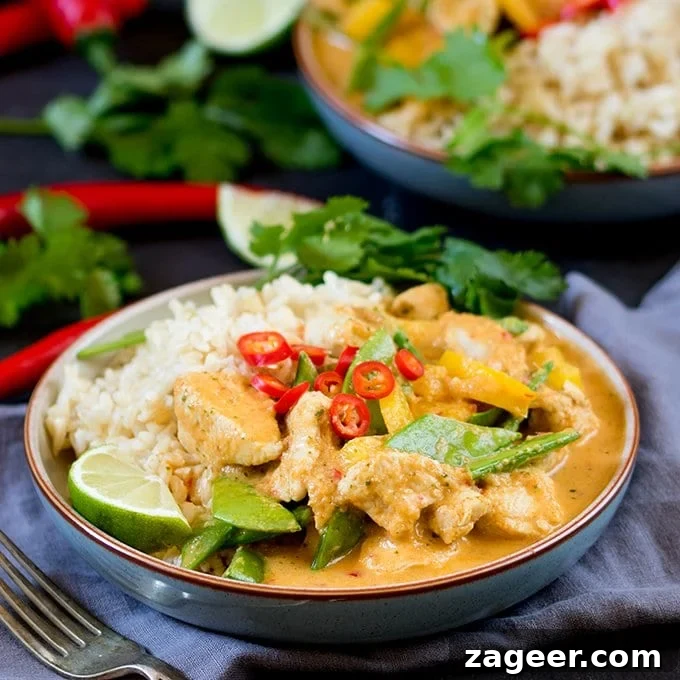
Spicy and Lighter Red Thai Chicken Curry: Fresh Flavors from Scratch
Embark on a culinary adventure with this incredible Spicy and Lighter Red Thai Chicken Curry! Forget the store-bought jars – crafting your own homemade curry paste is surprisingly simple, taking just minutes, and the difference in flavor is truly astounding. This recipe brings vibrant, authentic Thai tastes to your table, offering a healthier twist without compromising on the bold, aromatic experience you crave.
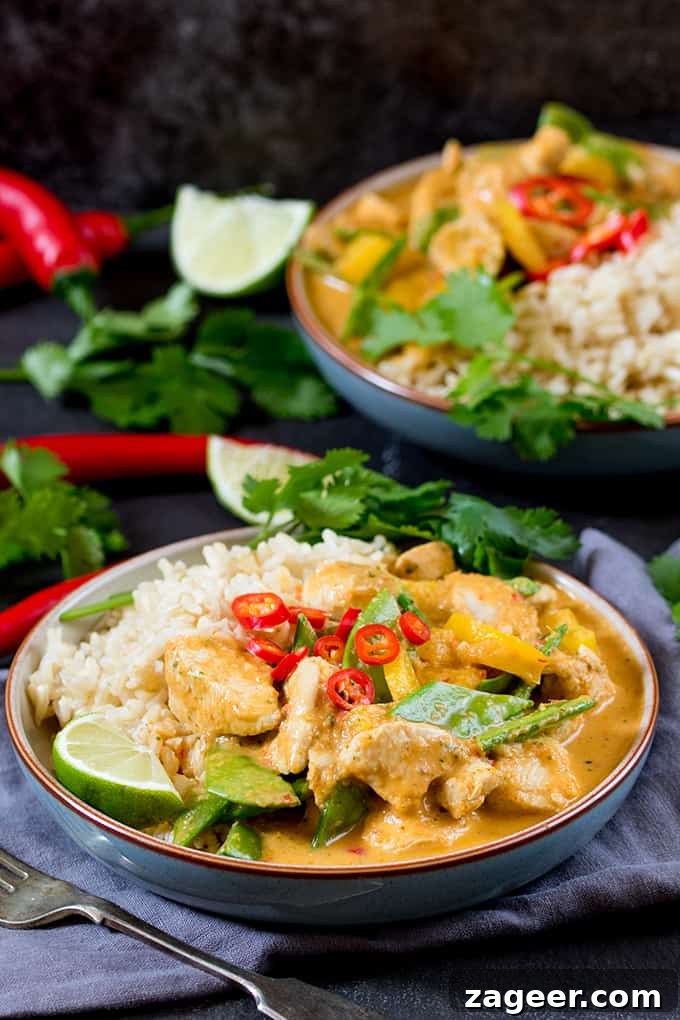
Why Homemade Curry Paste is a Game-Changer
While ready-made curry pastes offer convenience, they often contain hidden sugars, oils, and preservatives that detract from both flavor and health benefits. This recipe empowers you to take control, creating a paste from scratch that sings with freshness. Imagine the zesty tang of lime, the fiery kick of bird’s eye chillies, the aromatic warmth of ginger and lemongrass, all mingling together to form a truly dynamic base for your curry. The best part? You can easily adjust the spice level to suit your preference, from a gentle warmth to an exhilarating heat, making it perfect for every palate.
The journey to making your own Thai red curry paste is not just about superior taste; it’s about embracing the therapeutic process of cooking with whole, natural ingredients. Each component, though potent on its own, harmonizes in the food processor to create an explosion of flavor that elevates this curry far beyond what any jarred alternative could offer. It’s a small extra effort for a huge flavor payoff.

Achieving a Lighter, Healthier Thai Curry
To keep this delicious meal on the lighter side without sacrificing its creamy texture, we opt for reduced-fat coconut milk. This simple swap significantly lowers the fat content, making it an excellent choice for those mindful of their caloric intake or pursuing a healthier lifestyle. A crucial tip when working with reduced-fat coconut milk: avoid bringing the curry to a rolling boil. High heat can cause the milk to separate or curdle, resulting in a less appealing, lumpy texture. Instead, gently heat the curry until it’s simmering, allowing the flavors to meld beautifully while maintaining its smooth, luscious consistency.
Should you desire a thicker sauce, a quick cornflour (cornstarch) slurry is your secret weapon. Simply mix a tablespoon of cornflour with two tablespoons of cold water until smooth, then stir it into the simmering curry. This will gently thicken the sauce to your desired consistency, ensuring a rich mouthfeel even with the reduced-fat coconut milk. This approach demonstrates that healthy eating doesn’t mean compromising on deliciousness or satisfaction.
My Journey Towards Healthier Eating: Delicious Meals, No Deprivation
This “Lighter Red Thai Chicken Curry” isn’t just a recipe; it’s a testament to my personal journey towards a healthier, more balanced lifestyle. Recently, I dedicated five weeks to working with a personal trainer, and I’m thrilled to report a 7-pound weight loss. What makes this achievement particularly satisfying is that I managed it without resorting to deprivation or feeling hungry – a core principle I live by. I firmly believe that sustainable healthy eating should never feel like a punishment or lead to that frustrating feeling of still needing “something more” after a meal.
Admittedly, I indulged in a few too many “cheat days,” which probably kept me from hitting my ambitious 10-pound target. However, I’m more determined than ever to shed those final three pounds before Easter. Recipes like this Red Thai Chicken Curry have been instrumental in my success. They’re quick to prepare, packed with satisfying flavors, and loaded with nourishing ingredients that keep me full and energized. This curry is a perfect example of how easy dinner swaps can make a significant difference, proving that you can eat incredibly well and achieve your health goals simultaneously. It’s about smart choices that genuinely satisfy, allowing you to enjoy every meal without guilt or regret.
Explore More Healthy and Flavorful Curries
If the vibrant flavors of this red curry capture your heart, you’ll definitely want to try my Skinny Thai Green Curry. It offers a fresh, fragrant, and light-yet-creamy experience, proving that a healthier curry can still be incredibly indulgent. It’s perfectly balanced and a fantastic alternative for green curry lovers.
For those who appreciate the convenience and deep flavors of slow cooking, don’t miss my Healthier Slow Cooker Spicy Beef Curry. This recipe is rich, tender, and incredibly satisfying, designed to be both delicious and health-conscious. It’s another fantastic option for a hearty, wholesome meal that fits seamlessly into a busy schedule.
Enhance Your Meal with More Veggies and Smart Sides
One of the beauties of this Red Thai Chicken Curry is its adaptability. Feel free to pile in extra vegetables to boost its nutritional value and add more texture. Broccoli florets, green beans, snap peas, bok choy, or even sliced carrots would all be wonderful additions. Not only do they add color and nutrients, but they also help make the meal even more filling and satisfying. This curry is a fantastic way to sneak in those extra portions of vegetables!
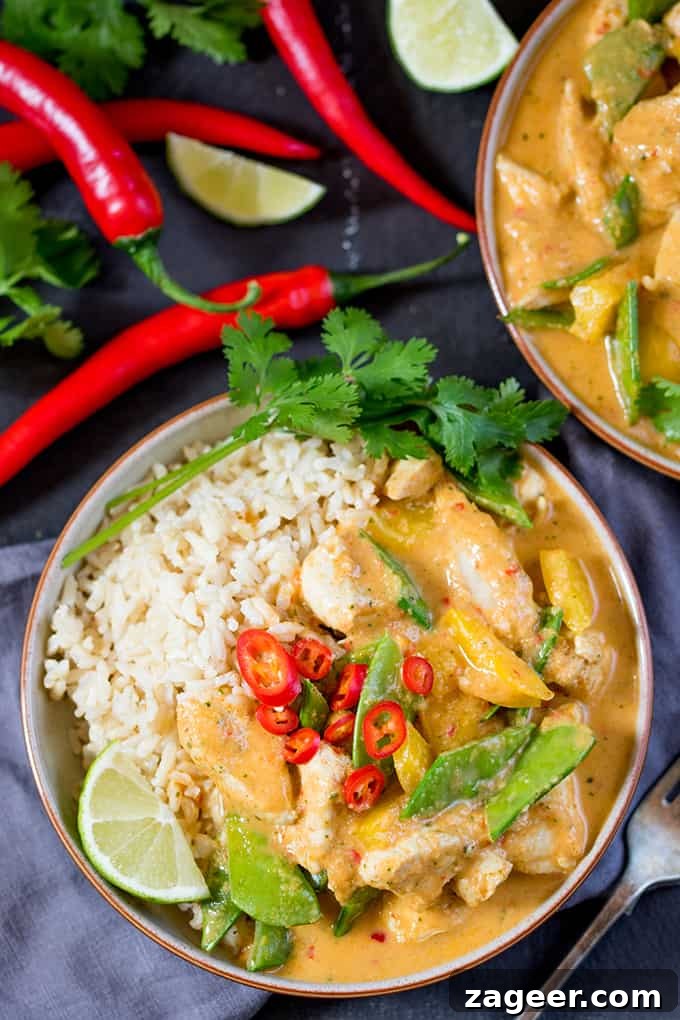
When it comes to serving, traditional brown rice is an excellent choice, offering fiber and a satisfying chew. However, if you’re looking to reduce carbohydrate intake further, cauliflower rice is an absolute game-changer. The rich, aromatic sauce of the curry soaks beautifully into the cauliflower rice, infusing it with flavor and making it a truly delicious and guilt-free accompaniment. It’s a clever way to enjoy a hearty, saucy meal while keeping it truly “lighter.” Garnish with a sprinkle of fresh coriander, a few extra slices of red chili for a visual and spicy pop, and perhaps a wedge of lime for an extra burst of freshness.
This delectable recipe was originally developed for SuperFood Magazine, where it was celebrated for its fantastic flavor and health-conscious approach. We’re delighted to share it with you here, offering a taste of authentic Thai cuisine that’s both easy to make and wonderfully good for you.

Print Recipe
Lighter Red Thai Chicken Curry Recipe
Ingredients
- 1 tbsp olive oil
- 3 chicken breasts about 200g (7oz) each, chopped into bite-size chunks
- 2 red bird’s eye chillies roughly chopped
- 1 thumb-sized piece of ginger peeled and finely chopped
- 5 kaffir lime leaves dried or fresh
- 1 lemongrass stalk finely chopped (or 1 tsp lemongrass paste)
- 4 shallots peeled and chopped
- 2 cloves garlic peeled and finely chopped
- 1 tsp cumin
- 1 tsp ground coriander
- ½ tbsp paprika
- 1 yellow bell pepper deseeded and sliced
- 85 g (1 cup) mangetout (snow peas) sliced in half
- 1 tbsp fish sauce
- juice of 1 lime
- ½ tsp honey
- 400 ml (14 oz tin) reduced-fat coconut milk
To Serve:
- 1 small bunch coriander leaves
- 1 red chilli finely sliced
Instructions
- Heat the oil in a large frying pan on a medium-to-high heat. Add the chicken, and cook for 5 minutes until sealed.
- Whilst the chicken is cooking, place the red chillies, ginger, kaffir lime leaves, lemongrass, shallots, garlic, cumin, ground coriander, and paprika into a food processor. Blend until the mixture forms into a paste.
- Add the paste to the chicken in the pan and cook for 5 minutes, stirring to coat the chicken.
- Add the yellow pepper, mangetout, fish sauce, lime and honey. Cook for a further 5 minutes, stirring often. By this time the chicken should be cooked through (you can check this by cutting the largest piece of chicken you can find in half and ensuring it’s no longer pink in the middle).
- Add the coconut milk and heat through until almost boiling. Don’t let it boil, or it may curdle. *Optional – if you would like the sauce to be a little thicker, mix 1 tbsp of cornflour with 2 tbsp cold water and stir into the sauce.
- Serve the Thai curry with brown rice. Top with fresh coriander leaves and slices of red chilli.
Notes
Nutrition
|
Carbohydrates: 15g
|
Protein: 20g
|
Fat: 12g
|
Saturated Fat: 7g
|
Cholesterol: 54mg
|
Sodium: 543mg
|
Fiber: 2g
|
Sugar: 4g
Nutrition information is automatically calculated, so should only be used as an approximation.