
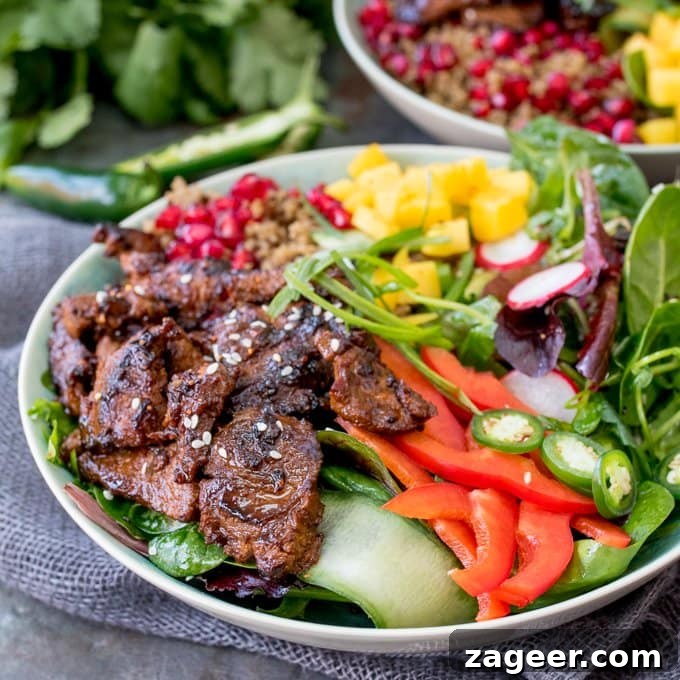
Experience an explosion of vibrant flavors with this homemade Korean Beef Bulgogi Bowl! Tender, thinly sliced sirloin steak, marinated in a rich, spicy-sweet sauce, then perfectly grilled or pan-fried. Served atop fluffy quinoa and surrounded by a colorful, crunchy fresh salad, this bowl is not just a meal – it’s a delightful culinary journey. It’s a guaranteed crowd-pleaser that brings the essence of Korean cuisine straight to your kitchen table.
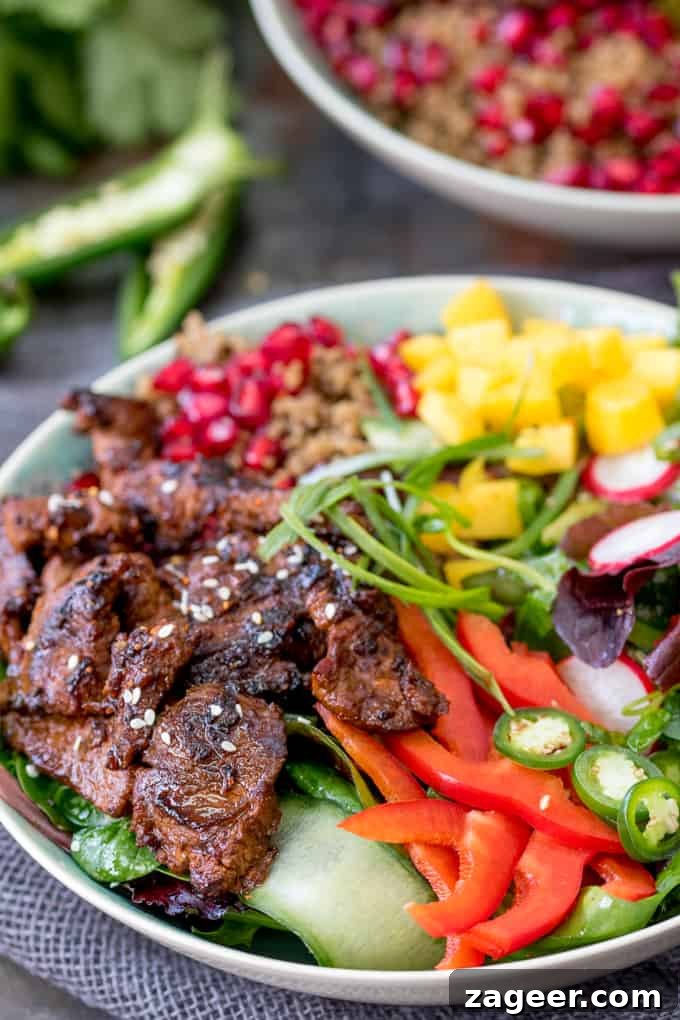
Imagine succulent, thinly sliced sirloin steak, each piece a canvas for an incredible marinade, cooked until it’s perfectly juicy with just a hint of delicious char. This isn’t just a fantasy; it’s the Korean Beef Bulgogi Bowl, and it’s destined to become a firm family favorite in your home, just as it has in ours. The exquisite balance of savory, sweet, and spicy notes creates a truly unforgettable taste experience that will have everyone asking for seconds.
While traditional bulgogi is often served with steamed rice, I’ve discovered a fantastic way to elevate this dish into a complete, balanced meal: by pairing it with nutritious quinoa and a brilliantly colorful, refreshing salad. This combination not only adds a wonderful textural contrast but also infuses the dish with a burst of freshness that complements the rich beef beautifully.
To make salads more exciting, especially for kids (and adults!), incorporating fruit is a game-changer. While apples and black grapes are always a hit, I love to experiment with seasonal produce. For this particular bowl, I chose the juicy tartness of pomegranate and the tropical sweetness of ripe mango. These fruits transform a simple cucumber and leafy green base into something truly spectacular and far more appealing.
The Secret to Tender Bulgogi: Mastering the Marinade
Many authentic bulgogi recipes often highlight the use of grated Asian pear or pear juice within the marinade. This isn’t merely for sweetness; the enzymes in the pear act as a natural tenderizer, ensuring the beef achieves that melt-in-your-mouth texture that bulgogi is famous for. However, sourcing Asian pears can sometimes be a challenge, especially in certain regions like the UK where I reside.
If you find yourself in a similar situation, don’t despair! I’ve found an excellent substitute: a grated Jazz apple. These particular apples offer a delightful sweet, slightly pear-drop-like flavor profile that mimics the effect of Asian pear remarkably well. If you haven’t had the pleasure of trying Jazz apples before, I highly recommend them – they’re truly my absolute favorite variety for their crispness and balanced sweetness. The key is to use a sweet, firm apple to achieve similar tenderizing and flavoring properties.
Beyond the fruit, the marinade is a symphony of flavors. Dark soy sauce provides a deep umami base, while gochujang paste introduces its signature spicy kick and beautiful crimson hue. Brown sugar balances the heat and savory notes with a touch of sweetness. Freshly minced ginger and garlic are indispensable, infusing the beef with aromatic warmth. A splash of rice wine adds another layer of subtle sweetness and helps to further tenderize the meat, and a drizzle of toasted sesame oil rounds out the flavors with its distinctive nutty aroma. Each component plays a crucial role in creating the iconic bulgogi taste.
Achieving the Perfect Thin Slices
A crucial step for achieving the ideal bulgogi texture and ensuring the marinade deeply penetrates every fiber of the meat is to slice the steak incredibly thinly. This can be tricky with fresh, soft steak. My top tip? Place your sirloin steaks in the freezer for about 20-30 minutes before slicing. This firms up the meat just enough to make it much easier to cut paper-thin slices against the grain using a sharp knife. This preparatory step makes all the difference, allowing the marinade to work its magic more effectively and ensuring even cooking.
Now, let’s take a moment to appreciate the star of the show – that perfectly cooked, juicy, and slightly charred beef.
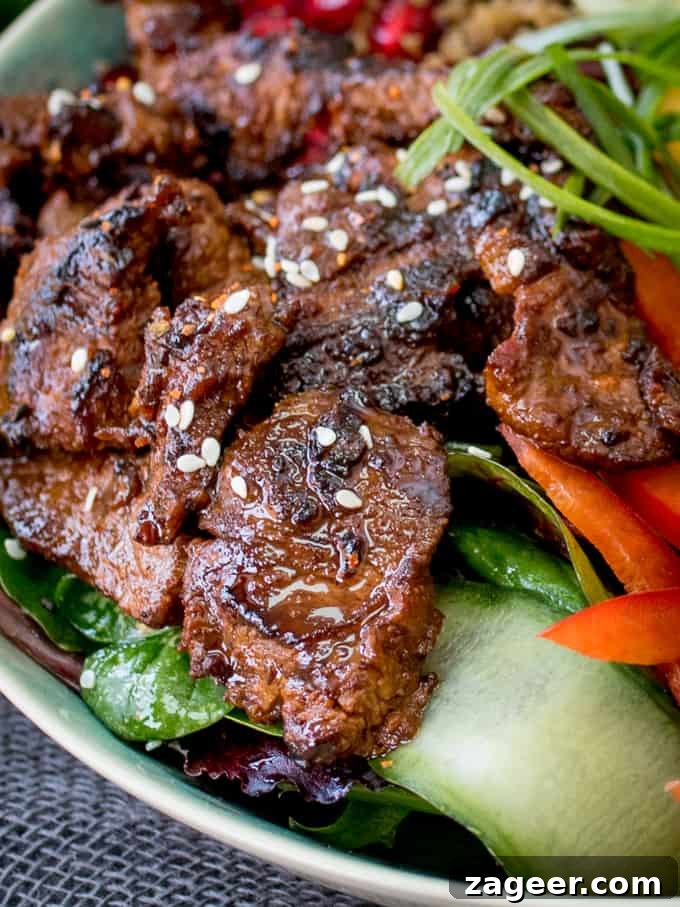
Absolutely delicious! The gochujang, a fermented Korean chili paste, is more than just a heat source; it’s a cornerstone of Korean cooking, adding a complex depth of flavor, a rich, savory sweetness, and that irresistible vibrant red color to the marinade. Its versatility is incredible! I frequently incorporate gochujang into other beloved recipes, such as my Spicy Pork Ramen for a warming kick, my Korean Style Lamb Cutlets for a distinct glaze, and even in a Korean Steak Sandwich. It also makes for an excellent dipping sauce for dishes like Veggie Bibimbap, adding an extra layer of bold flavor. Gochujang is now widely available in most major supermarkets, often in the international foods aisle, but if you’re having trouble locating it locally, you can easily find it online.
Creating the Ultimate Korean Beef Bulgogi Bowl
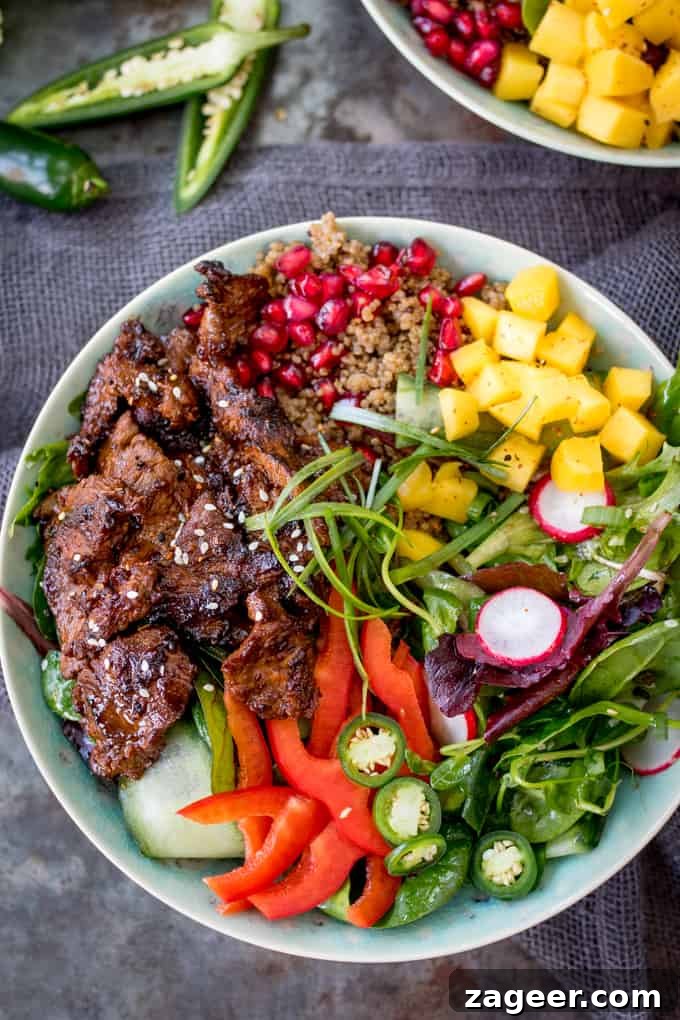
Once your tender, flavor-packed bulgogi is ready, the assembly of the bowl is where creativity and nutrition come together. The base of fluffy quinoa provides a healthy, protein-rich foundation, absorbing any delicious juices from the beef. Around this, arrange an array of fresh, crisp vegetables to create a symphony of textures and colors.
Thin ribbons of cucumber, vibrant slices of red bell pepper, and thinly sliced radishes add crunch and a refreshing bite. The sweetness of ripe mango chunks offers a tropical contrast that beautifully complements the spicy beef, while a scattering of tart pomegranate seeds provides little bursts of juicy flavor. A thinly sliced jalapeño chili adds an optional extra layer of heat and freshness, allowing you to customize the spice level to your preference. Finally, a sprinkle of toasted sesame seeds (a mix of black and white for visual appeal) and fresh spring onions ties all the elements together, adding a nutty finish and a final touch of verdant color. This combination makes for a balanced, visually stunning, and incredibly satisfying meal that’s perfect for any occasion.
Tips for Success with Your Bulgogi Bowl
- **Marinate for Flavor:** For the deepest flavor, allow the beef to marinate for at least 3-4 hours, or even better, overnight in the refrigerator. This gives the ingredients ample time to infuse into the meat and tenderize it.
- **Don’t Overcrowd the Pan:** When cooking the beef, work in batches if necessary. Overcrowding the pan will lower the temperature, steaming the meat instead of searing it, preventing that desired slightly charred exterior.
- **High Heat is Key:** Cook the bulgogi over high heat for a short period. This ensures the steak remains juicy on the inside while developing a flavorful crust.
- **Customize Your Bowl:** Feel free to experiment with different grains like brown rice or even cauliflower rice for a low-carb option. Vary the vegetables based on what’s in season or your personal preference – shredded carrots, spinach, or pickled daikon are all great additions.
- **Adjust Spice to Taste:** If you prefer less heat, reduce the amount of gochujang paste. For more fire, add an extra dash or a pinch of red chili flakes.
Serving Suggestions & Variations
While the Bulgogi Bowl is a complete meal in itself, there are many ways to enjoy this versatile Korean dish. Serve it as a traditional Korean BBQ experience, accompanied by leafy greens for wrapping the meat, kimchi, and various banchan (small side dishes). It’s also excellent simply served with a bowl of steamed white or brown rice.
Looking for variations? The marinade works beautifully with other proteins too! Try it with thinly sliced chicken breast or thigh for Korean Chicken Bulgogi, or with pork loin for a flavorful Spicy Pork Bulgogi. For a vegetarian option, firm tofu or mushrooms can be marinated and cooked in the same way, offering a delightful plant-based alternative.
This Korean Beef Bulgogi Bowl isn’t just a recipe; it’s an invitation to explore the rich, diverse, and incredibly delicious world of Korean cuisine from the comfort of your own home. With its balance of sweet, savory, and spicy notes, coupled with fresh, vibrant components, it’s a dish that truly excites the palate and satisfies the soul.
The Korean Beef Bulgogi Bowl Recipe
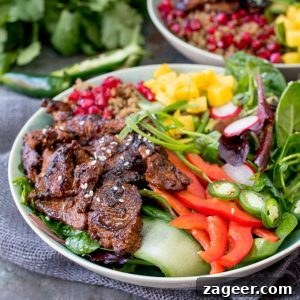
This Korean Beef Bulgogi Bowl is bursting with spicy flavor! Marinated, then grilled or fried and served with a vibrant, crunchy salad.
- Prep Time: 20 mins
- Cook Time: 10 mins
- Total Time: 30 mins
- Servings: 3 servings
- Course: Dinner
- Cuisine: Asian, Korean
Ingredients
Bulgogi:
- 2 medium sirloin steaks
- 2 tbsp dark soy sauce
- 2 tbsp gochujang paste
- 1 thumb-sized piece of ginger, peeled and minced
- 2 tbsp light brown sugar
- 2 tbsp rice wine
- 2 garlic cloves, peeled and minced
- ½ tsp black pepper
- 1 grated sweet apple* (no need to peel)
- 1 tbsp toasted sesame oil
- 2 tbsp vegetable oil
Salad:
- 120 g (2/3 cup) dry quinoa
- 1 chicken or vegetable stock cube, crumbled
- 100 g (approx 3 cups) baby salad leaves
- Seeds from half a pomegranate
- Half a cucumber, cut into ribbons using a potato peeler
- 1 red bell pepper, deseeded and sliced
- 1 ripe mango, peeled and chopped into small chunks
- 1 jalapeno chilli, thinly sliced
- 3 radishes, thinly sliced
- 1 tsp sesame seeds (a mixture of black and white sesame seeds works well)
- 2 spring onions (scallions), sliced into thin strips
Instructions
- Place the sirloin steaks in the freezer for 30 minutes to firm up slightly. This makes them easier to slice. Then, using a sharp knife, slice the steak thinly against the grain.
- Place the thinly sliced steak into a large bowl. Add all the bulgogi marinade ingredients (dark soy sauce, gochujang paste, minced ginger, light brown sugar, rice wine, minced garlic, black pepper, grated sweet apple, and toasted sesame oil). Mix everything together thoroughly to ensure the beef is fully coated. Cover the bowl with clingfilm and refrigerate for 3-4 hours to marinate.
- While the steak is marinating, prepare the quinoa. Cook the quinoa according to the package instructions, adding the crumbled chicken or vegetable stock cube to the cooking water for extra flavor. Once cooked, let it cool slightly and then fluff with a fork.
- Once the steak has marinated, heat the vegetable oil in a large frying pan or skillet over high heat. Using a slotted spoon, scoop the marinated steak out of the bowl, allowing any excess marinade to drip off. Fry the steak in the hot oil. Use a set of tongs to separate the steak slices during cooking to ensure even searing. Cook on a high heat until the beef is cooked through and has developed a slight char on the edges, which adds to the flavor. Remove the cooked bulgogi from the heat.
- Assemble the bowls: Divide the baby salad leaves evenly among three serving bowls. Top the salad leaves with the cooked quinoa. Sprinkle the pomegranate seeds over the quinoa. Artfully arrange the cucumber ribbons, bell pepper slices, mango chunks, jalapeno slices, and radish slices around the quinoa and salad.
- Finally, divide the cooked bulgogi evenly between the bowls. Sprinkle the sesame seeds generously over the beef and salad, then top with the sliced spring onions. Serve immediately and enjoy your delicious Korean Beef Bulgogi Bowl!
Notes
- *Traditionally, Asian pear is used in bulgogi marinades for its tenderizing properties and sweetness. If you can source Asian pears, feel free to use one grated instead of the sweet apple.
- Nutritional information provided is an approximation and can vary based on specific ingredients and preparation methods.
Nutrition (per serving)
- Calories: 632 kcal
- Carbohydrates: 60g
- Protein: 42g
- Fat: 24g
- Saturated Fat: 11g
- Cholesterol: 92mg
- Sodium: 1096mg
- Fiber: 6g
- Sugar: 25g
Nutrition information is automatically calculated, so should only be used as an approximation.
We hope you love this recipe! Don’t hesitate to leave a comment below and share your thoughts.
If you’re a fan of flavorful beef salads, you might also enjoy my Vietnamese Steak Salad.
Some of the links in this post may be affiliate links – which means if you buy the product I get a small commission (at no extra cost to you). If you do buy, then thank you! That’s what helps us to keep Kitchen Sanctuary running. The nutritional information provided is approximate and can vary depending on several factors. For more information please see our Terms & Conditions.