
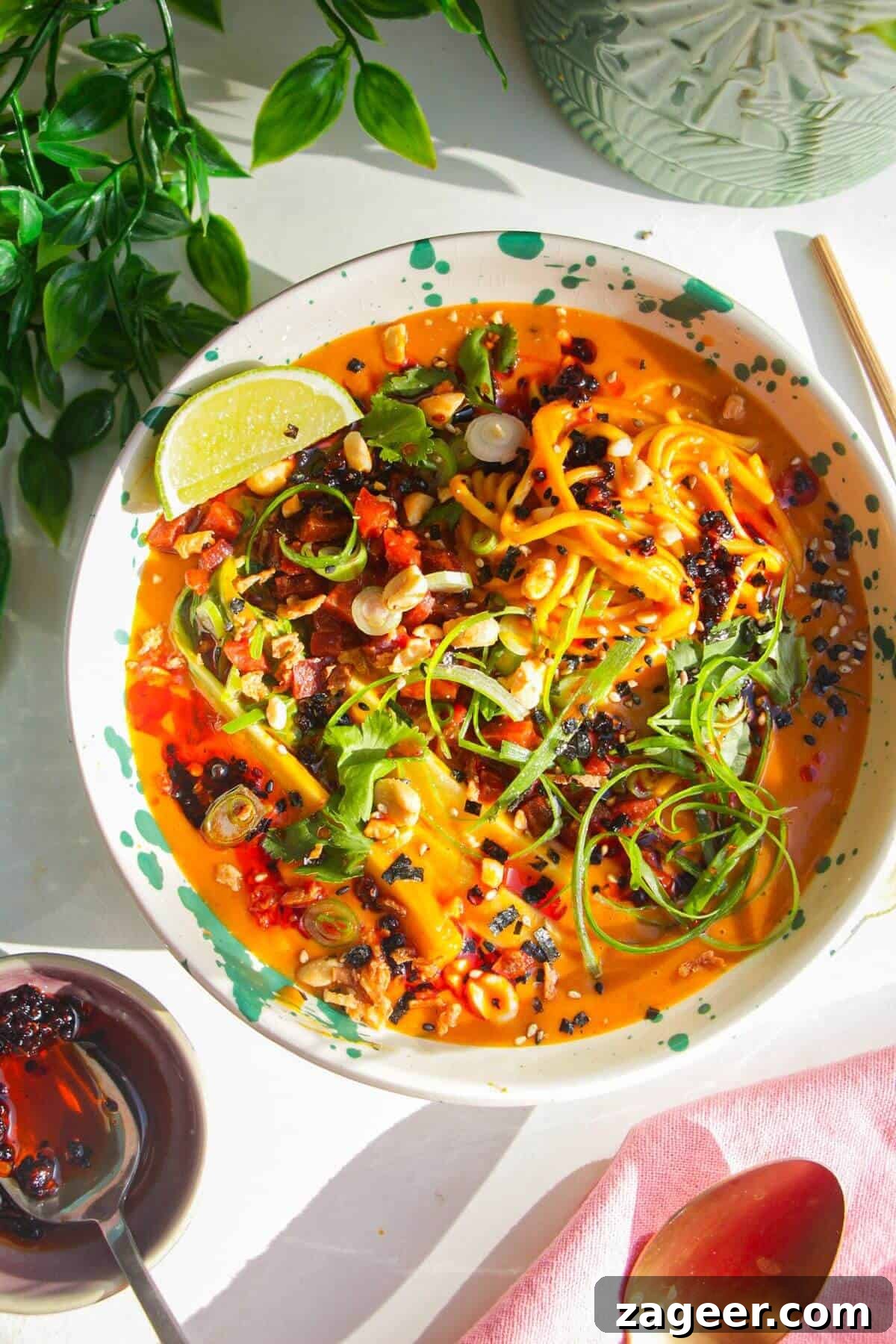
Creamy One-Pot Butternut Squash Ramen: Your Ultimate Cozy Weeknight Meal
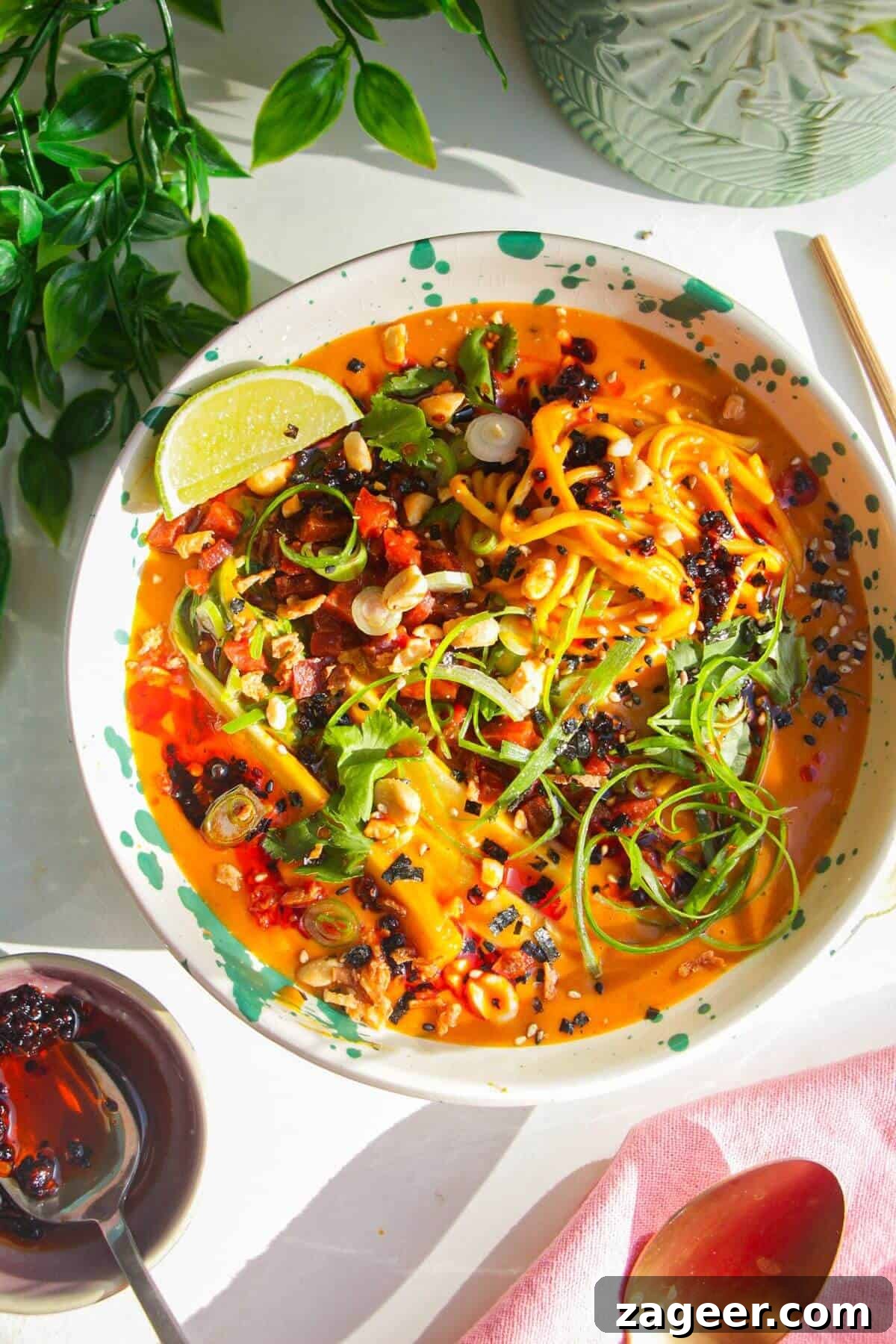
Step into a world of comforting flavors with this exquisite Creamy One-Pot Butternut Squash Ramen. This is more than just a meal; it’s an experience designed to transform even the most ordinary weeknights into a cozy, culinary escape. Picture a deeply satisfying broth, rich with the inherent sweetness of perfectly roasted butternut squash, subtly infused with the distinct spicy kick of gochujang, and balanced by the luscious, nutty undertones of peanut butter. This luxurious, Asian-fusion base effortlessly cradles tender noodles and crisp, fresh greens, creating a harmony of textures and tastes.
What truly sets this ramen apart is its incredible simplicity and the speed with which it comes together. Designed for the busiest schedules, this “wow-factor” dish gives the impression of having simmered for hours, yet it’s ready in approximately 40 minutes from start to finish. The ingenious technique involves blending caramelized roasted squash directly into the broth, which yields an irresistibly velvety, sauce-like consistency. This rich broth then clings beautifully to every noodle, ensuring a burst of flavor in every bite, all while keeping cleanup to an absolute minimum thanks to its one-pot preparation.
Why This Butternut Squash Ramen Will Become Your New Favorite
This recipe isn’t just about feeding yourself; it’s about indulging in a unique and satisfying meal without the fuss. Here are compelling reasons why this Butternut Squash Ramen deserves a permanent spot in your recipe collection:
- Effortless One-Pot Cooking: Beyond the initial roasting of the squash, the entire dish beautifully converges in a single pot. This drastically cuts down on washing up, allowing you to spend more time relaxing and less time scrubbing, making it ideal for those hectic weekday evenings.
- Unrivaled Flavor Harmony: Prepare your palate for a delightful interplay of sweet, savory, and spicy notes. The roasted butternut squash naturally sweetens the broth and contributes to its creamy body. Gochujang paste introduces an authentic Korean chili warmth, while natural peanut butter provides a grounding, nutty richness. The result is a complex, deeply satisfying broth that’s genuinely addictive.
- Remarkably Flexible and Adaptable: Consider this recipe your versatile kitchen companion. Whether you have instant ramen bricks (sans seasoning packets), thick and chewy udon, classic egg noodles, or even gluten-free rice noodles, this recipe embraces them all. It’s incredibly forgiving and easily adjusted to whatever ingredients you have on hand, making it both economical and convenient.
- Luxuriously Creamy and Comforting: The secret to this ramen’s indulgent texture lies in the roasted butternut squash. Once blended into the coconut milk base, it creates a wonderfully thick, velvety sauce that not only enriches the flavor but also perfectly coats every strand of noodle, ensuring a comforting and deeply satisfying experience with each spoonful.
- Personalized Spice Levels: Whether you crave a gentle warmth or a fiery kick, this recipe empowers you to control the heat. Easily adjust the amount of gochujang paste to match your personal preference. The coconut and squash naturally mellow the spice, making it approachable for all palates, yet capable of being intensified for the adventurous.
- Simple Dietary Customization: With just a few straightforward alterations, this ramen can be effortlessly transformed into a delicious vegetarian or vegan meal. This makes it a fantastic option for households with diverse dietary needs, ensuring everyone can enjoy a hearty and flavorful dish.
- Quick and Weeknight-Friendly: Despite its sophisticated taste and rich texture, this ramen is surprisingly fast to prepare. Its minimal active cooking time means you can enjoy a restaurant-quality meal on your table in under an hour, making it an excellent solution for busy weeknights when time is of the essence.
Essential Ingredients for Your Creamy Butternut Squash Ramen
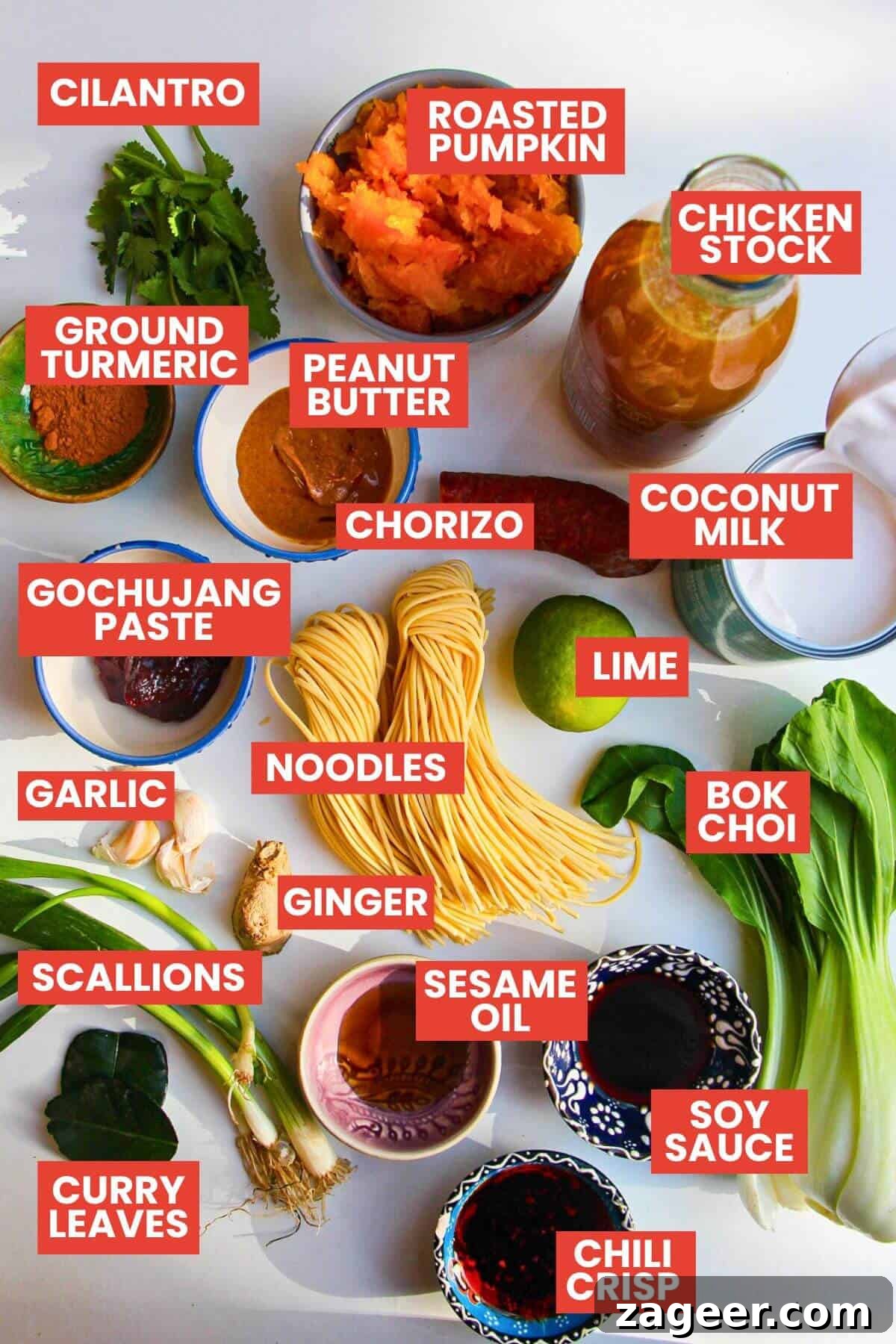
Crafting this vibrant ramen begins with gathering a thoughtful selection of fresh produce and pantry staples. Each ingredient plays a crucial role in building the dish’s distinctive flavor profile. Here’s a detailed guide to what you’ll need, along with tips for selecting the best components:
- Butternut Squash: The undisputed hero of this dish. You’ll need one medium butternut squash. Roasting it until tender and caramelized is vital, as this process deepens its natural sweetness and adds a rich, nutty nuance to the broth. For a convenient shortcut, especially on extra busy days, you can substitute the fresh squash with approximately 1.5 cups of plain, canned pumpkin puree. While it won’t offer the same roasted complexity, it will still deliver that essential creamy texture and sweet squash flavor.
- Noodles: The flexibility here is a dream! Choose your preferred noodle variety to suit your taste and pantry. Popular choices include instant ramen bricks (remember to discard the seasoning packets), thick and satisfying udon noodles, classic egg noodles, or even lighter rice noodles for a different texture. Fresh or dried, the choice is yours, adapting effortlessly to your preference.
- Peanut Butter: For the most authentic and clean flavor, opt for a smooth, natural peanut butter. Look for brands where the ingredient list is simply “peanuts” and “salt,” avoiding those with added sugars or hydrogenated oils that can overpower or alter the delicate balance of the ramen broth. This ingredient is key for creamy texture and a delightful nutty depth.
- Gochujang Paste: This beloved Korean fermented chili paste is the cornerstone of the ramen’s unique spice and umami. It imparts a beautiful balance of sweet, savory, and spicy notes. Gochujang is increasingly accessible and can typically be found in the “Asian” or international foods aisle of most major grocery stores. Don’t hesitate to use it generously for a truly profound flavor.
- Full-Fat Coconut Milk: To achieve that signature silky texture and luxurious creaminess, full-fat coconut milk is non-negotiable. Ensure you select a can with a high percentage of coconut extract (ideally 60% or more) for the richest, most decadent broth base.
- Aromatics (Ginger & Garlic): The foundation of any great Asian-inspired dish. You’ll need about a 1-inch piece of fresh ginger, finely grated, and 3 cloves of garlic, thoroughly crushed or minced. These aromatics are essential for building a fragrant and invigorating base for your broth.
- Ground Turmeric: Just two teaspoons of ground turmeric are used to add a vibrant golden hue to the broth, along with a subtle earthy warmth that beautifully complements the sweetness of the squash and the spice of the gochujang.
- Seasoning Sauces (Soy Sauce & Fish Sauce): Two tablespoons of light soy sauce provide indispensable salinity and a deep umami character. For an additional layer of authentic savory depth, two teaspoons of fish sauce are highly recommended, though optional. If you’re preparing a vegetarian or vegan version, simply substitute the fish sauce with an equal amount of extra light soy sauce or a plant-based alternative.
- Stock (Chicken or Vegetable): Three cups of high-quality stock form the voluminous base of your ramen. Use chicken stock for a richer, more robust flavor, or choose vegetable stock to maintain a vegetarian or vegan profile.
- Bok Choi: Two heads of sliced bok choi add a lovely touch of fresh green, a slight crunch, and a boost of healthy vegetables to your bowl. If bok choi isn’t available, other leafy greens such as spinach or chopped kale can make excellent substitutes.
- Fresh Lime Juice: The juice of half a fresh lime, added right at the end, is a crucial finishing touch. It brightens all the flavors, cutting through the richness of the broth with a refreshing, zesty lift.
- Optional Protein (Spanish Chorizo): Approximately 2 ounces (50g) of diced Spanish chorizo, specifically Spanish (not Mexican), offers a wonderful smoky flavor and a savory texture. This is optional but highly recommended for an added dimension. Alternatively, crispy bacon bits or crumbled sausage meat work well. For plant-based protein, pan-fried shredded tofu or sautéed wild mushrooms are fantastic options.
Step-by-Step Guide to Crafting Your Creamy Butternut Squash Ramen
Creating this flavorful and comforting ramen is an enjoyable and straightforward process. Follow these detailed instructions to bring your creamy, spicy, and satisfying bowl to life. A complete recipe card with precise ingredient quantities is available at the conclusion of this article.

1. Prepare and Roast the Butternut Squash: Begin by preheating your oven to 425°F (220°C, fan-assisted). Carefully slice the butternut squash in half lengthwise, then use a spoon to scoop out and discard the seeds and stringy bits. Drizzle the exposed flesh generously with one tablespoon of olive oil and sprinkle with a pinch of salt. Place the squash halves, cut-side down, onto a baking sheet lined with parchment paper. Roast in the preheated oven for approximately 30 minutes, or until the squash is incredibly soft and tender, easily pierced with a knife. Roasting is key to developing its sweet, caramelized depth of flavor.

2. Cook the Chorizo (Optional Step): While the butternut squash roasts, place a large, high-sided skillet or pot over medium heat. Add the diced Spanish chorizo (if you’re using it). Cook, stirring occasionally, for about 3-5 minutes, allowing the chorizo to render its flavorful fat and become beautifully crispy. Once cooked to your liking, remove the crispy chorizo from the pan with a slotted spoon and set it aside. Leave the rendered fat in the pot; it will add an incredible smoky flavor to your broth.
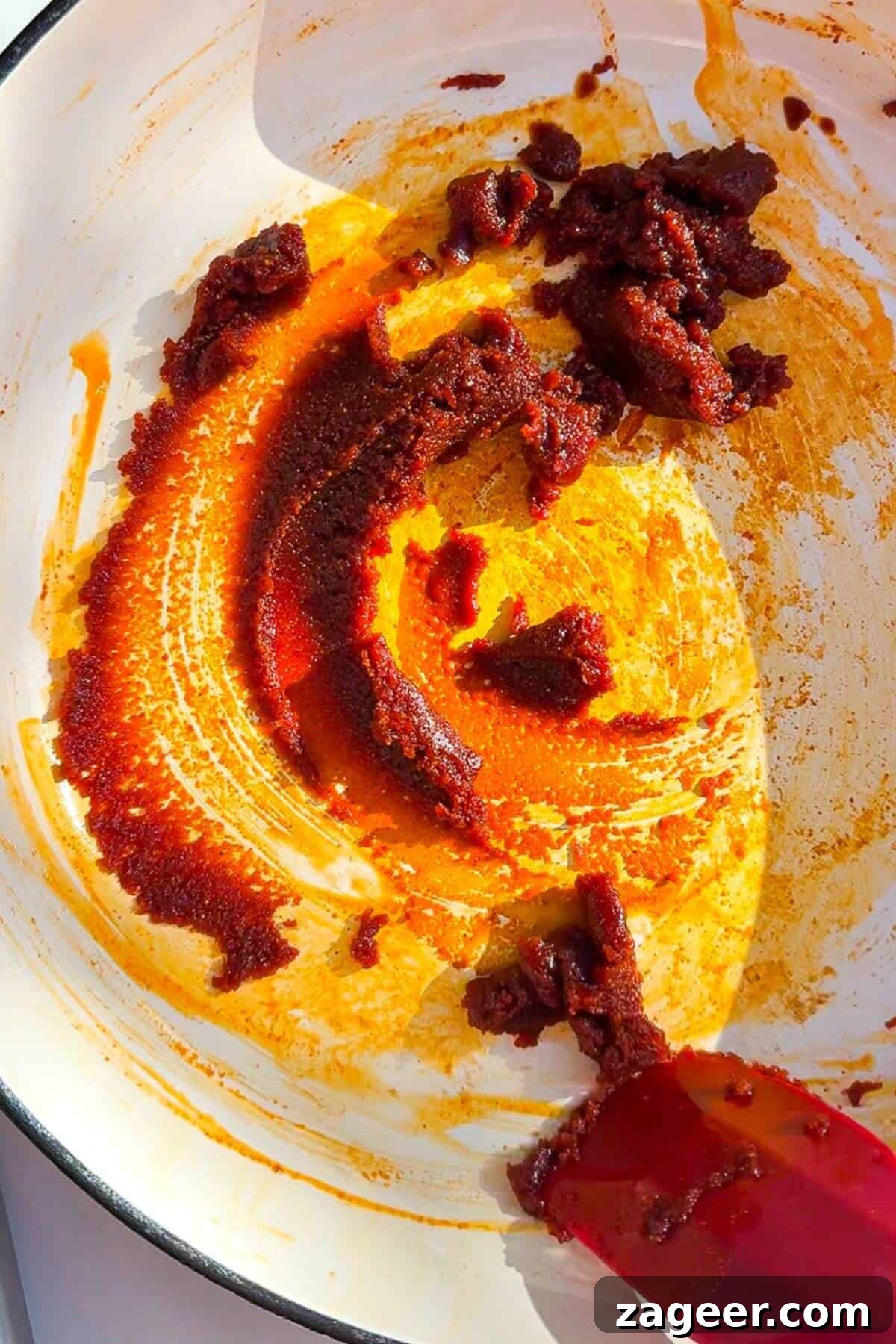
3. Build the Flavorful Broth Base: To the same pot with the rendered chorizo fat (or add a small drizzle of neutral oil if you’re not using chorizo), introduce the grated ginger, crushed garlic, and ground turmeric. Sauté, stirring continuously, for approximately one minute until the aromatics become incredibly fragrant. Next, stir in the three tablespoons of gochujang paste, two tablespoons of natural peanut butter, two tablespoons of light soy sauce, and two teaspoons of fish sauce (if using). Continue to cook and stir for another few minutes, allowing these potent ingredients to combine into a thick, deeply aromatic paste. This step is crucial for developing the foundational layers of flavor.

4. Introduce Liquids and Form the Creamy Broth: Pour in the full-fat coconut milk and three cups of chicken or vegetable stock. Using a sturdy whisk, thoroughly combine the rich paste with the liquids, ensuring that no clumps remain and the mixture is perfectly smooth. Continue whisking until you have a beautifully cohesive and creamy base for your ramen broth. Reduce the heat to medium-low and bring the broth to a gentle simmer, allowing the complex flavors to meld and deepen without boiling vigorously.
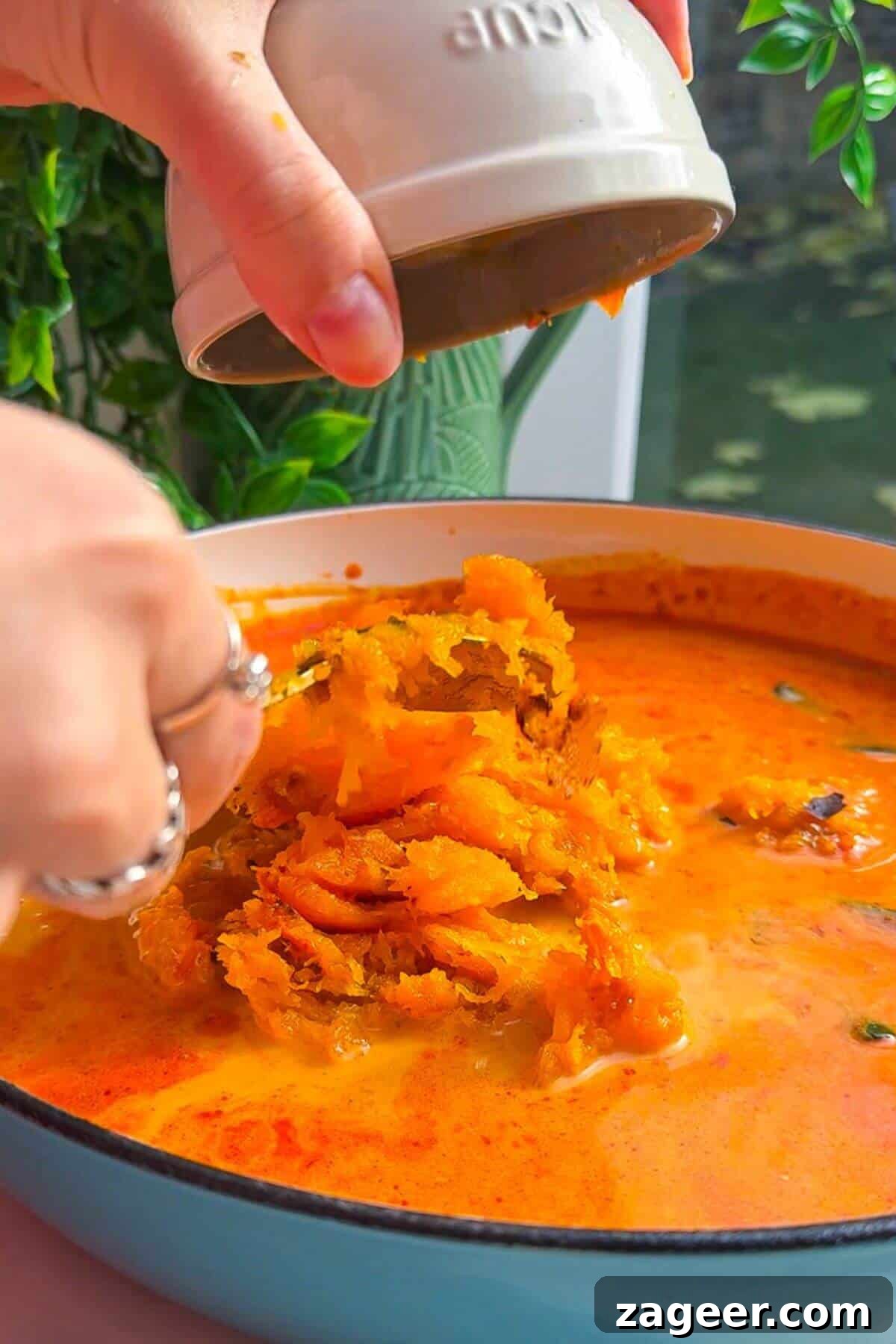
5. Incorporate the Roasted Butternut Squash: Once the roasted squash is cool enough to handle, carefully scoop all the soft, sweet flesh out of its skin and add it directly to your simmering broth. Stir it through thoroughly, using your spoon or spatula to break up the squash flesh and help it integrate seamlessly into the liquid. Allow the broth to continue simmering gently for another five minutes with the squash, infusing it further with its natural goodness and contributing to its creamy texture.

6. Achieve Silky Smoothness for the Broth: For an irresistibly smooth and luxurious broth, employ an immersion blender directly in the pot. Blend thoroughly until there are absolutely no visible lumps of squash remaining and the broth has transformed into a perfectly silky consistency. If you do not possess an immersion blender, carefully transfer the broth in batches to a regular stand blender and blitz until smooth. Then, return the velvety broth to the pot, ensuring its signature creamy texture.

7. Cook the Noodles and Wilt the Bok Choi: Now it’s time to bring the dish together with the noodles! Add your chosen dried noodles directly into the simmering broth. Gently stir them to ensure they are fully submerged and evenly coated by the rich liquid. Refer to your noodle package instructions for the precise cooking times. Halfway through the noodle cooking, add the sliced bok choi to the pot. Stir it into the broth and noodles, allowing it to gently wilt and cook through until tender-crisp, adding a lovely fresh texture and vibrant color.
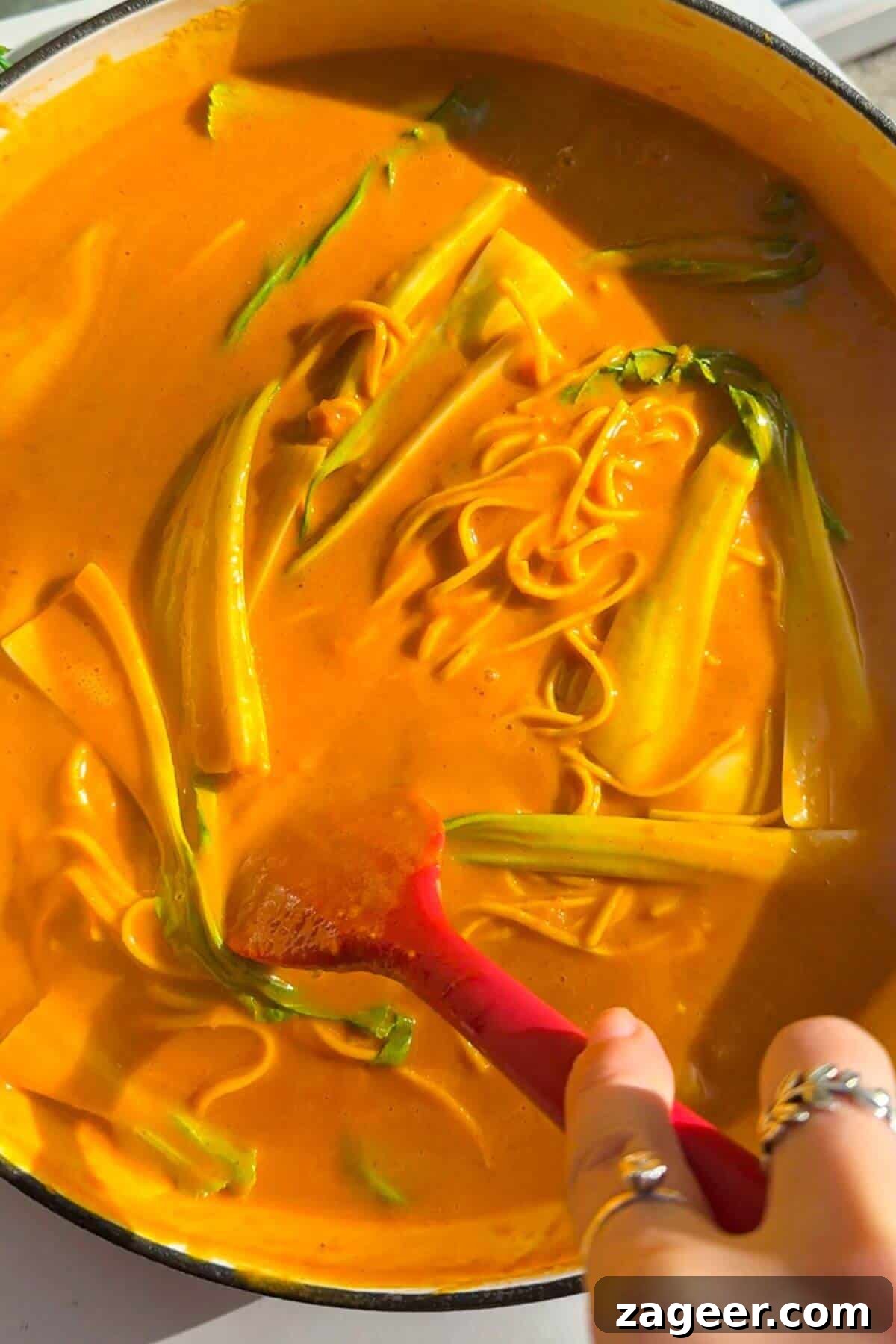
8. Final Seasoning and Taste Adjustment: Once the noodles are perfectly cooked to your liking and the bok choi is tender-crisp, taste the ramen. This is your opportunity to fine-tune the flavors. Stir in the fresh lime juice, which is crucial for brightening the dish and balancing the richness. If needed, add a little extra soy sauce, fish sauce, or even a pinch more gochujang to achieve your desired balance of salt, umami, and spice. Ensure all flavors are harmonious before serving.

Kate’s Pro Tip: Mastering Broth Consistency
For that coveted luscious, saucy ramen experience, where the creamy broth lavishly coats every single noodle, I wholeheartedly recommend cooking the noodles directly within the broth, as outlined in the steps above. The starches released from the cooking noodles naturally thicken the broth, creating an unparalleled richness. However, if your preference leans towards a lighter, more soup-like ramen, simply cook your chosen noodles separately according to their package instructions. Then, divide the perfectly cooked noodles among your serving bowls and generously pour the flavorful broth over them just before serving.

9. Serve and Garnish Generously: With the ramen perfected, it’s time for the final presentation. Divide the hot, steaming ramen, ensuring each bowl has a generous portion of both noodles and the creamy broth, among individual serving bowls. Now comes the exciting part – the toppings! Garnish generously with the reserved crispy chorizo (if you chose to use it), a delightful dollop of chili crisp for an extra layer of heat and textural contrast, a scattering of fresh cilantro leaves, and thinly sliced scallions. For an even more elevated finish, consider adding a sprinkle of toasted sesame seeds or crispy fried onions.
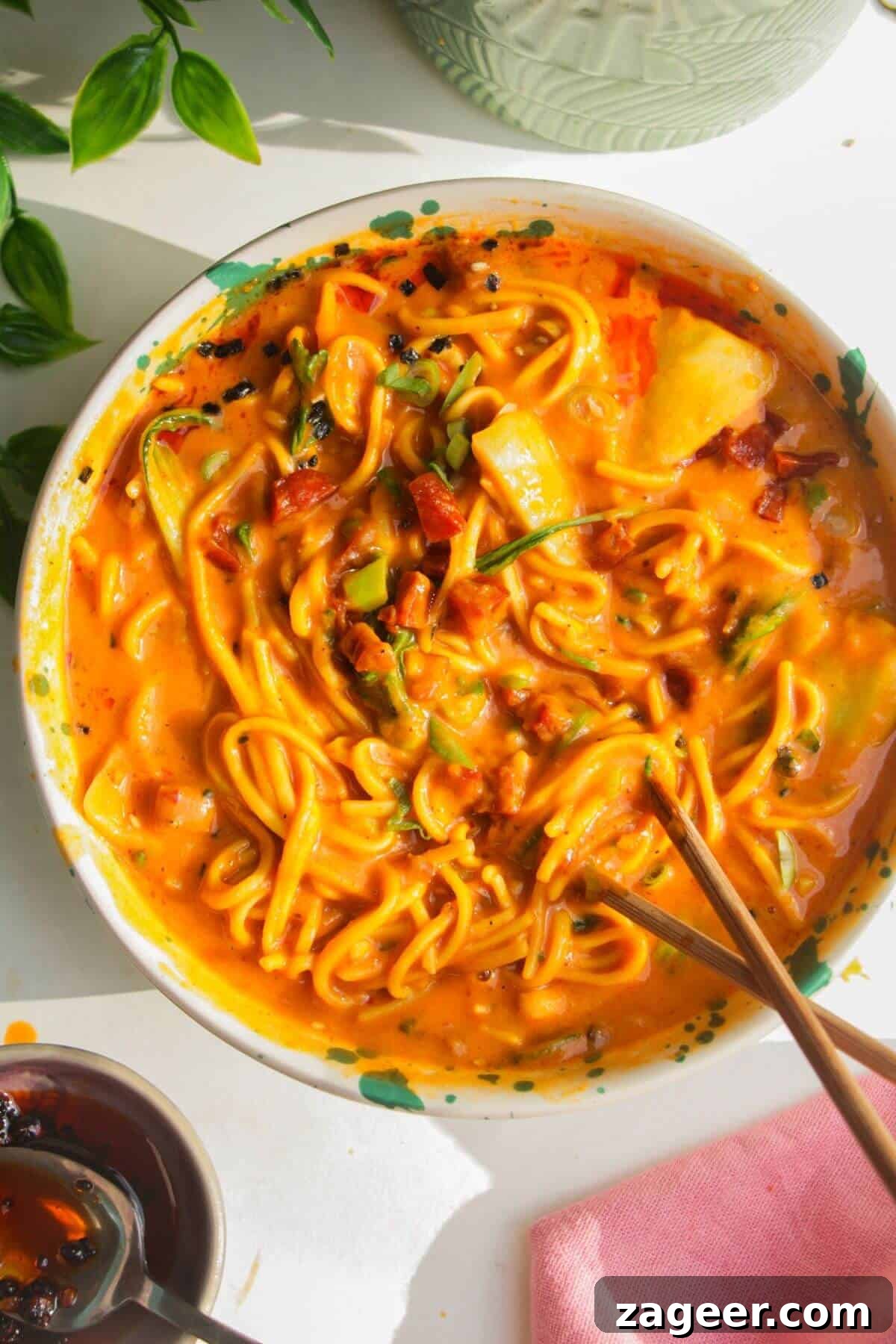
10. Enjoy Immediately for Optimal Flavor: Your Creamy One-Pot Butternut Squash Ramen is now ready! Serve it immediately while it’s piping hot and at the peak of its deliciousness. For those who appreciate an extra fiery kick, offer additional chili crisp on the side. This dish is truly best savored fresh, allowing you to fully appreciate every creamy, spicy, and profoundly satisfying spoonful. Enjoy this homemade comfort in a bowl!
Customization and Variations for Your Ramen
The beauty of this Butternut Squash Ramen lies in its incredible versatility. Feel free to experiment and tailor it to your preferences and what you have on hand:
- Protein Power-Ups: While Spanish chorizo adds a wonderful smoky depth, the options for protein are endless. Consider adding shredded rotisserie chicken, leftover roast turkey, quick-cooking shrimp (which can be tossed directly into the simmering broth for the last 2-3 minutes), or pan-fried tofu cubes for a plant-based boost. Sautéed mushrooms, such as shiitake or cremini, also make a fantastic hearty addition.
- Vegetarian & Vegan Adaptations: This recipe is easily made plant-friendly. For a vegetarian version, simply omit the chorizo and ensure you use vegetable stock. To make it completely vegan, in addition to the vegetarian changes, substitute the fish sauce with an equal amount of extra light soy sauce or a readily available vegan fish sauce alternative.
- Noodle Choices: Don’t limit yourself! Udon noodles provide a delightfully chewy texture, egg noodles are a classic, and rice noodles offer a lighter, gluten-free option. In a pinch, even breaking up regular spaghetti and cooking it directly in the broth can yield surprisingly delicious results.
- Adjusting the Spice Level: Gochujang offers a fantastic depth of flavor, but personal spice tolerance varies. If you prefer a milder ramen, start with 2 tablespoons of gochujang paste. The coconut milk and butternut squash naturally temper the heat, allowing for easy adjustment. For more heat, a dash of sriracha or an extra spoonful of chili crisp can be added to individual bowls.
- Additional Greens: While bok choi is excellent, feel free to substitute or augment with other leafy greens. Spinach, chopped kale, or Swiss chard can be stirred in during the final minutes of cooking for added nutrition and vibrant color.
- The Brightening Touch of Citrus: Do not underestimate the impact of fresh lime juice! It’s a critical ingredient that brightens the entire dish and masterfully cuts through the richness of the broth. A squeeze of fresh lime juice just before serving is essential for a perfectly balanced flavor profile.
Make-Ahead and Storage Best Practices
While this ramen is truly at its best when enjoyed fresh, a little forward planning can make your future meals even simpler and more delightful:
- Advance Broth Preparation: You can efficiently prepare the roasted butternut squash and the entire ramen broth up to three days in advance. Once the broth has cooled completely, transfer it to an airtight container and store it safely in the refrigerator. This allows the intricate flavors to meld and deepen over time, enhancing the overall taste.
- Keep Noodles Separate: A crucial tip for avoiding soggy noodles is to always cook them fresh, just before you intend to serve the ramen. Cooked noodles should never be stored directly in the broth, as they will inevitably absorb the liquid, becoming mushy and losing their desirable texture. When reheating, gently warm the broth and then cook fresh noodles according to their package directions.
- Freezing the Broth: The creamy butternut squash broth freezes exceptionally well, making it perfect for future quick meals. Portion the cooled broth into freezer-safe containers or heavy-duty freezer bags, and it will keep for up to three months. To use, simply thaw the broth overnight in the refrigerator, then gently reheat it on the stovetop. As always, cook fresh noodles to accompany your thawed broth for the best results.
- Reheating Instructions: To reheat the refrigerated broth, gently warm it on the stovetop over medium-low heat, stirring occasionally to prevent sticking. If the broth has thickened considerably in the fridge, feel free to add a splash of water or extra stock to achieve your preferred consistency. Once reheated, cook a fresh batch of noodles and combine them with the warm broth for a satisfying meal.
Butternut Squash Ramen: Frequently Asked Questions
How can I adjust the ramen broth to be thicker or thinner?
For a wonderfully thick, sauce-like ramen, a personal favorite, I highly recommend cooking the noodles directly in the broth. The starches released from the noodles naturally thicken the sauce, creating a rich consistency that perfectly clings to every bite. If you prefer a lighter, more soup-like broth, simply add a little more chicken or vegetable stock to thin it out slightly, and then cook your noodles separately before adding them to your serving bowls.
Can I make this ramen vegetarian or vegan?
Absolutely! To prepare a vegetarian version, just omit the Spanish chorizo and ensure you use vegetable stock instead of chicken stock. For a completely vegan ramen, in addition to the aforementioned changes, replace the fish sauce with an equal amount of extra light soy sauce or a readily available plant-based fish sauce alternative. You can further enhance the meal with plant-based proteins like pan-fried tofu or a medley of sautéed mushrooms.
What’s the best way to prepare this ramen in advance?
To make this recipe ahead, roast your butternut squash as instructed, then proceed to prepare the entire ramen broth, but crucially, do not add the noodles at this stage. Allow the broth to cool completely before transferring it to an airtight container and refrigerating for up to three days. When you’re ready to serve, simply reheat the broth gently and cook your noodles fresh. This method guarantees your noodles remain perfectly al dente and prevents them from becoming soggy.
Can I use canned pumpkin puree as a substitute for fresh butternut squash?
Yes, absolutely! For a quick and incredibly convenient shortcut, you can certainly opt to use plain, canned pumpkin puree instead of fresh butternut squash. You will need approximately 1.5 cups of puree to substitute for one medium butternut squash. While roasting the fresh squash imparts a wonderful caramelized depth of flavor, canned pumpkin puree will still deliver that essential creaminess and sweet squash notes, making this recipe even faster for those exceptionally busy days.
More Cozy Noodle Favorites to Try
If you’re deeply passionate about comforting noodle dishes, explore these other delicious and easy-to-make recipes from Dished By Kate. Each one offers unique flavors and a satisfying experience!
Quick Spicy Coconut Noodles
One Pot Saucy Peanut Satay Noodles
Crispy Ramen Noodle Salad
Easy Baked Peanut Satay Ramen (In 30 Minutes)

Creamy One Pot Coconut Butternut Squash Ramen
No reviews yet!
- Author: Kate Phillips
- Total Time: 40 minutes
- Yield: 4 servings
Description
This heartwarming, creamy butternut squash ramen is the ultimate easy weeknight meal. Featuring sweet roasted squash blended into a silky coconut broth with gochujang and peanut butter, it’s a one-pot wonder that delivers incredible depth of flavor with minimal effort. Perfect for chilly evenings, this fusion dish is both comforting and quick to make.
Shortcut Tip: If roasting squash isn’t an option, use 1 1/2 cups of plain, canned pumpkin puree instead.
Ingredients
For the Roasted Squash:
- 1 medium butternut squash
- 1 tablespoon olive oil
- Pinch of salt
For the Ramen Broth:
- 2 oz (50g) Spanish chorizo, diced (optional, or use other protein)
- 1 inch piece of fresh ginger, grated
- 3 garlic cloves, crushed
- 2 teaspoons ground turmeric
- 1 can (13.5 oz or 400ml) full-fat coconut milk
- 3 tablespoons gochujang paste (adjust to taste)
- 2 tablespoons natural peanut butter
- 2 tablespoons light soy sauce
- 2 teaspoons fish sauce (optional, substitute with more soy sauce for vegetarian/vegan)
- 3 cups chicken or vegetable stock
- 2 heads of bok choi, sliced
- Juice of 1/2 lime
For the Noodles:
- 10 oz (300g) dried noodles (e.g., instant ramen bricks, udon, egg, or rice noodles)
To Serve (Optional Garnishes):
- Chili crisp (homemade or store-bought)
- Fresh cilantro, chopped
- Sliced scallions
- Sesame seeds
- Crispy fried onions
Instructions
- Roast the Butternut Squash: Preheat oven to 425°F (220°C fan). Slice squash in half lengthwise, scoop out seeds. Drizzle flesh with 1 tbsp olive oil and a pinch of salt. Roast cut-side down on a parchment-lined baking sheet for 30 minutes, or until soft and tender when pierced with a knife.
- Cook the Chorizo (Optional): While squash roasts, heat a large, high-sided skillet or pot over medium heat. Add diced chorizo and cook, stirring, for a few minutes until crispy and oil is released. Remove chorizo from pan and set aside, leaving fat in the pot.
- Build the Broth Base: To the same pan, add a little more oil if needed. Add grated ginger, crushed garlic, and ground turmeric. Cook, stirring, for 1 minute until fragrant. Stir in 3 tbsp gochujang paste, 2 tbsp peanut butter, 2 tbsp light soy sauce, and 2 tsp fish sauce. Cook, stirring, for another few minutes until a thick paste forms.
- Add Liquids: Pour in 1 can coconut milk and 3 cups chicken or vegetable stock. Whisk vigorously to combine the paste into a smooth, creamy broth. Reduce heat and bring to a gentle simmer.
- Incorporate Squash: Scoop the roasted squash flesh out of its skin and add it to the simmering broth. Stir through, breaking up the flesh with your spoon. Let it simmer for another five minutes.
- Blend the Broth: For a silky smooth soup, use an immersion blender directly in the pot to blend until no lumps remain. Alternatively, carefully transfer broth to a stand blender and blitz until smooth, then return to the pot.
- Cook Noodles and Bok Choi: Add dried noodles directly into the simmering broth and stir to submerge. Cook according to package directions. Halfway through cooking, add sliced bok choi to the broth and stir to gently cook until tender-crisp.
- Season and Serve: Taste the ramen and adjust seasoning if necessary; add the juice of 1/2 lime. Divide the noodles and broth among serving bowls. Garnish with the reserved crispy chorizo, chili crisp, fresh cilantro, and sliced scallions. Serve hot and enjoy!
Notes
Cubed Squash Option: If preferred, you can roast peeled, cubed squash (or pumpkin) at 425°F (220°C) for 20-25 minutes until soft and lightly golden. Boiling cubed squash for 12-15 minutes also works but won’t offer the same caramelization.
Prep Ahead: For best results, prepare the broth (steps 1-6) and store it in the refrigerator for up to 3 days. Cook noodles fresh just before serving to avoid sogginess.
Ingredient Flexibility: This recipe welcomes customization! Use any noodles you prefer. Swap chorizo for shredded chicken, shrimp, or tofu. Replace bok choi with spinach or kale. Adjust gochujang for your desired spice level; 2 tablespoons is a good starting point for a milder taste.
Freezer Instructions: The broth can be frozen for up to three months. Thaw completely before reheating and cooking fresh noodles. Do not freeze noodles in the broth.
Broth Consistency: For a thicker, sauce-like ramen, cook noodles directly in the broth. For a thinner, more soup-like broth, cook noodles separately and add more stock to the broth if desired.
- Prep Time: 10 minutes
- Cook Time: 30 minutes
- Category: Noodles, Main Course
- Method: Stove Top, Roasting
- Cuisine: Asian, Fusion, Korean-Inspired
Nutrition Information (per serving, approximate)
- Serving Size: 250g
- Calories: 575
- Sugar: 10g
- Sodium: 1,520mg
- Fat: 28g
- Saturated Fat: 16g
- Unsaturated Fat: 11g
- Trans Fat: 0g
- Carbohydrates: 63g
- Fiber: 7g
- Protein: 18g
- Cholesterol: 20mg
If you’ve enjoyed creating this flavorful Butternut Squash Ramen, we’d love to hear about your experience! Please consider leaving a recipe rating and a comment below to share your thoughts and tips with our community. And don’t forget to tag @DishedByKate on Instagram, Facebook, and TikTok when you share your delicious creations. Your feedback and beautiful food photos truly inspire us daily!