

Experience the vibrant flavors of Greece with a classic, refreshing dip: Tzatziki. This easy-to-make meze is a culinary delight, perfect for elevating any meal, from a casual barbecue to an elegant dinner spread. With its creamy texture, subtle garlic kick, and invigorating burst of cucumber and dill, homemade Tzatziki is an absolute must-have for lovers of fresh, healthy, and flavorful food.

The Ultimate Homemade Tzatziki Recipe: Your Guide to Authentic Greek Flavor
There’s a reason Tzatziki holds a special place in Greek cuisine and has captured hearts worldwide. This luscious, garlicky, and incredibly fresh dip transforms simple ingredients into an extraordinary experience. Imagine the coolness of cucumber meeting the tang of Greek yogurt, brightened by dill and a hint of garlic – it’s a symphony of flavors that invigorates the palate. Whether you’re planning a lively summer barbecue, a quiet Mediterranean-inspired lunch, or simply craving a healthy and delicious snack, our homemade Tzatziki recipe is your gateway to an authentic taste of Greece.
Why You’ll Love This Tzatziki Recipe
Our Tzatziki recipe stands out for its simplicity, speed, and undeniable deliciousness. It’s a testament to how humble ingredients can create something truly spectacular. Here’s why this recipe will quickly become a favorite in your kitchen:
- Effortlessly Easy: With just a few basic steps and minimal cooking, anyone can whip up a batch of perfect Tzatziki. It’s an ideal recipe for beginners and seasoned cooks alike.
- Incredibly Versatile: From a vibrant dip to a creamy sauce or spread, Tzatziki complements an astonishing array of dishes. Its versatility makes it a kitchen staple.
- Naturally Refreshing: The combination of cool cucumber and tangy yogurt makes Tzatziki incredibly refreshing, especially on warm days or as a counterpoint to rich, grilled meats.
- Packed with Flavor: Fresh dill, garlic, and a touch of vinegar create a perfectly balanced profile that is both invigorating and deeply satisfying.
- Wholesome and Healthy: Made with Greek yogurt and fresh cucumber, Tzatziki is a lighter alternative to many other dips, offering protein and probiotics without heavy fats.
What is Tzatziki? A Culinary Journey to Greece
Tzatziki is more than just a dip; it’s a cornerstone of Greek and Mediterranean cuisine, a traditional mezze (appetizer) often served alongside main courses or as part of a larger spread. Originating from the Eastern Mediterranean, it shares similarities with other regional yogurt-based sauces, but its distinct blend of ingredients gives it a unique character.
At its heart, Tzatziki is a cool, creamy emulsion of strained Greek yogurt, finely grated cucumber, fresh garlic, olive oil, and herbs, most commonly dill or mint, seasoned with salt and sometimes a touch of vinegar or lemon juice. Its name, “Tzatziki,” is believed to be derived from the Turkish word “cacık,” which refers to a similar cold soup or dip. Over centuries, it has evolved into the beloved staple we know today, cherished for its ability to cleanse the palate, add moisture to dry dishes, and provide a delightful counterpoint to savory flavors.
Whether enjoyed in a bustling Athens taverna or prepared in your own home, Tzatziki evokes images of sunny Greek islands, fresh ingredients, and communal dining. It embodies the essence of Mediterranean cooking: simple, fresh, and bursting with natural goodness.
Essential Ingredients for Perfect Tzatziki
The beauty of Tzatziki lies in the quality and freshness of its few, but mighty, ingredients. Each component plays a crucial role in creating the perfect balance of flavor and texture. Let’s dive into what you’ll need to craft an authentic batch.
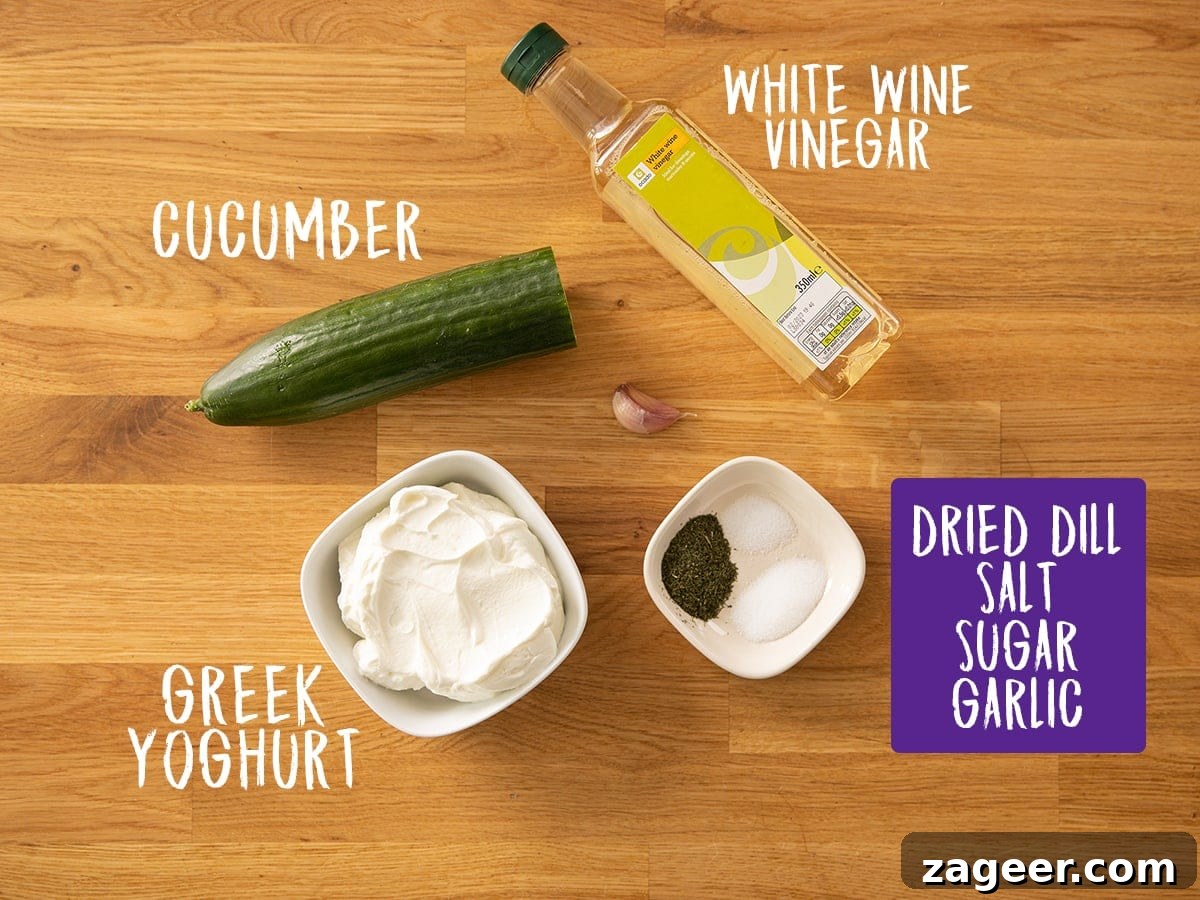
Greek Yogurt: The Creamy Foundation
The star of the show, Greek yogurt, provides Tzatziki with its signature thick, creamy texture and delightful tang. For the best results, always opt for full-fat Greek yogurt. While low-fat or 0% fat options might seem appealing for calorie counting, they simply don’t deliver the same richness, mouthfeel, or depth of flavor that full-fat yogurt offers. The fat content contributes to a smoother, more luxurious dip that holds up better when combined with other ingredients.
Why Greek Yogurt? Greek yogurt is naturally strained, meaning much of its whey (watery liquid) has been removed, resulting in a denser, creamier product compared to regular yogurt. This high protein content and reduced water also help prevent your Tzatziki from becoming watery. If you only have regular plain yogurt on hand, you can strain it yourself using a cheesecloth-lined sieve over a bowl in the refrigerator for a few hours (or overnight) to achieve a similar thickness.
Cucumber: The Refreshing Core
Cucumber is the refreshing backbone of Tzatziki, contributing a cool, crisp element that brightens the entire dip. You’ll need about half a large cucumber or one small one for this recipe. The key to preventing a watery Tzatziki is properly preparing the cucumber.
Deseeding and Squeezing: Cucumbers contain a lot of water, particularly in their seedy core. To avoid a diluted dip, it’s crucial to first slice the cucumber lengthwise and scoop out the seeds with a teaspoon. Then, after grating the cucumber, firmly squeeze out as much liquid as possible using your hands or a clean kitchen towel. This step is non-negotiable for a thick, flavorful Tzatziki that maintains its consistency. English or Persian cucumbers are often preferred for their thinner skins and fewer seeds, but a regular garden cucumber will work perfectly once properly prepped.
Garlic: The Pungent Kick
Garlic is indispensable in Tzatziki, providing that characteristic aromatic and pungent kick. For this recipe, half a small clove of garlic, peeled and minced, is usually sufficient to impart flavor without overpowering the other ingredients. However, garlic potency can vary, and personal preference plays a big role. If you love a bolder garlic flavor, feel free to add a little more. Always use fresh garlic for the best taste; garlic powder simply doesn’t compare in terms of depth and complexity.
Mincing for Flavor: Mincing the garlic very finely ensures its flavor is evenly distributed throughout the dip. You can use a garlic press or finely chop it by hand. If you find raw garlic too intense, you can lightly crush it and let it sit for a few minutes before adding, or even briefly blanch it, though this is less traditional.
Fresh Dill: Aromatic Herb
Dill is the traditional herb for Tzatziki, offering a distinct fresh, slightly anisy, and herbaceous aroma that is synonymous with Greek cooking. Fresh dill, finely chopped, provides the brightest and most authentic flavor. You’ll need about 1 tablespoon of fresh dill or 1 teaspoon of dried dill if fresh is unavailable. While dried dill can be used, it’s important to note that its flavor is more concentrated, so use sparingly and taste as you go.
Other Herb Options: For a delightful twist, consider swapping out dill for finely chopped fresh mint, or even combine both dill and mint for a nuanced flavor profile. Mint offers a cool, vibrant note that pairs wonderfully with the cucumber and yogurt.
White Wine Vinegar: The Balancing Act
A teaspoon of white wine vinegar adds a crucial element of acidity to Tzatziki, brightening the flavors and enhancing the tanginess of the yogurt. It helps to cut through the richness and provides a lovely counterpoint to the garlic. If you don’t have white wine vinegar, fresh lemon juice can be used as a suitable substitute, offering a similar zesty lift.
Salt and Sugar: Seasoning to Perfection
A pinch of salt is essential for seasoning and bringing out all the wonderful flavors in the dip. It also aids in drawing out excess moisture from the cucumber. A small amount, about half a teaspoon, of sugar (caster, granulated, or superfine all work) might seem unusual, but it plays a vital role in balancing the acidity of the yogurt and vinegar and mellowing the raw garlic, contributing to a well-rounded and harmonious taste.
Step-by-Step Guide: How to Make Homemade Tzatziki
Making Tzatziki from scratch is surprisingly simple and incredibly rewarding. Follow these detailed steps to create a dip that tastes like it came straight from a Greek kitchen.
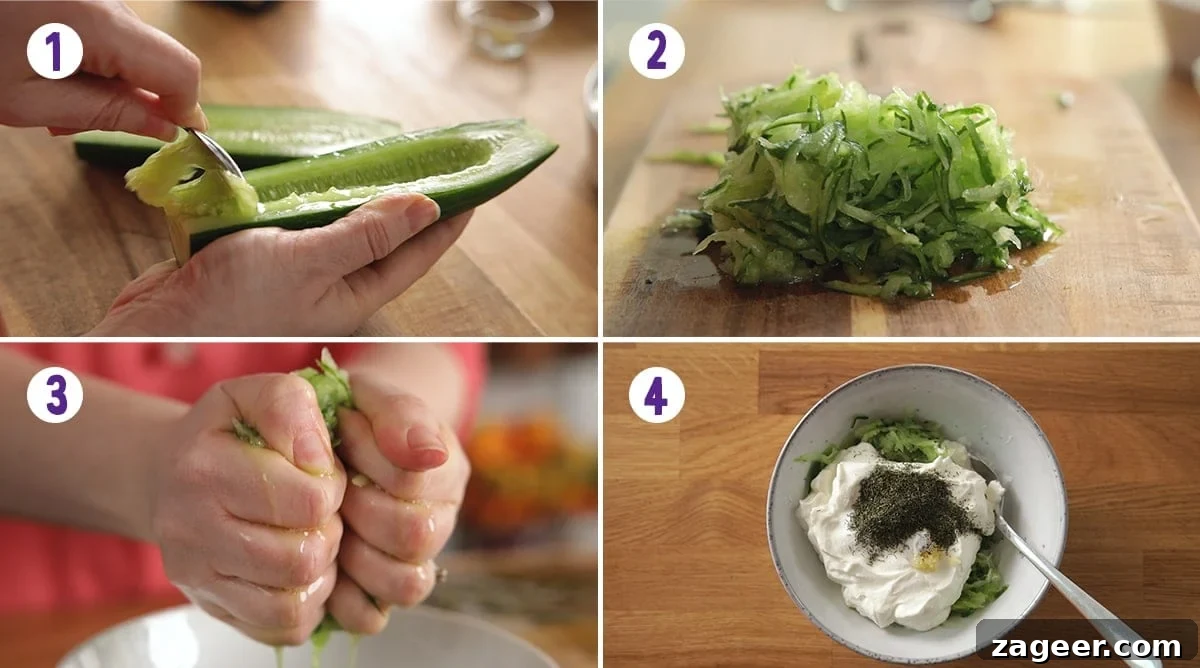
- Prepare the Cucumber: Begin by taking your half large cucumber (or one small cucumber). Slice it lengthwise down the middle. Using a small spoon, carefully scoop out the seeds from both halves. This step is critical as cucumber seeds contain a lot of water and can make your Tzatziki watery if not removed.
- Grate and Drain the Cucumber: Once deseeded, use a box grater or food processor to grate the cucumber into fine shreds. Place the grated cucumber in a clean kitchen towel or several layers of paper towels. Gather the edges of the towel and firmly squeeze out as much liquid as possible over a sink or bowl. You’ll be surprised how much water comes out! The drier your cucumber, the thicker and creamier your Tzatziki will be.
- Combine Ingredients: Transfer the squeezed-out grated cucumber into a medium-sized mixing bowl. Add the 240 ml (1 cup) of full-fat Greek yogurt, 1 teaspoon of white wine vinegar, 1 teaspoon of dried dill (or 1 tablespoon of fresh chopped dill), ½ a small clove of minced garlic, ½ teaspoon of sugar, and a pinch of salt.
- Mix and Chill: Using a spoon or spatula, thoroughly mix all the ingredients together until well combined. Taste and adjust seasoning as needed – you might want a little more salt, garlic, or dill depending on your preference. Once mixed, cover the bowl with plastic wrap and refrigerate for at least 30 minutes. Chilling allows the flavors to meld beautifully and the dip to thicken further.
- Serve: When ready to serve, give the Tzatziki another quick stir. For a traditional touch, you can drizzle a little extra virgin olive oil over the top and garnish with a few fresh sprigs of dill or a slice of cucumber. Enjoy!
Master Your Tzatziki: Tips for Success
Achieving restaurant-quality Tzatziki at home is simple with these essential tips:
- Don’t Skip the Squeeze: This is arguably the most important step! Properly draining the cucumber prevents a watery, bland Tzatziki. Squeeze until you think you can’t get any more liquid out – then squeeze a little more.
- Embrace Full-Fat Greek Yogurt: While healthier options exist, full-fat Greek yogurt delivers the authentic creamy texture and rich flavor that defines classic Tzatziki. It simply cannot be replicated with lighter alternatives.
- Chill for Flavor Development: While you can eat Tzatziki immediately, allowing it to chill in the refrigerator for at least 30 minutes (or even a few hours) allows the flavors of the garlic, dill, and yogurt to meld and deepen, resulting in a more harmonious and delicious dip.
- Adjust Garlic to Your Liking: Raw garlic can be quite potent. Start with ½ a small clove as suggested, then taste and add more if you prefer a stronger garlic presence. Remember, you can always add, but you can’t take away!
- Use Fresh Herbs: Whenever possible, opt for fresh dill or mint. Their vibrant flavors make a noticeable difference compared to dried herbs.
- Taste and Season: Always taste your Tzatziki before serving and adjust salt, sugar, and vinegar to achieve your desired balance. A good Tzatziki is well-seasoned.
Creative Variations & Flavor Boosters
While the classic Tzatziki recipe is perfect as is, it’s also wonderfully adaptable. Don’t be afraid to experiment with these creative variations to suit your taste or what you have on hand:
- Herbal Twists: While dill is traditional, finely chopped fresh mint offers a brighter, cooler flavor that pairs exceptionally well with cucumber. You can use mint instead of dill, or even a combination of both for a multi-layered herbaceousness. Fresh parsley can also add a fresh, green note.
- Nutty Depth with Tahini: For a slightly nutty and richer flavor, stir in a teaspoon or two of tahini (sesame paste). This adds a wonderful creaminess and a subtle earthiness, reminiscent of hummus.
- Spice it Up: Introduce a whisper of warmth with dried spices. Cumin, paprika, or ground coriander can add an interesting complexity. For a gentle kick, a tiny pinch of chili flakes works wonders. Remember to start with a very small amount (¼ teaspoon) and taste before adding more, as spices can quickly overpower the delicate flavors of Tzatziki.
- Tangy Additions: A tablespoon of finely chopped capers can introduce a briny, salty pop that brightens the dip. Similarly, finely chopped pitted Kalamata olives can add a delicious Mediterranean tang and a beautiful color contrast.
- Creamy Enrichment: For an even richer texture, some recipes call for a small amount of crumbled feta cheese. Stirring this in at the end adds a salty, tangy depth that many will find irresistible.
- Lemon Zest Brightness: In addition to or in place of vinegar, a teaspoon of fresh lemon zest can provide an extra layer of bright, citrusy aroma and flavor.
Versatile Serving Suggestions: More Than Just a Dip
Tzatziki’s magic lies not just in its flavor, but in its incredible versatility. It’s a condiment that can elevate almost any meal, transforming everyday dishes into something special. Here are some of our favorite ways to enjoy this Greek classic:
What to Serve Your Tzatziki With: Endless Possibilities
- Grilled Meats: This is a classic pairing! Drizzle generously over Greek Lamb Souvlaki Kebabs, Crispy Pork Gyros, Chicken Souvlaki, or any grilled chicken, beef, or lamb. The cool, creamy dip perfectly complements the smoky, savory flavors of the meat.
- Pita Bread and Flatbreads: A simple, satisfying way to enjoy Tzatziki. Tear up warm pita bread, flatbread, or even crusty artisan bread and scoop up generous amounts of the dip.
- Mezze Platter Essential: No Greek mezze (appetizer) platter is complete without Tzatziki. Serve it alongside fresh vegetable sticks (carrots, celery, cucumber, bell peppers), olives, hummus, and feta for a vibrant spread.
- Delicious with Seafood: Tzatziki pairs beautifully with grilled fish, shrimp, or salmon. Its refreshing qualities cut through the richness of seafood.
- Healthy Bowls: Add a big spoonful to chicken nourish bowls, fish taco bowls, or any grain bowl for a creamy, tangy dressing that ties all the flavors together.
- Sandwiches and Wraps: Use Tzatziki as a flavorful spread in sandwiches, wraps, or homemade gyros with various fillings and fresh vegetables. It adds moisture and a burst of flavor.
- Crisps and Crackers: For a simple snack, serve Tzatziki with a big bag of your favorite potato crisps or an assortment of crackers.
- Roasted Potatoes: Offer it as a creamy side for Greek Potato Hash or Lemon Roast Potatoes, adding a fresh contrast to the savory starch.
- Crispy Lamb Salad: A fantastic dressing or accompaniment to a vibrant lamb salad, balancing the richness of the lamb with its cool freshness.
It’s such a great dip to have on standby in the fridge, ready to transform any meal or snack.
Planning Ahead: Storage and Shelf Life
Tzatziki is one of those rare dishes where preparing it in advance can actually enhance its flavor. Knowing how to properly store it ensures you always have a delicious batch ready.
Can I Make Tzatziki Ahead of Time?
Absolutely, and we highly recommend it! The flavors in Tzatziki actually develop further and meld together beautifully if given a few hours to chill in the refrigerator before serving. This allows the garlic to mellow slightly, the dill to infuse the yogurt, and all the ingredients to become more harmonious. If you’re planning a party or a busy week, making Tzatziki a few hours or even a day in advance is a fantastic idea.
To store it ahead, simply cover the bowl tightly with plastic wrap to prevent it from absorbing any refrigerator odors. It should keep well for 2-3 days in the refrigerator. Before serving, give it a good stir, as some of the remaining liquid from the cucumber may separate and rise to the top over time. This is completely normal and a quick stir will restore its creamy consistency.
Can I Freeze Tzatziki?
Unfortunately, freezing Tzatziki is not recommended. The primary reason is the cucumber content. Cucumbers have a very high water content, and when frozen, this water turns into ice crystals. Upon defrosting, these ice crystals rupture the cell walls of the cucumber, causing it to become very mushy and watery. This breakdown will significantly alter the texture of the Tzatziki, making it thin, grainy, and unappealing. The yogurt component may also separate or split, leading to an undesirable consistency.
For the best experience, always enjoy Tzatziki fresh or within 2-3 days of making it from the refrigerator.

Recipe Card: Homemade Tzatziki
Homemade Tzatziki
By Nicky Corbishley
A refreshing Greek meze or dip, this Tzatziki is easy to make and goes great with grilled meats and pita bread. A must for any barbecue.
- Prep Time: 10 mins
- Total Time: 10 mins
- Servings: 8
- Course: Side Dish
- Cuisine: Greek
Ingredients
- ½ a large cucumber (or 1 small cucumber)
- 240 ml (1 cup) full-fat Greek yogurt
- 1 tsp white wine vinegar
- 1 tsp dried dill (or 1 tbsp fresh dill, chopped)
- ½ a small clove of garlic, peeled and minced
- ½ tsp sugar (caster/granulated/superfine)
- 1 pinch of salt
Instructions
- Slice the cucumber in half lengthways, and scoop out the seeds with a teaspoon.
- Grate the cucumber, then squeeze all of the liquid out using your hands (or a clean kitchen towel). This step is crucial for thick Tzatziki.
- Place the squeezed cucumber in a bowl and add the Greek yogurt, white wine vinegar, dill, minced garlic, sugar, and salt. Mix all ingredients together thoroughly until well combined.
- Cover the bowl and refrigerate for at least 30 minutes to allow the flavors to meld and the dip to thicken.
- Optional: Serve topped with a drizzle of extra virgin olive oil and a few fresh sprigs of dill.
Nutrition Information (Per Serving)
Calories: 19kcal | Carbohydrates: 2g | Protein: 3g | Fat: 1g | Saturated Fat: 1g | Cholesterol: 1mg | Sodium: 15mg | Fiber: 1g | Sugar: 1g
Nutrition information is automatically calculated, so should only be used as an approximation.
Frequently Asked Questions (FAQ) about Tzatziki
Here are answers to some common questions about making and enjoying Tzatziki:
What kind of cucumber should I use for Tzatziki?
English (hothouse) or Persian cucumbers are often preferred as they have thinner skins and fewer seeds, making them less bitter and requiring less deseeding. However, a regular garden cucumber works perfectly fine; just ensure you diligently deseed and squeeze out all excess moisture for the best texture.
Do I need to peel the cucumber?
For English or Persian cucumbers, peeling is optional as their skins are thin and mild. For thicker-skinned cucumbers, like regular garden varieties, it’s generally recommended to peel them to avoid a tougher texture in your dip.
Can I use regular plain yogurt instead of Greek yogurt?
Yes, but you will need to strain regular plain yogurt first to achieve the desired thickness. Line a sieve with cheesecloth or a coffee filter and place it over a bowl. Pour the yogurt into the sieve and let it drain in the refrigerator for at least 4-6 hours, or preferably overnight, until it reaches a thick, Greek yogurt-like consistency.
How long does homemade Tzatziki last?
When stored in an airtight container in the refrigerator, homemade Tzatziki will last for 2-3 days. Its freshness and quality are best within the first day or two.
Can I make Tzatziki vegan?
Yes! To make a delicious vegan Tzatziki, simply substitute traditional Greek yogurt with a thick, plain, unsweetened plant-based yogurt. Coconut yogurt or almond-based yogurt are popular choices, ensuring they are strained for optimal thickness, similar to how you’d prepare dairy yogurt.
What if my Tzatziki is too watery?
The most common reason for watery Tzatziki is not adequately squeezing the liquid out of the grated cucumber. If you find your finished dip is too thin, you can try to gently strain it through a fine-mesh sieve lined with cheesecloth in the refrigerator for an hour or two. Alternatively, you can mix in a spoonful or two of additional thick Greek yogurt to help absorb some of the excess moisture and improve the consistency.
Conclusion: Your New Favorite Greek Dip
Tzatziki is truly a magical creation – a simple blend of fresh ingredients that comes together to form a dip that is both wholesome and utterly delicious. Its refreshing taste, creamy texture, and versatile nature make it a perfect addition to countless meals and occasions. Whether you’re grilling, hosting a dinner party, or simply looking for a healthy and flavorful snack, this homemade Tzatziki recipe is guaranteed to impress.
So, gather your ingredients, follow these easy steps, and prepare to embark on a delightful culinary journey to Greece. You’ll quickly discover why this vibrant dip is a cherished staple, and why it will become one of your most requested recipes. Enjoy the taste of authentic Greek hospitality, right in your own kitchen!
Some of the links in this post are affiliate links – which means if you buy the product I get a small commission (at no extra cost to you). If you do buy, then thank you! That’s what helps us to keep Kitchen Sanctuary running. The nutritional information provided is approximate and can vary depending on several factors. For more information please see our Terms & Conditions.