
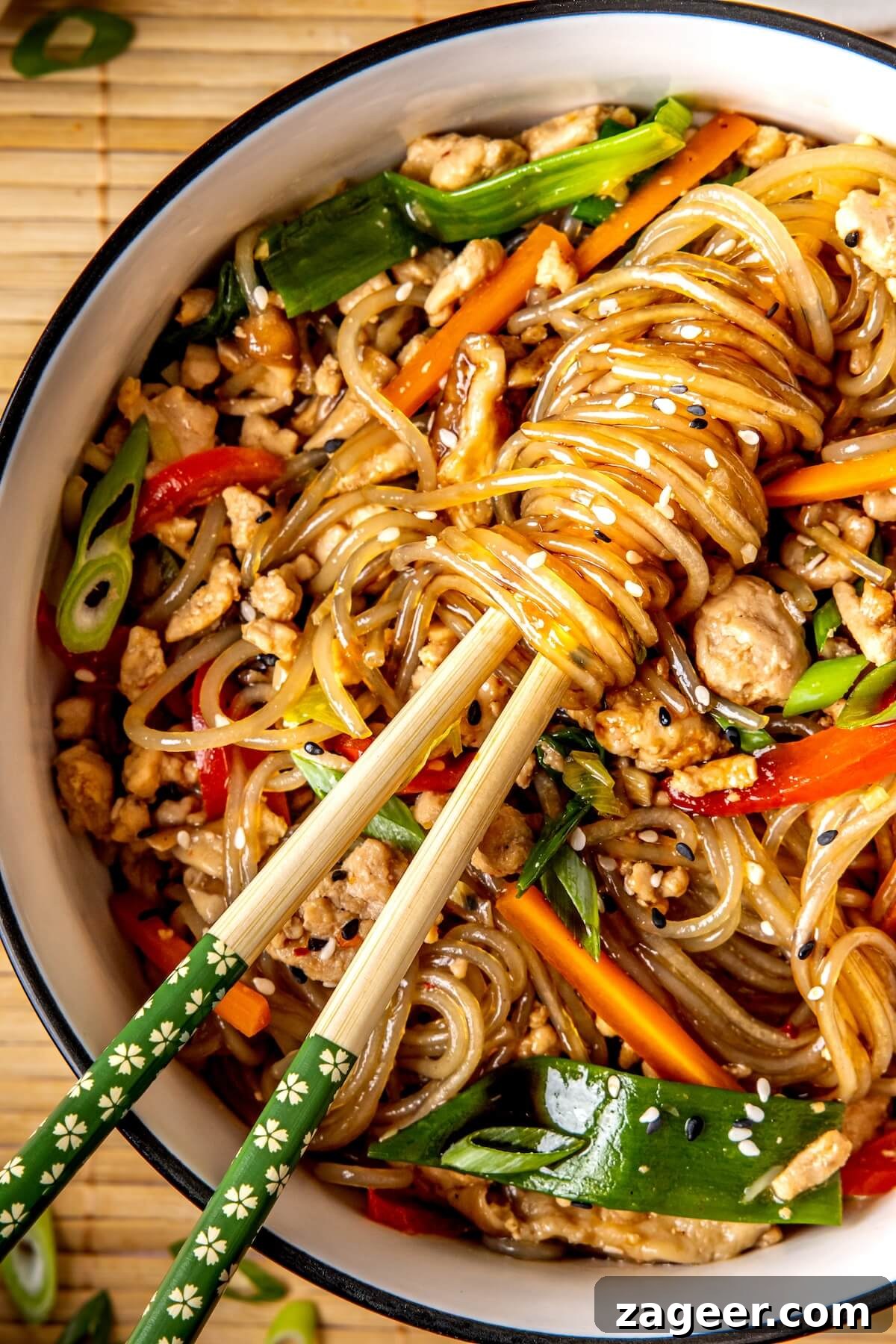
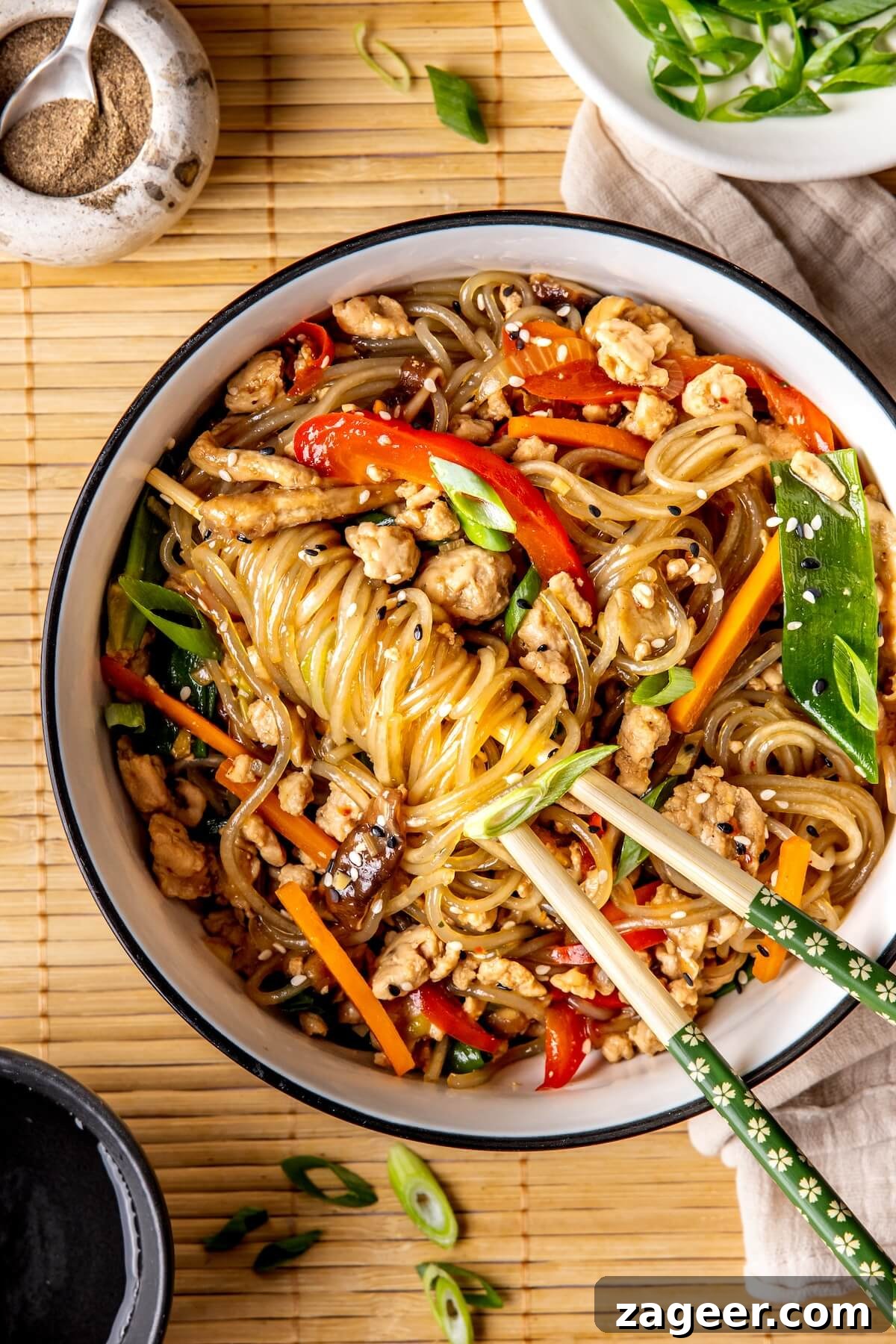
Korean glass noodles, often hailed as Japchae, are a culinary revelation! Made from nutrient-rich sweet potato starch, these uniquely chewy and delightfully transparent noodles offer a fantastic gluten-free alternative to traditional grain-based pastas or even common rice noodles. If you haven’t encountered them yet, prepare for a new favorite that will transform your stir-fry nights.
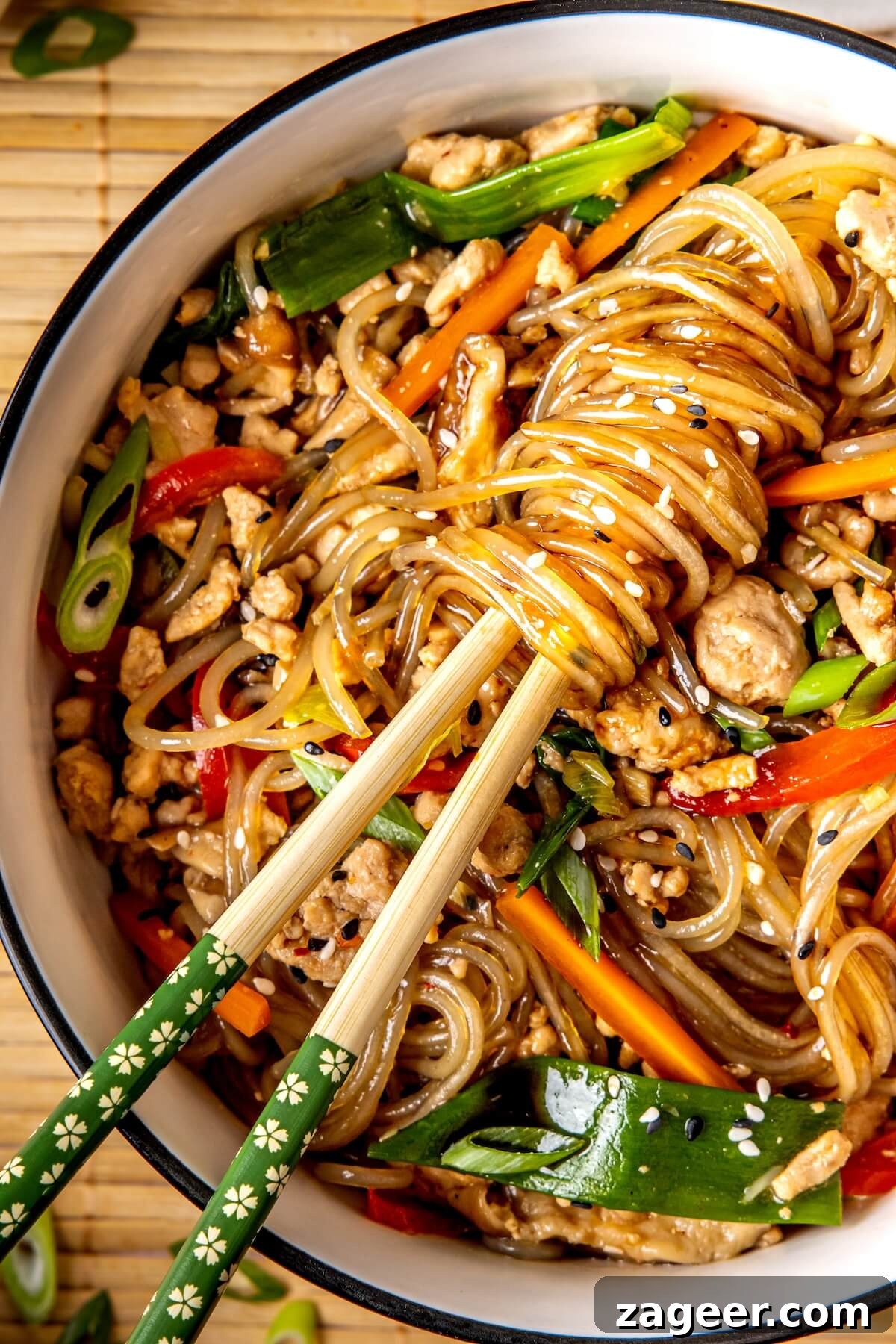
My recent discovery of these versatile noodles in a local grocery store immediately sparked a quest to create a delicious recipe. When I first shared this Korean Glass Noodle Stir Fry recipe on my Instagram, the excitement and curiosity from so many of you were truly infectious! It’s clear that these noodles are capturing hearts and palates, and for good reason.
One of the most remarkable qualities of glass noodles is their exceptional ability to maintain their texture and shape. Unlike many rice noodles that can become mushy or break down when stored overnight, glass noodles remain wonderfully al dente, making this dish taste just as incredible, if not better, as leftovers. This makes it an ideal meal prep option for busy weeks, ensuring you have a delicious and healthy lunch or dinner ready to go.
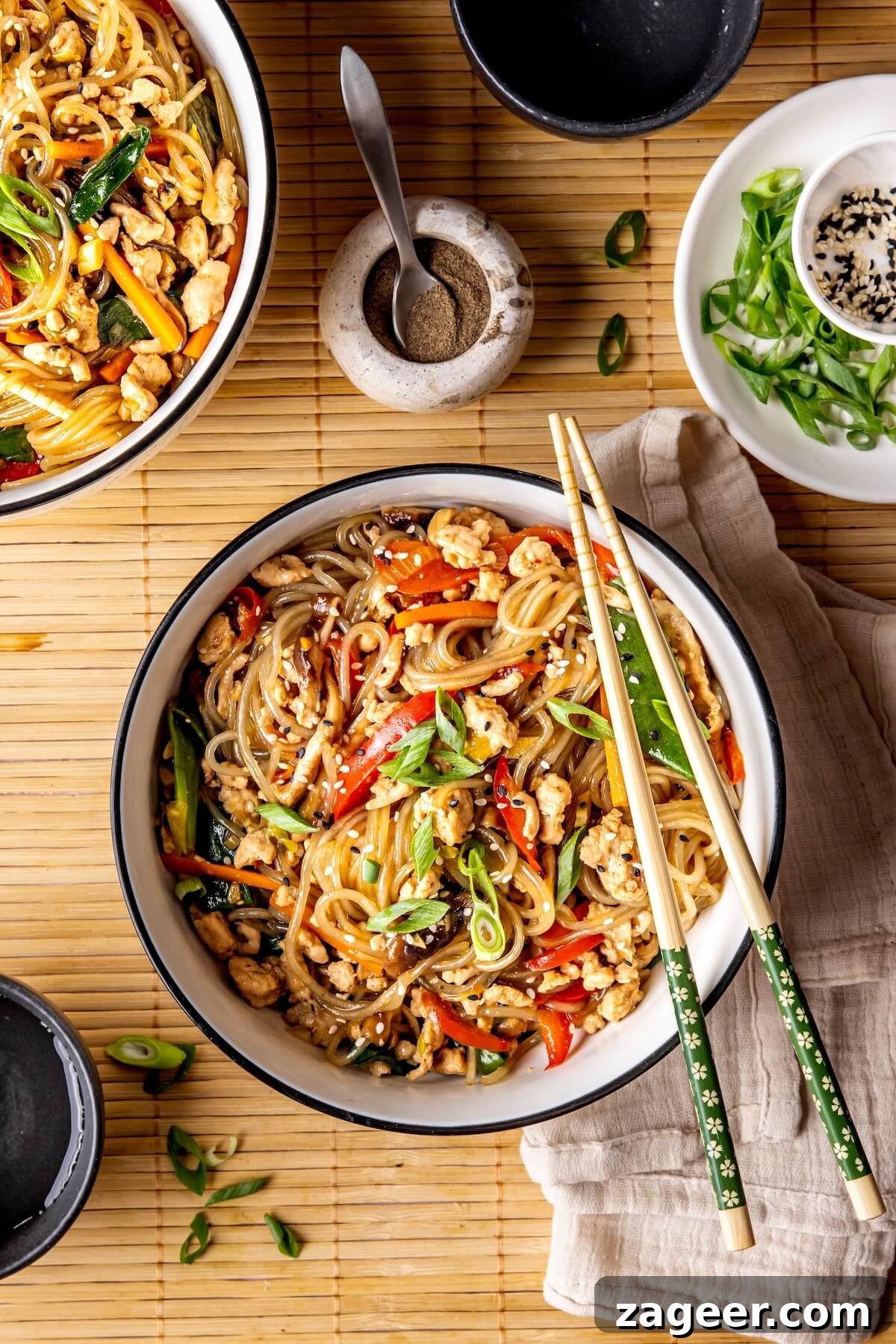
The inspiration for this particular noodle stir fry stemmed from a memorable date night with my husband, Kyle, at Oseyo, a charming Korean restaurant in Austin. We cherish our “date night Fridays,” often exploring new culinary spots or revisiting beloved favorites. That evening, we savored Japchae for the very first time – a delightful dish crafted from these same clear sweet potato noodles, combined with an assortment of fresh vegetables.
As someone who actively seeks out gluten-free and dairy-free options, a dish like Japchae on the menu is an immediate draw. The flavors and textures of Oseyo’s Japchae left such a lasting impression that when I spotted the glass noodles at the store, I knew they had to come home with me. This personal experience fueled my desire to recreate and adapt the dish, bringing those exquisite flavors into my own kitchen.
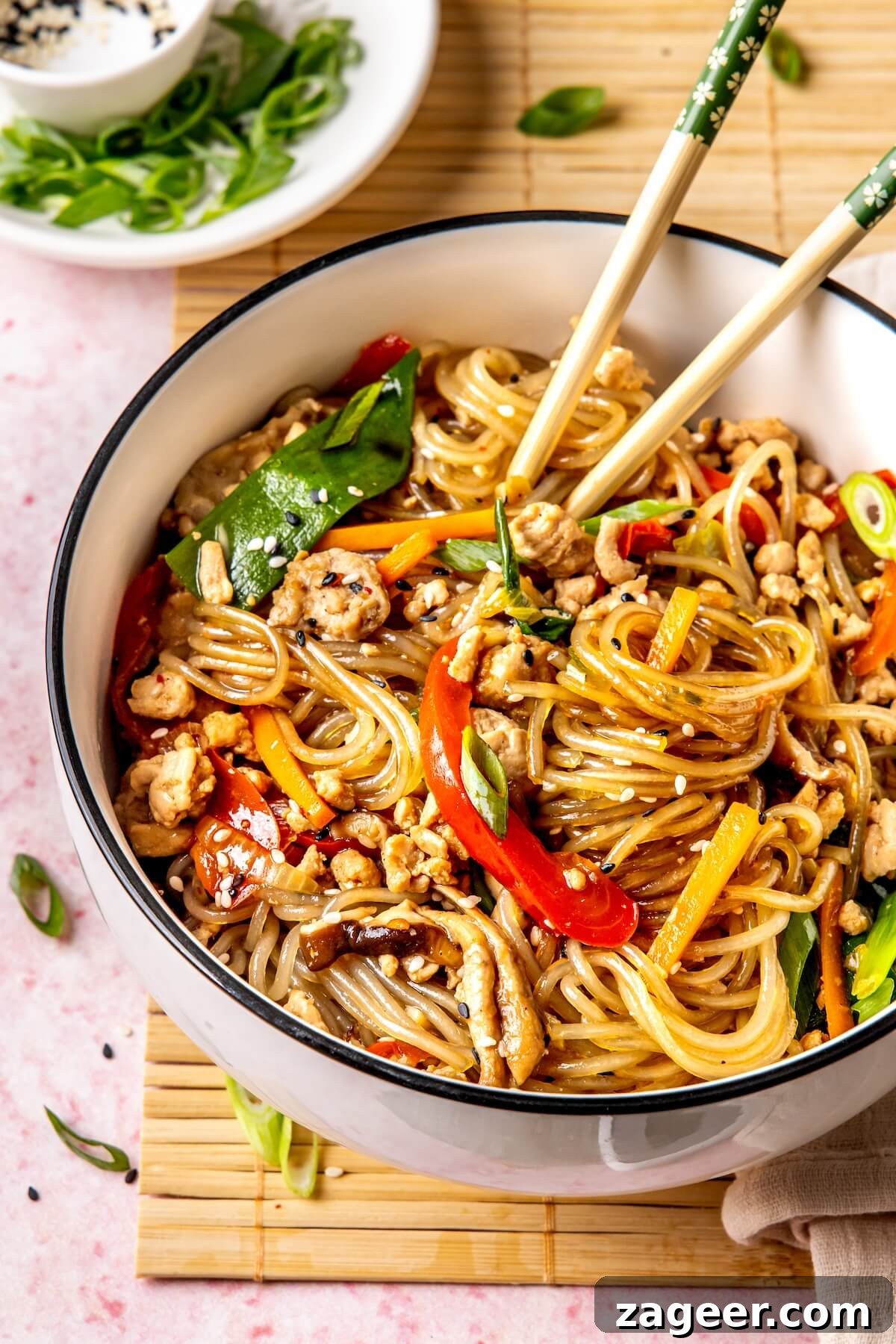
My unique twist on traditional Japchae incorporates lean ground chicken as a robust protein source, alongside a vibrant medley of colorful vegetables. Everything is then lovingly coated in a perfectly balanced sweet and savory sauce that truly ties the dish together. If you’re seeking a delicious and healthy excuse to enjoy more stir-fries, this Korean Glass Noodle Stir Fry is an absolute must-try. I am confident that you and your family will fall in love with its incredible flavor and satisfying texture.
This recipe isn’t just a meal; it’s an experience. It’s incredibly adaptable, allowing you to use whatever vegetables you have on hand, making it a sustainable and economical choice. The cooking process is designed to be straightforward and quick, perfect for those busy weeknights when you crave something wholesome and flavorful without spending hours in the kitchen. Whether you’re a seasoned chef or a kitchen novice, you’ll find this Japchae recipe rewarding and utterly delicious.
Why You’ll Love This Korean Glass Noodle Stir Fry
- **Gluten-Free Delight:** Sweet potato glass noodles are naturally gluten-free, making this an excellent option for those with sensitivities or preferences.
- **Quick & Easy:** Designed for speed, this stir-fry comes together in under 40 minutes, perfect for busy weeknights.
- **Flavorful & Balanced:** The homemade sauce strikes a perfect harmony between sweet, savory, and a hint of spice.
- **Packed with Nutrients:** Loaded with colorful vegetables and lean protein, it’s a wholesome meal that doesn’t compromise on taste.
- **Amazing Leftovers:** The glass noodles maintain their wonderful texture, making this dish fantastic for meal prep.
- **Customizable:** Easily swap proteins or vegetables to suit your taste and what you have in your pantry.
Key Ingredients for Korean Glass Noodle Stir Fry
Beyond the star ingredient – the Korean glass noodles – you’ll find that most of the other components for this delicious stir fry are likely already staples in your refrigerator and pantry. Let’s delve into what makes each ingredient essential:
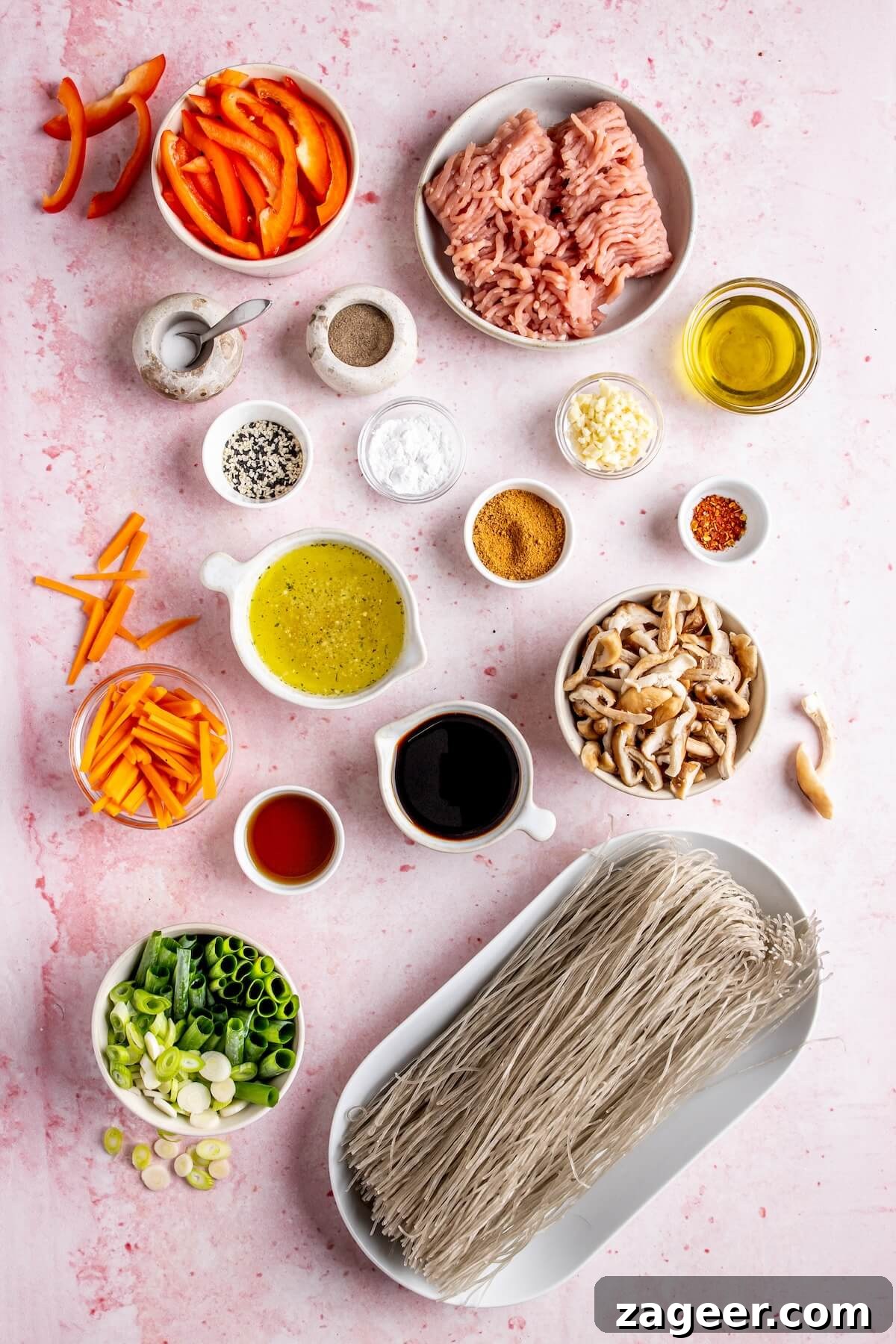
- Korean Glass Noodles (Dangmyeon): As the hero of this dish, these sweet potato starch noodles are indispensable. They boast a wonderfully elastic and chewy texture that sets them apart. I typically find them in the international aisle of larger grocery stores, but they are also widely available at Asian markets and online retailers. If you absolutely can’t source them and are eager to make this dish, rice noodles can be a substitute, though the texture will be noticeably different – still delicious, but not quite the same unique glass noodle experience.
- Ground Chicken: For a stir-fry, efficiency is key, and using ground chicken makes this an incredibly quick and easy protein-packed meal. Its fine texture allows it to cook rapidly and absorb the sauce beautifully. While I’ve used ground chicken here, you can certainly experiment with other ground meats like turkey, pork, or even beef. For a plant-based version, simply omit the meat entirely and increase the vegetable quantities or add a firm tofu.
Explore more protein-rich recipes!
- Assorted Vegetables: My go-to combination features the delightful colors and textures of shiitake mushrooms, bell peppers (any color works, but a mix adds visual appeal), crisp carrots, and fresh green onions. However, this is where you can truly personalize your stir-fry! Feel free to incorporate your favorite vegetables. Snap peas, edamame, broccoli florets, spinach, or even thinly sliced zucchini would be excellent additions. I specifically chose shiitake mushrooms for their richer, meatier flavor profile compared to more common button mushrooms, adding depth to the dish.
- Broth (Chicken Bone Broth): The foundation of our flavorful sauce is chicken bone broth. Beyond its delicious taste, bone broth is a powerhouse of nutrients, known for its collagen content and benefits for gut health. While it’s a warming staple in colder months for soups and stews, I love finding ways to integrate its nourishing qualities into lighter dishes, dressings, and sauces during spring and summer. If bone broth isn’t available, regular chicken broth or vegetable stock will work perfectly well.
- Tamari: This gluten-free soy sauce alternative is crucial for delivering that authentic umami and Asian-inspired depth to the sauce. Its rich, savory notes are essential. If you don’t require a gluten-free option, traditional soy sauce can be used interchangeably. Another popular gluten-free alternative is coconut aminos; however, be mindful that coconut aminos tend to be sweeter. If you opt for them, you might want to slightly reduce or even omit the coconut sugar from the sauce recipe to balance the sweetness.
- Arrowroot Starch: This acts as our thickening agent, ensuring the sauce beautifully coats the noodles and vegetables without being watery. Arrowroot starch is a fantastic gluten-free alternative to flour and is commonly used in various dressings and sauces. If you don’t have arrowroot starch on hand, cornstarch or tapioca starch are excellent substitutes that will yield similar thickening results.
- Coconut Sugar: Provides a subtle sweetness that balances the savory and tangy notes of the sauce. Brown sugar or honey can also be used as alternatives.
- Sesame Oil & Sesame Seeds: Essential for that distinct, nutty Asian aroma and flavor. Toasted sesame oil adds a richer, deeper taste.
- Crushed Red Pepper Flakes: For a touch of heat and a gentle kick. Adjust the amount to your spice preference.
- Fresh Garlic & Green Onions: These aromatics are foundational to most Asian stir-fries, providing a fresh, pungent base that elevates all other flavors.
How to Make This Delicious Korean Glass Noodle Stir Fry
Creating this flavorful Korean Glass Noodle Stir Fry (Japchae) is simpler than you might think. Follow these straightforward steps to achieve a perfectly balanced and utterly delicious meal.
1. Prepare the Savory Sauce
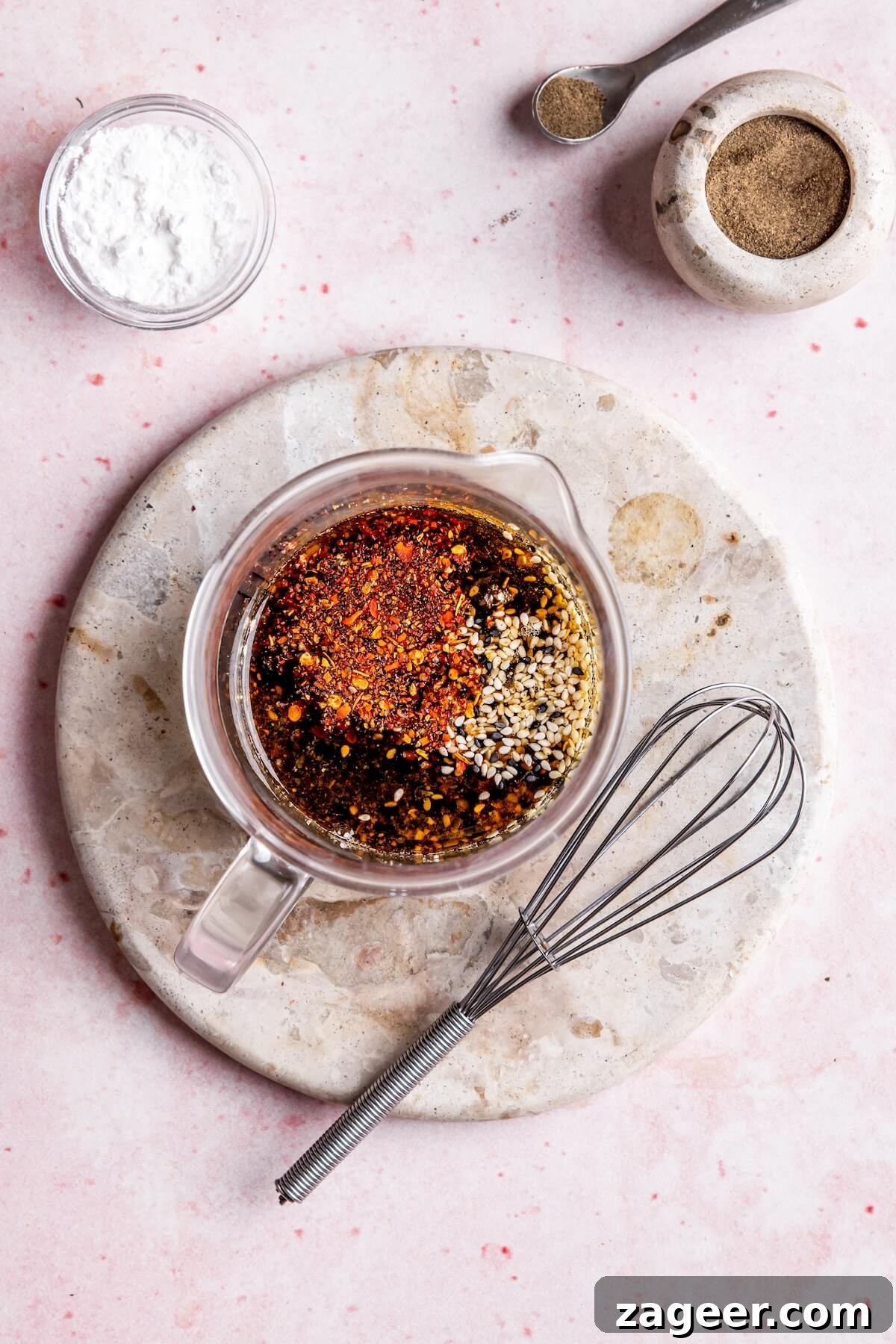
The sauce is the heart of this stir-fry. In a small bowl or a measuring cup, combine all the sauce ingredients: the chicken bone broth, ¼ cup of tamari, coconut sugar, sesame oil, sesame seeds, crushed red pepper flakes, and black pepper. Whisk everything thoroughly until the arrowroot starch is completely dissolved and no lumps remain. This ensures a smooth, glossy sauce. Set this vibrant mixture aside while you prepare the other components of your dish.
2. Cook the Glass Noodles
Next, focus on the glass noodles. Carefully follow the cooking instructions provided on your specific package of Korean glass noodles. Typically, they require boiling for a short period – often around 6 minutes for the brand I use. Once cooked to a perfectly chewy tenderness, drain the noodles and rinse them under cold water. This step is crucial as it stops the cooking process and prevents the noodles from sticking together, ensuring that desired distinct texture. You might also want to snip them with kitchen shears if they are very long, to make them easier to eat.
Pin this recipe for later!
Pin It
3. Start the Stir Fry: Mushrooms First
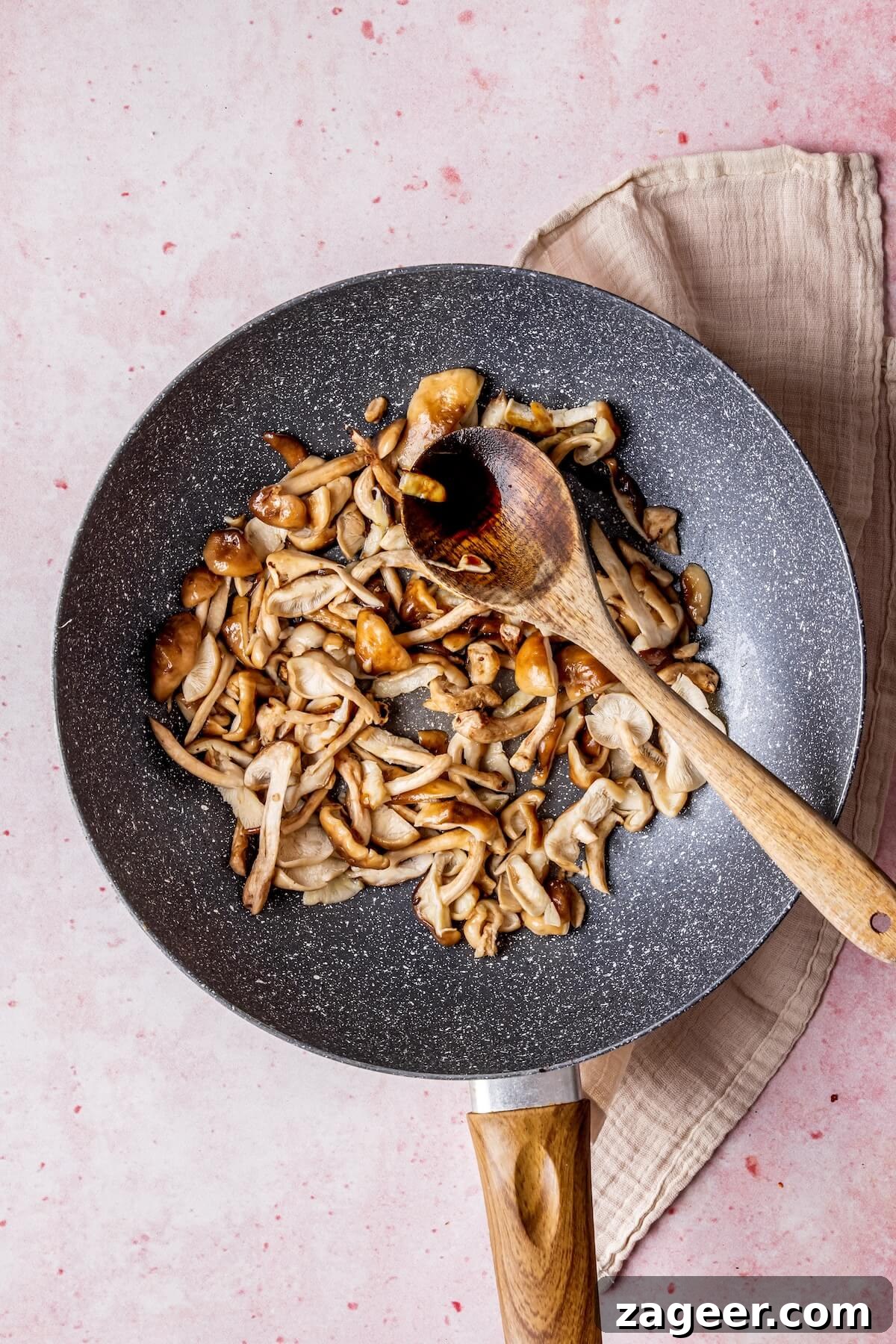
Heat 2 tablespoons of avocado oil in a large skillet or wok over medium-high heat. Once shimmering, add the sliced shiitake mushrooms and cook for about 2 minutes until they begin to soften. Then, add the remaining 2 tablespoons of tamari directly to the mushrooms, tossing them to coat. Continue cooking for another 2 minutes. The tamari helps marinate the mushrooms as they cook, infusing them with savory flavor. Once done, remove the mushrooms from the pan and set them aside. This step ensures the mushrooms get a nice sear without overcooking with the other ingredients.
4. Cook the Ground Chicken and Vegetables
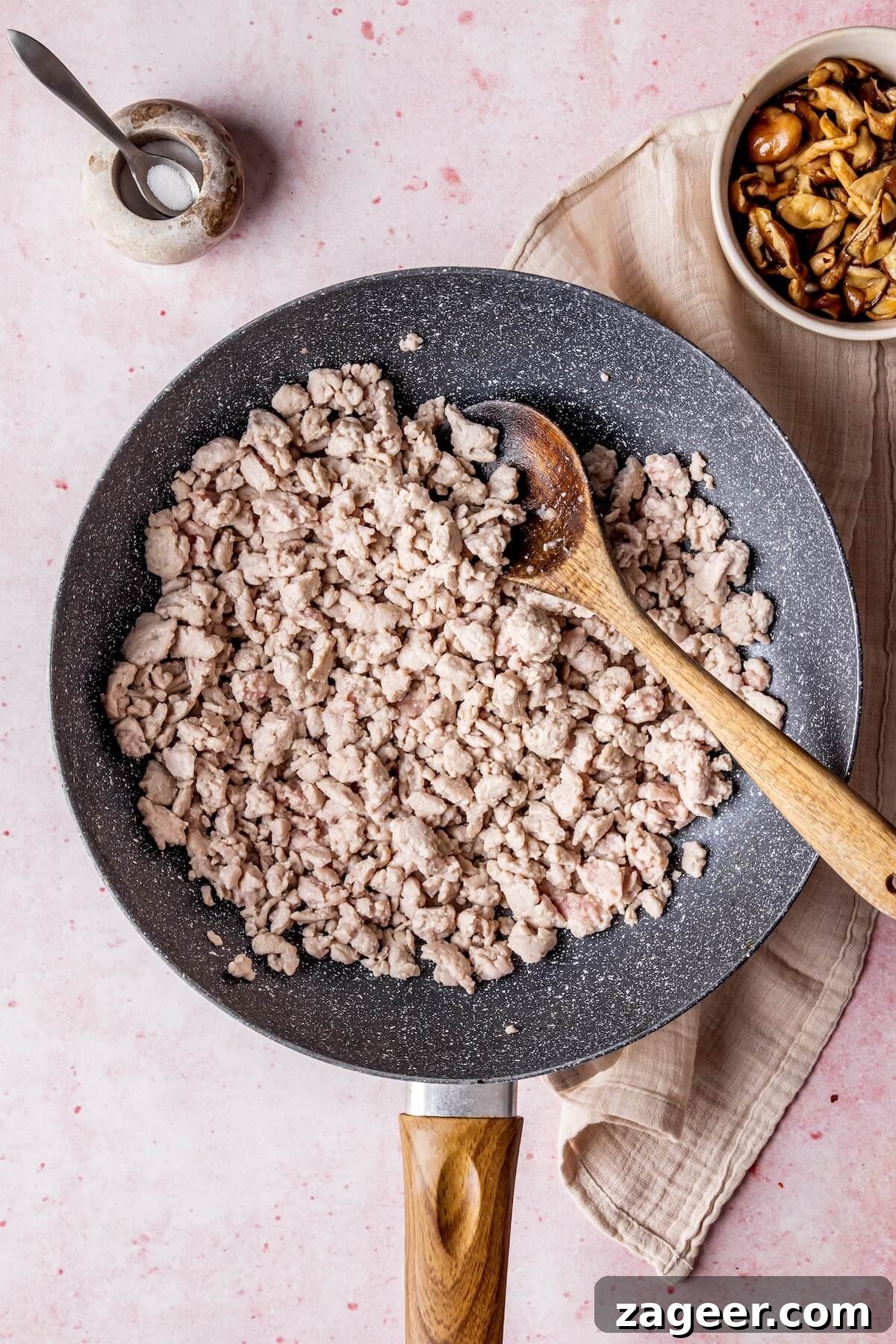
Add another tablespoon of avocado oil to the same large pan. Introduce the ground chicken and cook, breaking it apart with a wooden spoon or spatula, until it is no longer pink and is fully cooked through. Season the chicken generously with salt as it cooks to enhance its flavor.
Once the chicken is browned, add the rest of your prepared vegetables: the thinly sliced carrot batons, colorful bell pepper strips, and the sliced white parts of the green onions (reserve the green parts for garnish). Sauté for approximately 3 minutes, allowing them to soften slightly while still retaining a pleasant crispness. Finally, add the minced garlic and continue cooking for another 2 minutes, until the garlic becomes fragrant and its aromatic essence fills the air.
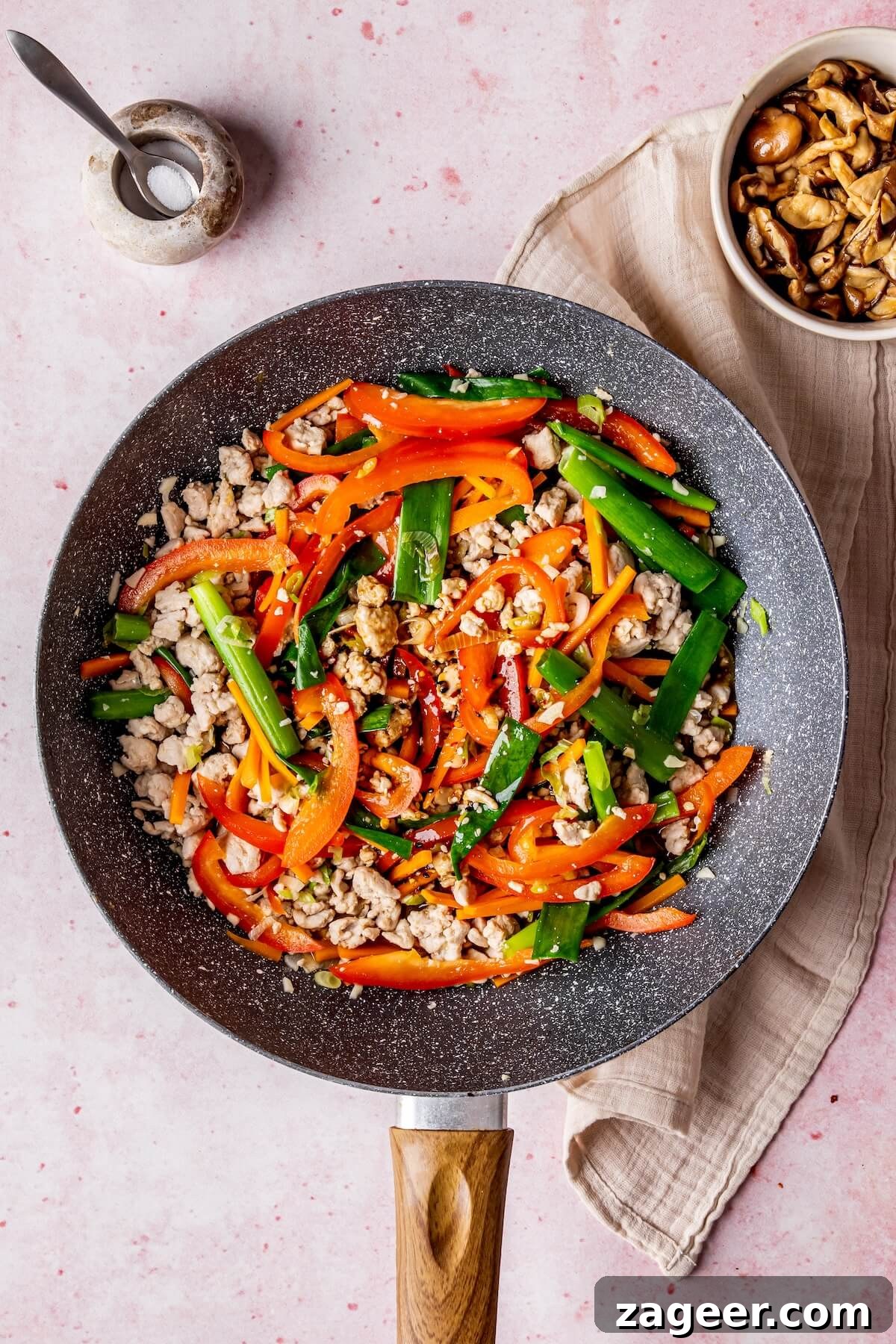
5. Combine and Thicken the Sauce
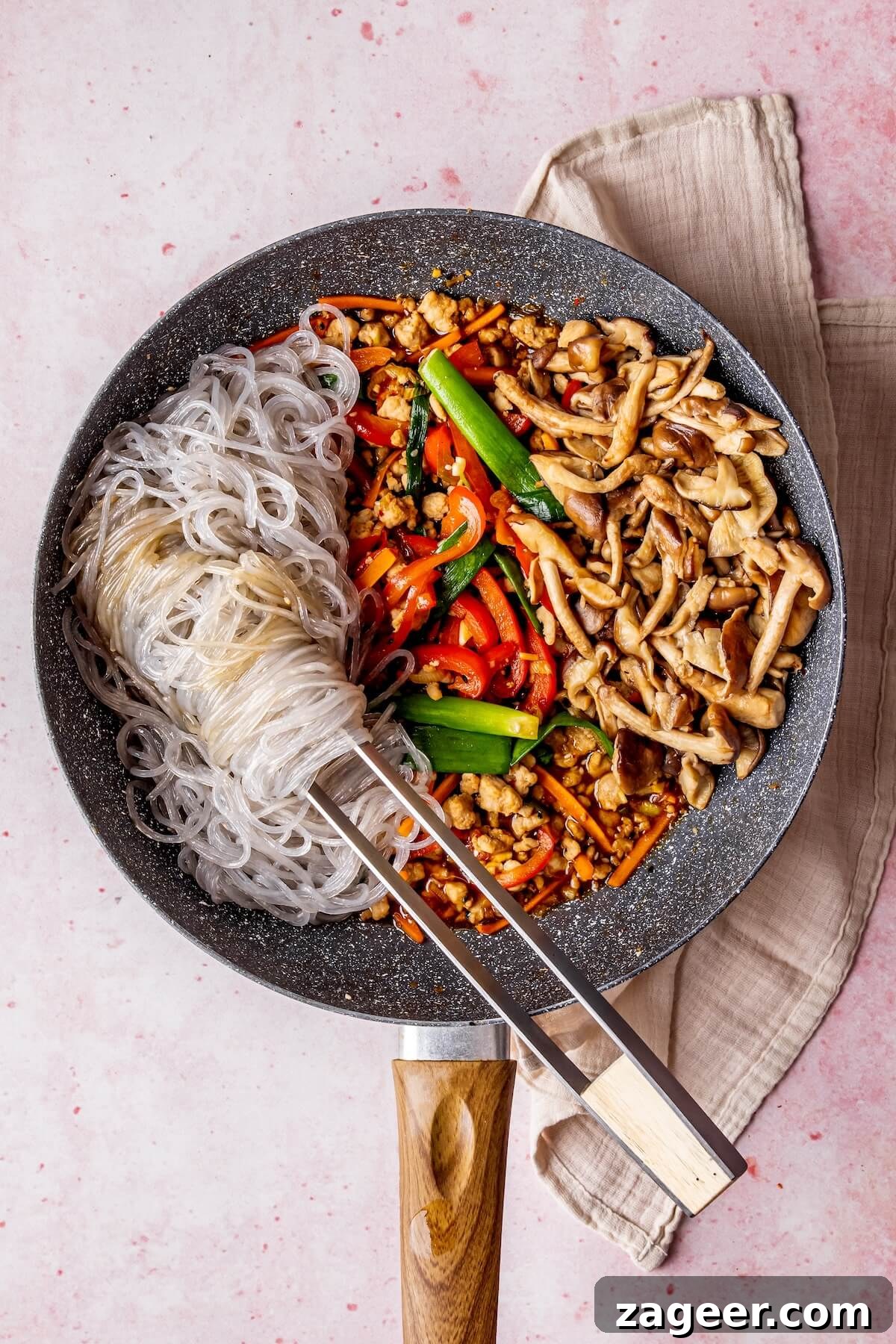
Pour the pre-mixed sauce into the skillet with the cooked chicken and vegetables. Stir well, making sure to scrape up any flavorful browned bits from the bottom of the pan – this process is called deglazing and adds incredible depth to your sauce. Bring the mixture to a gentle simmer and cook for 3-5 minutes, allowing the arrowroot starch to work its magic and thicken the sauce to a rich, glossy consistency that clings beautifully to the ingredients.
6. Finish with Noodles and Mushrooms
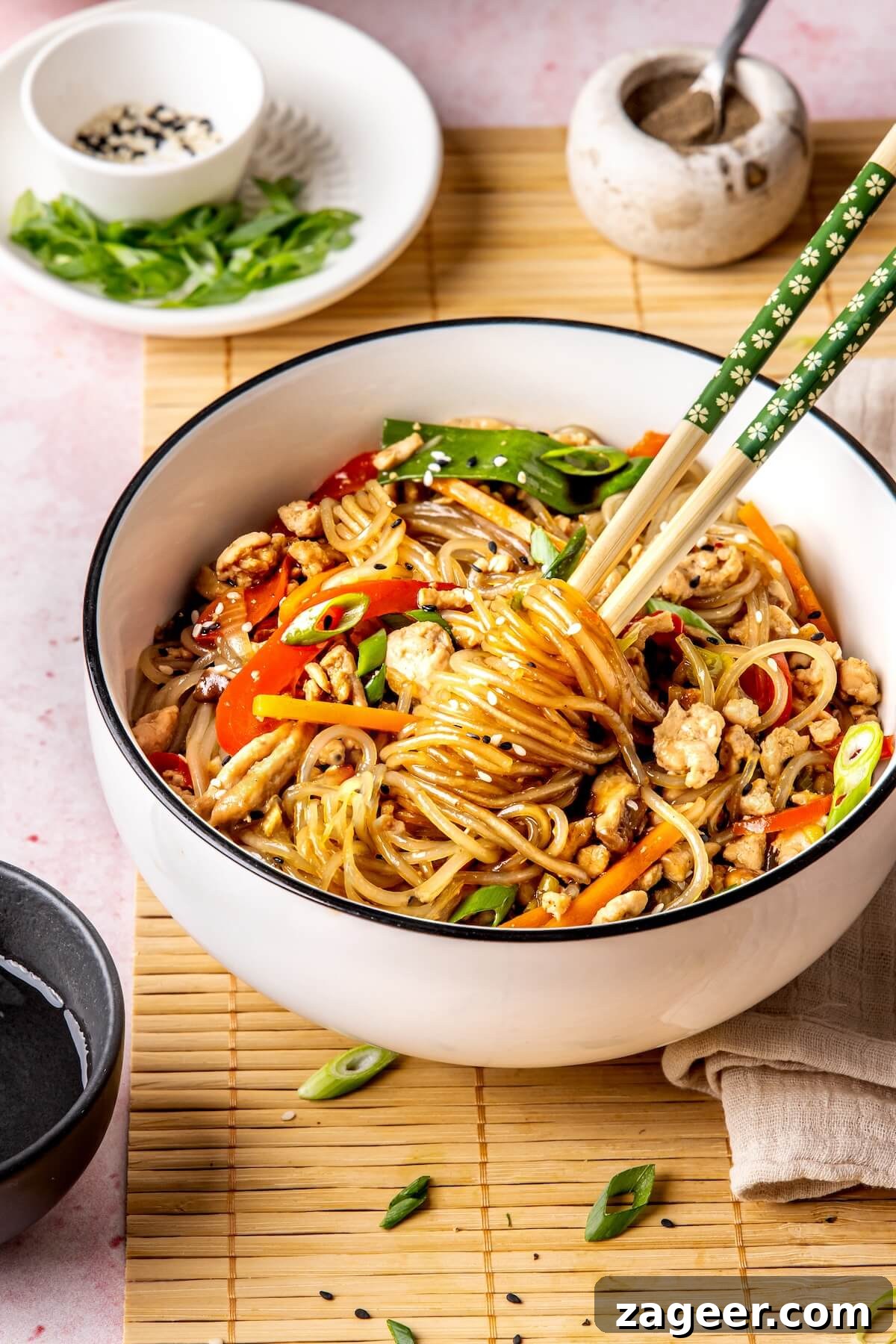
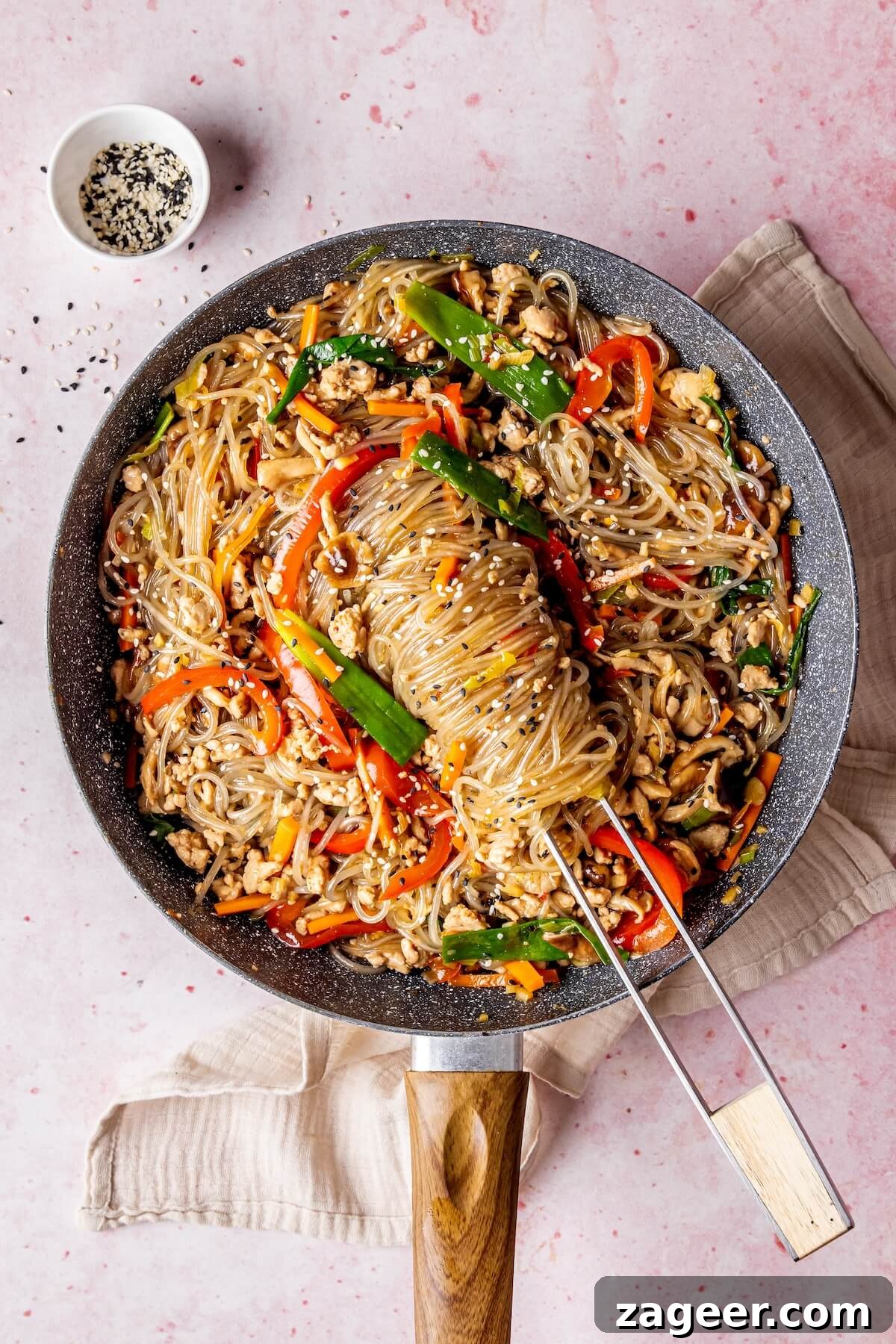
Finally, return your cooked glass noodles and the sautéed shiitake mushrooms to the pan. Using tongs or chopsticks, thoroughly toss and stir the entire mixture until the noodles are perfectly coated with the savory sauce and all ingredients are evenly distributed. Ensure everything is well combined and heated through.
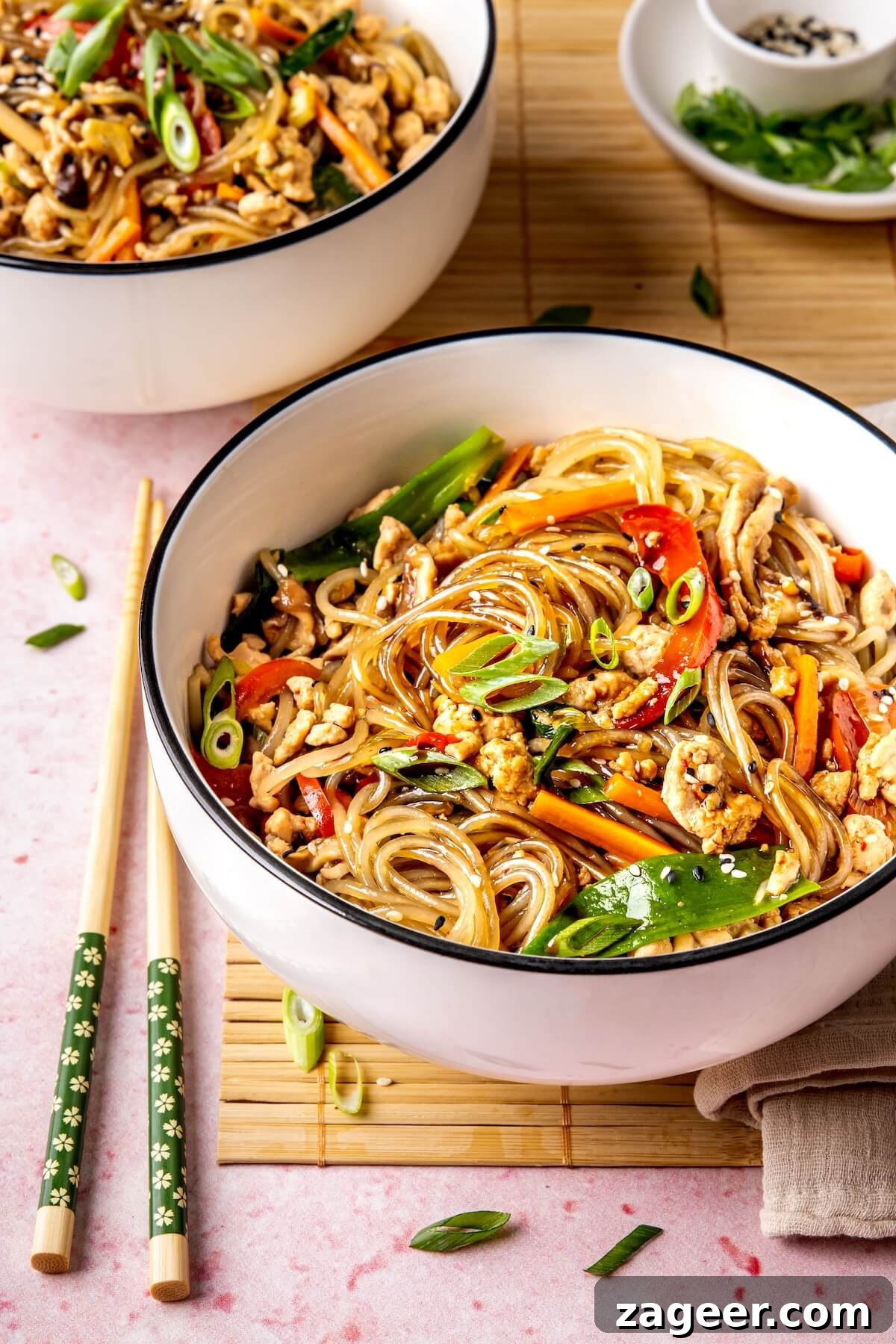
Serve this vibrant Korean Glass Noodle Stir Fry immediately in individual bowls. Garnish generously with additional sesame seeds and the chopped green parts of the scallions for a fresh burst of color and flavor. Enjoy every delicious, chewy bite!
Tips for Success
- **Prep Ahead:** Chop all your vegetables and make the sauce in advance to make the cooking process even quicker.
- **Don’t Overcook Noodles:** Glass noodles can become soft if overcooked. Stick to package instructions and rinse immediately with cold water.
- **High Heat for Stir Fry:** Ensure your skillet or wok is hot enough for a proper stir-fry, which helps vegetables cook quickly while retaining crunch.
- **Customize Vegetables:** Feel free to swap or add any vegetables you love. Broccoli, spinach, snow peas, or cabbage are great options.
- **Adjust Spice:** Increase or decrease red pepper flakes according to your heat preference.
- **Slicing Veggies:** Aim for uniform, thin slices for vegetables so they cook evenly and quickly.
Customization Ideas
- **Protein Power:** While ground chicken is fantastic, feel free to substitute with ground pork, beef, turkey, or even thinly sliced steak or shrimp. For a vegetarian option, use firm or extra-firm tofu, pressed and cubed, or a medley of additional mushrooms.
- **Veggie Variety:** This dish is incredibly flexible. Incorporate bok choy, zucchini, baby corn, water chestnuts, or even bell peppers of different colors for added visual appeal and nutrients.
- **Heat It Up:** If you prefer more spice, add extra red pepper flakes, a dash of sriracha to the sauce, or a drizzle of chili oil when serving.
- **Nutty Notes:** A sprinkle of chopped peanuts or cashews can add an extra layer of crunch and flavor.
- **Herbal Freshness:** Fresh cilantro or mint can be a refreshing garnish alongside the green onions.
Serving Suggestions
This Korean Glass Noodle Stir Fry is a complete meal on its own, offering a perfect balance of protein, carbohydrates, and vegetables. However, if you’re looking to round out your meal, it pairs wonderfully with:
- A side of steamed rice (though the noodles are filling enough!)
- A crisp cucumber salad with a light vinaigrette.
- Kimchi, for an authentic Korean accompaniment.
- Steamed edamame for a simple appetizer.
Storage and Reheating
One of the best attributes of this Japchae recipe is how well it holds up as leftovers! Store any remaining stir-fry in an airtight container in the refrigerator for up to 3-4 days. The glass noodles maintain their delightful chewiness, making this dish arguably even better the next day as the flavors meld and deepen.
To reheat, simply warm portions in a microwave or gently sauté in a skillet over medium heat until heated through. You might want to add a tiny splash of water or broth if it seems a bit dry.
Frequently Asked Questions (FAQs)
- Are Korean glass noodles healthy?
- Yes! Made from sweet potato starch, they are naturally gluten-free and have a lower glycemic index than many traditional wheat-based noodles. They also contribute a unique fiber and resistance starch, supporting gut health.
- Can I make this Japchae vegetarian or vegan?
- Absolutely! Simply omit the ground chicken and use vegetable broth instead of chicken bone broth. You can replace the chicken with pressed and cubed firm tofu, tempeh, or additional vegetables like spinach, broccoli, or more mushrooms.
- Where can I buy Korean glass noodles?
- You can typically find them in the international or Asian food aisle of well-stocked grocery stores, at local Asian markets, or conveniently online through retailers like Amazon.
- What’s the difference between Japchae and other Asian noodle dishes?
- Japchae is distinguished by its use of sweet potato glass noodles (dangmyeon), which have a unique chewy and slightly bouncy texture. The flavor profile is often characterized by a savory-sweet soy sauce dressing with sesame oil, often featuring a vibrant mix of sautéed vegetables and sometimes meat.
- Can I prepare this dish in advance?
- Yes, it’s an excellent dish for meal prep! The glass noodles hold their texture exceptionally well. You can cook the entire dish and store it in the refrigerator for several days, making it perfect for grab-and-go lunches or quick dinners.
Other Asian-Inspired Recipes To Try
If you loved this Korean Glass Noodle Stir Fry, you might enjoy exploring these other delicious Asian-inspired recipes:
- Asian Braised Pork Shoulder
- Sticky Glazed Chicken Ginger Meatballs
- Thai Chicken Red Curry
- Peanut Satay Lettuce Cups
- Mongolian Beef Ramen Noodle Bowls
5 from 5 votes
KOREAN GLASS NOODLE STIR FRY
By Olivia Adriance
Prep: 20 mins
Cook: 20 mins
Total: 40 mins
Servings: 4
Print Recipe
Great warm or cold, this Korean Glass Noodle Stir Fry dish is packed with protein and vibrant veggies. Give it a try for a fun twist on your typical stir fry night!
Ingredients
Sauce:
- ½ cup chicken bone broth
- ¼ cup tamari + 2 tablespoons (divided)
- 2 tablespoons coconut sugar
- 2 tablespoons sesame oil
- 1 tablespoon sesame seeds
- ½ teaspoon crushed red pepper flakes
- Pepper, to taste
- 1 tablespoon arrowroot starch
Noodles & Stir Fry:
- 12 ounces Korean glass noodles
- 3 tablespoons avocado oil (divided)
- 1 pound ground chicken
- ½ teaspoon salt
- ½ pound shiitake mushrooms, sliced
- 1 large carrot, peeled and sliced into batons
- 1 colorful bell pepper, thinly sliced
- 3 green onions, green parts chopped and white parts thinly sliced
- 3 cloves garlic, minced
Garnishes:
- Green onions, chopped
- Sesame seeds
Instructions
Make the Sauce:
- In a small bowl, combine all sauce ingredients (broth, ¼ cup tamari, coconut sugar, sesame oil, sesame seeds, pepper flakes, pepper, arrowroot starch). Whisk until smooth.
Make the Noodles:
- In a large saucepan, cook the glass noodles according to package instructions (typically boiling for about 6 minutes). Drain and rinse under cold water to prevent sticking.
Make the Stir Fry:
- Heat 2 tablespoons of avocado oil in a large skillet or wok over medium-high heat.
- Add the sliced mushrooms and cook for 2 minutes. Add the remaining 2 tablespoons of tamari and toss, cooking for another 2 minutes. Remove mushrooms from the pan and set aside.
- Add another tablespoon of avocado oil to the pan along with the ground chicken. Cook until no longer pink, breaking it apart with a spoon. Season with ½ teaspoon salt.
- Add the sliced carrot, bell pepper, and the white parts of the green onions to the skillet. Cook for 3 minutes until softened. Add the minced garlic and cook for another 2 minutes until fragrant.
- Pour the prepared sauce into the skillet with the chicken and veggies. Deglaze the pan by scraping up any browned bits. Simmer for 3-5 minutes until the sauce has thickened.
- Add the cooked glass noodles and the sautéed mushrooms to the skillet. Using tongs or chopsticks, toss the mixture until the noodles are evenly coated with the sauce.
- Serve immediately in bowls and garnish with chopped green onions and sesame seeds.
- ENJOY!
Notes
Store leftovers in an airtight container in the fridge for lunch or dinner the next day! The glass noodles hold their shape incredibly well, and the entire dish often tastes even better as the flavors deepen overnight.
Like this? Leave a comment below!