
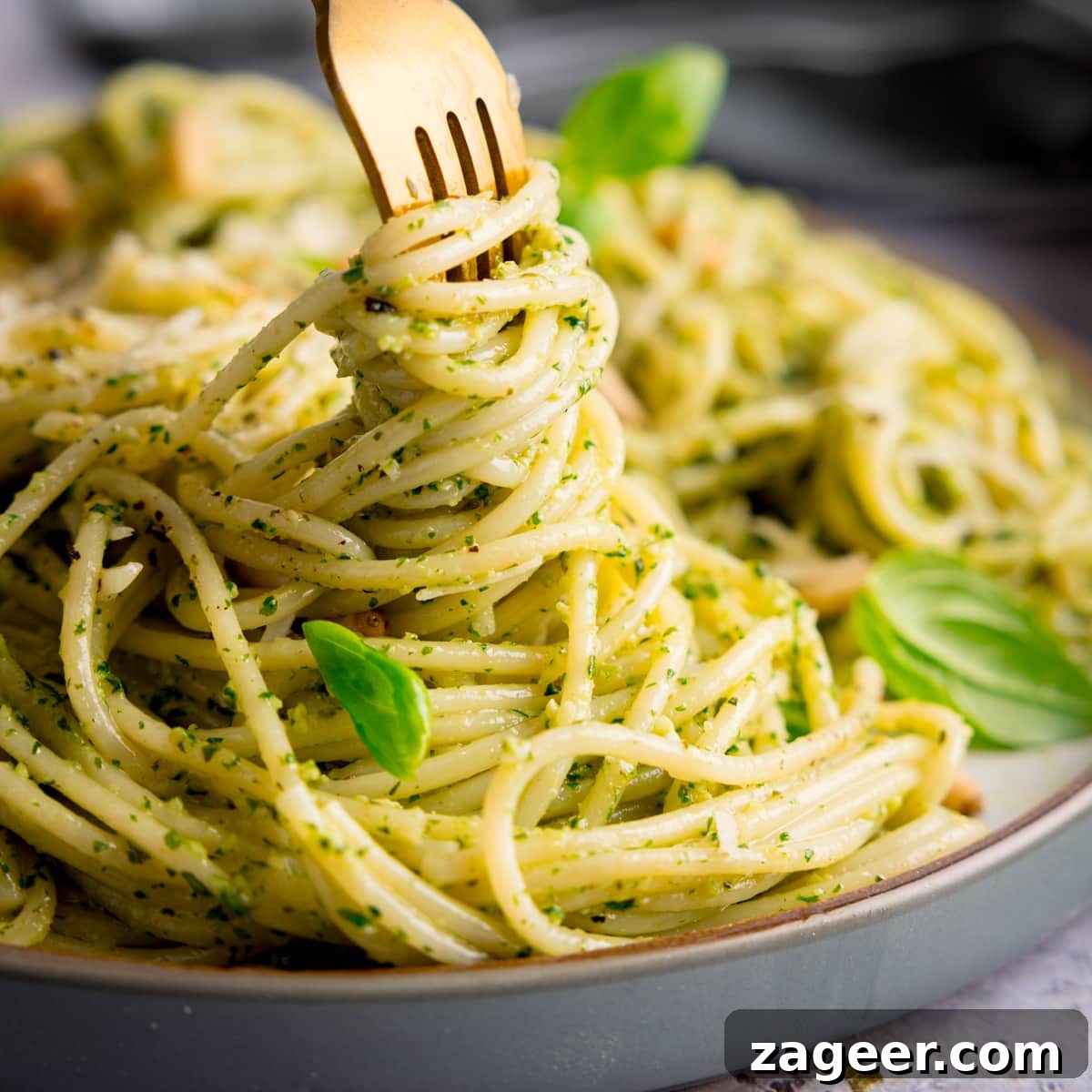
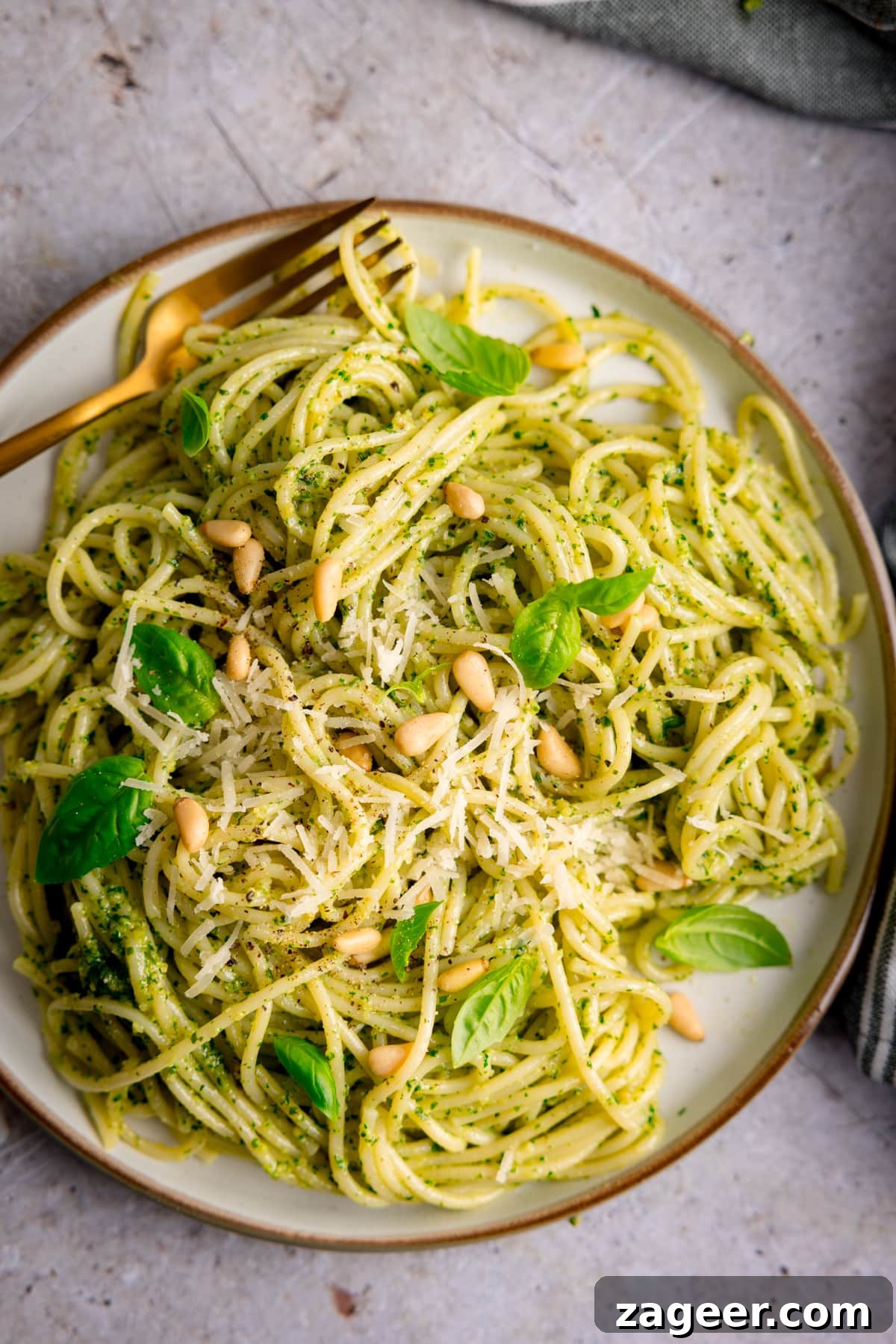
Indulge in a vibrant, quick dinner of your favorite pasta generously coated in homemade fresh basil pesto. Customize it with as much garlic, cheese, salt, or even a spicy kick as you desire for a truly personalized culinary experience.
Ready in a remarkable 15 minutes! This includes the joy of making your own authentic homemade pesto.
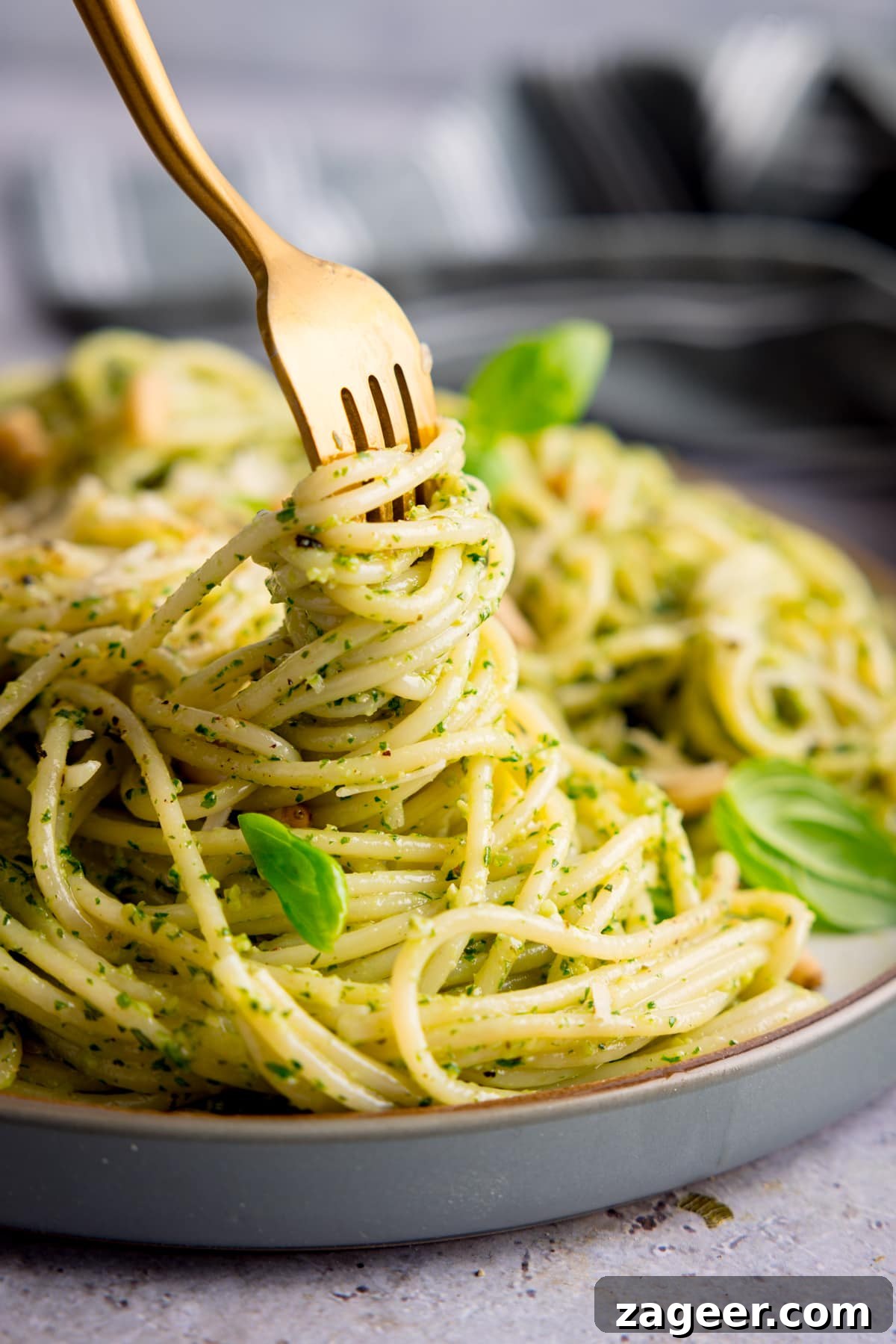
The Ultimate 15-Minute Homemade Pesto Pasta
Are you searching for a dinner that’s not only incredibly quick but also bursting with fresh, vibrant flavors? Look no further than this delightful homemade pesto pasta recipe. Pesto pasta is a true weeknight hero, offering a satisfying, hearty, and flavorful meal that comes together in mere minutes. It’s the perfect solution when you crave something delicious without spending hours in the kitchen.
While ready-made basil pesto can be a convenient option (and yes, I occasionally use it too!), nothing quite compares to the bright, intense flavor of homemade pesto. When choosing store-bought, always opt for fresh pesto from the refrigerated section rather than jarred varieties; it generally boasts a more vibrant taste and appealing texture. However, the real magic happens when you craft your pesto at home. Making your own allows for complete personalization: adjust the garlic intensity, add a hint of fresh chili, incorporate leftover greens like rocket, or swap out pine nuts for walnuts. The possibilities are endless, and tailoring it to your exact preferences ensures a truly unique dish.
The best part? Whizzing up a batch of homemade pesto takes only a few minutes – often less time than it takes to cook your pasta! This means you can enjoy an authentic Italian-inspired meal with minimal effort, transforming a simple dinner into a gourmet experience right in your own kitchen.
Table of Contents
- Essential Pesto Sauce Ingredients
- Step-by-Step: How to Make Pesto Pasta
- Pro Tips for Perfect Pesto
- What to Serve with Pesto Pasta
- Storage and Make-Ahead Tips
- Customization and Variations
- More Fantastic Quick Pasta Recipes
- Pesto Pasta Recipe Card
📋 Essential Pesto Sauce Ingredients
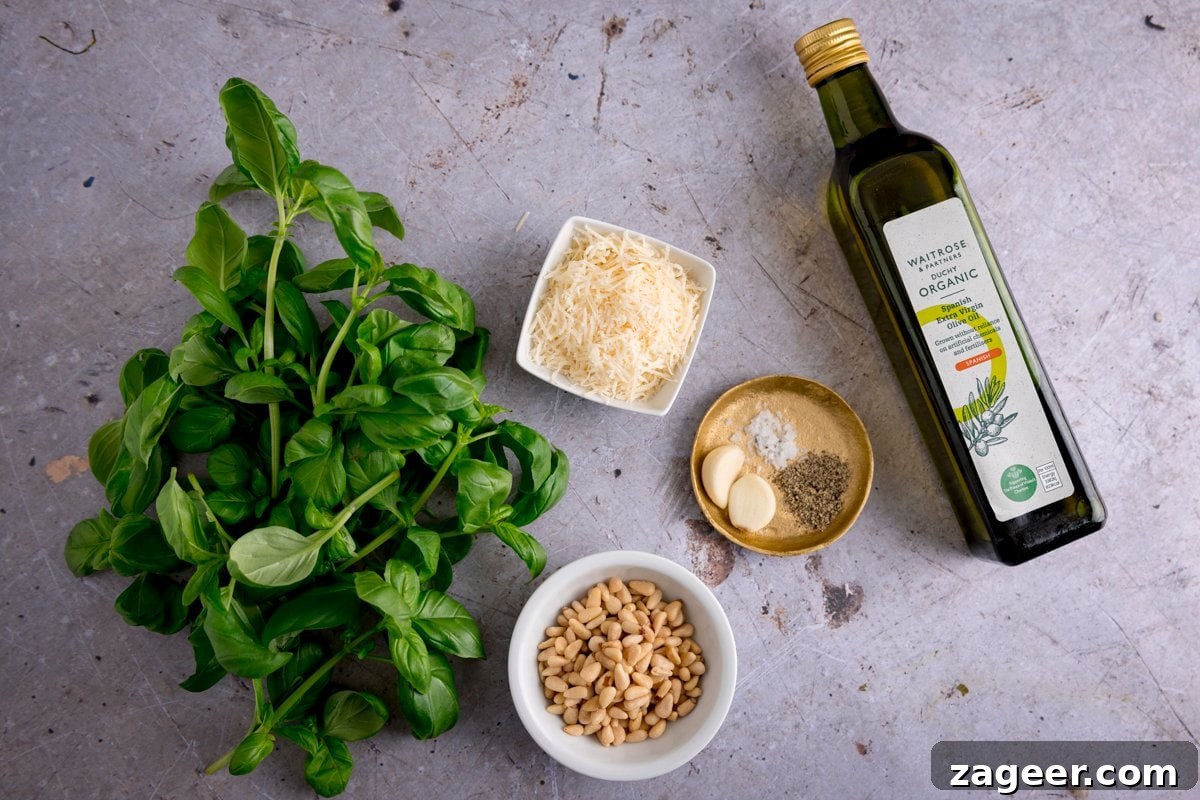
Crafting the perfect pesto relies on a few key, high-quality ingredients. Each component plays a crucial role in building that signature fresh, aromatic, and savory profile that defines classic Italian pesto.
- Fresh basil – The heart of the pesto! You’ll need plenty of vibrant, green basil leaves. For the best flavor, aim for fresh, aromatic leaves. Avoid any wilted or discolored leaves, as they can impart a bitter taste.
- Olive oil – This isn’t just a binder; it’s a flavor enhancer. Try to go for a good quality extra-virgin olive oil if you can. Its fruity and sometimes peppery notes will elevate the entire sauce. A lesser quality oil can significantly detract from the overall taste.
- Garlic – A must for that fragrant, pungent garlicky flavor. Adjust the amount to your preference; some like it mild, others prefer a strong kick. Fresh garlic cloves are non-negotiable here.
- Parmesan cheese (Parmigiano-Reggiano) – For that salty, umami-rich, and nutty depth. Freshly grated Parmesan is always superior to pre-grated varieties, which often contain anti-caking agents. If you’re aiming for a vegetarian version, look for an Italian-style hard cheese that does not contain animal rennet.
- Pine nuts – These provide a delicate, buttery creaminess and a subtle nutty flavor. Lightly toasting them beforehand can enhance their aroma, bringing out a deeper, more complex taste. While pine nuts are traditional, there are also delightful alternatives you can explore.
- Salt and Pepper – Essential for seasoning. A good quality sea salt or Maldon salt (for a textural crunch) and freshly ground black pepper will perfectly balance the flavors of the pesto.
Each of these ingredients contributes to the harmony of flavors that makes pesto so beloved worldwide. Don’t skimp on quality, especially for the basil and olive oil, as they form the backbone of the sauce.
🔪 How to Make Pesto Pasta Step-by-Step
The full recipe with detailed measurements and steps can be found in the recipe card at the end of this post.
Making homemade pesto pasta is surprisingly simple and incredibly rewarding. Here’s a detailed breakdown to ensure your dish is perfect every time:
- Start with the Pasta: Begin by cooking your chosen pasta, like spaghetti, in a large pan of generously salted boiling water. Cooking pasta in well-salted water is key to infusing it with flavor from the inside out. Cook until it’s perfectly al dente – tender with a slight bite. Once cooked, drain the pasta, but be sure to reserve about a cup of the starchy pasta cooking water. This water is liquid gold for emulsifying your pesto sauce and helping it beautifully cling to the pasta.
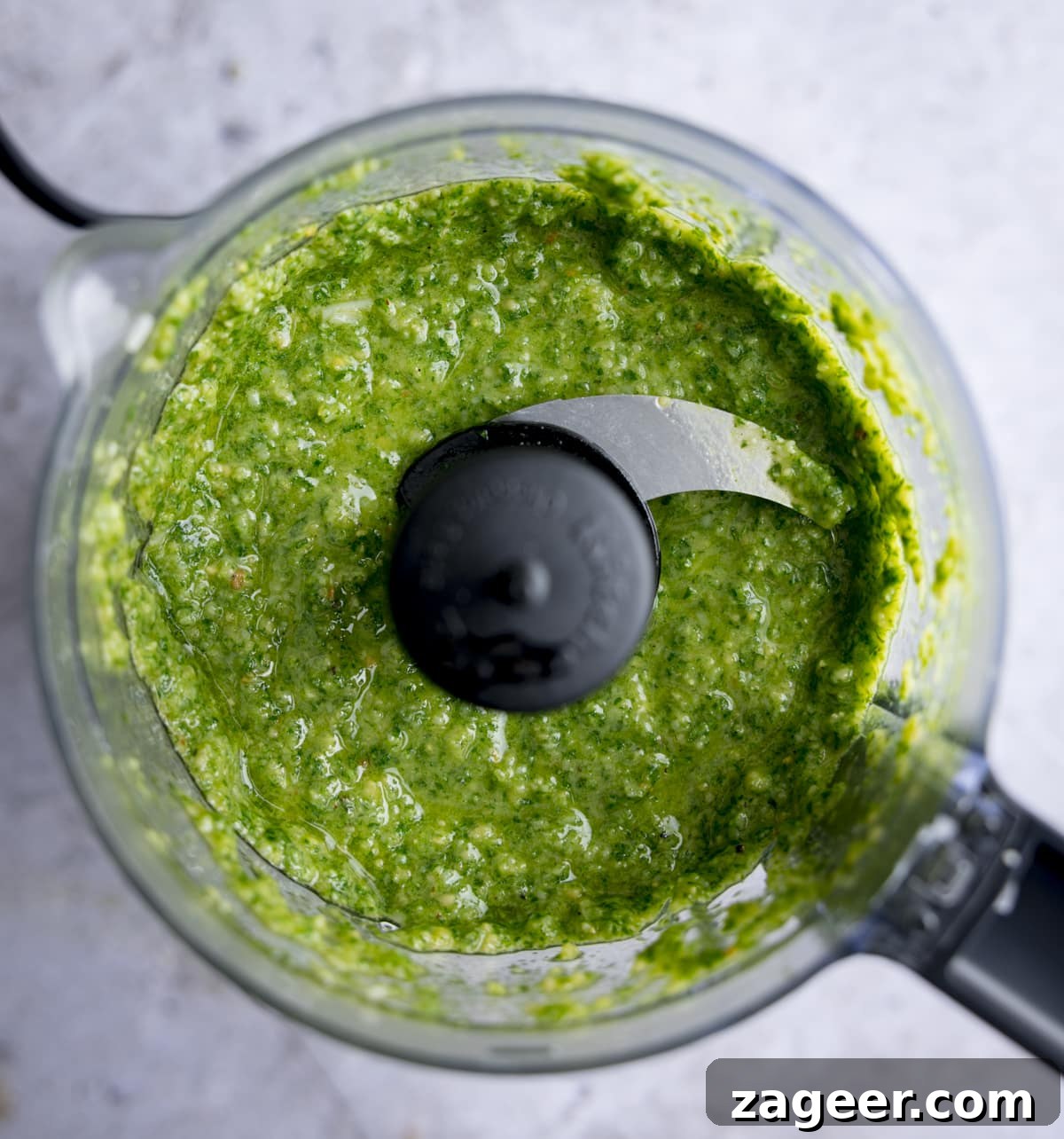
- Prepare the Pesto Base: While your pasta is cooking, gather your pesto ingredients. In a small food processor (or a mini chopper or even a blender), combine the fresh basil, peeled garlic cloves, pine nuts, grated Parmesan cheese, and a pinch of black pepper and salt. Pulse these ingredients together for just a few seconds. This initial pulsing step is crucial as it helps to break down the garlic and pine nuts into smaller pieces, ensuring a smooth yet textured pesto.
- Incorporate the Olive Oil: With the motor of your food processor running, slowly pour in the extra virgin olive oil in a steady, thin stream. This gradual addition helps to emulsify the oil with the other ingredients, creating a creamy and well-combined sauce. If you’re using a blender (like a Nutribullet), you can add half the oil, blend, give it a good shake, then add the remaining oil and blend again until smooth.
- Season to Perfection: Once the pesto has reached your desired consistency, give it a taste test. This is your chance to adjust the seasoning. You might want to add a little more salt (crushed Maldon salt is fantastic for a burst of salty flavor and a delightful crunch), or another grind of black pepper. Remember, the flavor of pesto develops, so taste as you go!
- Combine and Serve: Finally, transfer your cooked pasta back into the pan (off the heat). Add the freshly made pesto and a good splash of the reserved pasta cooking water. Toss everything together vigorously using tongs. The starchy pasta water will help to loosen the pesto, creating a glossy, creamy sauce that beautifully coats every strand of spaghetti. If the sauce feels too thick, add a little more pasta water until it reaches your desired consistency. Serve immediately, garnished with extra Parmesan, pine nuts, and fresh basil.
👩🍳PRO TIPS for Perfect Pesto
To ensure your homemade pesto pasta is truly exceptional, consider these expert tips:
- Salt Strategy: When blending the pesto, add just a small amount (like 1/2 tsp of Maldon salt) initially. Taste the pesto after blending, then add more salt as needed. This prevents over-salting and allows you to perfectly fine-tune the seasoning. Adding flaky Maldon salt at the end can also provide a wonderful textural crunch.
- Quality Olive Oil: Always use a good quality extra virgin olive oil. It makes a noticeable difference in the flavor profile of your pesto.
- Toasted Pine Nuts: For an enhanced nutty flavor, lightly toast your pine nuts in a dry pan over medium heat for a few minutes until golden. Watch them closely as they burn quickly!
- Pasta Water is Key: Don’t underestimate the power of reserved pasta water. Its starchiness helps create a silky, emulsified sauce that adheres perfectly to the pasta.
- Avoid Over-processing: While a food processor makes quick work of pesto, avoid over-processing. Pesto is best with a slightly rustic texture, not a completely smooth paste. Over-blending can also generate too much heat, which can dull the vibrant basil flavor and color.
🍽️ What to Serve with Your Pesto Pasta
Pesto pasta is a delicious meal on its own, but it pairs wonderfully with a variety of sides that complement its rich flavors. Here are some fantastic suggestions:
- Garlic Bread: Embrace your inner garlic-fiend and serve it up with easy homemade garlic bread! The crunchy, savory bread is perfect for soaking up any leftover pesto sauce. For an extra treat, add some mozzarella cheese to your garlic bread before baking.
- Simple Green Salad: A crisp, refreshing green salad with a light vinaigrette dressing is an excellent counterpoint to the richness of the pesto. It adds freshness and a nice textural contrast to the meal. Think mixed greens, cherry tomatoes, and perhaps some thinly sliced red onion.
- Crispy Chicken Goujons: My kids absolutely love this addition! Crispy chicken goujons, chopped into chunks and sprinkled on top of the pasta, add a protein boost and a satisfying crunch. You could also use grilled chicken breast or even pan-fried shrimp for a more elegant touch.
- Roasted Vegetables: Sweet cherry tomatoes, bell peppers, zucchini, or asparagus, lightly tossed with olive oil and roasted until tender-crisp, make a healthy and flavorful side dish.
- Bruschetta: For a light appetizer, serve classic bruschetta with fresh tomatoes, basil, and a drizzle of balsamic glaze. It’s a perfect starter that echoes the flavors of the main course.
Storage and Make-Ahead Tips
Pesto is fantastic for meal prep and can be stored in various ways:
- Storing Fresh Pesto: Store your homemade pesto in a sealed jar in the refrigerator for up to a week. To help maintain its vibrant green color and prevent oxidation, pour a thin layer of olive oil over the surface of the pesto before sealing. Alternatively, a tablespoon of lemon juice can also help.
- Freezing Pesto: For longer storage, pesto freezes beautifully. I often recommend freezing it in portions using an ice cube tray. Once frozen, transfer the cubes to an airtight container or freezer bag. Frozen pesto can last for about 3 months. When ready to use, simply defrost the required amount in the fridge, or add the frozen cubes directly to a hot dish – they will melt quickly.
- Storing Cooked Pesto Pasta: Cooked pesto pasta is best enjoyed fresh. However, leftovers can be stored in an airtight container in the refrigerator for 1-2 days. Reheat gently on the stovetop with a splash of water or broth to loosen the sauce, as it tends to thicken in the fridge.
Customization and Variations
One of the best things about pesto pasta is its versatility. Feel free to experiment with these variations:
- Pasta Shapes: While spaghetti is classic, feel free to swap it for other pasta shapes like rigatoni, fusilli, penne, orecchiette, or even linguine. Short pasta shapes are excellent for capturing the chunky pesto sauce.
- Nut Swaps: If pine nuts are unavailable or you prefer a different flavor, walnuts, almonds, or cashews make excellent substitutes. For a nut-free version, try using sunflower seeds or pumpkin seeds.
- Cheese Alternatives: For a vegetarian version, use an Italian-style hard cheese that is made without animal rennet. You can also experiment with pecorino romano for a sharper, saltier kick.
- Add Heat: For those who love a bit of spice, add a fresh green chili (deseeded for less heat) before blending the pesto, or stir in 1/4 tsp of chili flakes after blending.
- Lemon Zest: A touch of lemon zest blended into the pesto or grated over the finished dish can brighten all the flavors.
- Extra Greens: Boost the nutritional content and flavor by adding a handful of spinach, rocket (arugula), or even sun-dried tomatoes to the food processor with the basil.
- Vegan Pesto: Omit the Parmesan and use nutritional yeast for a cheesy flavor, or substitute with a good quality vegan Parmesan alternative. Ensure your olive oil is high quality for robust flavor.
🍲 More fantastic quick pasta recipes
Quick & Easy
Creamy Cajun Prawn Pasta
Pasta
Penne Arrabbiata with Mozzarella and Chorizo
Quick & Easy
Pan Fried Salmon and Spaghetti with Lemon Cream Sauce
Dinner
Salmon Rigatoni in a Creamy Tomato Sauce
Pasta
Buffalo Chicken Pasta
Pasta
Creamy Mushroom Pasta
Stay updated with new recipes!
Subscribe to the newsletter to hear when I post a new recipe. I’m also on YouTube(new videos every week) and Instagram(behind-the-scenes stories & beautiful food photos).
Pin
★
★
★
★
Click the stars to rate or comment
Pesto Pasta
Nicky Corbishley
5 mins
10 mins
15 mins
4 servings
Dinner
Italian
Ingredients
Pasta:
Pesto:
To Serve:
Instructions
-
Add the dried spaghetti to a large pan of salted boiling water and cook for 10-13 minutes (so it’s to the texture of your liking).400 g (14 oz) dried spaghetti
-
While the pasta is cooking, make the pesto.
-
Add the fresh basil leaves, garlic, pine nuts, freshly grated Parmesan cheese, black pepper, and Maldon salt to a food processor and pulse for about 10 seconds to break up the garlic and pine nuts.50 g (1.75 oz) fresh basil leaves, 2 cloves garlic, 40 g (3 tbsp) pine nuts, 30 g (1/3 cup) freshly grated Parmesan cheese, ¼ tsp freshly ground black pepper, 1/2 tsp Maldon salt
-
Turn the food processor back on and pour in the olive oil in a steady stream – which should take about 10 seconds.90 ml (1/3 cup) olive oil
-
Check for consistency – if you like it a little chunky, it’s ready to go. If you like it smoother, whizz for another 10-20 seconds, until the texture is to your liking.
-
Taste the pesto and add in a little more salt if needed. Put the pesto to one side.
-
When the spaghetti is ready, drain in a colander, reserving 1 cup of the pasta cooking water.
-
Place the spaghetti back into the pan you cooked it in. Add in the pesto and a good splash (about 1/3 of a cup) of the pasta cooking water.
-
Toss the spaghetti in the sauce, using a set of tongs, over a low heat, until the sauce coats the pasta. Add in more of the pasta water if you want to loosen up the sauce more.
-
Divide the pasta between bowls and top with a sprinkling of black pepper, grated parmesan, toasted pine nuts, and some fresh baby basil leaves.1/2 tsp black pepper, 2 tbsp freshly grated Parmesan cheese, 2 tbsp toasted pine nuts, 1 handful of fresh baby basil leaves
Notes
Place the pine nuts in a medium dry (no oil) frying pan and heat over a medium heat, stirring/tossing often, until the pine nuts are golden brown. This should take about 2-4 minutes. Keep a close eye on them, as they can burn quickly.
Remove them from the pan fairly quickly at this point, otherwise they will continue to brown in the residual heat of the pan.
Making toasted pine nuts ahead
I like to toast extra pine nuts to use for salads, avocado toast etc. So I usually toast a larger batch than needed for this recipe.
You can toast pine nuts ahead of time. Storing them in an airtight container at room temperature, once the pine nuts have cooled.
They go rancid quicker once toasted, so don’t store them at room temperature for more than about 5 days.
You can freeze toasted pine nuts and they’ll last longer (about 3 months in an airtight container).
Just defrost the required amount at room temperature before using.
Storage of Pesto
Store the pesto in a sealed jar, for up to a week, in the fridge. It may lose a little of the vibrant color during this time, but will still taste great.
If you are storing in the refrigerator for more than a day, I like to add in a tablespoon of lemon juice to help maintain the vibrant color.
Alternatively, you can freeze the pesto in portions (I use an ice cube tray) – then defrost in the fridge or add the frozen pesto cubes directly to the dish you’re making – it should defrost pretty quickly with heat.
Ingredient swaps
- Swap the spaghetti for short pasta such as rigatoni, fusilli or penne pasta.
- Swap the pine nuts for walnuts, almonds or cashews.
- Swap the Parmesan for vegetarian Italian-style hard-cheese if you want a vegetarian version.
- Add in a green chili before blending, or stir in 1/4 tsp chili flakes after blending for a kick of heat.
Nutritional information is approximate, per serving. This recipe serves 4.
Nutrition
Carbohydrates: 79g |
Protein: 19g |
Fat: 35g |
Saturated Fat: 5g |
Polyunsaturated Fat: 8g |
Monounsaturated Fat: 19g |
Cholesterol: 9mg |
Sodium: 473mg |
Fiber: 4g |
Sugar: 3g
Nutrition information is automatically calculated, so should only be used as an approximation.
Like this recipe? Leave a comment below!
Some of the links in this post may be affiliate links – which means if you buy the product I get a small commission (at no extra cost to you). If you do buy, then thank you! That’s what helps us to keep Kitchen Sanctuary running. The nutritional information provided is approximate and can vary depending on several factors. For more information please see our Terms & Conditions.