
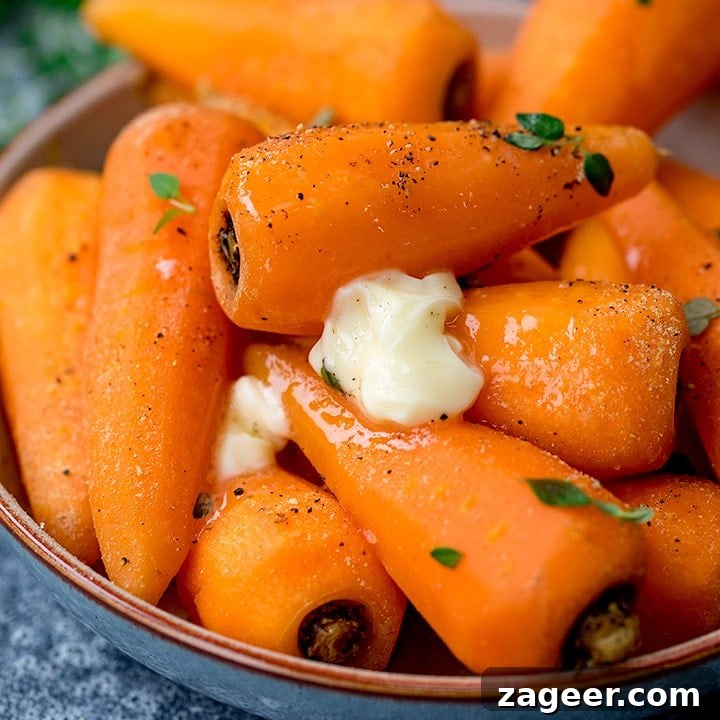
Welcome to the world of incredibly simple, yet profoundly delicious side dishes. Our spotlight today shines on the humble carrot, elevated to a culinary delight with just two key ingredients: rich butter and a hint of white pepper. This method transforms ordinary carrots into an easy, melt-in-your-mouth accompaniment that promises minimal preparation and maximum flavor. Whether you prefer them steamed to vibrant perfection or boiled until tender, we’ll guide you through the process, along with creative ideas for alternative toppings to suit any palate. This isn’t just a recipe; it’s a celebration of simple ingredients creating extraordinary taste.
While some might hesitate to call this a “recipe” due to its sheer simplicity, the outcome is so profoundly satisfying that it truly deserves a dedicated share. These butter-pepper carrots are more than just a side dish; they are a cherished staple in my kitchen, often making an appearance as a vibrant component of larger meals. In fact, they are an integral part of my popular ‘How to Make a Roast Beef Dinner Step-by-Step Timeplan‘ post, where they perfectly complement a hearty Sunday spread.
If you’re planning a complete roast dinner, you’ll find the full, comprehensive recipe and time plan over there, ensuring every element of your feast is perfectly coordinated and delectable.
The Secret to Unforgettable Butter-Pepper Carrots
Let’s delve into the heart of what makes these carrots so uniquely appealing: the butter-pepper combination. You might instinctively reach for unsalted butter with a sprinkle of salt and black pepper, right? But here’s where we diverge from the conventional path to discover a truly exceptional flavor. For this recipe, it’s all about embracing salted butter – I personally swear by Kerrygold for its rich, creamy texture and perfect salt balance. No additional salt is needed, allowing the natural sweetness of the carrots to shine through.
And for the pepper? It simply HAS to be white pepper. The subtle, earthy warmth of white pepper, when melted into the luscious salted butter, creates an incredibly delicious coating that transforms the carrots. This isn’t just a preference; it’s a tradition passed down through generations. My dad introduced me to this magical combination many, many years ago, and it has remained a family favorite ever since. The delicate pungency of white pepper, distinct from the sharper kick of black pepper, complements the carrots without overpowering them, resulting in a harmonious and comforting taste that feels both familiar and special.
A Family Tradition: My Dad’s Classic Carrot Method
My dad’s approach to these carrots is wonderfully rustic and yields an irresistible texture. He starts by carefully peeling and chopping the carrots into manageable pieces. Once prepared, they are simply boiled until perfectly tender. The magic truly begins after draining. Instead of a precise mash, he uses a sturdy knife to roughly cut the tender carrots into tiny, irregular pieces, right against the side of the pan. This technique creates a varied texture, offering delightful little chunks rather than a uniform puree. While a potato masher could be used for convenience, that extra texture achieved by the knife makes all the difference, adding character to every bite.
Once the carrots are roughly chopped, a generous dollop of salted butter is added, followed by a good pinch of white pepper. Everything is then stirred together vigorously, ensuring the butter melts evenly and coats every piece, infusing them with that signature savory-peppery flavor. Served immediately, these carrots are unbelievably delicious – a testament to how simple ingredients, combined with a touch of culinary wisdom, can create something truly memorable.
Whole vs. Mashed: Tailoring Carrots to Your Preference
While my dad’s method involves a rustic chop, I also frequently prepare these in their whole chantenay form, especially when aiming for a more elegant presentation. My children, in particular, prefer whole carrots, and admittedly, they do offer a more visually appealing display on the plate compared to the delightfully ‘smushed’ version. This is why you’ll often see whole chantenay carrots featured in my photos, showcasing their natural beauty.
The beauty of this recipe lies in its flexibility. You can choose to leave your carrots whole, maintaining their distinct shape and a slightly firmer bite, or embrace the comforting, textural experience of smushing them up as my dad does. Both options are equally delicious and provide a wonderful canvas for the butter and white pepper. I’ve included both approaches in the recipe instructions below, allowing you to decide which style best suits your meal and your preference. Which one will become your new favorite?
Mastering the Cook: Steaming vs. Boiling Carrots
Achieving the perfect tender-crisp carrot involves understanding the nuances of different cooking methods. Both steaming and boiling are excellent choices for these butter-pepper carrots, each offering distinct advantages.
Steaming: The Art of Vibrant Color and Nutrient Retention
Steaming is often hailed as the healthier option because it helps to preserve more of the carrots’ water-soluble vitamins, such as Vitamin C and B vitamins, which can leach out into boiling water. It also tends to keep vegetables vibrant in color and firmer in texture. For steaming, you’ll need a steamer basket or an insert that fits snugly over a saucepan. The key is to ensure the carrots are elevated above the simmering water, allowing the steam to gently cook them through.
- **Preparation:** After peeling, you can leave Chantenay carrots whole, or chop larger carrots into uniform pieces (e.g., coins, sticks, or chunks). Uniformity ensures even cooking.
- **Method:** Fill a saucepan with about 2 inches of water and bring it to a rolling boil. Place the carrots in your steamer basket, ensuring they are not overcrowded, then place the basket over the boiling water. Cover tightly with a lid and reduce the heat to a steady simmer. Steam for approximately 15-20 minutes, or until the carrots are tender when pierced with a fork but still hold their shape. The cooking time will vary depending on the size and thickness of your carrot pieces.
- **Benefits:** Retains more nutrients, yields a brighter color, and a slightly firmer texture.
Boiling: The Quick and Easy Path to Tenderness
Boiling is a straightforward and rapid method for cooking carrots, perfect when you’re short on time or aiming for a softer, more yielding texture – ideal if you plan to mash them. While some nutrients might be lost to the water, the convenience and consistent tenderness make it a popular choice.
- **Preparation:** Similar to steaming, peel and prepare your carrots. For boiling, you might choose slightly smaller or thinner cuts to speed up the process, especially if you want to ‘smush’ them later.
- **Method:** Place the carrots in a saucepan and cover them generously with cold water. Add a pinch of salt to the water (optional, as we’re using salted butter later). Bring the water to a boil over high heat, then reduce the heat to a gentle bubble and simmer. Cook for approximately 15-20 minutes, or until the carrots are fork-tender. Again, adjust cooking time based on carrot size.
- **Benefits:** Fast, easy, and produces very tender carrots, excellent for mashing or rustic chopping.
Whichever method you choose, the goal is carrots that are perfectly cooked – neither crunchy raw nor mushy overdone. A fork should slide in easily with just a little resistance. Once cooked, drain them thoroughly if boiling, or carefully remove the steamer basket. Then, they are ready for their buttery, peppery transformation!
The Simple Butter Pepper Carrots Recipe:
Click the stars to rate or comment
Simple Butter Pepper Carrots: An Essential Side Dish
5 minutes
20 minutes
25 minutes
Ingredients
- 300 g (10.6 oz) Chantenay carrots , peeled (or use larger carrots, chopped)
- 2 tbsp salted butter (preferably a rich European style like Kerrygold)
- ¼ tsp white pepper (adjust to taste)
Instructions
-
Steamed carrots method: Begin by filling a large pan with approximately 2 inches of water and bring it to a vigorous boil over high heat. While the water heats, prepare your carrots (peeled, whole Chantenay or uniformly chopped larger carrots). Place a steam basket or steamer insert securely on top of the pan, ensuring it doesn’t touch the water. Carefully arrange the carrots in the steamer basket in a single layer if possible, to allow for even cooking. Place a tight-fitting lid on the pan, then reduce the heat to medium. Allow the carrots to steam for 15-20 minutes, or until they are tender when pierced with a fork but still have a slight bite. Cooking time may vary based on carrot size.300 g (10.6 oz) Chantenay carrots
-
Boiled carrots method: For boiling, place the peeled carrots (whole or chopped) into a saucepan. Cover them completely with cold water, ensuring they are submerged by at least an inch. Bring the water to a rapid boil over high heat. Once boiling, reduce the heat to a gentle simmer and cook for 15-20 minutes, or until the carrots are tender all the way through. For a very soft texture, suitable for mashing, you can extend the cooking time slightly.300 g (10.6 oz) Chantenay carrots
-
Once cooked, carefully drain the carrots thoroughly if you boiled them. Return them to the warm pan (off the heat). Add the salted butter directly to the hot carrots, allowing it to melt and coat them generously. Finally, sprinkle on the white pepper. Stir gently to combine, ensuring the butter and pepper are evenly distributed. Serve immediately as a warm and comforting side dish.2 tbsp salted butter, 1/4 tsp white pepper
Notes
Mashed butter pepper carrots:
For those who adore a richer, more textural experience reminiscent of my dad’s classic method, try preparing mashed butter pepper carrots. First, peel approximately 10.5 oz (300g) of carrots and chop them into roughly uniform pieces. Cook them using either the steaming or boiling method described above until they are very tender (about 20 minutes). Once cooked, drain them well and return them to the warm pan. Using a sturdy knife, roughly chop the carrots directly in the pan, pressing them against the side to create uneven, textured pieces. This isn’t a fine mash; it’s about breaking them down while retaining some body. Add the salted butter and white pepper, then continue to ‘chop’ and mix with the knife until the butter is fully incorporated and the pepper is evenly distributed. Alternatively, for a smoother consistency, you can use a potato masher, but the knife method provides that delightful, rustic texture that truly makes a difference.
Alternative toppings for boiled or steamed carrots:
While the classic butter-white-pepper combo is undeniably delicious, sometimes a little variation can elevate your carrot side dish even further. Here are some fantastic alternative toppings that pair beautifully with both boiled and steamed carrots:
- Bacon Butter: For a savory, smoky twist, cook 2-3 strips of your favorite bacon until crispy. Crumble the cooked bacon finely and mix it into 2 tablespoons of softened unsalted butter. The unsalted butter here allows the saltiness of the bacon to shine. This adds an incredible depth of flavor and a pleasing crunch.
- Honey Butter: If you prefer a touch of sweetness, combine 1 tablespoon of golden honey with 2 tablespoons of softened salted butter. This creates a glaze that complements the natural sweetness of the carrots perfectly, making them an excellent choice for a holiday meal or a comforting family dinner.
- Tarragon or Dill Butter: For an herbaceous and fresh aroma, mix 1 tablespoon of finely chopped fresh tarragon or dill into 2 tablespoons of softened salted butter. Both herbs offer a distinct, delicate flavor that brightens the carrots without being overpowering. These are particularly good with fish or chicken dishes.
- Lemon Herb Butter: Combine 2 tablespoons of softened salted butter with 1 tablespoon of fresh lemon zest and a tablespoon of chopped fresh parsley or chives. The lemon adds a zesty brightness, cutting through the richness of the butter and giving the carrots a lovely, fresh finish.
- Maple Pecan Glaze: For a dessert-like, rich topping, melt 1 tablespoon of butter with 1 tablespoon of maple syrup. Toss the cooked carrots with this mixture and then sprinkle with 1 tablespoon of toasted, chopped pecans. This is a fantastic option for festive occasions.
Feel free to experiment with these suggestions or create your own signature carrot topping. The possibilities are endless!
Nutritional information is per serving.
Nutrition
Nutrition information is automatically calculated, so should only be used as an approximation. It’s provided per serving for your convenience.
Enjoyed this simple, delicious recipe? We’d love to hear from you! Leave a comment below and share your experience. Your feedback helps our community thrive.
Some of the links in this post may be affiliate links – which means if you buy the product I get a small commission (at no extra cost to you). If you do buy, then thank you! That’s what helps us to keep Kitchen Sanctuary running and continue sharing delicious recipes. The nutritional information provided is automatically calculated and should be considered approximate, as it can vary depending on several factors such as ingredient brands and preparation methods. For more detailed information, please refer to our Terms & Conditions.