
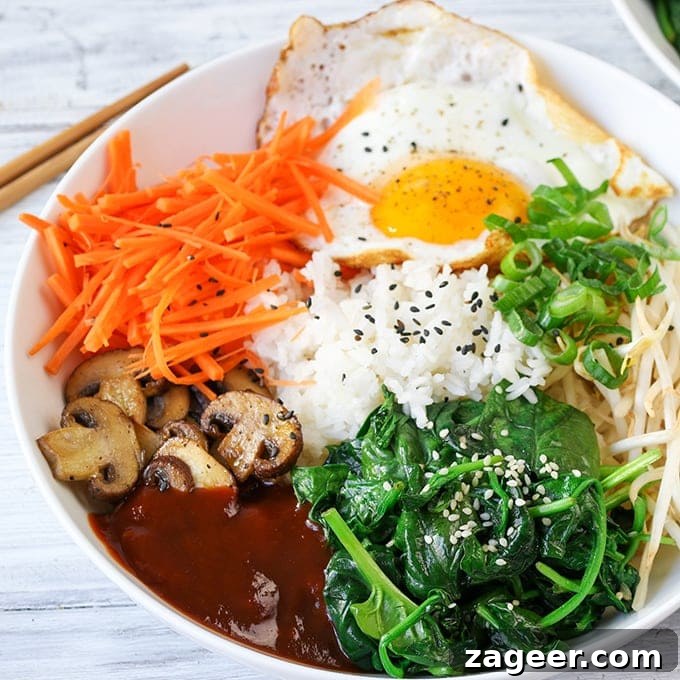
Experience the vibrant flavors and wholesome goodness of this Korean-style Vegetable Bibimbap, brilliantly enhanced by the spicy kick of Gochujang! A true celebration of healthy ingredients in one satisfying bowl.
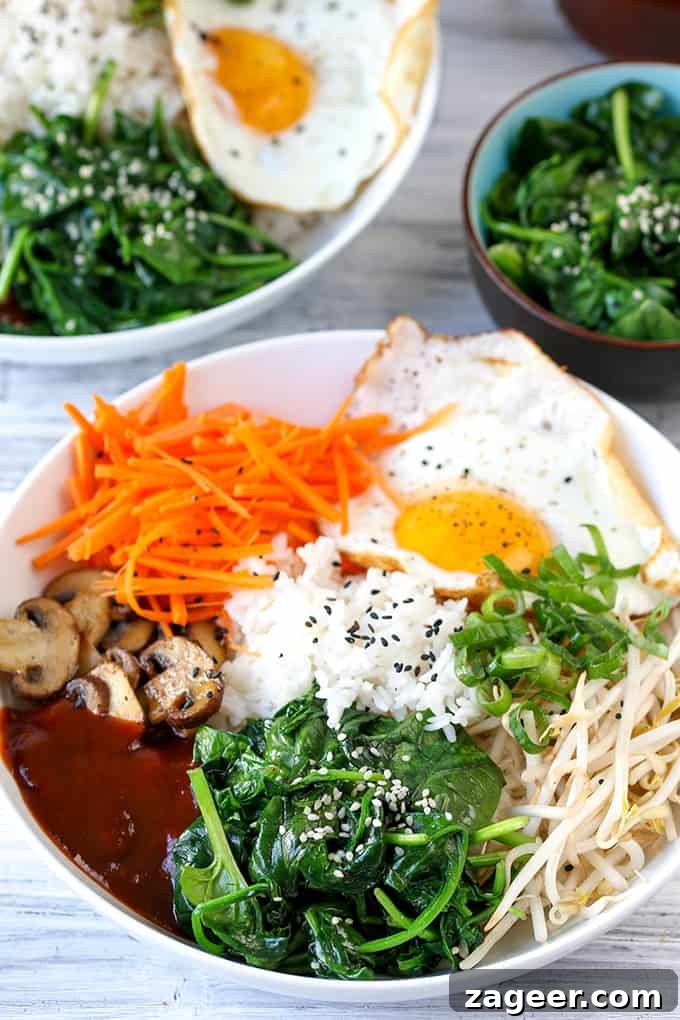
Ultimate Vegetable Bibimbap with Gochujang: A Healthy Korean Delight
Dive into the delightful world of Korean cuisine with this incredibly flavorful and satisfying Vegetable Bibimbap recipe. Perfect for a meat-free meal, this dish is bursting with fresh vegetables, perfectly cooked rice, and the indispensable spicy-sweet fermented chili paste, gochujang. Whether you’re a seasoned chef or new to Korean cooking, this bibimbap offers an accessible and utterly delicious way to explore Asian flavors right in your own kitchen.
Bibimbap, which literally means “mixed rice,” is a staple in Korean households, beloved for its versatility and nutritional balance. Traditionally, it features a warm bowl of white rice topped with an array of sautéed and seasoned vegetables (namul), often beef, and a fried egg, all mixed together with gochujang just before eating. Our vegetarian version focuses on the exquisite interplay of diverse vegetable textures and tastes, making it a fantastic option for anyone looking for a wholesome and flavorful meal.
This particular recipe is a personal favorite, often making an appearance as a vibrant, nutrient-packed lunch, but it transitions effortlessly into a comforting and substantial dinner. The beauty of bibimbap lies in its quick preparation, especially if you have pre-cooked rice on hand. From start to finish, you could have this incredible meal ready in under 15 minutes, making it ideal for busy weeknights or when you crave something special without a lengthy cooking process.
The Magic of Gochujang: Elevating Your Bibimbap
What truly sets this bibimbap apart is the inclusion of gochujang. This thick, crimson Korean chili paste is a revelation for anyone who loves bold flavors. A complex blend of savory, sweet, and spicy notes, gochujang adds incredible depth and umami to any dish it graces. I discovered this culinary gem only a few months ago, and I’ve been utterly captivated ever since. Its versatility is astounding; a dollop can transform soups, sauces, marinades, or simply be drizzled over roasted vegetables for an instant flavor boost. You absolutely need a bottle of this vibrant red paste in your refrigerator – it’s a game-changer!
In our Vegetable Bibimbap, gochujang isn’t just a condiment; it’s the heart of the dish, binding all the fresh ingredients with its unique warmth and spice. Paired with perfectly wilted spinach and golden-brown, well-seasoned mushrooms – two of my absolute favorite vegetables – the gochujang elevates these simple components to an extraordinary level of deliciousness. The earthy notes of the mushrooms, the subtle bitterness of spinach, and the fresh crunch of carrots and bean sprouts are all beautifully harmonized by the paste’s distinctive profile.
Life’s Busy Rhythm: Finding Joy in Everyday Moments
On a more personal note, August has proven to be an exceptionally busy month for me. Beyond the usual demands of work, I’ve been navigating the exciting chaos of school holidays, striving to keep the children entertained and engaged. Simultaneously, our household has been abuzz with preparations for a significant new extension to our home. The plan is ambitious: adding a new garage, a small utility room, and a dedicated study space to the side of the house. The biggest transformation, however, will involve knocking out the back wall to significantly expand our kitchen – a project I’ve dreamed about for years!
The anticipation is immense, but so is the temporary disruption. I know this renovation will take several months, and in the interim, our home has undergone a fascinating (and sometimes frustrating) transformation. All my essential kitchen items are currently residing in my daughter Gracey’s room, while the rest of the house seems perpetually filled with migrating piles of belongings, constantly shifted from one corner to another. It’s a testament to the temporary nature of home improvements!
In an effort to carve out some dedicated time for blog work – and to give the kids a much-deserved change of scenery – I’ve whisked them away to my mum and dad’s house for a week. While I enjoy being thoroughly fed and pampered by my mum, poor Chris has been left to manage at home. He’s balancing his office job during the day with undoubtedly lending a hand with the building work in the evenings. It’s a team effort, for sure! My folks are simply the best; my mum even left fresh towels on my bed and ensured the cupboard was stocked with my favorite chocolate biscuits. It’s these small gestures that truly make a difference.
So here I sit, comfortably on the bed, catching up on my writing, while the kids are happily engaged in creating their latest “potions” in the garden – a delightful (and undoubtedly messy) concoction of herbs, mud, and flower petals, I imagine. It’s a peaceful moment amidst the ongoing bustle, a reminder to savor these simple joys.
Endless Possibilities: Customizing Your Bibimbap
This Vegetable Bibimbap recipe, which I initially developed for Superfood Magazine a few months back, has become a cherished adaptable dish in my repertoire. Since its inception, I’ve remade it countless times, exploring various iterations and tailoring it to whatever ingredients I have on hand. It’s truly one of those magical meals that can be transformed weekly for an entire year without ever feeling repetitive!
Consider the possibilities: you could add thinly sliced cooked chicken for a protein boost, omit the egg for a completely vegan version, or swap out traditional white rice for wholesome quinoa or brown rice. Experiment with different vegetables too – thinly sliced raw cabbage, spiralized zucchini, bell peppers, or even roasted sweet potato cubes would all be fantastic additions. Feel free to play with the ratios and explore new combinations based on your dietary preferences and what’s fresh in your fridge. The key is to have a variety of textures and colors, ensuring each spoonful is a delightful surprise.
No matter how you choose to customize it, the foundational elements of fresh vegetables, warm rice, and that incredible gochujang sauce promise a satisfying and nutritious meal. I wholeheartedly encourage you to procure some gochujang and give this bibimbap a try for dinner tonight. I’m genuinely confident you’ll fall in love with it as much as I have. It’s more than just a meal; it’s an experience!
The Vegetable Bibimbap Recipe:
Click the stars to rate or comment
Vegetable Bibimbap
15 minutes
20 minutes
35 minutes
Ingredients
- 2 tbsp olive oil
- 6 chestnut mushrooms sliced
- Pinch of salt and pepper
- 2 eggs
- 100 g fresh baby spinach
- 1 clove garlic peeled and minced
- 300 g warm boiled rice
- 1 large carrot peeled and cut into matchsticks
- 100 g fresh beansprouts
- 3 tbsp Korean gochujang dipping sauce this can be found in the speciality aisle of most large supermarkets
- 1 tsp sesame seeds
- 1 tsp black sesame seeds
Instructions
-
Heat half of the olive oil in a small frying pan over medium-high heat. Add the sliced chestnut mushrooms and season with a pinch of salt and pepper. Fry for 3-4 minutes, turning occasionally, until they are beautifully golden brown and tender. Remove the mushrooms from the pan and set aside.
-
Add the remaining olive oil to the same pan and heat it over a medium flame. Carefully crack the two eggs into the pan. Fry the eggs for 3-4 minutes, or until the whites are fully set but the yolks remain wonderfully runny. Remove the fried eggs from the pan.
-
Into the still-warm pan, add the fresh baby spinach, minced garlic, and another pinch of salt and pepper. Sauté for just 1 minute, or until the spinach has wilted down considerably. Turn off the heat immediately to prevent overcooking.
-
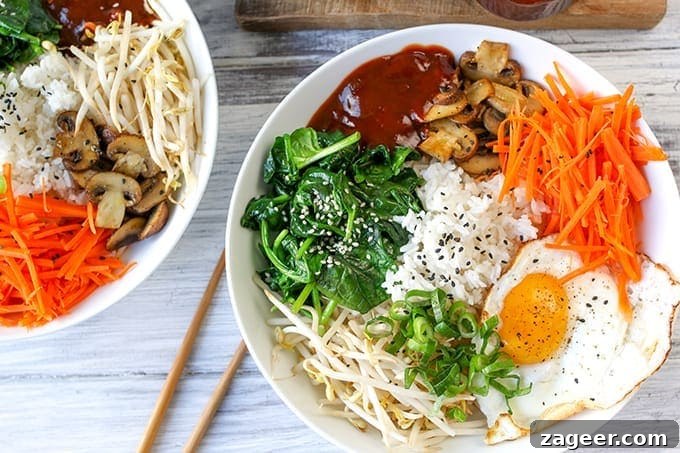
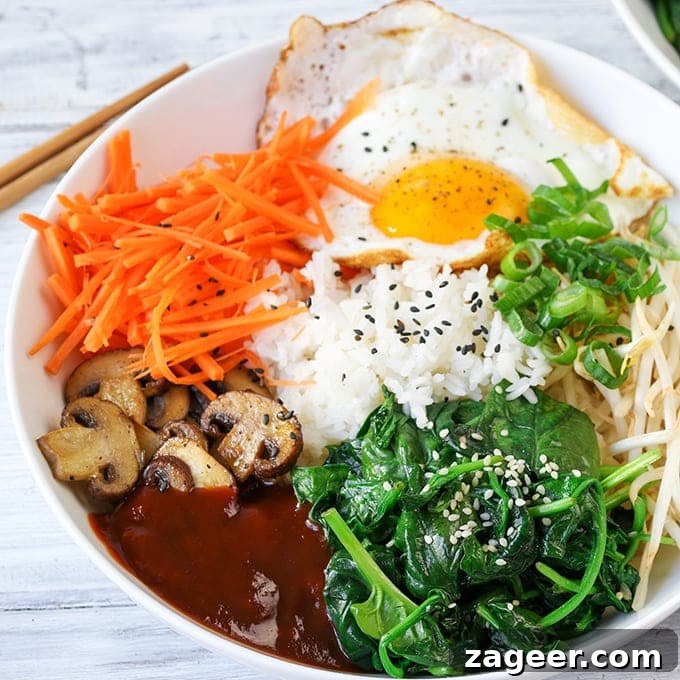
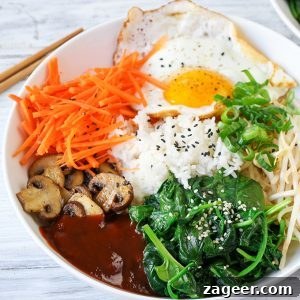
Divide the warm, boiled rice evenly between two large serving bowls. Artfully arrange the carrot matchsticks, fresh beansprouts, cooked mushrooms, and wilted spinach around the perimeter of each bowl, creating a colorful and appealing presentation. Gently place one fried egg on top of the vegetables in each bowl, and then generously spoon the Korean gochujang sauce over everything.
-
Finish by sprinkling both the white and black sesame seeds over each bibimbap bowl for added texture and visual appeal. Serve immediately and enjoy the delightful experience of mixing all the ingredients together before taking your first bite!
Notes
Nutrition
Nutrition information is automatically calculated, so should only be used as an approximation.
Like this recipe? Leave a comment below!