
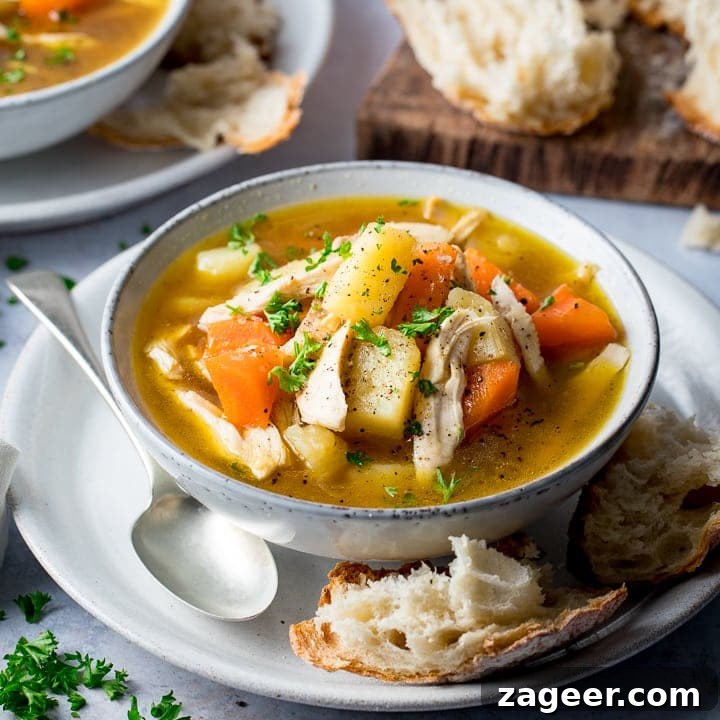
I never throw away the chicken bones after a roast dinner because I always turn them into this hearty Chicken and Vegetable Soup. It’s a comforting, flavourful way to use leftovers.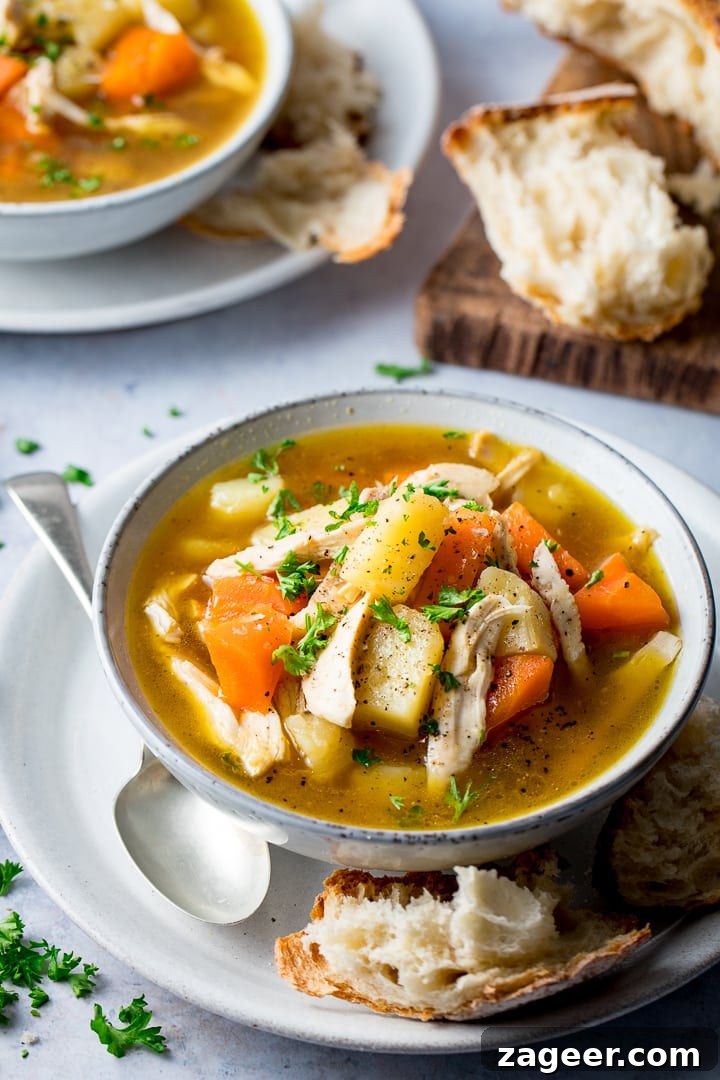
This homemade soup is simple, warming and full of homely flavour.
While I often think of comfort food as rich or creamy, a clear, well-made chicken broth with tender vegetables can feel just as satisfying. This is a recipe I’ve loved since childhood. My mum used the same method to make large batches of turkey stock after Christmas.
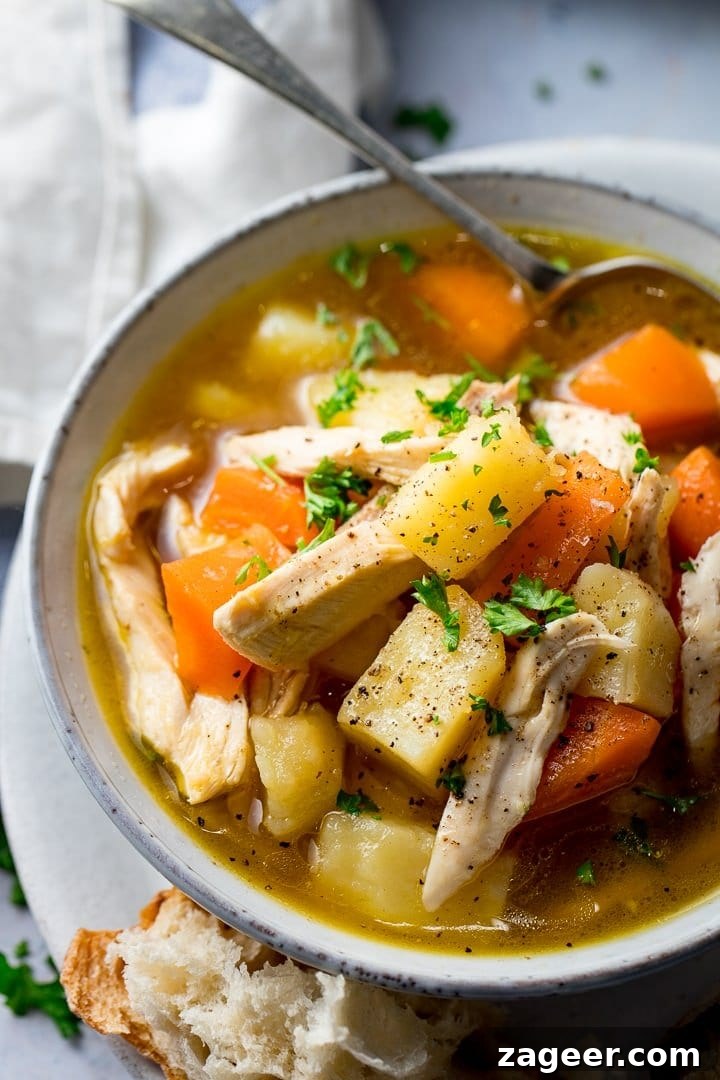
I craved this soup a lot when I was pregnant — I’d roast a chicken late at night just so I could make the stock and soup.
What do we need?
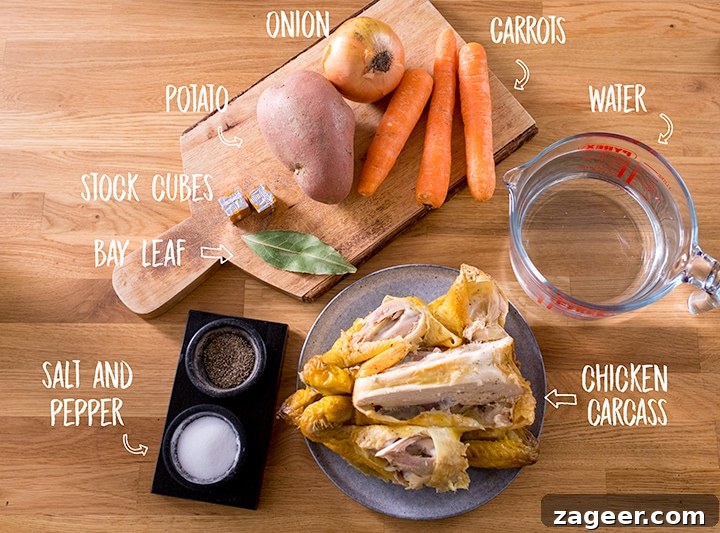
I usually start with carrots and potatoes, but you can add whatever vegetables you like: broccoli, peas, cauliflower, kale or squash all work well. The key is a good stock made from the carcass.
How to make chicken soup from a carcass
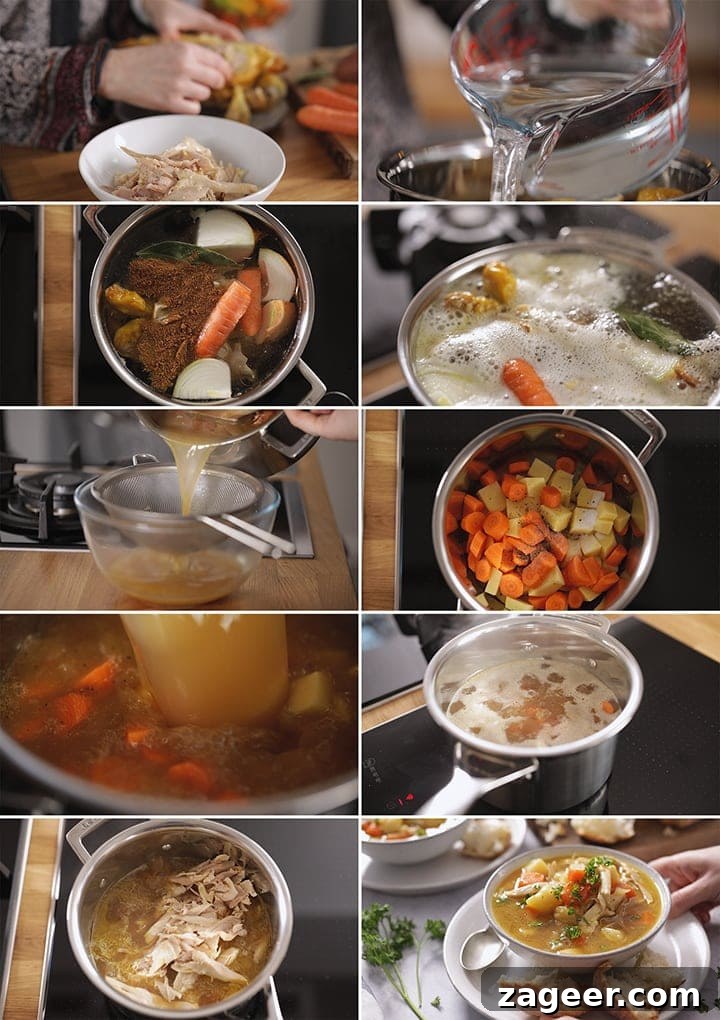
Begin by removing any shreds of meat from the leftover roast chicken — check the wings and underside for small pieces. Set the meat aside for later. Put the carcass and any leftover skin into a large pan and cover completely with cold water. If you have pan juices from the roast, add them, but they’re not essential for great flavour.
Add a quartered onion and one broken carrot (no need to peel), a bay leaf and a couple of crumbled chicken stock cubes. Bring to the boil, then reduce the heat and simmer gently for 2–3 hours. This long simmer extracts flavour and collagen from the bones.
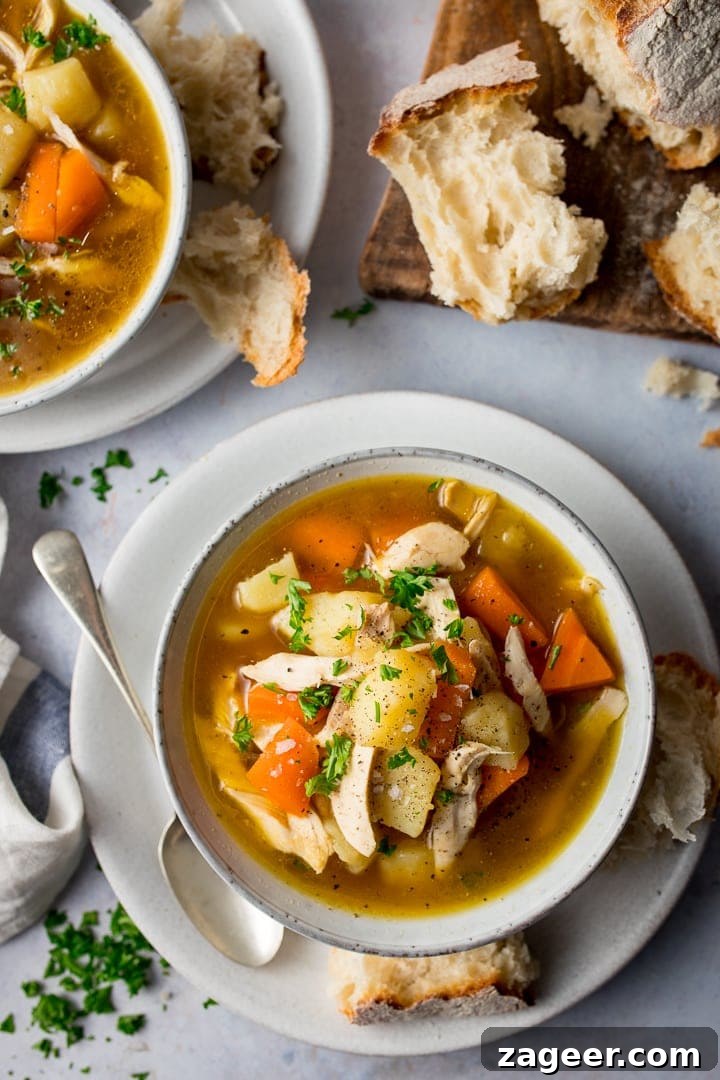
After simmering, strain the stock into a bowl through a sieve, returning the liquid to the pan. Add the remaining carrots, chopped potato and seasoning, then simmer for about 20 minutes until the vegetables are tender. Stir in the shredded chicken for the last five minutes to heat through. Serve topped with chopped parsley.
I always keep at least a few bags of homemade chicken stock or a leftover carcass in the freezer so a pot of soup is never far away.
Short on time?
If you don’t want to start a long simmer right after a roast, pull off every bit of meat and wrap it in foil. Place the carcass and wrapped meat together in a bag and freeze. You can simmer from frozen later — there’s no need to defrost before making stock.
One small carcass makes roughly two portions of soup; a larger bird will yield 3–4 portions. To stretch the soup further, add extra water and another stock cube.
Multiple carcasses
You can scale this recipe up easily. Boil multiple carcasses together in a large pan, strain and freeze the stock in portions. The stock will keep in the fridge for a few days or in the freezer for longer, ready to turn into soup whenever you like.
Using rotisserie chicken
Yes — you can use a rotisserie chicken. Keep in mind that the better the quality of the chicken, the better the stock will taste. Avoid using heavily seasoned or BBQ-flavoured birds for the cleanest results.
Make ahead
You can prepare the stock in advance, strain and cool it, then refrigerate or freeze. Add shredded chicken either before storing or keep it wrapped separately and combine when reheating.
To finish from frozen, heat the stock gently in a pan until melted, then add the vegetables and seasoning and simmer until tender. Add shredded chicken for the last few minutes. If you make the full soup ahead, cool, cover and refrigerate or freeze. Reheat until piping hot.
Why soup can become jelly-like in the fridge
When chilled, the stock often turns jelly-like — that’s the gelatin from collagen released during long cooking. It melts back to a liquid on reheating and contributes nutrients and body to the soup.
Gluten free option
Use gluten free stock cubes to make the soup suitable for a gluten free diet.
Thickening the soup
This is a broth-style soup. If you prefer a thicker texture, stir in a cornstarch (cornflour) slurry just before serving: mix 2 tablespoons cornflour with 6 tablespoons cold water, then add gradually while stirring until you reach the desired thickness.
More Delicious Soups:
If you love soup, try variations like cream of broccoli, Tuscan chicken soup, chicken pot pie soup, hidden-veg tomato soup with gruyere bacon croutons, creamy chicken and tortellini, or baked sweet potato and carrot soup with cheddar-potato-skin croutons.
The video:
Piled High Chicken and Vegetable Soup
Ingredients
- 1 leftover cooked chicken carcass, with a bit of the meat still on
- Cold water (enough to cover the carcass)
- 1 onion, quartered (no need to peel)
- 3 carrots (one broken in half for the stock; two peeled and chopped later)
- 1 bay leaf
- 2 chicken stock cubes, crumbled
- 1 large potato, peeled and chopped into bite-size chunks
- 1/4 tsp each salt and pepper
- 1 tsp fresh chopped parsley, to serve
Instructions
- Remove any meat from the carcass and refrigerate it for later. Use your fingers to find small shreds under the wings and skin.
- Place the bones and skin in a large pan and cover with cold water so it sits about an inch above the chicken.
- Add the quartered onion, one carrot (broken in half), bay leaf and crumbled stock cubes.
- Bring to a boil, then reduce to a simmer and cook for 2–3 hours until the liquid has reduced and the flavour is concentrated.
- Strain the stock through a sieve into a large bowl, allowing all juices to drip through, then return the strained liquid to the pan.
- Add the remaining two chopped carrots to the stock.
- Add the chopped potato, salt and pepper. Bring to the boil, then simmer gently for about 20 minutes until the vegetables are tender. Stir in the reserved shredded chicken for the last five minutes to heat through.
- Ladle into bowls and serve topped with chopped parsley.
Notes
Can I make it ahead?
Yes. Make the stock in advance, strain and cool, then refrigerate or freeze. Add shredded chicken before storing or keep it separate. Reheat gently and then add vegetables to finish the soup. If you freeze the finished soup, defrost overnight in the fridge or reheat from frozen over a low heat until piping hot.
Gluten free
Use gluten free stock cubes.
Nutrition information is an approximation per serving.
Nutrition
Calories: 242 kcal | Carbohydrates: 28 g | Protein: 14 g | Fat: 9 g | Saturated Fat: 2 g | Cholesterol: 39 mg | Sodium: 1357 mg | Fiber: 6 g | Sugar: 7 g
Nutrition information is automatically calculated and should be used as an approximation.
This post was first published in April 2015 and updated in February 2020 with new photos, video and tips.
Some links in the original post may have been affiliate links. Nutritional information is approximate and can vary depending on ingredients and portion sizes.