
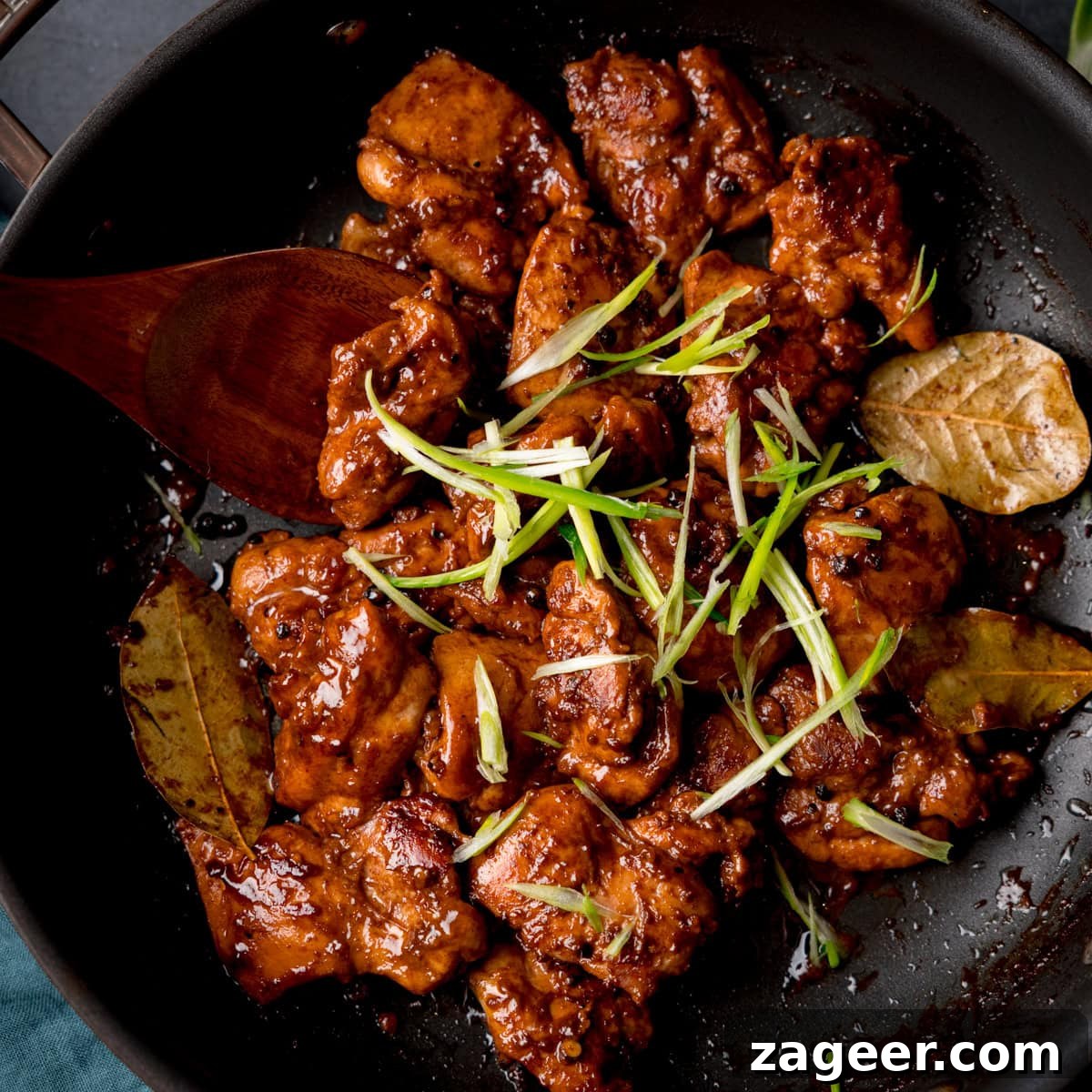
Embark on a culinary journey to the Philippines with this irresistible Chicken Adobo recipe. It’s renowned for its perfectly sticky, glossy glaze that’s bursting with peppery, tangy, and savory notes. This is the kind of dish you’ll want to generously drizzle over fluffy rice, letting every grain soak up its incredible flavor. Get ready to master a classic that promises both comfort and an explosion of taste!
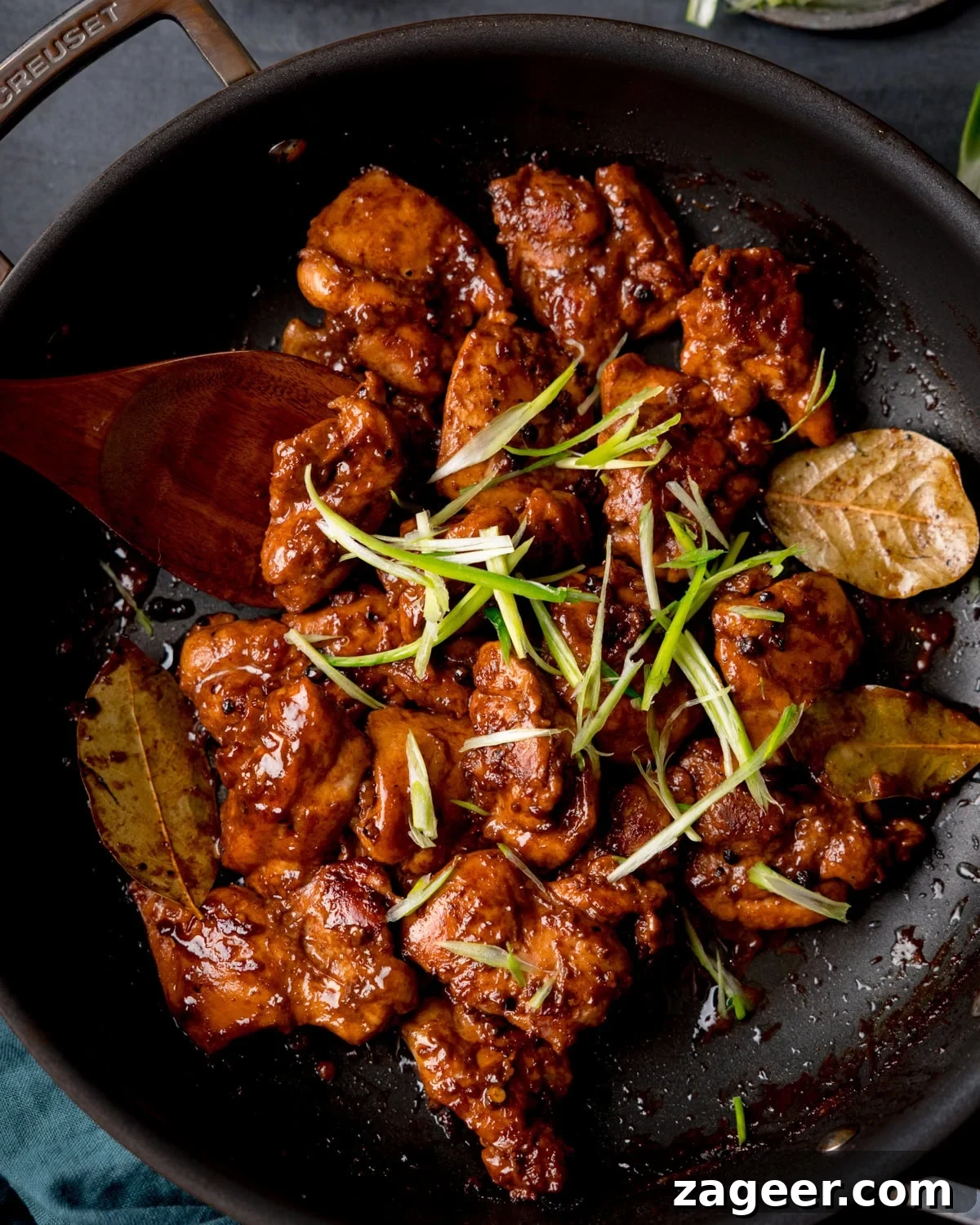
Why You Will Love This Chicken Adobo Recipe

It’s always a delightful surprise how a handful of straightforward ingredients can unite to create something as profoundly flavorful as Chicken Adobo. Originating from the Philippines, Chicken Adobo is a staple dish celebrated for its intricate flavor profile, yet it’s surprisingly simple to prepare. The key to its magic lies in allowing the sauce to patiently simmer down, transforming into that perfect, desired consistency – either a luscious sauce or a deep, sticky glaze.
The distinctive tanginess that defines Adobo primarily comes from rice vinegar. While our recipe calls for about 4 tablespoons – which might seem generous, it’s actually a balanced amount, often less than what you’d find in many traditional recipes. This quantity ensures a vibrant tang without overpowering the other rich flavors. Plus, it’s incredibly easy to adjust the acidity to suit your personal preference, as detailed in our comprehensive tips section below.
Here’s what makes this particular Adobo Chicken recipe an absolute standout and a guaranteed favorite in your kitchen:
- Versatile Sauce Consistency: Whether you prefer a slightly saucier dish perfect for soaking into rice, or a rich, thick, glossy glaze that clings beautifully to the chicken, you can achieve it effortlessly. Simply adjust the simmering time by a few minutes to get your desired texture.
- Pantry-Friendly Ingredients: Beyond the chicken itself, this recipe relies on common pantry staples. You won’t need to hunt for exotic items; everything required should be readily available at your local supermarket, making it a convenient choice for any night of the week.
- Delicious Hot or Cold: This dish is fantastic when served piping hot, straight from the pan. But its flavors deepen beautifully upon cooling, making it exceptional as leftovers. Try it cold as part of a vibrant salad, or tucked into a wrap for a satisfying lunch the next day. It’s truly a gift that keeps on giving!
Table of Contents
- Why You Will Love This Chicken Adobo Recipe
- A Brief History of Filipino Adobo
- 📋 Ingredients for the Perfect Chicken Adobo
- 🧑🍳 Abbreviated Chicken Adobo Recipe
- Expert Recipe Tips for Chicken Adobo
- 🍽️ What to serve with Chicken Adobo
- Make Ahead and Leftovers Guide
- 📺 Watch How to Make It
- Authentic Chicken Adobo Recipe Card
- 🍲 More Chicken Thigh Recipes
A Brief History of Filipino Adobo
Chicken Adobo is more than just a dish; it’s a culinary icon and the unofficial national dish of the Philippines, deeply embedded in the country’s culture and history. The term “adobo” itself is of Spanish origin, meaning “marinade” or “sauce,” and was given by Spanish colonizers who observed the indigenous cooking method. However, the technique of cooking meat in vinegar, salt (or soy sauce), and garlic predates Spanish arrival, serving as a practical way to preserve food in a tropical climate.
Over centuries, Filipino Adobo has evolved into countless regional variations, with each family often boasting its own cherished version. While pork, seafood, and vegetables can also be adobo-style, chicken adobo remains the most popular and recognized. Its enduring appeal lies in its perfect balance of savory, sour, and sometimes sweet and spicy flavors, creating a complex yet comforting profile that truly represents Filipino resilience and adaptability.
📋 Ingredients for the Perfect Chicken Adobo
For precise measurements and detailed quantities, please refer to the comprehensive recipe card located at the bottom of this article.
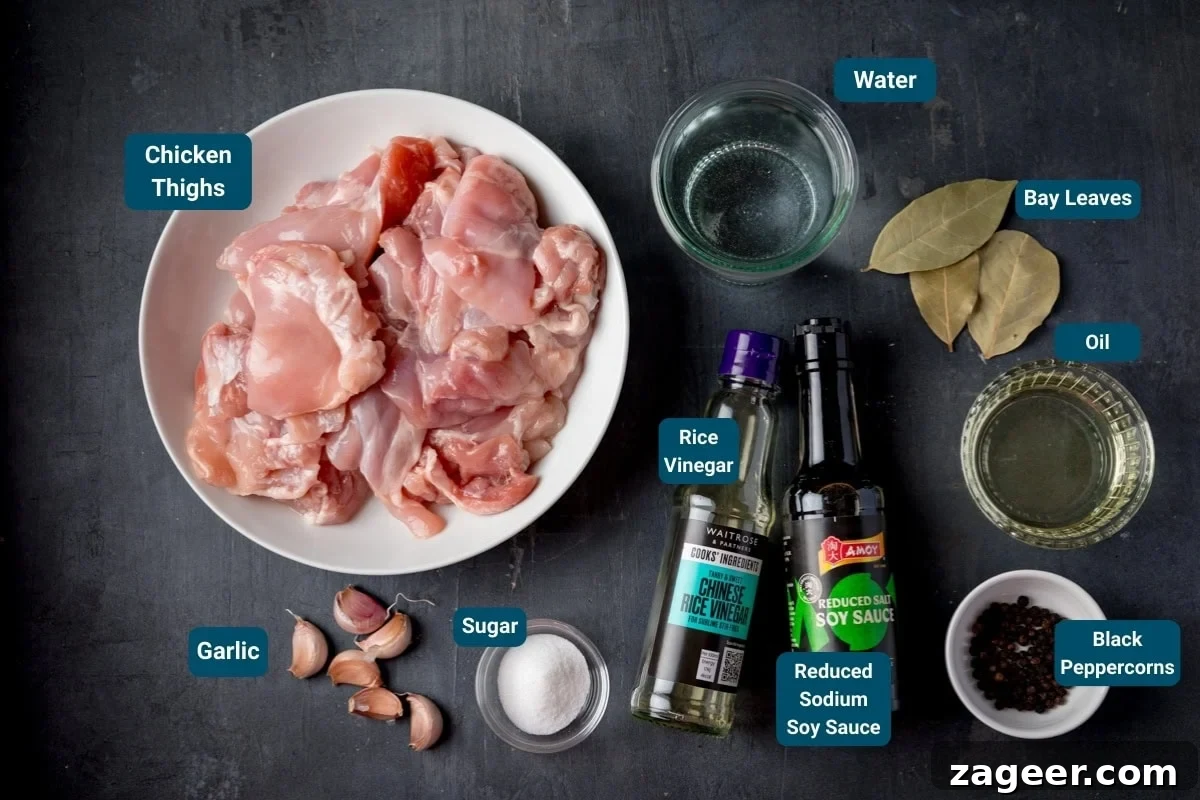
Chicken Thighs
We highly recommend using boneless, skinless chicken thigh fillets for this recipe. Chicken thighs are incredibly forgiving, remaining succulent and tender even after simmering for a longer period. Their higher fat content contributes significantly to the richness and depth of flavor in the adobo sauce. Slicing them in half ensures even cooking and allows more surface area to absorb the delicious marinade.
Garlic: The Heart of Adobo
Garlic is non-negotiable in Filipino Adobo. Its pungent aroma and savory notes form the foundation of the dish’s irresistible flavor. Freshly minced garlic is always best, providing a more vibrant and potent taste compared to pre-minced jarred varieties.
Soy Sauce: Flavor and Color
For this particular recipe, we opt for **reduced sodium soy sauce**. As the adobo sauce simmers and reduces, its saltiness intensifies. Using reduced sodium soy sauce prevents the dish from becoming overly salty, allowing you to appreciate the full spectrum of flavors. You always have the option to add a pinch more salt at the very end if you feel it’s needed, tailoring it perfectly to your palate. If using regular soy sauce, you might want to slightly reduce the quantity or add a splash more water during simmering.
Rice Vinegar: The Essential Tang
Rice vinegar is crucial for Adobo’s signature tang. It provides a clean, bright acidity that cuts through the richness of the chicken and soy sauce, creating that wonderfully balanced flavor profile. While rice vinegar is preferred for its milder, slightly sweet notes, white vinegar can be used as a substitute, though you might start with a slightly smaller amount and adjust to taste.
Bay Leaves: Aromatic Depth
Bay leaves infuse the adobo with a subtle, earthy, and aromatic depth that is essential to its classic taste. Whether you use fresh or dried bay leaves, ensure they are whole to allow their flavor to gradually release into the sauce as it simmers. Remember to remove them before serving, as they are not meant to be eaten.
Black Peppercorns: For a Peppery Kick
Whole black peppercorns, lightly bashed, provide a robust, warm heat and a subtle texture that’s characteristic of authentic adobo. Their flavor mellows and blooms beautifully during the simmering process, contributing to the dish’s complexity.
Brown Sugar: For Balance
A touch of light brown sugar helps to balance the tang of the vinegar and the savoriness of the soy sauce, creating a harmonious sweet and sour profile. It also contributes to the lovely caramelization and sticky glaze of the sauce.
Cooking Oil
Any neutral-flavored oil like avocado oil, vegetable oil, or canola oil will work perfectly for searing the chicken. Avocado oil is a personal favorite due to its high smoke point and mild flavor, which won’t interfere with the adobo’s distinct taste.
🧑🍳 Abbreviated Recipe
For the complete recipe with precise measurements and detailed, step-by-step instructions, please scroll down to the dedicated recipe card below.
Begin by marinating chicken thigh fillets in a fragrant blend of minced garlic, reduced sodium soy sauce, rice vinegar, and bay leaves for at least an hour to infuse maximum flavor. Once marinated, carefully remove the chicken, reserving the marinade, and pan-fry the drained chicken in a touch of oil for just 2 minutes per side until lightly browned. Then, return the reserved marinade to the pan, along with water, light brown sugar, and lightly bashed black peppercorns. Bring to a simmer and cook for 25-30 minutes, turning the chicken halfway, until the sauce reduces to a wonderfully sticky, glossy glaze that coats the tender chicken pieces beautifully.
Expert Recipe Tips
- Achieving Your Preferred Sauce Consistency: The beauty of Adobo is its adaptability. Simmering for approximately 25 minutes will result in perfectly tender chicken enveloped in a flavorful sauce, ideal for spooning generously over rice. If you prefer a more pronounced, darker, and incredibly glossy glaze that truly clings to each piece of chicken with very little residual sauce, aim for a 30-minute simmer. Feel free to experiment to find your ideal balance!
- Mastering the Tang: Adobo should have a distinctive, bright tang. You can easily adjust this to your liking. Towards the end of the simmering time, around 5 minutes before you anticipate it being done, taste the sauce. If you desire a stronger tang, simply add 1-2 tablespoons of additional rice vinegar. Crucially, do not stir immediately; allow it to simmer for another 3 minutes. This brief simmering period will mellow the sharp edge of the fresh vinegar, integrating it smoothly into the sauce rather than leaving a harsh taste. Taste again and repeat if necessary for even more tang. Conversely, if you find the sauce too tangy for your preference, a teaspoon of sugar can be added to balance and soften the acidity.
- Marinating Time Matters: While the recipe suggests a minimum of 1 hour, marinating the chicken for longer, even overnight in the refrigerator, will significantly deepen the flavors. The chicken will absorb more of the garlic, soy, and vinegar, resulting in a more profound and aromatic dish.
- Searing for Depth: Don’t skip the initial searing step! Briefly frying the chicken thighs before adding the sauce creates a beautiful golden-brown crust, locking in moisture and adding another layer of rich flavor through caramelization. It also helps the glaze adhere better later.
- Don’t Overcrowd the Pan: When searing the chicken, ensure it’s in a single layer without overlapping. If your pan isn’t large enough, cook the chicken in batches to ensure proper browning rather than steaming. This is key for that delicious crust.
Loved this recipe? Pin it now and save it for later!
Pin It
🍽️ What to serve with Chicken Adobo
Chicken Adobo is a remarkably versatile dish that pairs beautifully with a variety of sides. Its rich, tangy, and savory flavors make it an excellent centerpiece for an Asian-inspired meal. Here are some of our top recommendations to complete your dining experience:
- Steamed White Rice: This is the traditional and arguably best accompaniment. The neutral flavor and fluffy texture of steamed white rice are perfect for soaking up every last drop of the glorious adobo sauce and glaze.
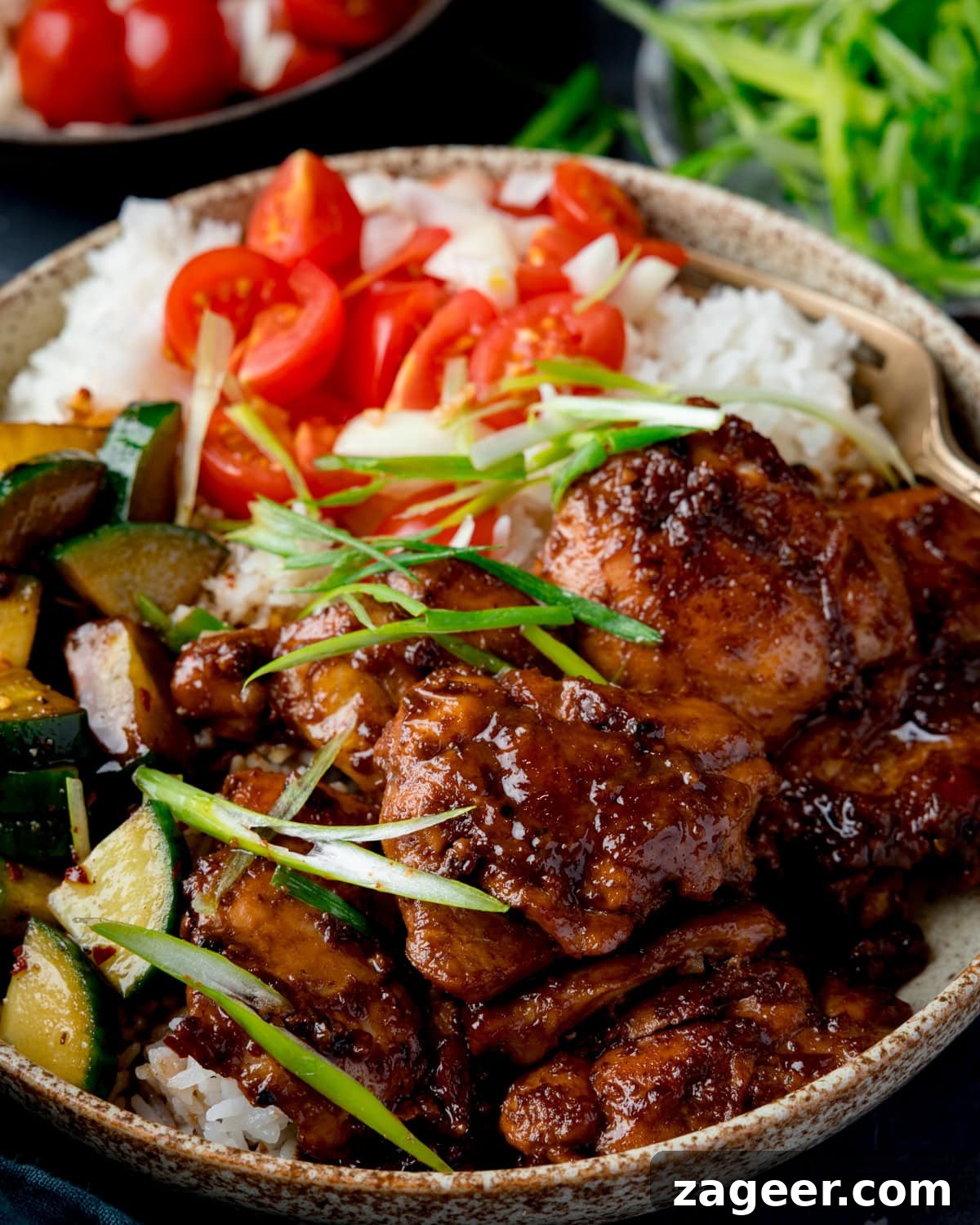
- Asian Cucumber Salad: The crisp, refreshing coolness and light tang of an Asian cucumber salad (like the one linked below) provide a wonderful contrast to the rich adobo. It’s a palate cleanser that brightens the entire meal.
- Tomato and Onion Salad: Another excellent fresh side, a simple tomato and onion salad offers a burst of freshness and a mild acidity that complements the chicken without overwhelming it.
- Garlic Fried Rice: For an extra layer of flavor and indulgence, swap plain steamed rice for garlic fried rice. The aromatic garlic notes will harmonize beautifully with the adobo’s garlicky base.
- Sautéed Greens: Simple sautéed bok choy, spinach, or green beans with a touch of garlic and soy sauce can add a healthy and vibrant element to your plate.
Explore these recipes for perfect pairings:
Salads
Asian Cucumber Salad
Sides
Tomato and Onion Salad
Sides
How to Cook Rice Perfectly
Sides
Onion Fried Rice
Make Ahead and Leftovers Guide
- Making Ahead: While this Chicken Adobo is best enjoyed immediately for optimal texture and freshness, it can certainly be prepared in advance. If you plan to make it ahead, simmer the adobo for about 20 minutes instead of the full 30. This leaves a bit more liquid, preventing the chicken from drying out during reheating. Once cooked, allow it to cool completely before transferring it to an airtight container. It can be refrigerated for up to 3-4 days. If freezing, ensure it’s in a freezer-safe container for up to 2-3 months; thaw overnight in the refrigerator before reheating.
- Reheating Instructions: To reheat, transfer the adobo to a pan over low-medium heat. Add a small splash of water (1-2 tablespoons) to help loosen the sauce and prevent it from becoming too thick or sticking to the pan. Cook for 10-12 minutes, gently turning the chicken pieces once or twice, until the chicken is thoroughly heated through and the sauce is bubbling. Avoid high heat to prevent scorching.
- Creative Leftovers: Leftover Chicken Adobo is incredibly versatile. Beyond simply reheating, consider shredding the cold chicken and using it in sandwiches, wraps, or even as a topping for a hearty noodle soup. The rich flavors of the adobo also make fantastic “adobo flakes” – simply shred the chicken and pan-fry until crispy, then serve over rice with a fried egg for a traditional Filipino breakfast experience.
📺 Watch How to Make It
Watch our step-by-step video guide to see exactly how to prepare this delicious Filipino Chicken Adobo. Visual instructions make cooking even easier!
Video Placeholder
(Replace “YOUR_VIDEO_ID” with an actual YouTube or Vimeo video ID if you have one.)

Click the stars to rate or comment
Authentic Chicken Adobo Recipe
Nicky Corbishley
10 minutes
35 minutes
1 hour
1 hour 45 minutes
4
Dinner
Filipino
Ingredients
Chicken and Marinade:
- 1 KG (2.2lbs) skinless chicken thigh fillets, sliced in half (this is approx 6 fillets)
- 6 garlic cloves peeled and minced
- 90 ml (1/2 cup + 2 tbsp) reduced sodium soy sauce
- 4 tbsp rice vinegar or white vinegar
- 4 bay leaves fresh or dried
Also Needed:
- 2 tbsp oil (I like to use avocado oil)
- 240 ml (1 cup) water
- 1 tbsp light brown sugar
- 2 tsp peppercorns lightly bashed
To Serve:
- boiled or fried rice
- 5 spring onions scallions shredded
- marinated cucumber
- tomato and onion salad
Instructions
-
Marinate the Chicken: In a large bowl, combine the chicken thigh fillets with the minced garlic, reduced sodium soy sauce, rice vinegar, and bay leaves. Mix thoroughly to ensure every piece of chicken is evenly coated. Cover the bowl and let the chicken marinate for at least 1 hour at room temperature, or for enhanced flavor, place it in the fridge and marinate overnight.1 KG (2.2lbs) skinless chicken thigh fillets, sliced in half (this is approx 6 fillets),
6 garlic cloves,
90 ml (1/2 cup + 2 tbsp) reduced sodium soy sauce,
4 tbsp rice vinegar or white vinegar,
4 bay leaves -
Sear the Chicken: Heat the oil in a large frying pan or skillet over medium-high heat. Using tongs, remove the chicken pieces from the marinade (be sure to reserve the marinade for later use). Place the chicken in the hot pan in a single layer. It’s fine if the chicken fits snugly, but avoid overlapping to ensure proper searing.2 tbsp oil
-
Brown Evenly: Fry the chicken for approximately 2 minutes on each side, allowing it to develop a beautiful golden-brown crust. This step adds significant depth of flavor to the finished dish.
-
Add Sauce Ingredients: Pour the reserved marinade back into the pan. Then, add the water, light brown sugar, and lightly bashed peppercorns. Stir gently to combine all the ingredients around the chicken.240 ml (1 cup) water,
1 tbsp light brown sugar,
2 tsp peppercorns -
Simmer to Perfection: Bring the sauce to a gentle simmer. Reduce the heat to low and let it simmer, uncovered, for 25-30 minutes. Make sure to turn the chicken pieces over halfway through the cooking time to ensure even absorption of flavor and glaze development. A full 30 minutes of simmering will yield exceptionally tender chicken with a thick, dark, and glossy glaze that coats the chicken beautifully, leaving just a minimal amount of rich sauce in the pan.
Note on Sauce: If you prefer a more generous amount of sauce for drizzling, simmer for a slightly shorter duration (around 25 minutes). You can also add an extra splash of water (about 2-3 tablespoons) to the pan during the final few minutes of simmering, but avoid pouring it directly over the chicken to preserve the developing glaze.
-
Adjust Tanginess: Before serving, taste the sauce. If you desire a more pronounced tang, add an additional 1-2 tablespoons of rice vinegar and let it simmer for another 2-3 minutes to mellow the vinegar’s harshness. If it’s too tangy, a teaspoon of sugar can help balance the flavors.
-
Serve: Once the adobo has reached your desired consistency and flavor, turn off the heat. Remove the bay leaves. Serve the succulent chicken and its sticky glaze hot over a bed of fluffy boiled or fried rice. Garnish generously with freshly shredded spring onions for a burst of color and fresh flavor. Consider serving alongside marinated cucumber or a refreshing tomato and onion salad for a complete Filipino feast.boiled or fried rice,
5 spring onions,
marinated cucumber,
tomato and onion salad
Recipe Video Guide
For a visual walkthrough of this recipe, refer to the video embedded earlier in the post or check our YouTube channel for the full cooking demonstration.
Notes
Adjusting the Tanginess
The distinctive tangy flavor is key to Adobo. You can easily fine-tune this to your preference near the end of the simmering process. Approximately 5 minutes before the estimated end of cooking, taste the sauce. If you desire more tang, incorporate 1-2 tablespoons of additional rice vinegar. It’s important not to stir immediately; allow the sauce to simmer for another 3 minutes. This brief period helps to mellow the raw vinegar taste, integrating it smoothly into the sauce. Taste again and repeat if needed for your ideal level of tang. Should the sauce become too tangy, a simple teaspoon of sugar can be added to balance out the acidity effectively.
Nutritional Information Disclaimer
The nutritional information provided here is an approximation. It is calculated per serving (based on this recipe yielding 4 servings) and does not include any serving suggestions such as rice or optional toppings. Factors such as exact ingredient brands, preparation methods, and serving sizes can alter the final nutritional values.
Recipe Inspiration:
This recipe is lovingly adapted from Nagi’s Filipino chicken adobo recipe from RecipeTinEats, a fantastic resource for delicious and reliable recipes.
Nutrition
Calories: 400kcal
|
Carbohydrates: 7g
|
Protein: 51g
|
Fat: 17g
|
Saturated Fat: 3g
|
Polyunsaturated Fat: 4g
|
Monounsaturated Fat: 8g
|
Trans Fat: 0.1g
|
Cholesterol: 238mg
|
Sodium: 1098mg
|
Fiber: 1g
|
Sugar: 3g
Nutrition information is automatically calculated, so should only be used as an approximation.
To save recipes and receive updates, please visit our newsletter signup page.
Did you enjoy this recipe? We’d love to hear from you!
Please leave a comment or rate the recipe below. Your feedback helps us and other home cooks discover delicious meals!
🍲 More Delicious Chicken Thigh Recipes
Quick & Easy
Honey Garlic Chicken
Asian
Thai Basil Chicken
Chicken
Chicken Doner Recipe
Asian
Salt and Pepper Chicken
Asian
Sticky Cashew Chicken
Asian
Szechuan Chicken
Some of the links in this post may be affiliate links – which means if you buy the product I get a small commission (at no extra cost to you). If you do buy, then thank you! That’s what helps us to keep Kitchen Sanctuary running. The nutritional information provided is approximate and can vary depending on several factors. For more information please see our Terms & Conditions.