

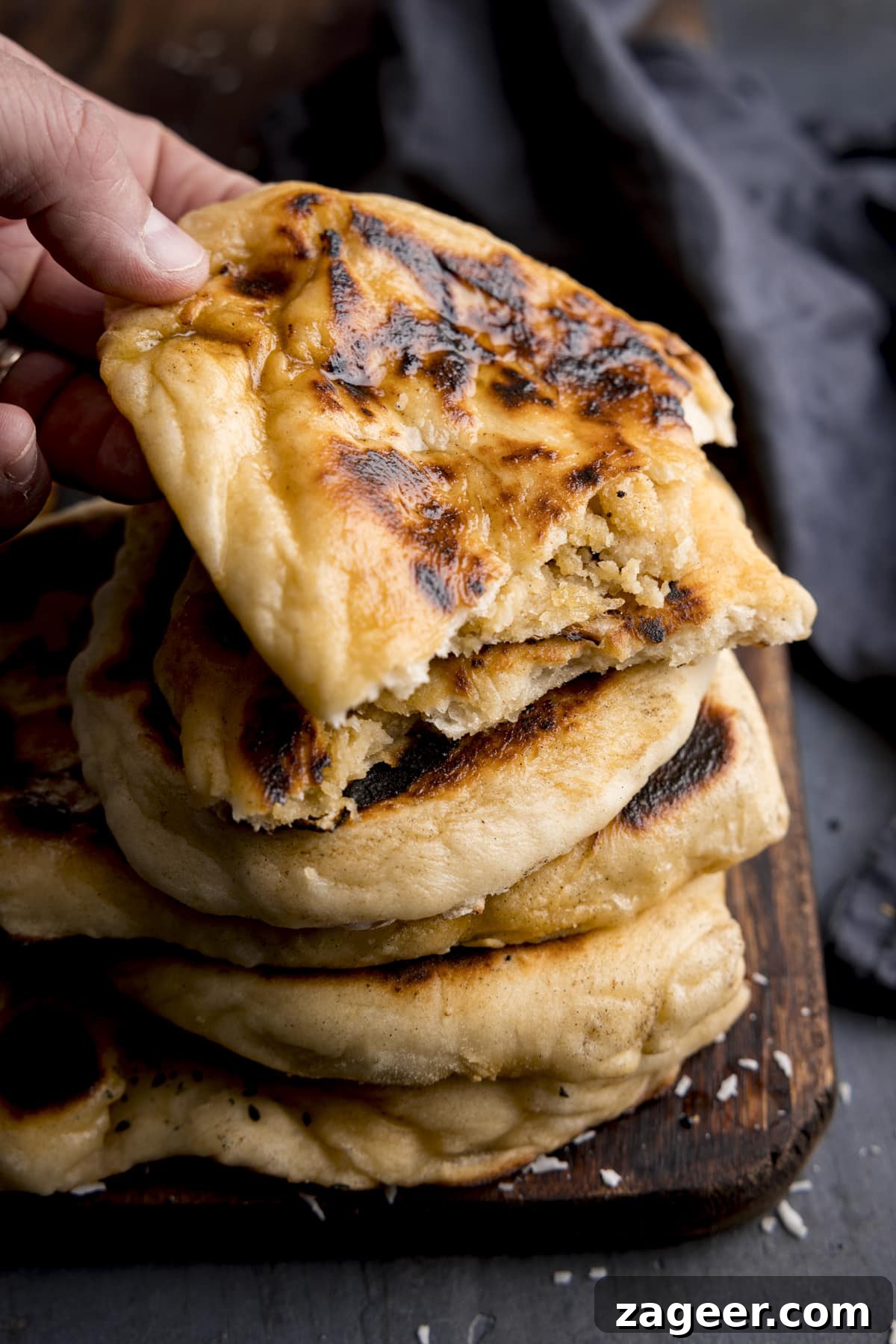
Imagine sinking your teeth into a piece of soft, fluffy naan bread, subtly sweet, perfectly warm, and ready to sweep up every last drop of a rich curry sauce. This is the magic of Peshwari Naan, a beloved Indian flatbread that masterfully balances sweet and savory notes. While some traditional recipes incorporate sultanas, our rendition focuses on a uniquely satisfying, moreish sticky mixture of ground almonds and desiccated coconut, creating a truly harmonious flavour profile that is simply irresistible.
The Irresistible Charm of Peshwari Naan
Peshwari Naan holds a special place in the hearts of curry enthusiasts around the world, and it’s almost always my top choice when ordering takeaway. The distinctive softness and chewiness of the bread, coupled with that delicate hint of almond sweetness, create an unparalleled culinary experience. But the real joy begins when you tear off a generous piece and generously swirl it through a comforting puddle of hot, aromatic Madras sauce. The explosion of spicy and sweet flavours on your palate is nothing short of pure bliss.
What is Peshwari Naan?
Originating from Peshawar, Pakistan, Peshwari Naan is a leavened flatbread distinguished by its rich, sweet stuffing. Unlike other popular naans like garlic or plain, Peshwari naan embraces a sweet interior, often made with a blend of desiccated coconut, almonds, and sometimes dried fruits. This unique filling transforms a simple bread into a luxurious accompaniment that complements the robust flavours of Indian and Pakistani cuisine.
Why Go Homemade?
While takeaway Peshwari Naan is certainly a treat, making it at home elevates the experience to a whole new level. The aroma of freshly baked bread filling your kitchen is incomparable. Homemade naan offers superior freshness, a soft, pillowy texture that’s hard to replicate commercially, and the complete control to customize the sweetness and richness to your exact liking. Plus, there’s an immense satisfaction in crafting these beautiful breads from scratch.
✅ How to Make Perfect Peshwari Naan
Crafting these delectable naans might seem daunting, but with our detailed, step-by-step guide, you’ll be baking like a pro in no time. For a complete list of ingredients and precise measurements, please refer to the recipe card at the end of this post.
Crafting the Perfect Peshwari Naan Dough
The foundation of any great naan is a well-made dough. Our recipe incorporates a few key ingredients that contribute to its signature chewy yet tender texture and rich flavour:
- Activating the Yeast: We begin by proofing instant yeast in warm water with a touch of sugar. This crucial step ensures your yeast is active and ready to work its magic, leading to a wonderfully light and airy naan.
- Combining Core Ingredients: Into a stand mixer, we add strong white bread flour for structure, sugar and salt for flavour balance, and two crucial leavening agents: instant yeast and baking powder. The baking powder acts as an extra boost, helping the dough to puff up beautifully during cooking.
- The Secret to Softness and Chewiness: To achieve that irresistible chewy and tender texture, we incorporate natural yogurt. Yogurt not only tenderizes the dough but also adds a subtle tang. Melted butter is also added to enrich the flavour, providing a lovely depth and contributing to the slight denseness characteristic of naan bread, without making it heavy.
- Kneading and Proving: Once all ingredients are combined, the dough is kneaded with a dough hook for about 10 minutes until it becomes smooth and elastic, though still slightly sticky. This extensive kneading develops the gluten, which is vital for the naan’s elasticity. The dough is then left to rise in a warm place for 60-90 minutes, allowing it to double in size and develop its full flavour.
Mixing the Sweet Filling
While the dough is proving, it’s the perfect time to prepare the star of the show: our delicious almond and coconut filling. We combine finely ground almonds, rich desiccated coconut, and light brown sugar, all brought together with softened unsalted butter. This creates a wonderfully sticky, sweet, and nutty mixture that will be generously stuffed into each naan. We opt for this blend over sultanas to ensure a smooth, consistently delightful texture in every bite.
Shaping and Stuffing Your Naans
Once the dough has risen, it’s time for the fun part – shaping and stuffing:
- Dividing the Dough: The risen dough is divided into six equal pieces. Each piece is then rolled out into a long rectangle on a lightly floured surface.
- Filling Each Naan: The prepared almond and coconut filling is spread evenly over one half of each dough rectangle. The dough is then carefully folded over the filling, creating a square. The edges are sealed tightly with your fingertips to ensure no delicious filling escapes during cooking.
- Final Shaping: Each filled dough square is then gently shaped into a classic teardrop or oval, approximately 15cm (6 inches) long and 10cm (4 inches) wide at its broadest point. You can use your hands for a more rustic feel or a rolling pin for uniformity. The key is to get the dough fairly thin without rupturing the filling.
Cooking Your Naan to Golden Perfection
- Preheating the Pan: Heat a large, dry frying pan (preferably a non-stick or well-seasoned cast iron pan) over high heat until it’s very hot. The high heat is essential for achieving that characteristic puff and golden spots.
- Frying the Naans: Place one naan bread in the hot dry pan and cook for about 3 minutes. Watch as it miraculously puffs up, indicating it’s cooking perfectly.
- Achieving Golden Patches: Flip the naan and cook for another 3 minutes until beautiful golden-brown patches appear on the underside. For darker patches, you can cook a little longer, but be mindful that the pan might smoke slightly. Wiping the pan clean between naans can prevent excessive smoking.
- Finishing with Butter: As each naan finishes cooking, transfer it to a baking tray and generously brush the top with melted unsalted butter (approximately ¾ tablespoon per naan). This adds incredible flavour and a lovely sheen.
- Keeping Warm: To keep your naans warm and soft while you cook the rest, cover the baking tray with foil and place it in an oven preheated to its lowest setting. Stack cooked naans on top of each other, recovering with foil each time, to maintain their warmth and softness.
👩🍳PRO TIP: When cooking multiple naans, stacking them and keeping them covered in a warm oven is a fantastic way to ensure every piece remains soft and piping hot, ready to be enjoyed with your meal.
🍽️ Saucy Curries to Dip Your Naan In
Peshwari Naan is the ultimate companion for a wide range of flavorful curries. Its sweet and savory profile provides a delightful contrast to spicy dishes and a comforting complement to milder ones. Here are some of our top recommendations to pair with your freshly made naan:
Curries
Chicken Jalfrezi Recipe
Curries
Easy Chicken Korma
Curries
Lamb Bhuna
Curries
Butter Chicken
Asian
Ultimate Beef Massaman Curry Recipe
Curries
Chicken Madras
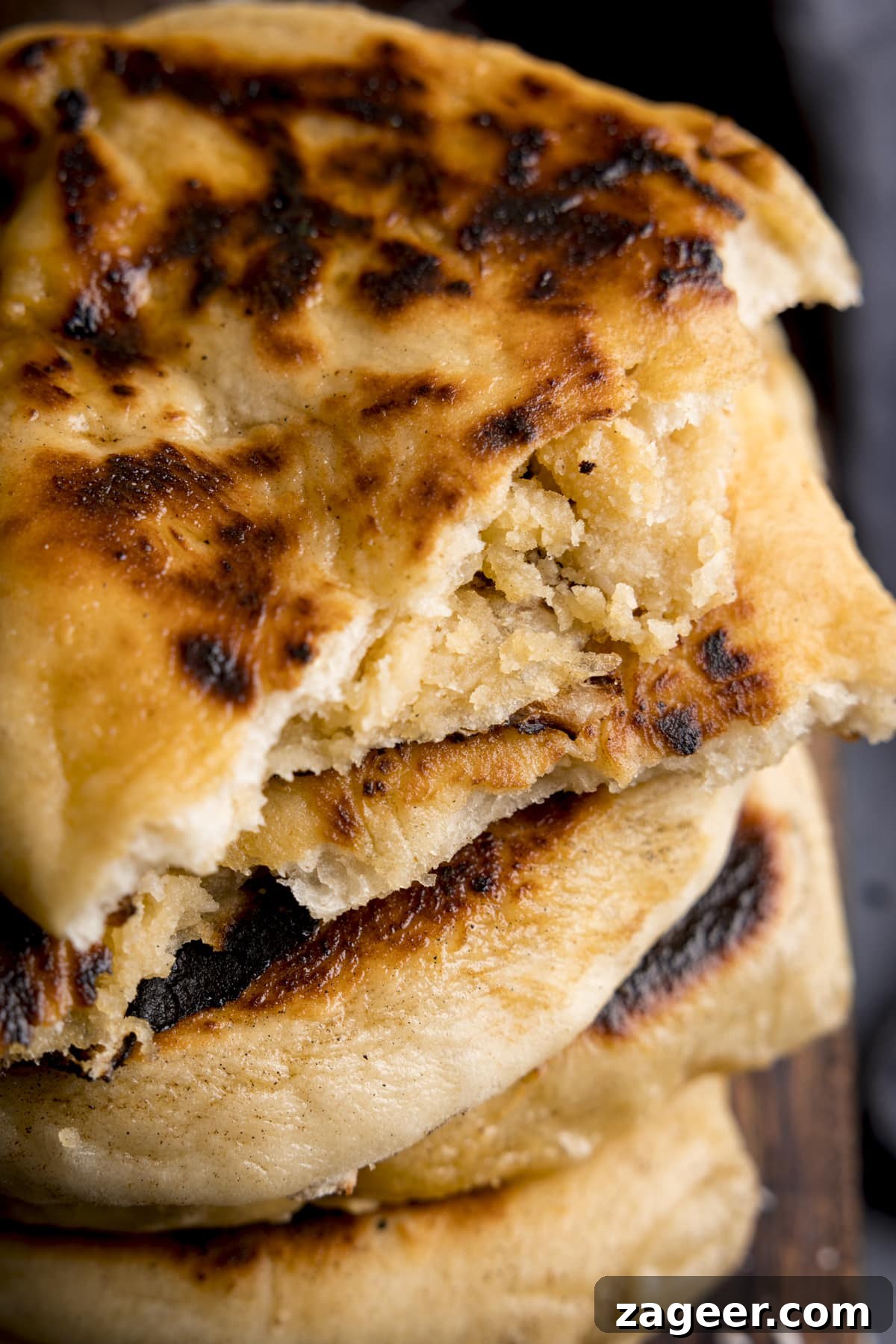
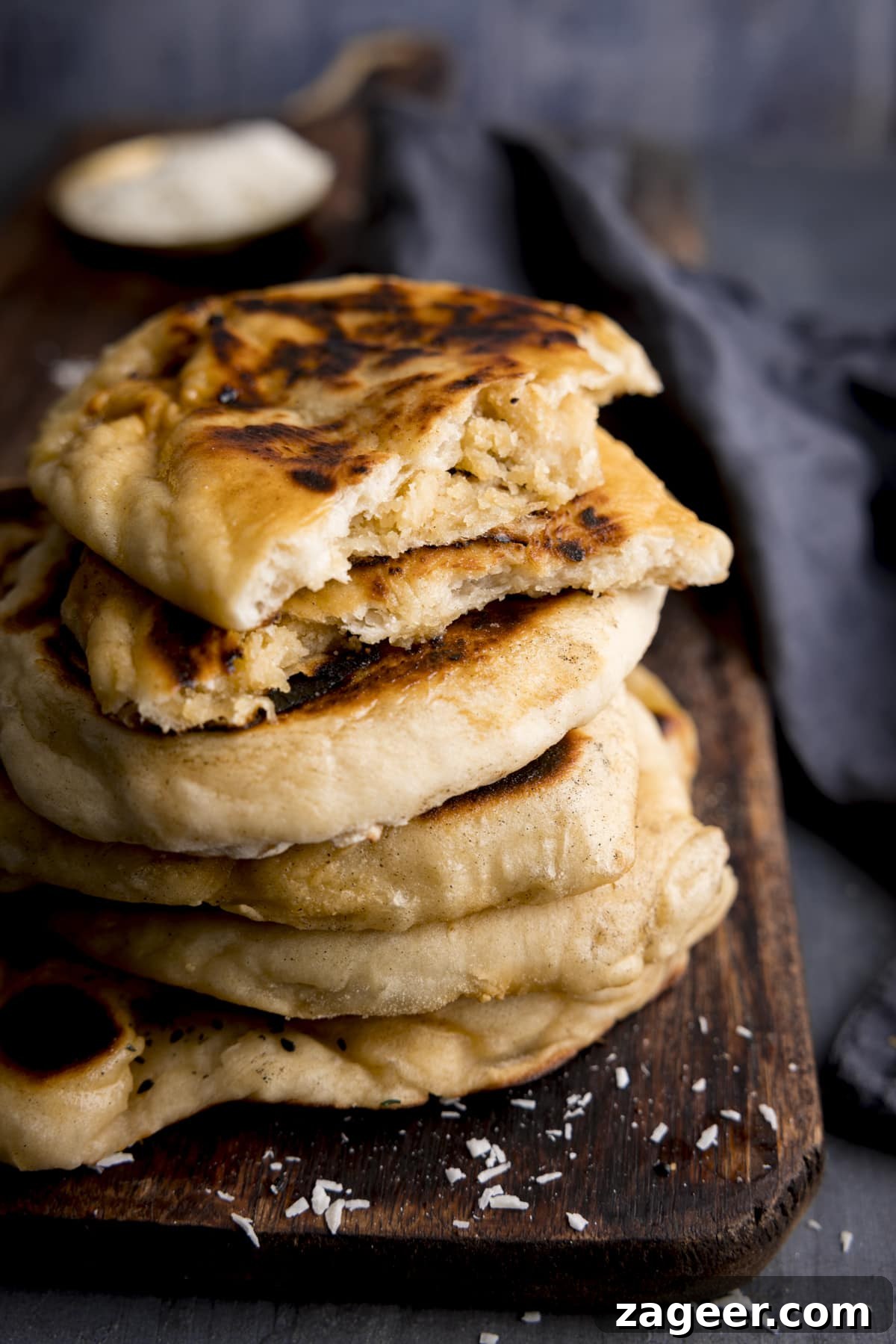
Just look at that lovely, sweet filling peeking out from the soft, tender bread!
🍲 More Fantastic Indian-Inspired Side Dishes
To complete your Indian feast, consider pairing your homemade Peshwari Naan with these other wonderful side dishes and accompaniments:
Jams & Chutneys
Homemade Mango Chutney Recipe
Breads
Garlic Naan Bread Recipe
Sides
Saag Aloo
Breads
Chapati Recipe
Appetizers
Onion Bhaji
Sides
Pilau Rice Recipe
Making Ahead, Storing, and Reheating Homemade Naan
While fresh naan is undeniably the best, sometimes preparation is key. Here’s how to manage your homemade Peshwari Naan for maximum convenience and enjoyment:
Can You Prepare Peshwari Naan in Advance?
Absolutely! Homemade naan still tastes fantastic even when made ahead. If you plan to prepare them in advance, cook all the naans as per the instructions, but omit brushing them with melted butter and don’t bother keeping them warm in the oven. Instead, cover each naan with foil after cooking to keep them soft as they cool. Avoid stacking them in a pile if cooling completely, as this will prolong the cooling time. Once cooled, store the naan breads at room temperature in a sealed airtight container for 1-2 days.
Freezing for Future Feasts
Peshwari Naan freezes exceptionally well, making it perfect for meal prepping. To freeze, place parchment paper between each naan to prevent them from sticking together, then transfer them to a freezer bag or an airtight freezer-safe container. They can be stored in the freezer for up to 2-3 months. When ready to enjoy, defrost them at room temperature for a couple of hours. Keep them in the bag or covered with foil during thawing to prevent them from drying out, ensuring they are no longer cold to the touch before reheating.
Reheating for Freshness
To bring your made-ahead or frozen naan back to life:
- Pre-heat your oven to 180°C (350°F).
- Arrange the naan breads on a baking tray. A slight overlap is fine.
- Sprinkle a small amount of water (about ½ tsp) on each naan. This helps to create steam, keeping them soft and moist.
- Cover the tray tightly with foil and place it in the preheated oven for 8-12 minutes, or until the naans are piping hot throughout.
- Once reheated, brush generously with melted butter before serving to restore their fresh-baked glory.
Stay updated with new recipes!
Subscribe to the newsletter to hear when I post a new recipe. I’m also on YouTube(new videos every week) and Instagram(behind-the-scenes stories & beautiful food photos).

Pin
Click the stars to rate or comment
Homemade Peshwari Naan Recipe
40 minutes
35 minutes
1 hour
2 hours 15 minutes
Ingredients
For the dough:
- 2 tsp (7 g) instant yeast
- 120 ml (½ cup) warm water
- 300 g (2 ½ cups) strong white bread flour
- 1 tsp (5 g) sugar (caster or superfine)
- ½ tsp baking powder
- 1 tsp (5 g) salt
- 150 ml (½ cup + 2 tbsp) natural yogurt
- 30 g (2 tbsp) melted unsalted butter
For rolling/shaping:
- 3-4 tbsp plain (all-purpose) flour
Coconut and almond filling:
- 100 g (1 cup) ground almonds
- 3 tbsp desiccated coconut
- 4 tbsp light brown sugar
- 3 tbsp unsalted butter softened
To Finish:
- 75 g (5 tbsp) melted unsalted butter
Instructions
-
In a medium bowl, combine the instant yeast with warm water. Stir gently and let it sit for 5 minutes until a frothy layer appears on the surface, indicating the yeast is active. This crucial step ensures your dough will rise properly.2 tsp (7 g) instant yeast, 120 ml (½ cup) warm water
-
In the bowl of a stand mixer, add the strong white bread flour, sugar (caster or superfine), baking powder, and salt. Pour in the yeast and water mixture, along with the natural yogurt and melted unsalted butter.300 g (2 ½ cups) strong white bread flour, 1 tsp (5 g) sugar, ½ tsp baking powder, 1 tsp (5 g) salt, 150 ml (½ cup + 2 tbsp) natural yogurt, 30 g (2 tbsp) melted unsalted butter
-
Attach the dough hook to your stand mixer and mix the ingredients until they are just combined. Initially, the mixture may appear dry and crumbly, but be patient; it will gradually come together to form a cohesive dough.
-
Once combined, continue kneading the dough with the dough hook for a full 10 minutes. This extended kneading time is crucial for developing the gluten, which gives the naan its characteristic chewy texture. By the end, the dough will be quite soft and sticky.
-
Lightly oil a large bowl. Transfer the sticky dough to the oiled bowl, turning it once to coat. Cover the bowl securely with a damp cloth or cling film to prevent it from drying out. Allow the dough to prove in a warm place for 60-90 minutes, or until it has visibly doubled in size. This step is vital for a light and airy naan.
-
While the dough is proving, prepare the irresistible coconut and almond filling. In a small bowl, combine the ground almonds, desiccated coconut, light brown sugar, and softened unsalted butter. Mix thoroughly with a spoon or your fingertips until all ingredients are well incorporated and the mixture forms a sticky, crumbly paste. Set aside.100 g (1 cup) ground almonds, 3 tbsp desiccated coconut, 4 tbsp light brown sugar, 3 tbsp unsalted butter
-
Once the dough has doubled, gently punch it down to release the air. Lightly dust your work surface with a generous sprinkling of plain (all-purpose) flour. Divide the dough evenly into 6 balls.3-4 tbsp plain (all-purpose) flour
-
Take one dough ball and lightly dust it with flour. Using a rolling pin, roll each dough ball out into an elongated rectangle, approximately 10cm (4 inches) wide by 5cm (2 inches) high. Ensure the surface is sufficiently floured to prevent sticking.
-
Divide the coconut/almond mixture evenly among the six dough rectangles. Spread the filling out so it covers one half of each piece of dough. Don’t worry if the filling seems a little crumbly; it will hold together once enclosed.
-
Carefully fold the unfilled half of the dough over the filling, creating a square shape that measures approximately 5cm x 5cm (2 inches). Press the edges firmly with your fingertips to seal the filling completely inside. Repeat this process for all remaining dough pieces.
-
With a light hand, gently shape each dough square into a traditional teardrop or oval shape, aiming for approximately 15cm (6 inches) long and about 10cm (4 inches) wide at the widest point. You can use your hands to gently stretch and coax the dough, or a rolling pin if you find it easier. The goal is to make the dough relatively thin, but without allowing the delicious filling to leak out. Don’t fret if they are not perfectly uniform; homemade charm is part of the appeal!
-
To keep your freshly cooked naans warm, preheat your oven to its lowest possible setting. This will create a warm holding environment without continuing to cook the bread.
-
Heat a large frying pan (either a non-stick or a seasoned cast iron pan works best) over a high heat until it is very hot. This intense heat is key to achieving the characteristic puffed texture of naan. Once hot, carefully place one naan bread in the dry pan and fry for approximately 3 minutes, observing as it begins to puff up beautifully.
-
Flip the naan bread over and cook for another 3 minutes on the second side, until it develops lovely golden patches. You can cook for a slightly longer duration if you prefer more pronounced darker, charred spots. Be aware that the pan may smoke a little if cooking for longer periods; in this case, it’s advisable to carefully wipe out any residue after cooking each naan to maintain consistent results.
-
As each naan bread finishes cooking, transfer it to a baking tray. Immediately brush the top generously with the melted unsalted butter (use approximately ¾ tablespoon of butter for each naan). This adds a wonderful richness and shine.75 g (5 tbsp) melted unsalted butter
-
Cover the baking tray containing the cooked naan with foil. Place this tray in your preheated warm oven.
-
Continue this process, cooking each remaining naan bread one by one. After each naan is cooked, brush it with melted butter and add it to the stack on the baking tray. By keeping them in a pile and re-covering with foil, you ensure all the naan breads remain wonderfully soft and warm until every one is cooked and ready to serve.
-
Serve your freshly made Peshwari Naan immediately with your favorite curry and enjoy the perfect blend of sweet and savory!
Notes
Fresh naan bread always tastes the best, but they do still taste fantastic when made ahead. Make all the naans as per the recipe, but skip keeping them warm in the oven or brushing with melted butter immediately. Cover each naan with foil after making it (to keep them soft), but you don’t need to put them in a pile if you’re making them ahead, as they’ll cool faster individually. Cool the naan breads completely, then store them at room temperature in a sealed container for 1-2 days.
Freezing:
Alternatively, Peshwari Naan is excellent for freezing. Place them in a freezer bag or a sealed container. To prevent sticking, put a piece of greaseproof paper between each naan. Defrost at room temperature for a couple of hours until completely thawed and no longer cold to the touch. Ensure they remain covered in the bag or with foil during defrosting to prevent them from drying out.
To reheat:
- Pre-heat the oven to 180°C/350°F.
- Place the naan breads on a baking tray. It’s fine if they overlap a little.
- Sprinkle a little water on each naan (about 1/2 tsp per naan) before covering.
- Cover with foil, and place in the oven for 8-12 minutes, until piping hot throughout.
- Brush with fresh melted butter and serve for the best flavour and texture.
Nutritional information is approximate – per individual naan bread.
Nutrition
Nutrition information is automatically calculated, so should only be used as an approximation.
Like this recipe? Leave a comment below!
Some of the links in this post may be affiliate links – which means if you buy the product I get a small commission (at no extra cost to you). If you do buy, then thank you! That’s what helps us to keep Kitchen Sanctuary running. The nutritional information provided is approximate and can vary depending on several factors. For more information please see our Terms & Conditions.