
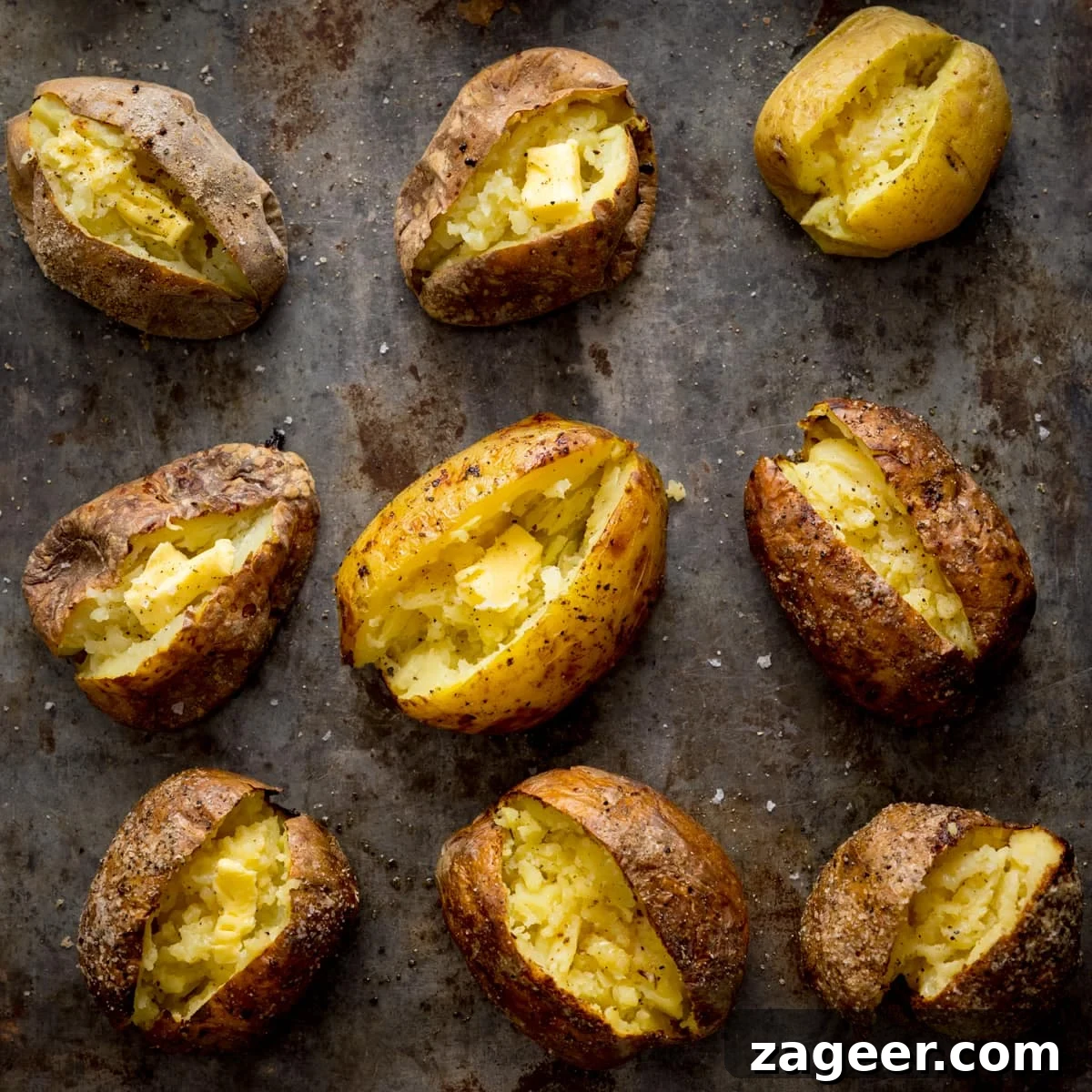
We tested 12 methods to discover how to make the BEST baked potato — one with a crisp, flavourful skin and a tender, fluffy interior. Some methods were disappointing, a few were solid, and a couple stood out above the rest.
Here are the results.
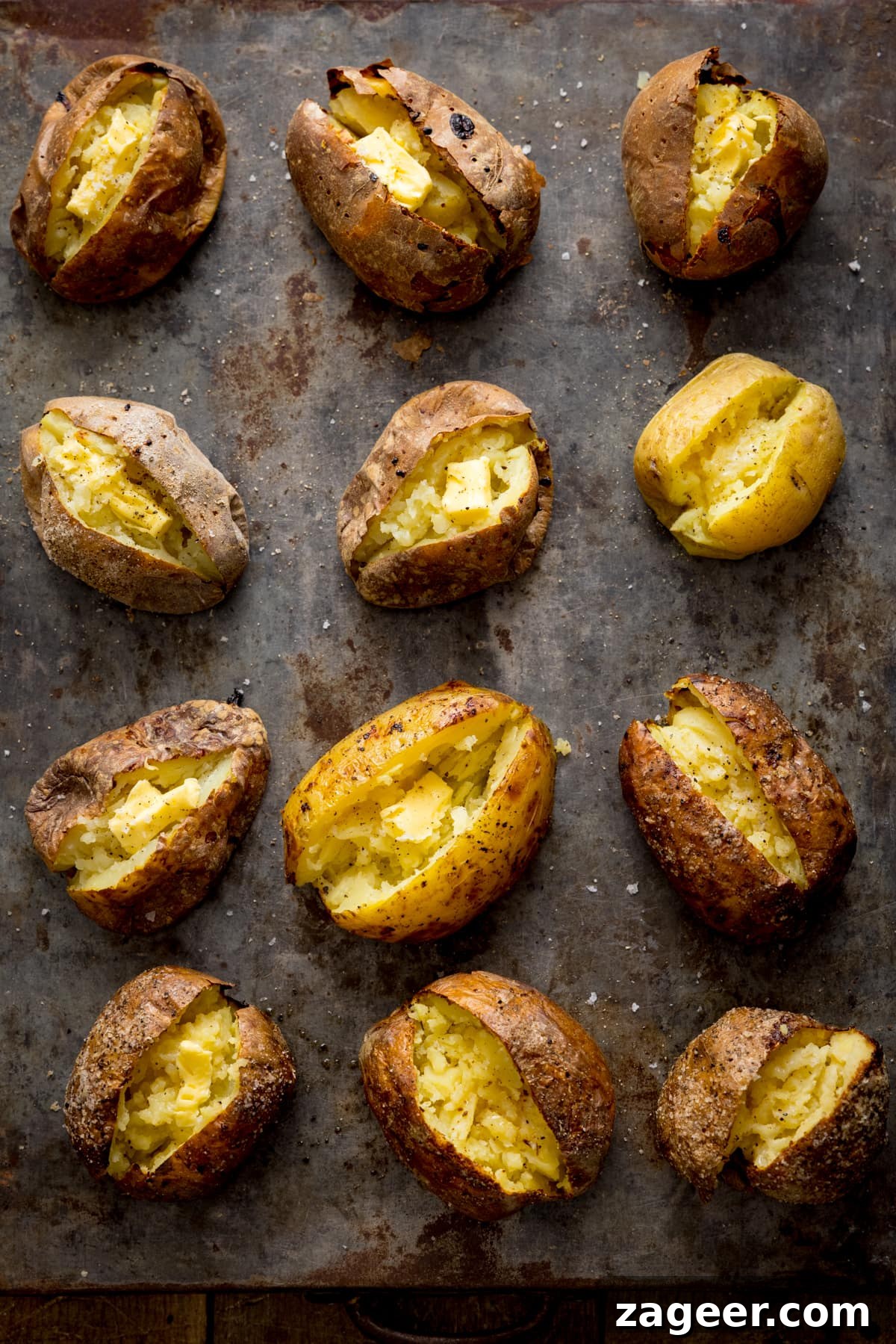
Normally I prick a potato and bake it for about an hour. That routine felt adequate until I was served a wrinkly, flavourless café potato that clearly had been microwaved. It made me wonder if my usual method was really the best. What could I do to make a truly outstanding jacket spud?
I set up a practical test and considered many variables:
- Should the potato be seasoned?
- Coated in oil or fat?
- Wrapped in foil?
- Partially or wholly microwaved?
- Baked on the wire rack versus a tray?
- Cooked long and slow?
- Or roasted hotter and faster?
That thinking led to a comprehensive comparison of 12 different methods. I didn’t include every possible appliance (no air fryers, slow cookers, BBQs or Instant Pots), but two approaches clearly produced the best baked potatoes I’ve tasted.
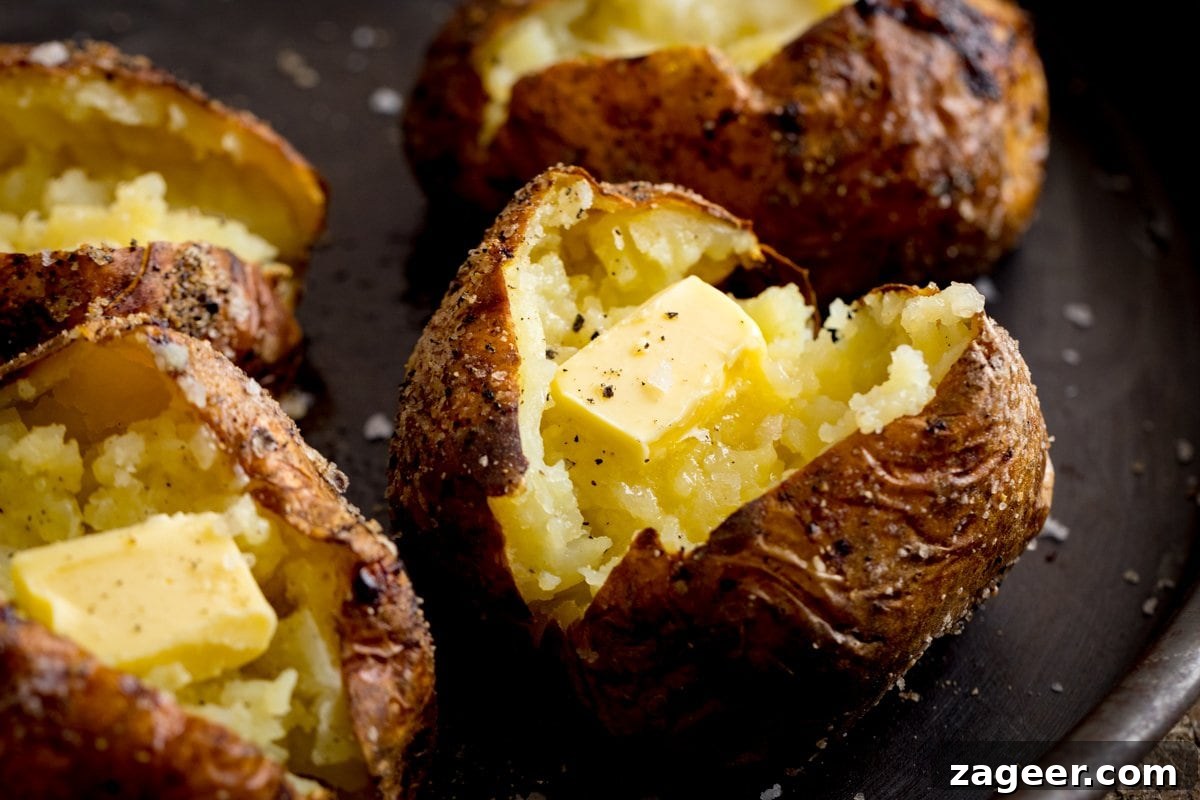
🔪 The 12 methods
For every test potato I began by pricking the skin several times with a fork to prevent bursting.
- Baked at 200°C / 400°F for 70 minutes, directly on the oven rack.
- Baked at 180°C / 350°F for 2 hours, directly on the rack.
- Baked at 200°C / 400°F for 25 minutes, then 180°C / 350°F for 1 hour, directly on the rack.
- Run under the tap to wet, roll in salt and pepper, then bake at 200°C / 400°F for 70 minutes, directly on the rack (method inspired by Nigel Slater).
- Baked at 200°C / 400°F for 70 minutes on a baking tray instead of the rack.
- Microwaved on high for 10 minutes.
- Microwaved on high for 5 minutes, then baked at 200°C / 400°F for 30 minutes, directly on the rack.
- Rubbed with olive oil, salt and pepper, wrapped in foil, then baked at 200°C / 400°F for 70 minutes on the rack.
- Rubbed with olive oil, salt and pepper, then baked at 200°C / 400°F for 70 minutes on the rack.
- Rubbed with beef dripping, salt and pepper, then baked at 200°C / 400°F for 70 minutes on the rack.
- Microwaved on high for 5 minutes, brushed with melted beef dripping, seasoned, then baked at 220°C / 425°F for 55 minutes on the rack.
- Rubbed with beef dripping, salt and pepper, then baked at 180°C / 350°F for 2 hours on the rack.
The results
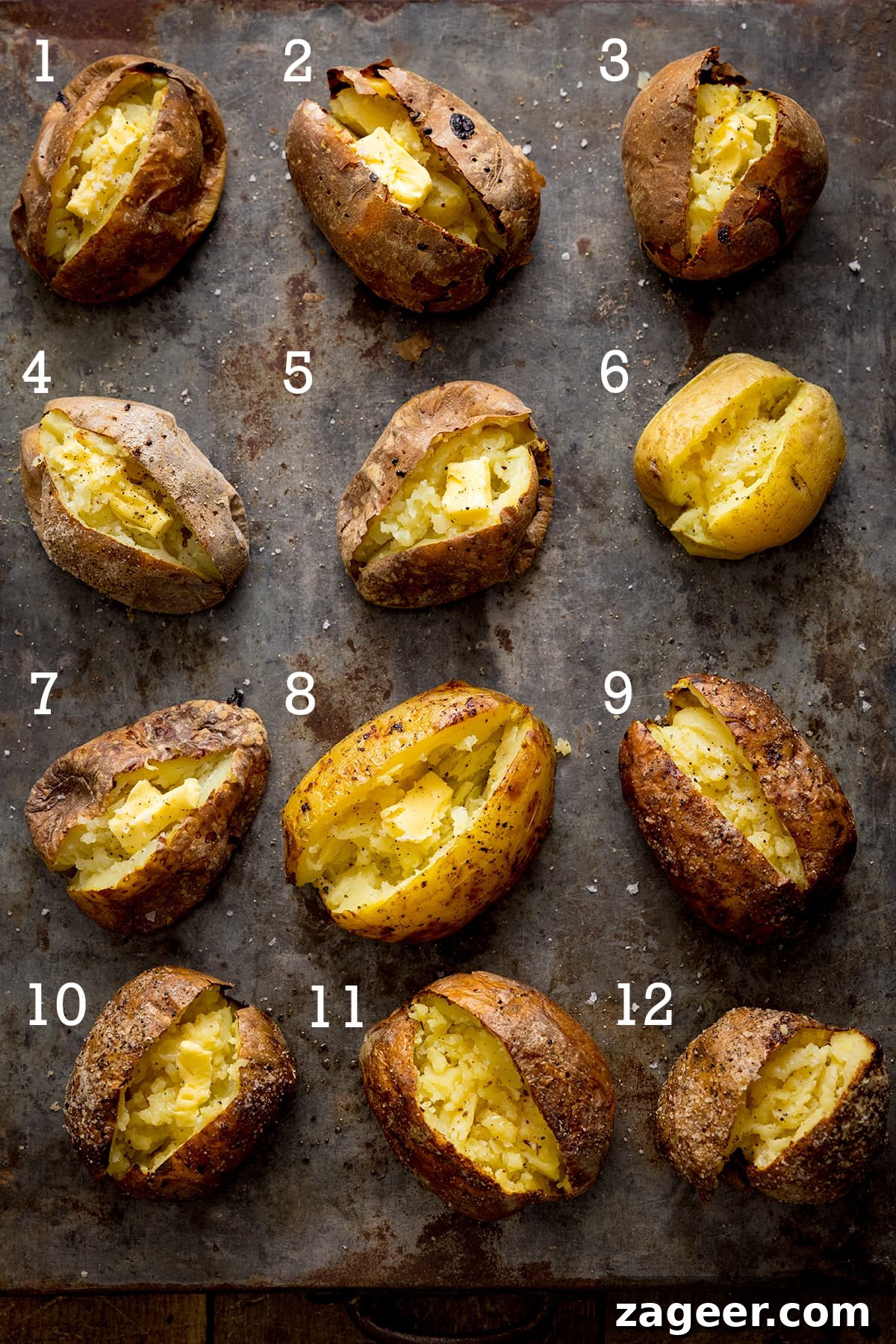
Potato 1 — 200°C / 400°F for 70 minutes, on the rack
The skin was crisp but thin and softened quickly. The interior was nicely fluffy.
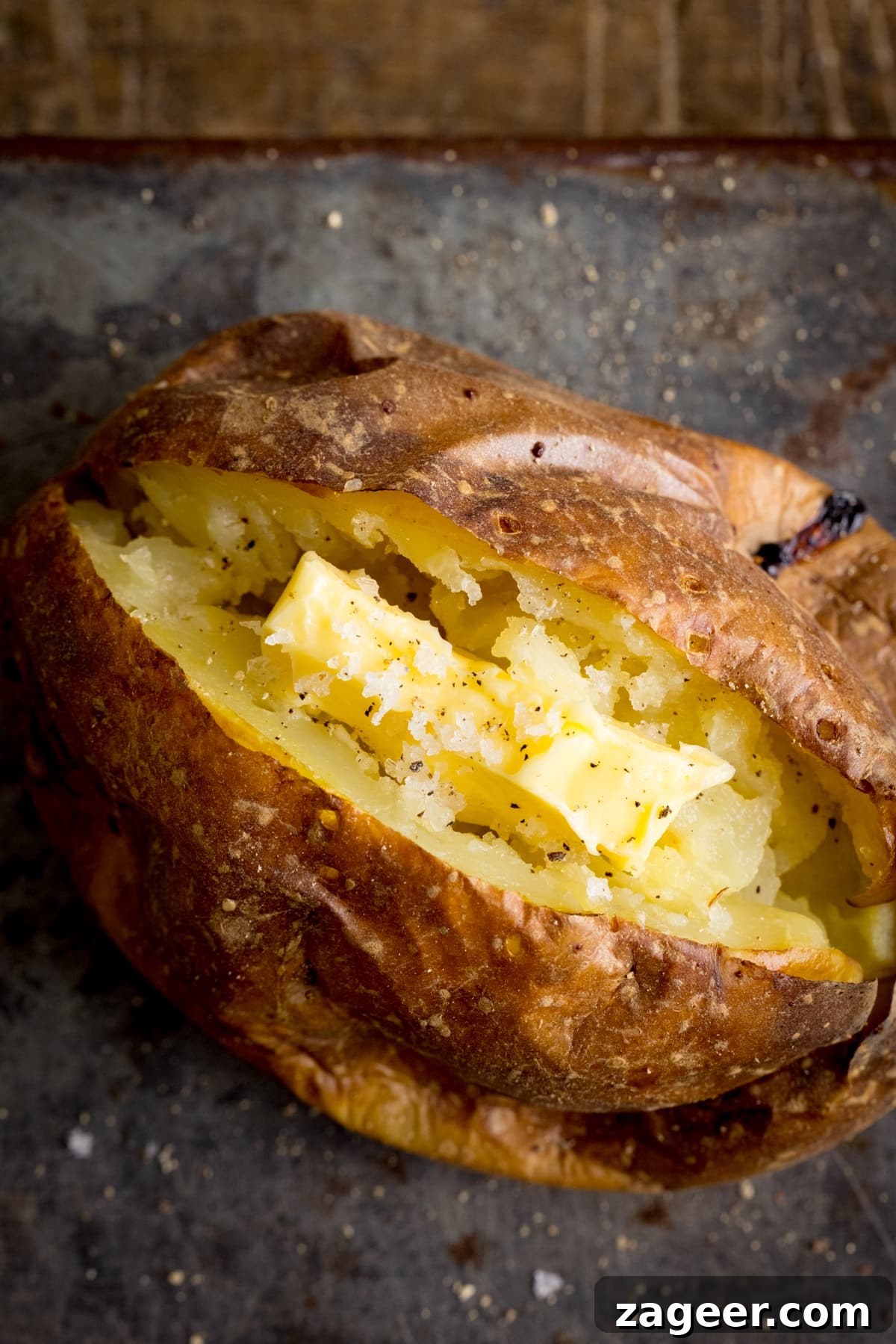
Potato 2 — 180°C / 350°F for 2 hours (3rd place)
This produced a thicker, crisp skin that stayed crisp for 10–15 minutes before becoming slightly chewy. The skin had a pleasant smoky flavour. If you want a good result without oiling the potato, this is the easiest route.
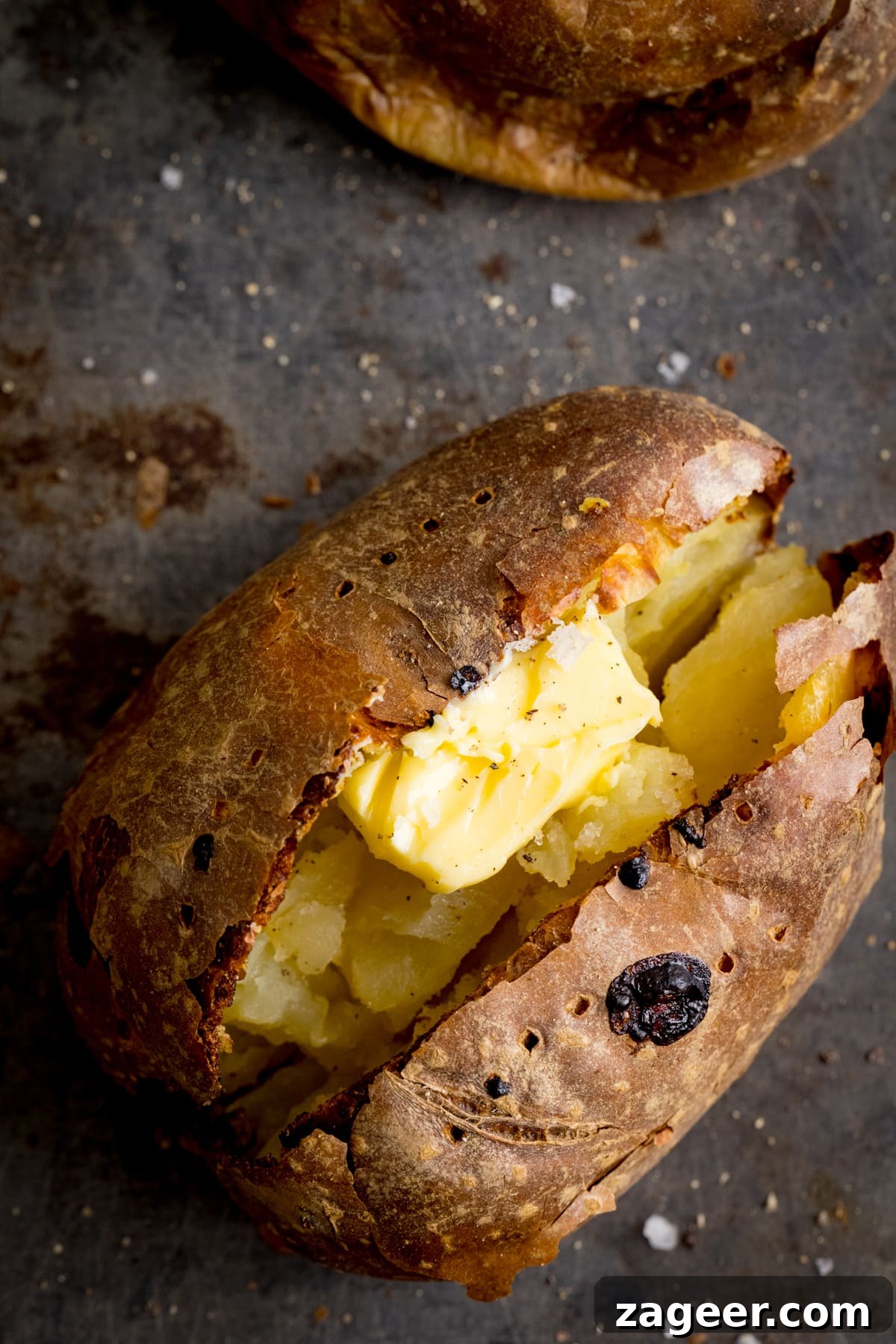
Potato 3 — 200°C for 25 mins, then 180°C for 1 hour
Similar to Potato 1: crisp but thin skin that softened quickly, and a fluffy interior.
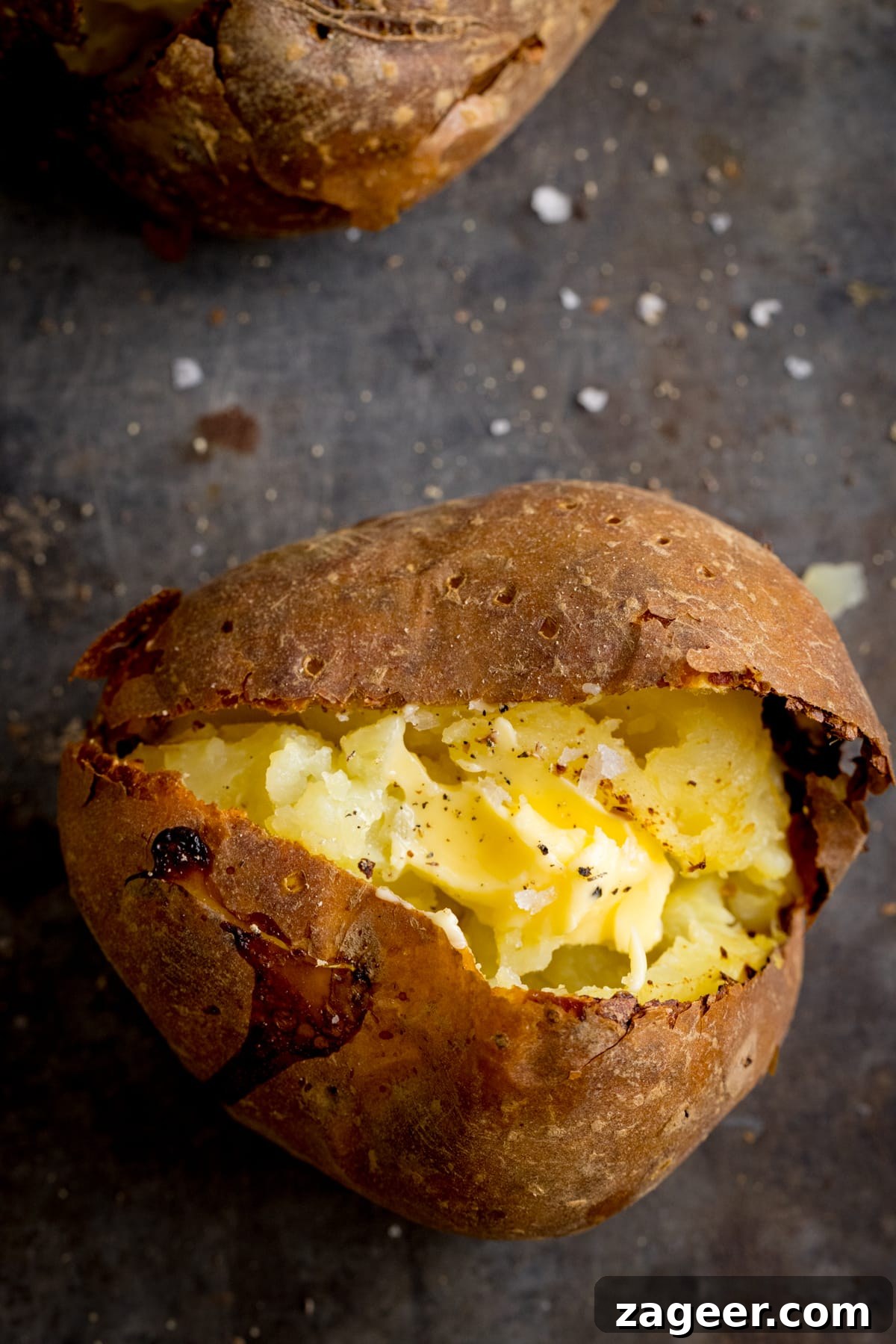
Potato 4 — Wet, seasoned, then baked at 200°C (Nigel Slater method)
This one disappointed. The skin stayed pale, soft and thin with no crunch, though the interior was soft and fluffy.
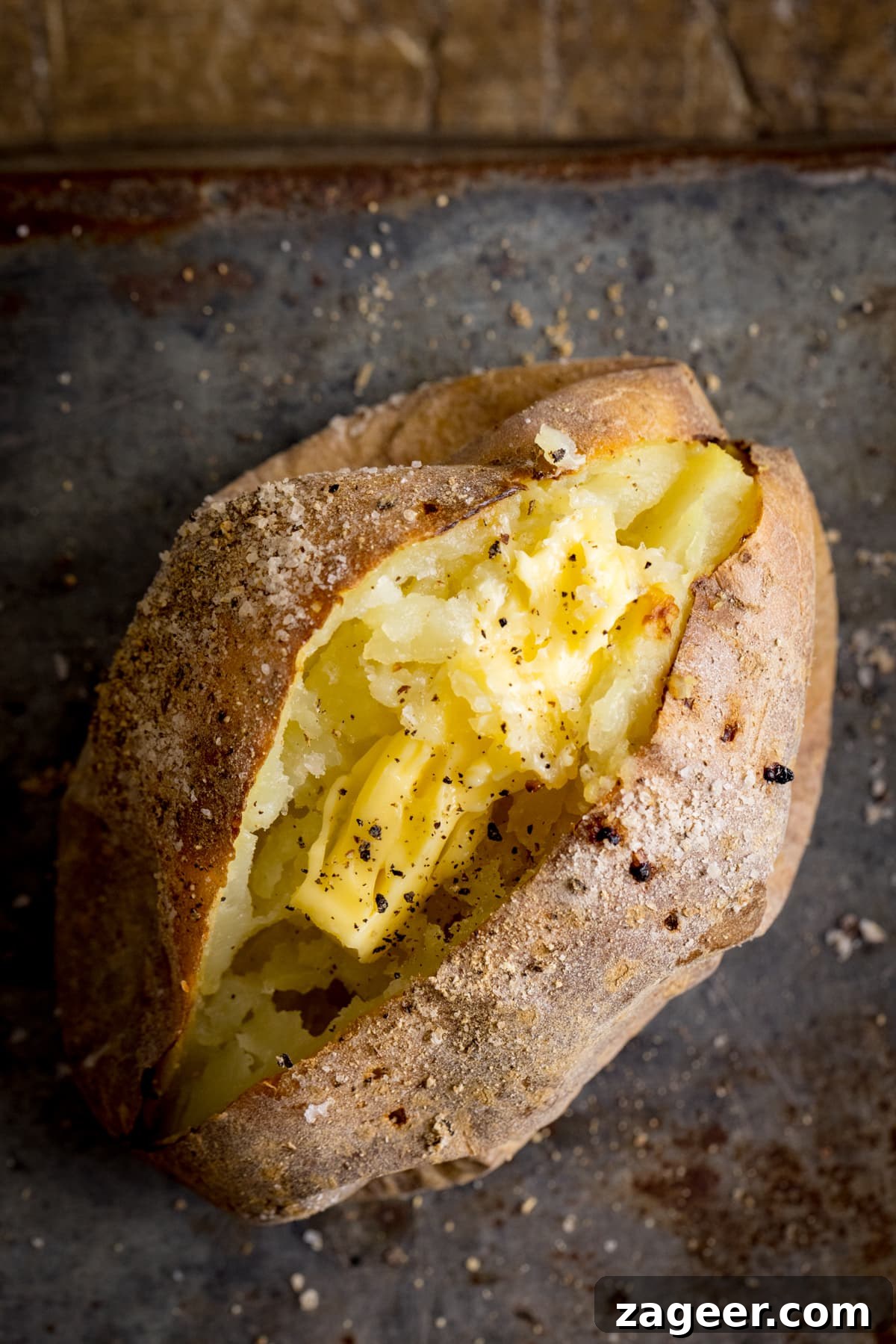
Potato 5 — 200°C for 70 minutes on a baking tray
Almost identical to Potato 1. The tray made no meaningful difference compared with baking on the rack.
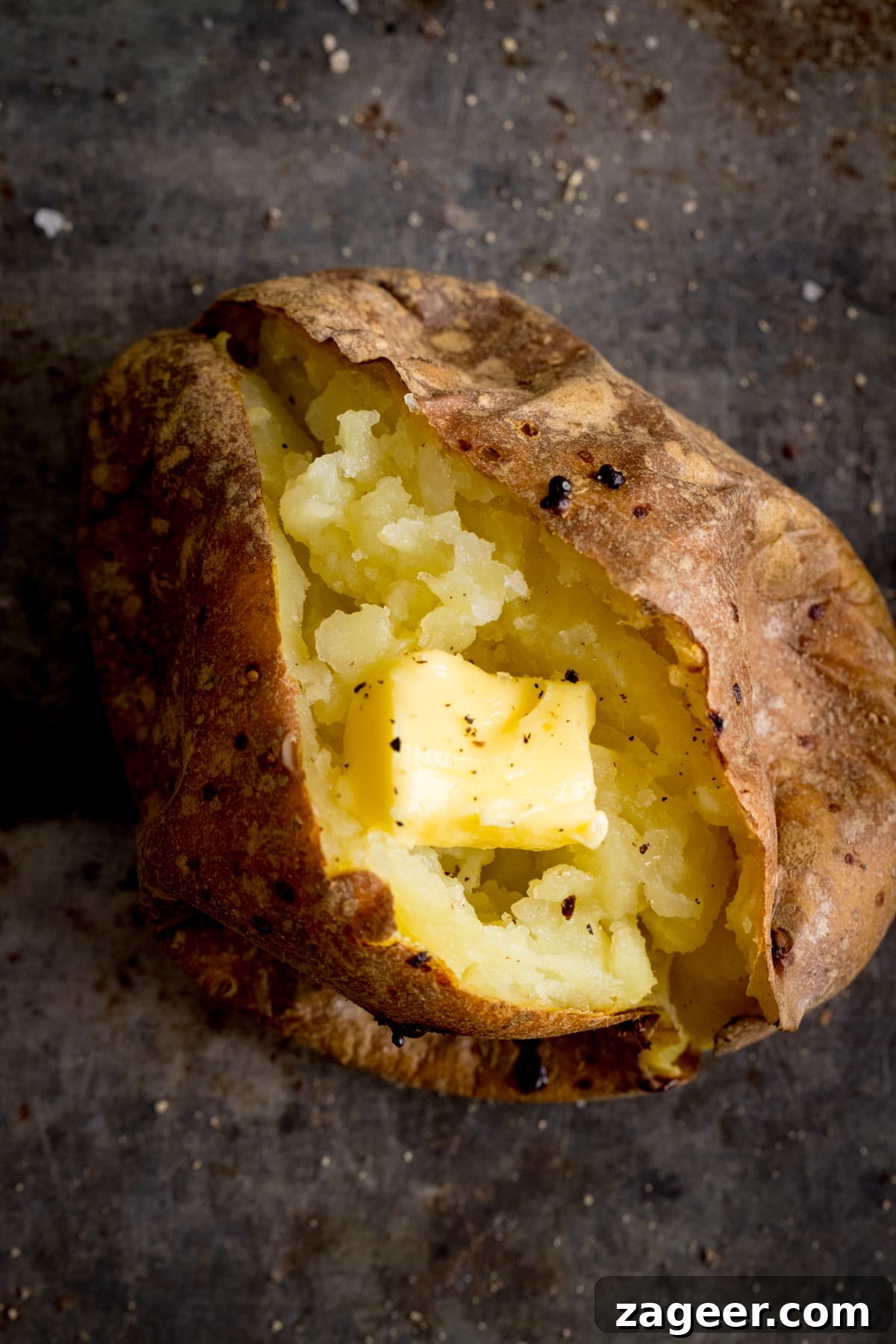
Potato 6 — Microwaved for 10 minutes
Unpleasant. The skin was soft and damp like tissue, and the interior tasted a bit waxy. Not recommended for a satisfying jacket potato.
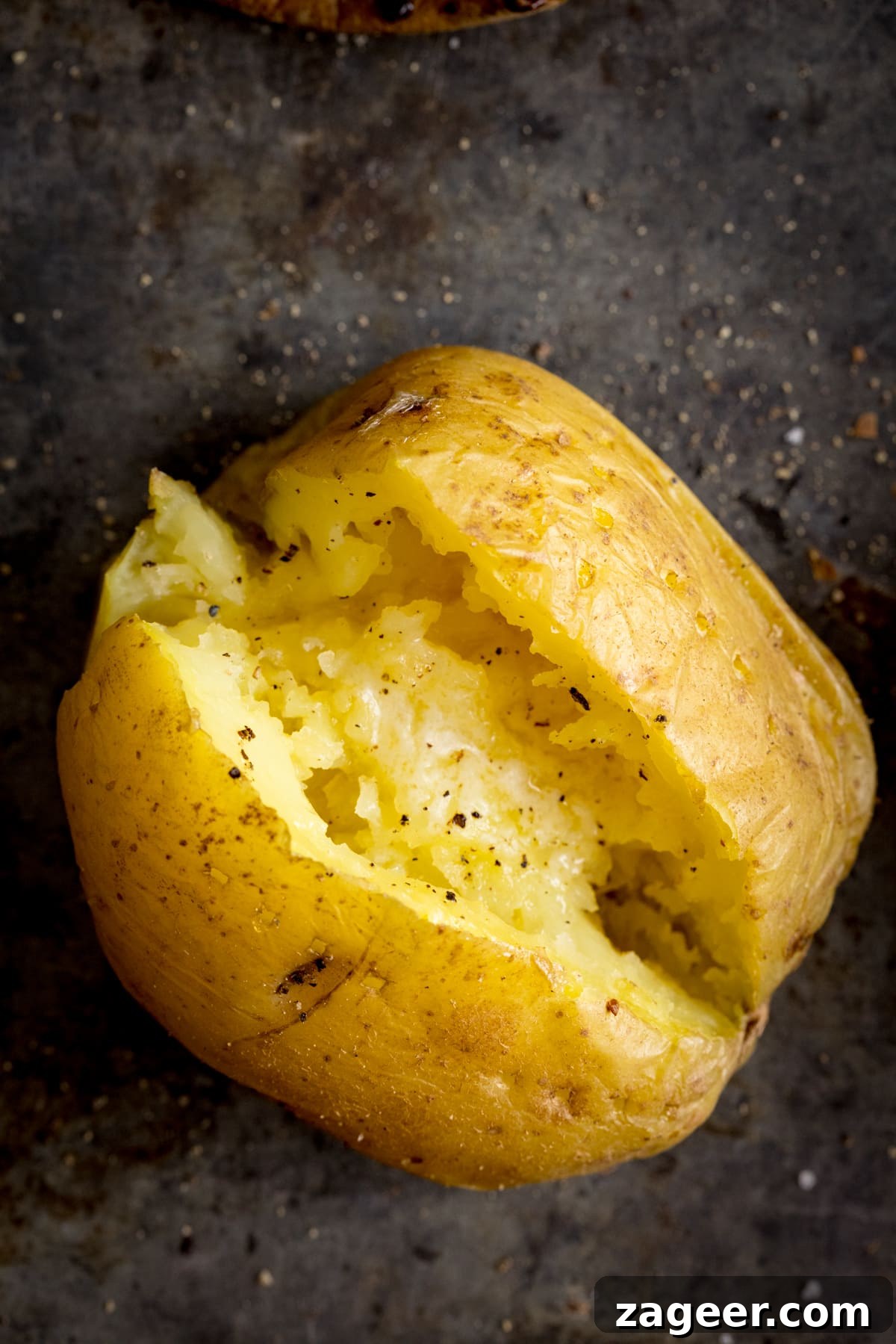
Potato 7 — Microwaved 5 mins, then baked 30 mins at 200°C
The skin was wrinkly and lost crispness within minutes, but it had good flavour. The interior was soft and fluffy. This is a decent time-saving option if you don’t need a long-lasting crisp skin.
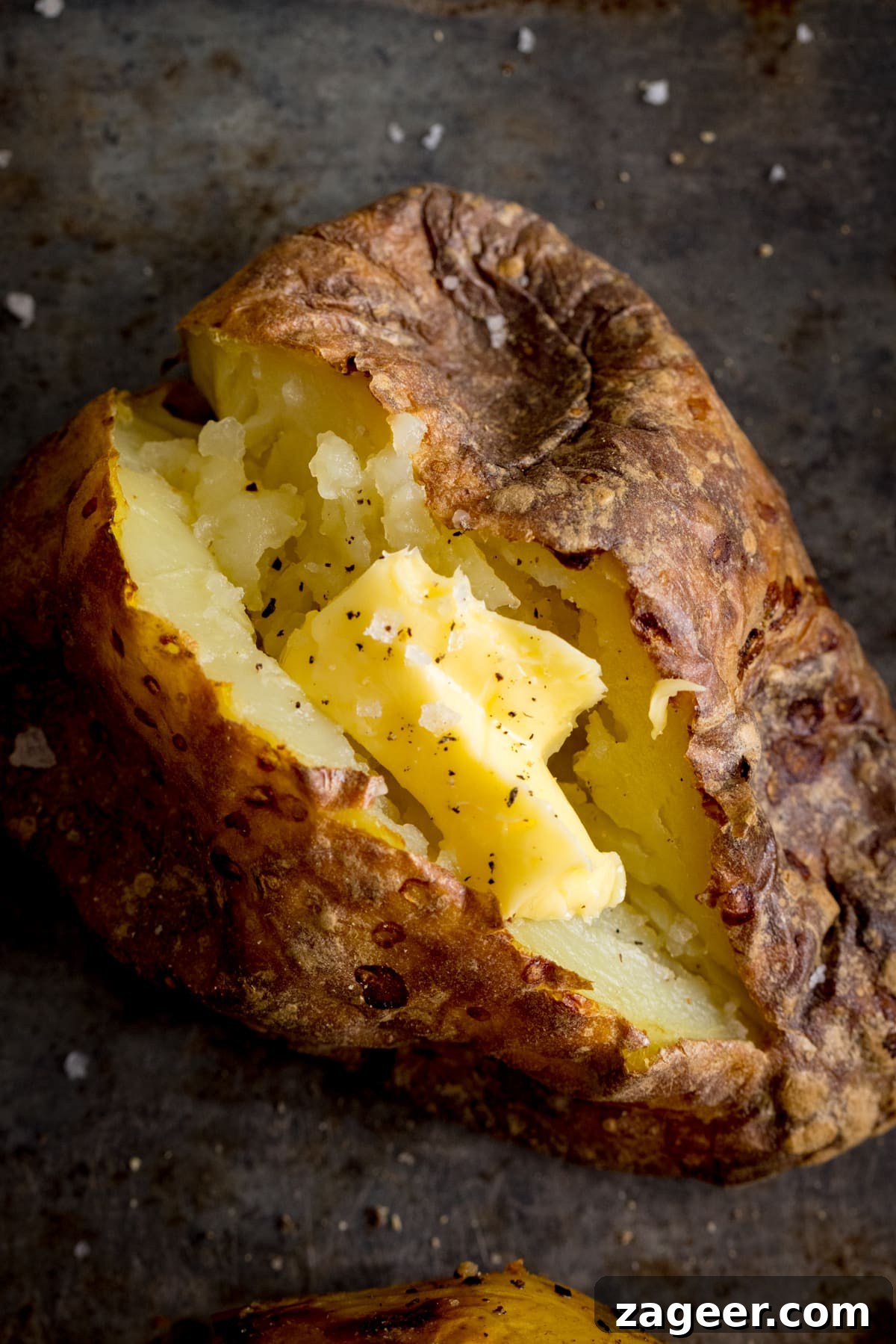
Potato 8 — Olive oil, seasoned, wrapped in foil, baked at 200°C
Wrapping in foil retained moisture so the potato didn’t shrink and the skin remained very soft and pale. If you prefer a moist interior and a tender skin rather than a crisp jacket, foil works — but it prevents browning and crunch.
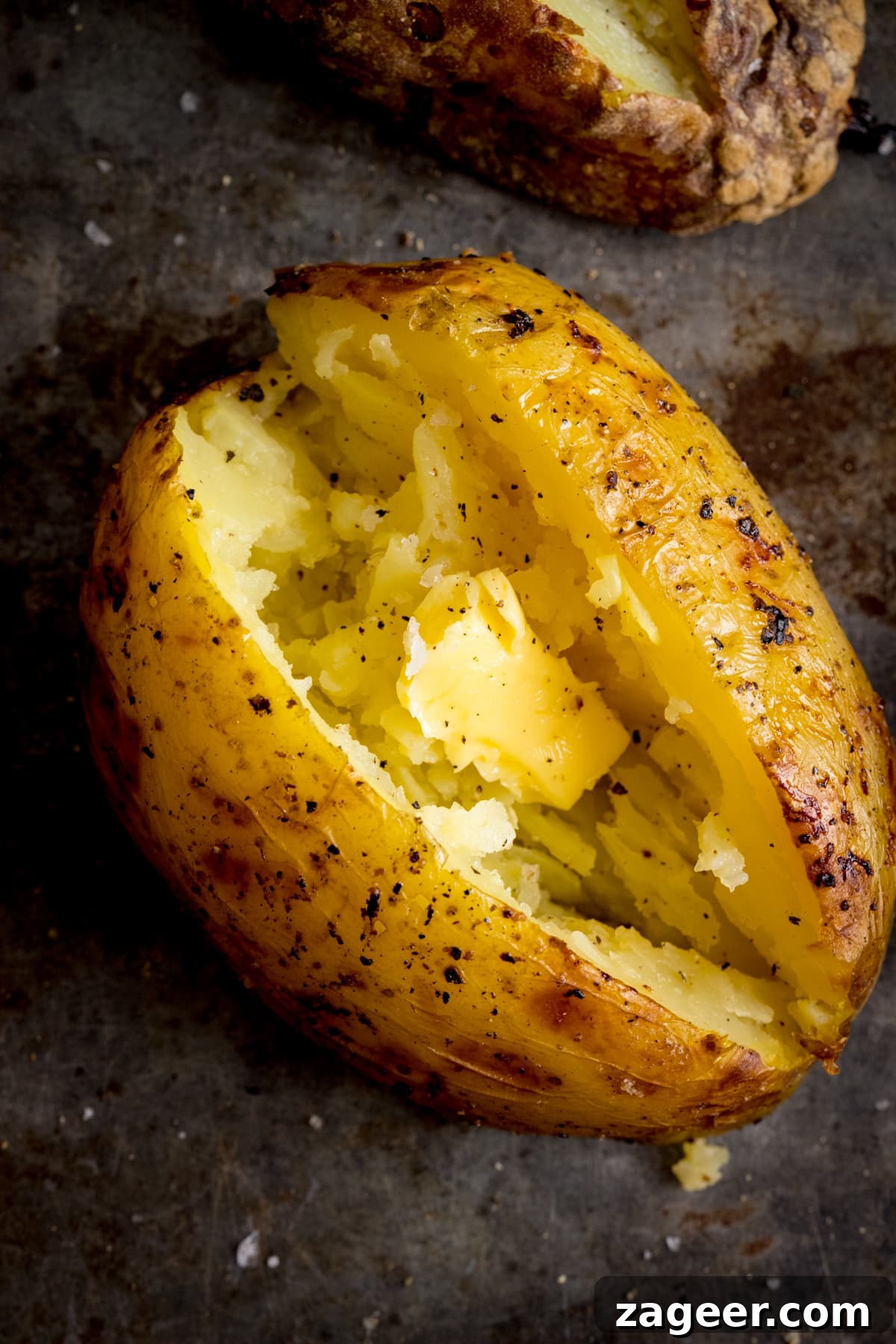
Potato 9 — Olive oil, seasoned, baked at 200°C
I expected a crispier skin from the oil, but it turned out chewier than crisp. To get really crispy skin you either need longer, lower cooking (about 2 hours) or higher heat after a pre-cook step. Still, the flavour was good and the interior was fluffy.
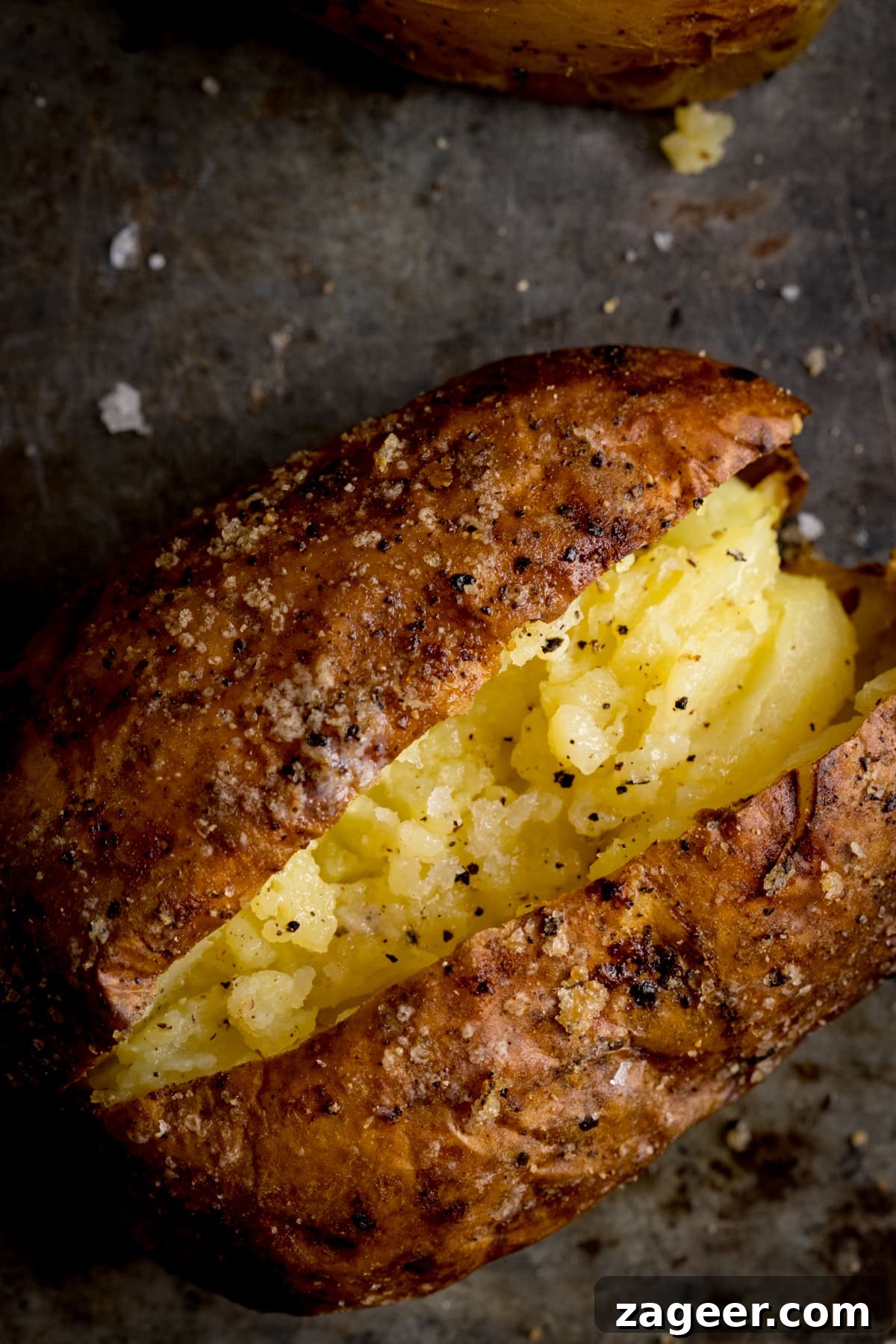
Potato 10 — Beef dripping, seasoned, baked at 200°C
Replacing oil with beef dripping improved the flavour noticeably. The texture was similar to Potato 9, but the skin tasted richer — a promising direction.
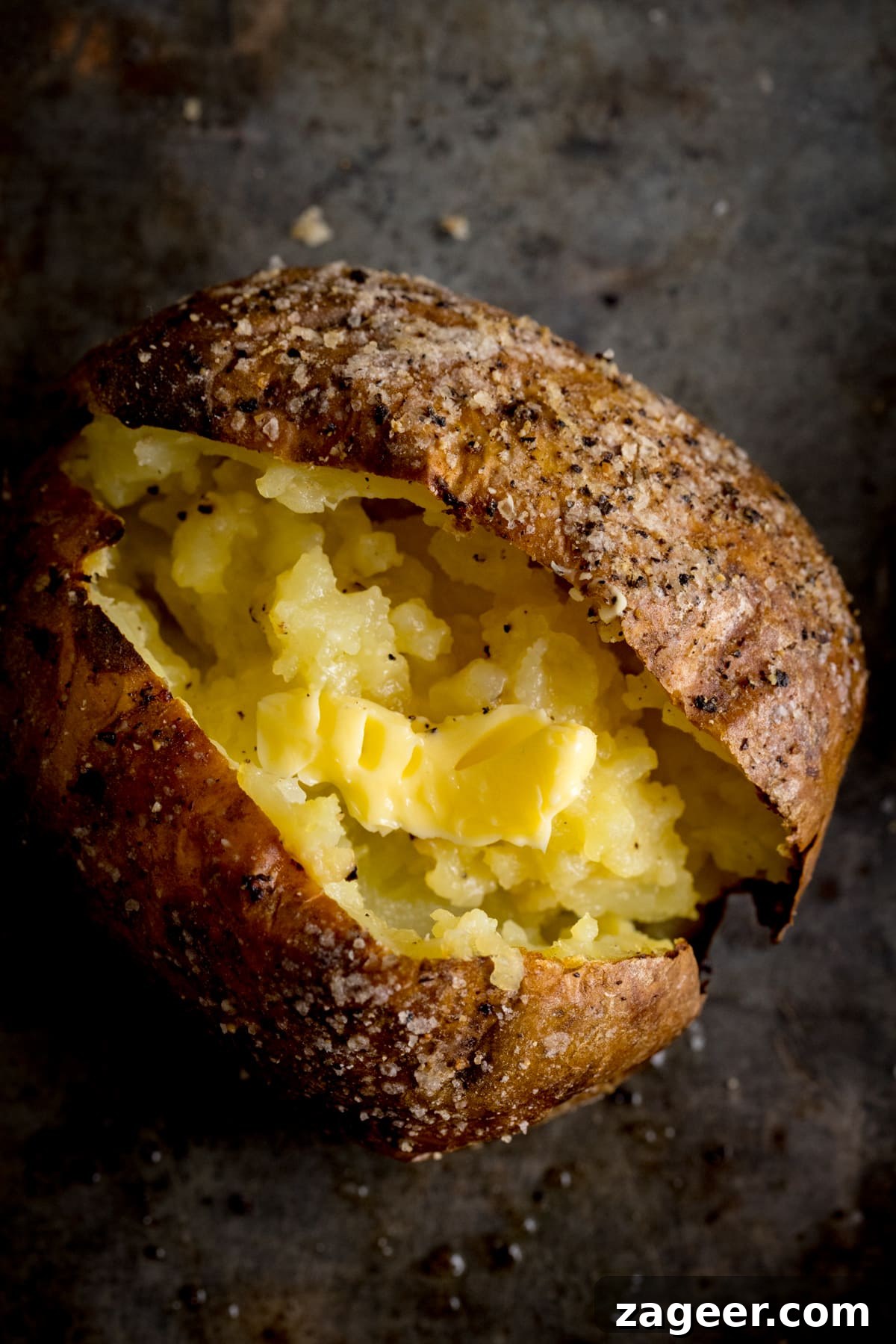
Potato 11 — Microwaved 5 mins, brushed with beef dripping, baked at 220°C (Winner)
This was the standout. A beautifully crunchy, deeply flavoured skin from the beef dripping and seasoning, which stayed crisp even after 15 minutes. The interior was light and fluffy. It combined speed with excellent texture and taste.
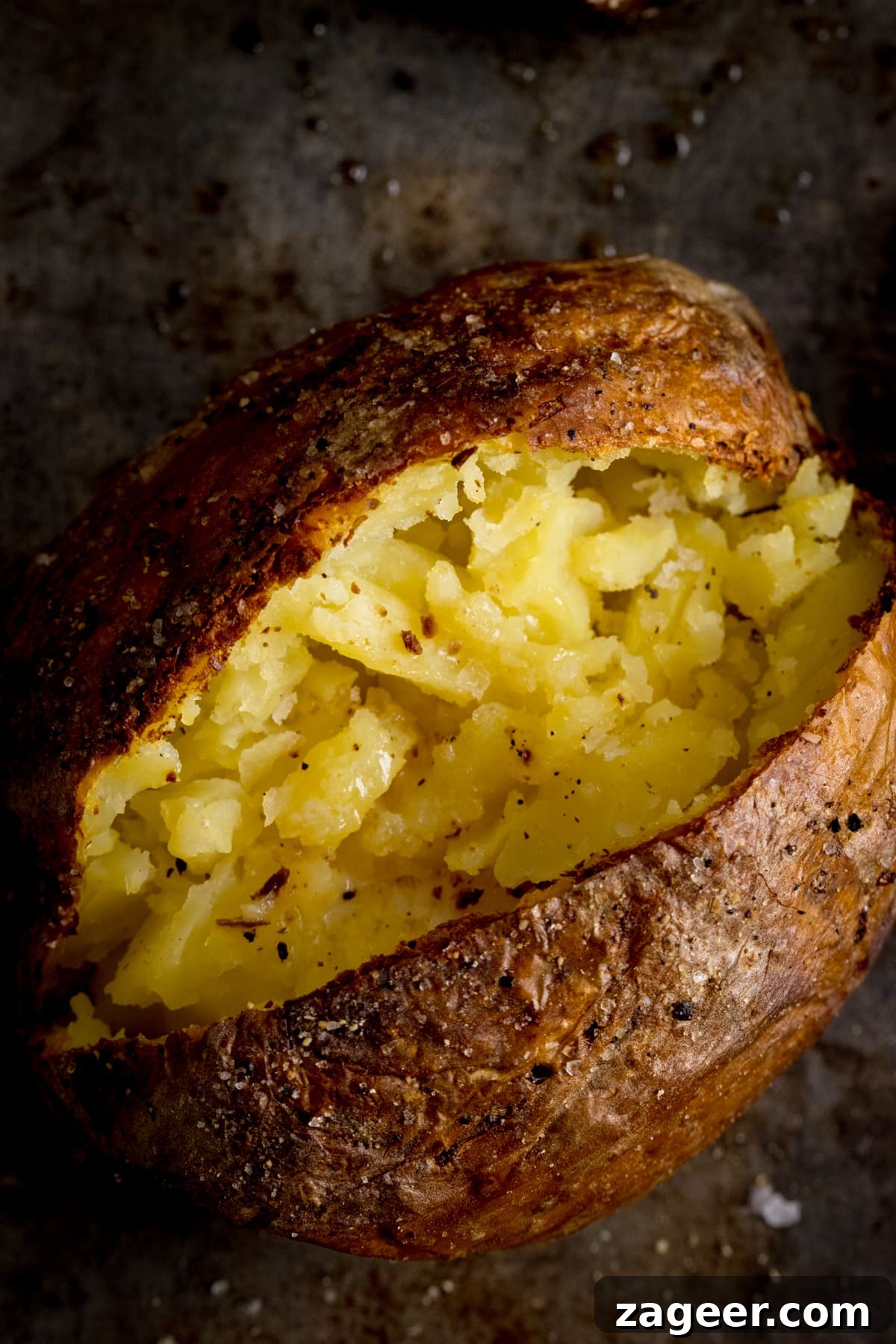
Potato 12 — Beef dripping, 180°C for 2 hours (2nd place)
Using beef dripping but following the long, slow bake produced a potato that matched the winner in crunch and flavour. It only lost out because it took longer to cook. If time isn’t an issue, this is an excellent method.
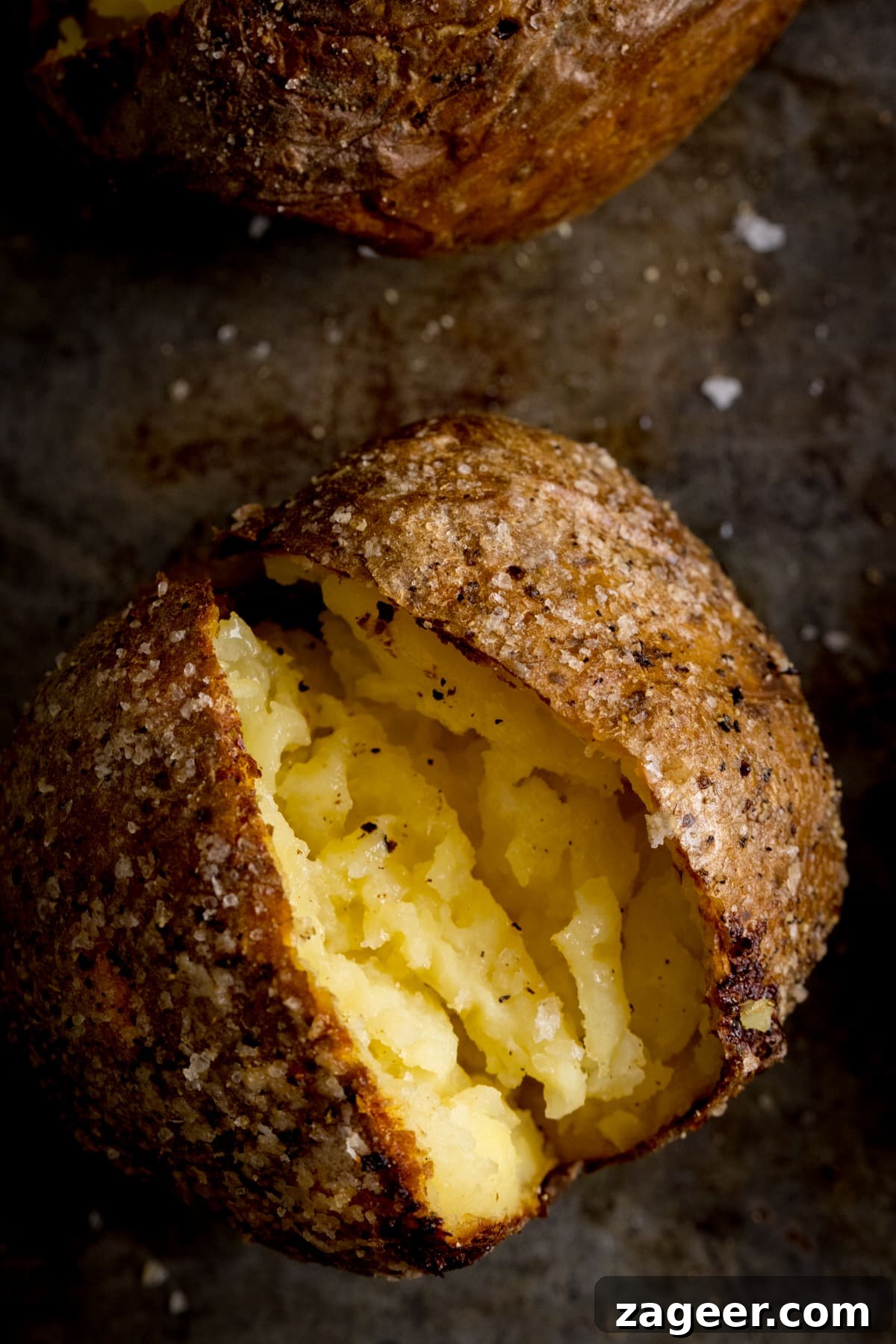
After testing so many variations, my clear recommendation is to try brushing your potato skin with beef dripping (or another flavorful fat), seasoning it, and using either a microwaved head start followed by a hot roast (220°C) for a shorter time, or a long, slow bake at 180°C if you prefer not to use a microwave.
I’ll definitely be using beef dripping on my baked potatoes from now on — it adds flavour and helps create a satisfying, crunchy skin.
🍲 More potato sides
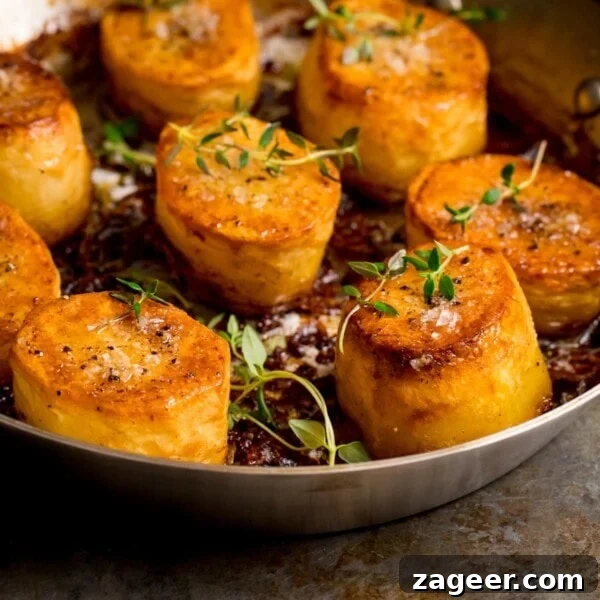
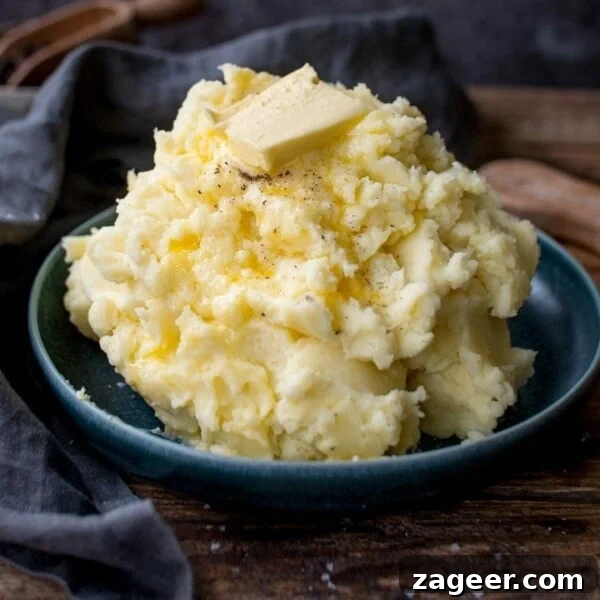
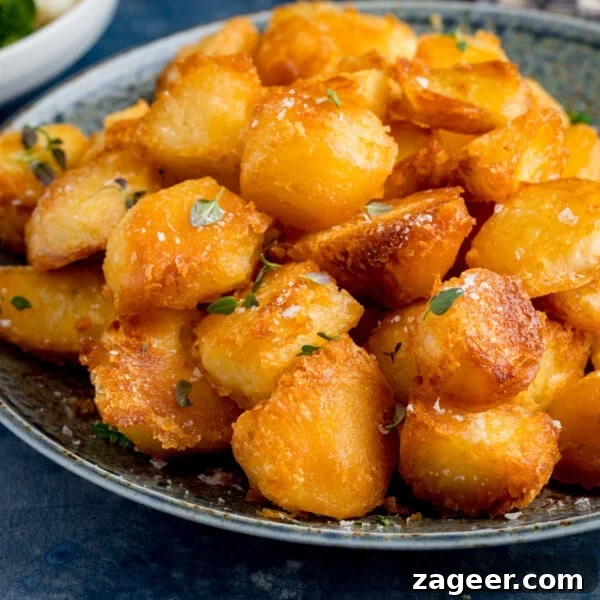
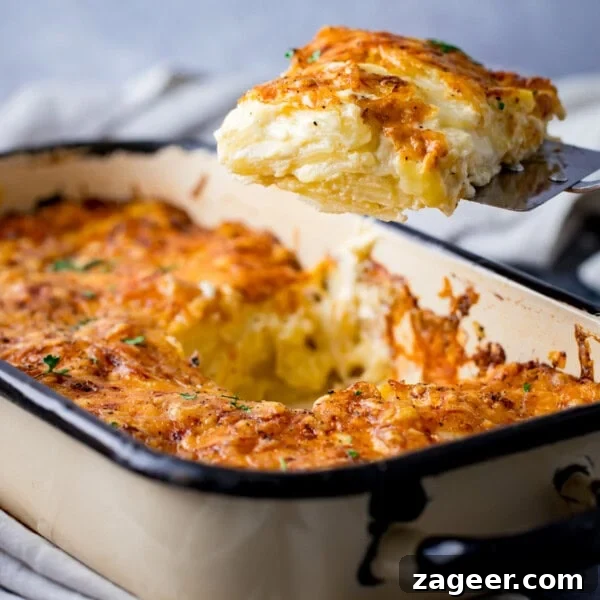
I love potato side dishes and often serve more than one with a roast dinner. Below are some ideas illustrated with images.
Sides
Fondant Potatoes
Sides
The Best Mashed Potatoes
Roast Dinner
The Best Crispy Roast Potatoes
Sides
Dauphinoise Potatoes
Sides
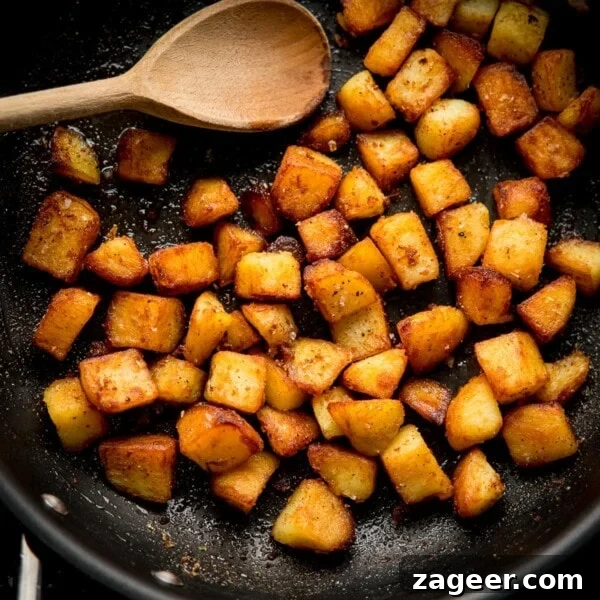
Sautéed Potatoes with Garlic
Sides
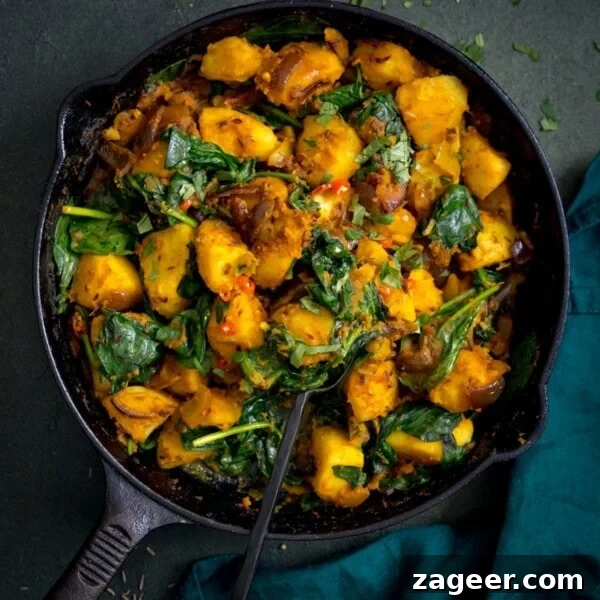
Saag Aloo
Stay updated with new recipes! Subscribe to the newsletter to hear when a new recipe is posted. There are also weekly videos on YouTube and behind-the-scenes stories on Instagram.
Some links mentioned in recipe posts may be affiliate links. If you choose to buy through them I may receive a small commission at no extra cost to you. Nutritional information is approximate and can vary.