Creamy One Pot Coconut Butternut Squash Ramen
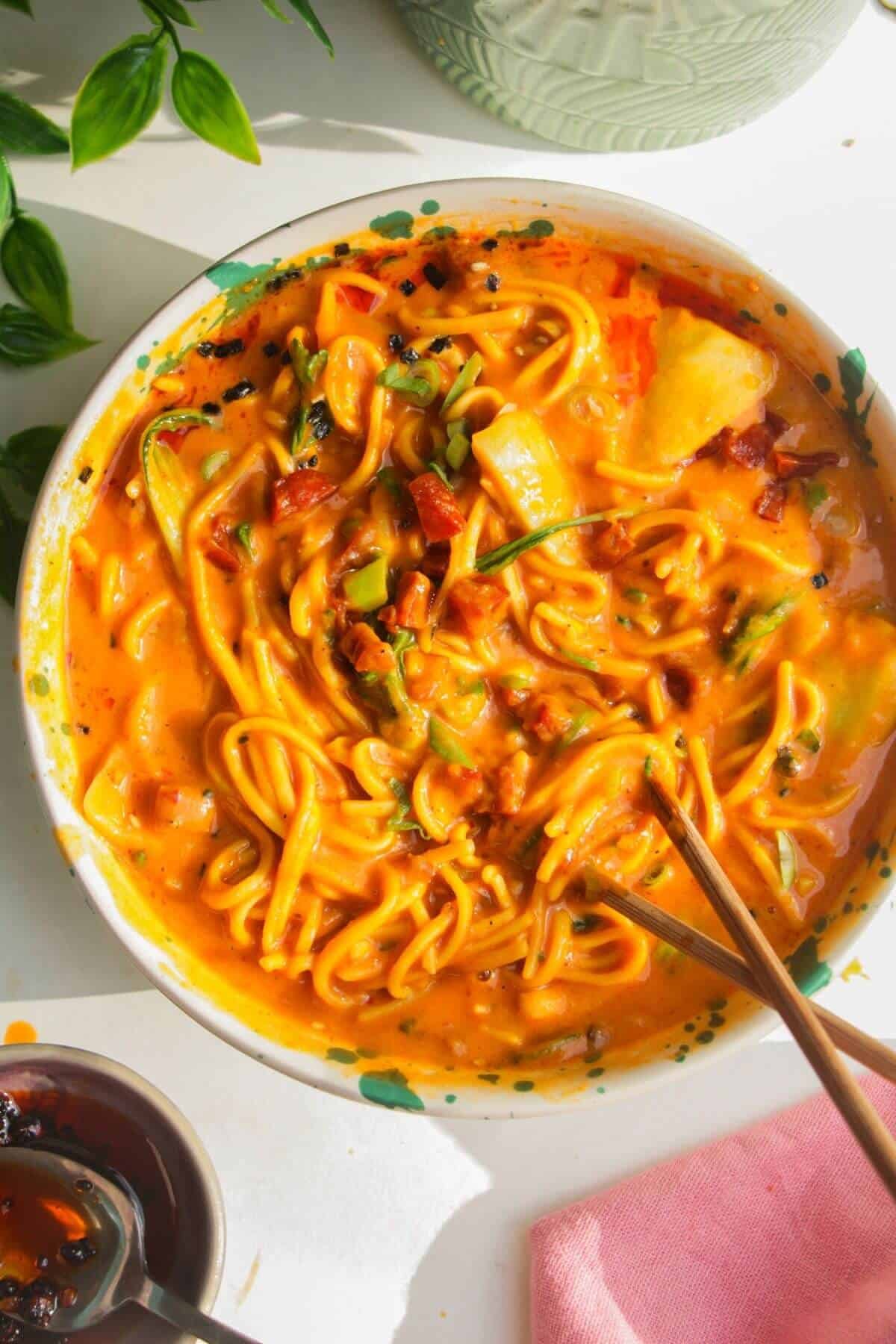
This butternut squash ramen is everything I want on a weeknight. You get this gorgeous Asian-fusion base of gochujang and peanut butter, all swirled into a silky butternut squash coconut broth that clings perfectly to every noodle. And it all comes together in one pot for ease.
Butternut Squash Ramen, at a Glance
⏰ Time: 40 minutes
🍴 Makes: 4 servings
🛒 Key Ingredients: Butternut squash, coconut milk, peanut butter, gochujang paste, noodles
🍳 Cooking Method: One pot, stovetop
💪 Skill Level: Easy
🍜 Why it Works:
🥡Perfect For: Cozy weeknights, comfort food cravings, dinner parties
The Cozy Comfort Food I Crave Constantly
There is truly not a lot better than being cozied up on the sofa with a warming bowl of saucy noodles. And this gorgeous butternut squash ramen is exactlythat kind of bowl.
While it’s not traditional ramen, it tastes like it’s been simmering all day. The squash is roasted until jammy and caramelized, then blended straight into the broth. It creates a boujee-feeling, velvety sauce-soup situation – toss in noodles, add some greens, and you’re basically done.
I’ve designed this recipe to be super flexible for busy weeknights:
- Use instant ramen bricks, udon, egg noodles, rice noodles – truly whatever you have. Spaghetti even works.
- It cooks all in one pot (once you’ve roasted the squash) for ease and minimal clean-up.
- Keep it saucy, or make it more of a brothy noodle soup.
- Toss in rotisserie chicken, shrimp, or any protein you like.
- Play around with the spiciness – you can easily dial up the gochujang paste if you like your ramen hot, or reduce it for a milder sauce.
While I’m roasting the squash for the recipe, it’s also a brilliant way to use any leftover canned pumpkin puree.
These flavors are similar to those in my super quick spicy one-pot coconut noodles, one-pot saucy peanut satay noodles, and baked satay noodles, if you’d like to try those too.

Ingredients You’ll Need
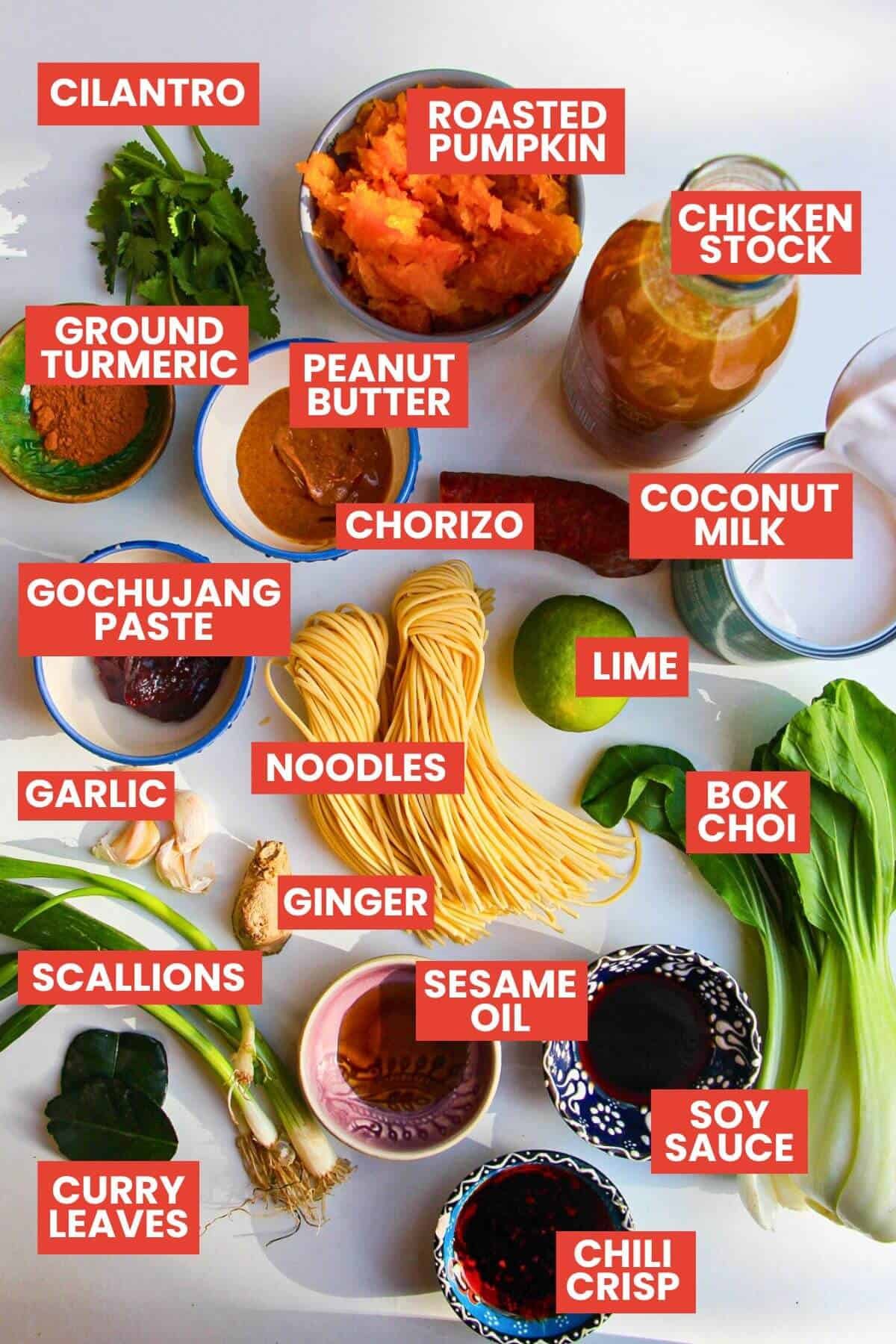
- Noodles. Use your favorite! Regular ramen or instant ramen noodles, udon, or egg noodles. Fresh or dried – either works.
- Butternut squash. You can roast your own squash for the ramen (I recommend using this guide for the easy way to roast butternut squash), or use plain, canned pumpkin puree for a shortcut.
- Peanut butter. Use smooth or crunchy peanut butter that lists only ‘peanuts’ and ‘salt’ in the ingredients for the best flavor.
- Gochujang paste. One of my absolute favorite ingredients – this sweet, spicy Korean fermented chili paste brings serious depth to the broth. You should be able to find it easily at the grocery store, in the ‘Asian’ section.
- Coconut milk. For the best silky texture and creaminess, use full-fat coconut milk with at least 60% coconut extract.
- Chorizo. Optional, but I love the smoky depth it brings. Use Spanish chorizo, not Mexican chorizo. Or, use bacon or crumbled sausage meat.
How to Make Butternut Squash Ramen (Step-by-Step)
This is a step-by-step photo overview of how to make the ramen – the full recipe with ingredient quantities and instructions is at the bottom of the page for you.
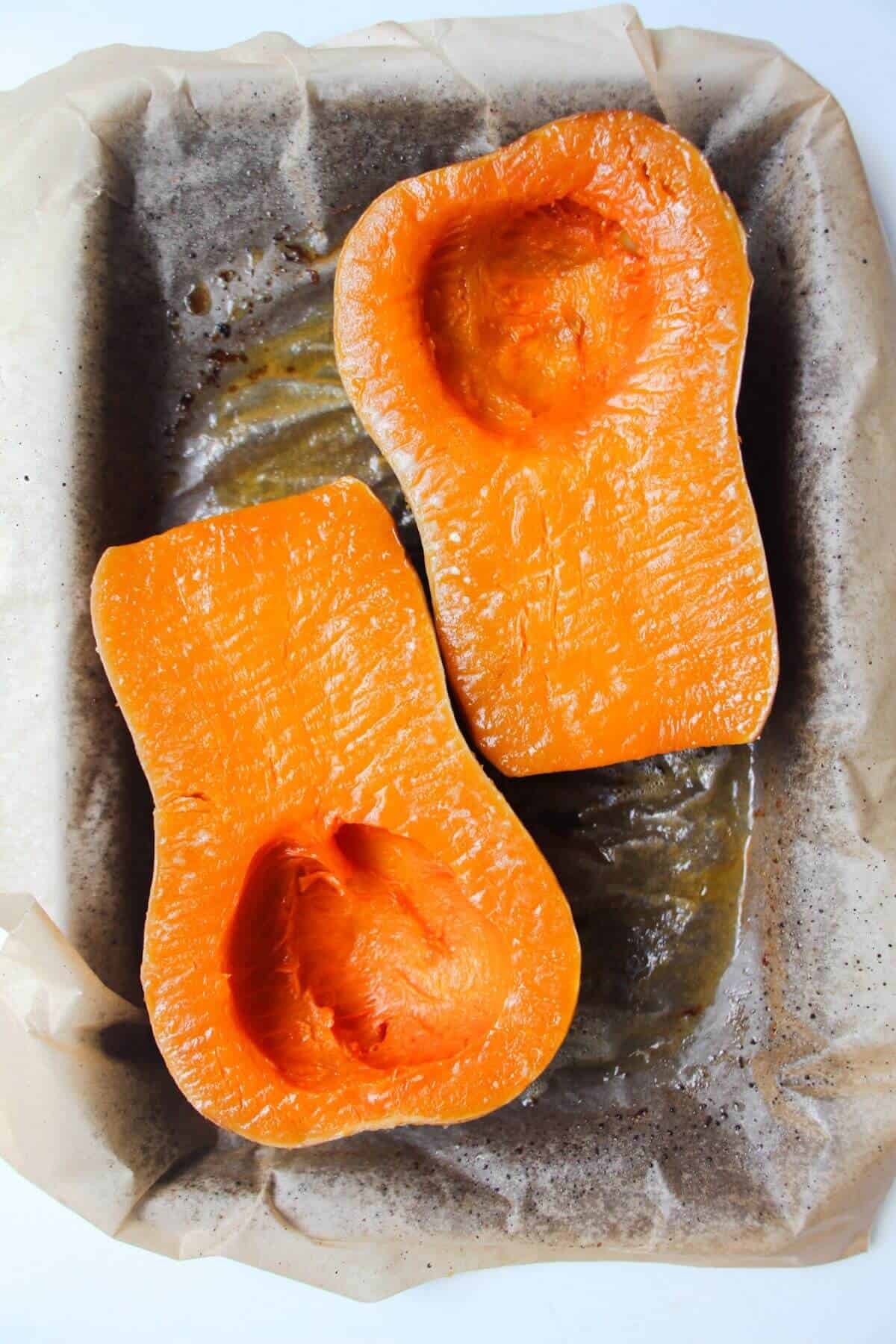
- Roast your squash – I prefer doing it in halves because I despise cutting it, but you can cube it if you prefer.

- If you’re using chorizo, cook it for a couple of minutes to crisp up, then remove it from the pan.
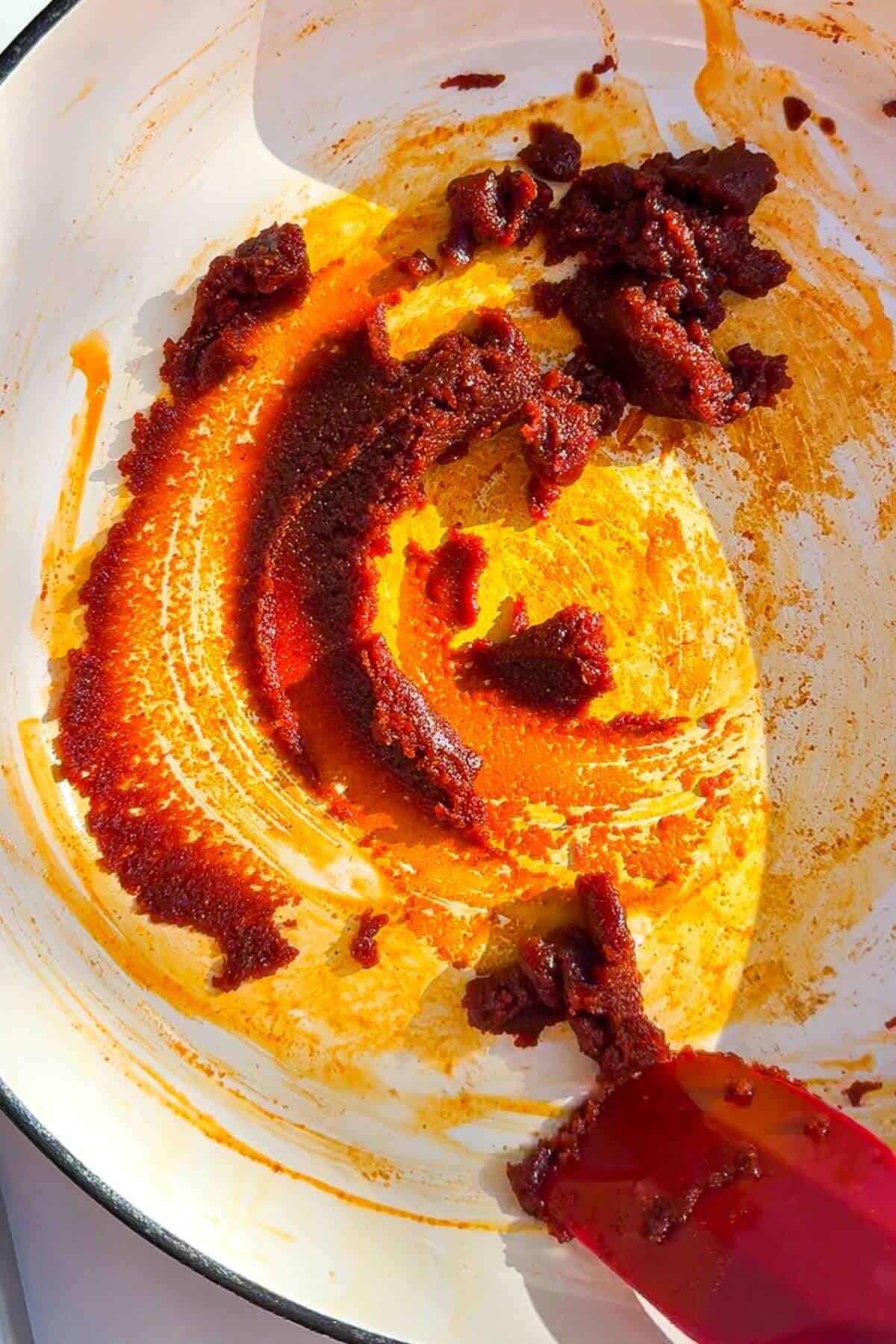
- Add the garlic, ginger, turmeric, gochujang paste, and peanut butter and cook, stirring, into a thick paste.
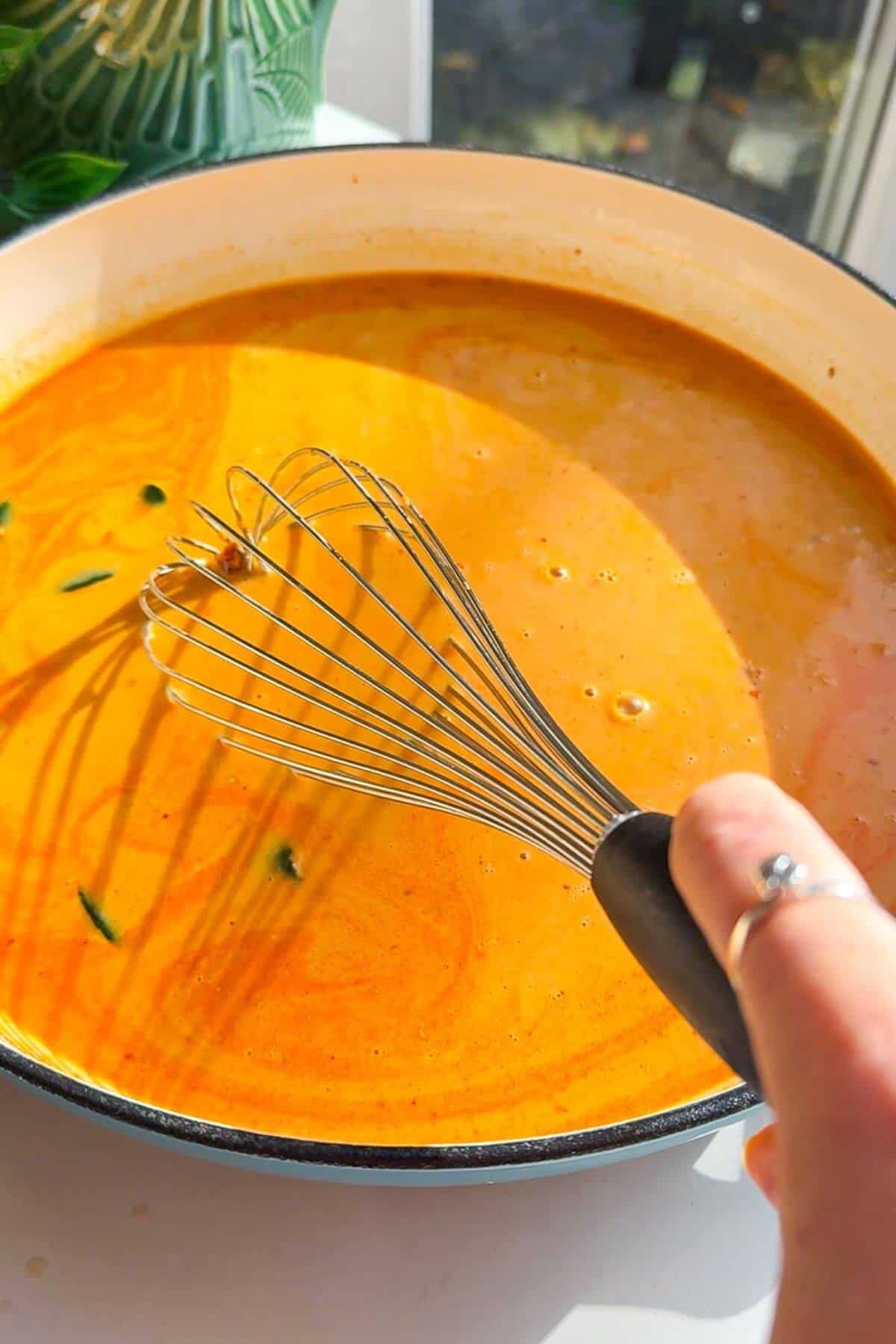
- Add the coconut milk, chicken stock, soy sauce, and fish sauce, then whisk to combine into a creamy base.
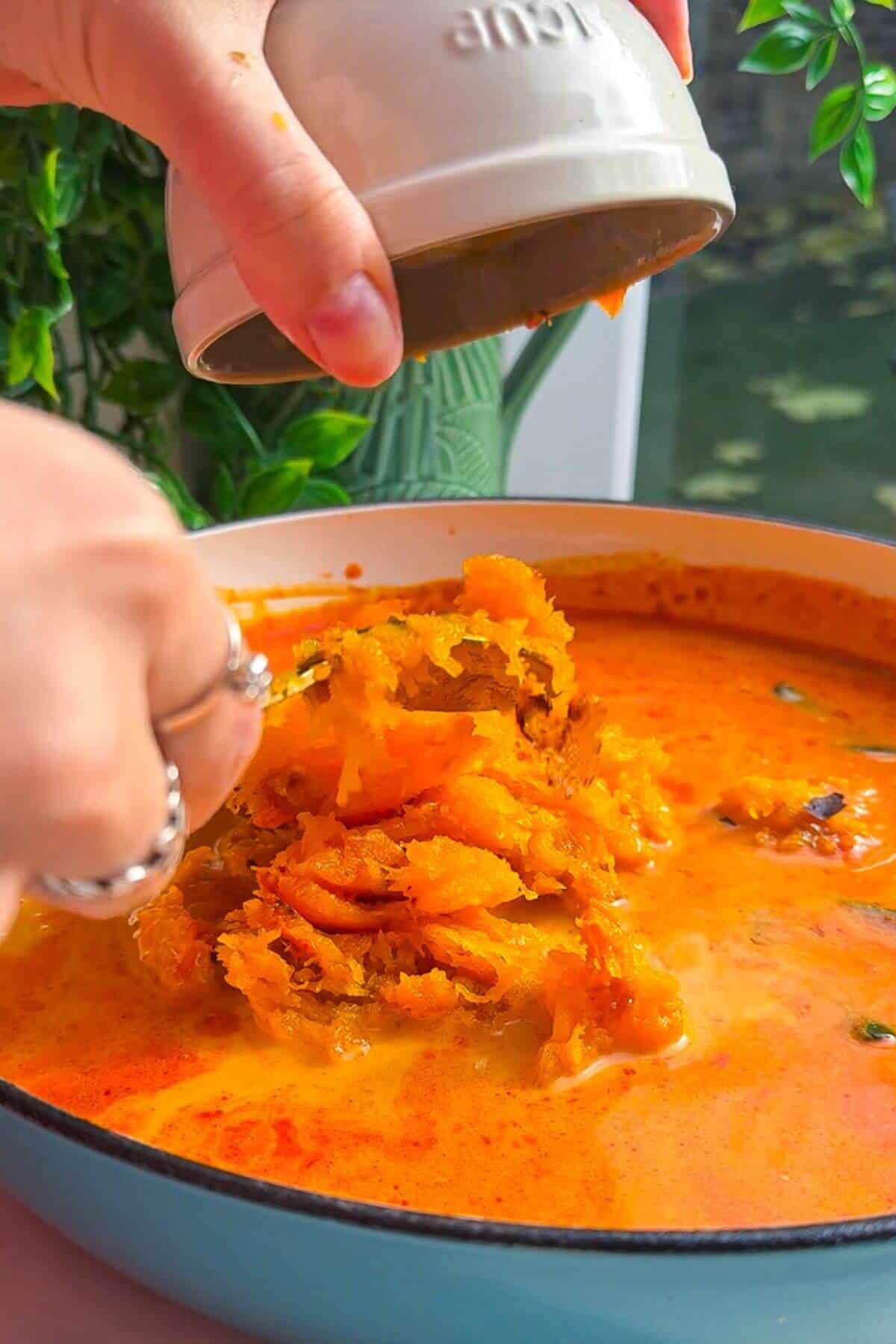
- Add the roasted squash flesh to your broth and stir it through.

- Use an immersion blender (for ease), or transfer the broth to a regular stand blender and blitz until super smooth.
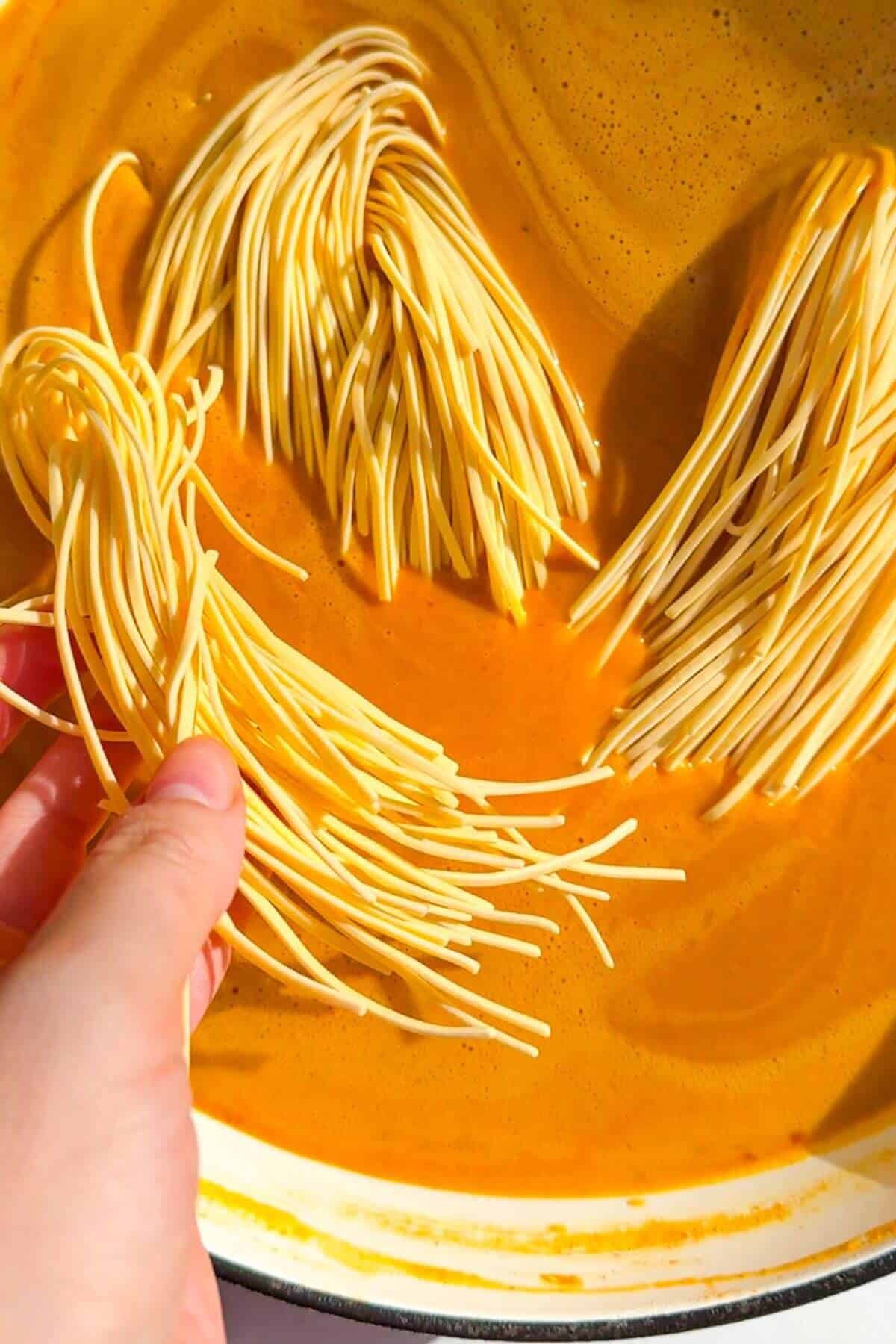
- Add your noodles directly into the broth, and stir to cover and cook.
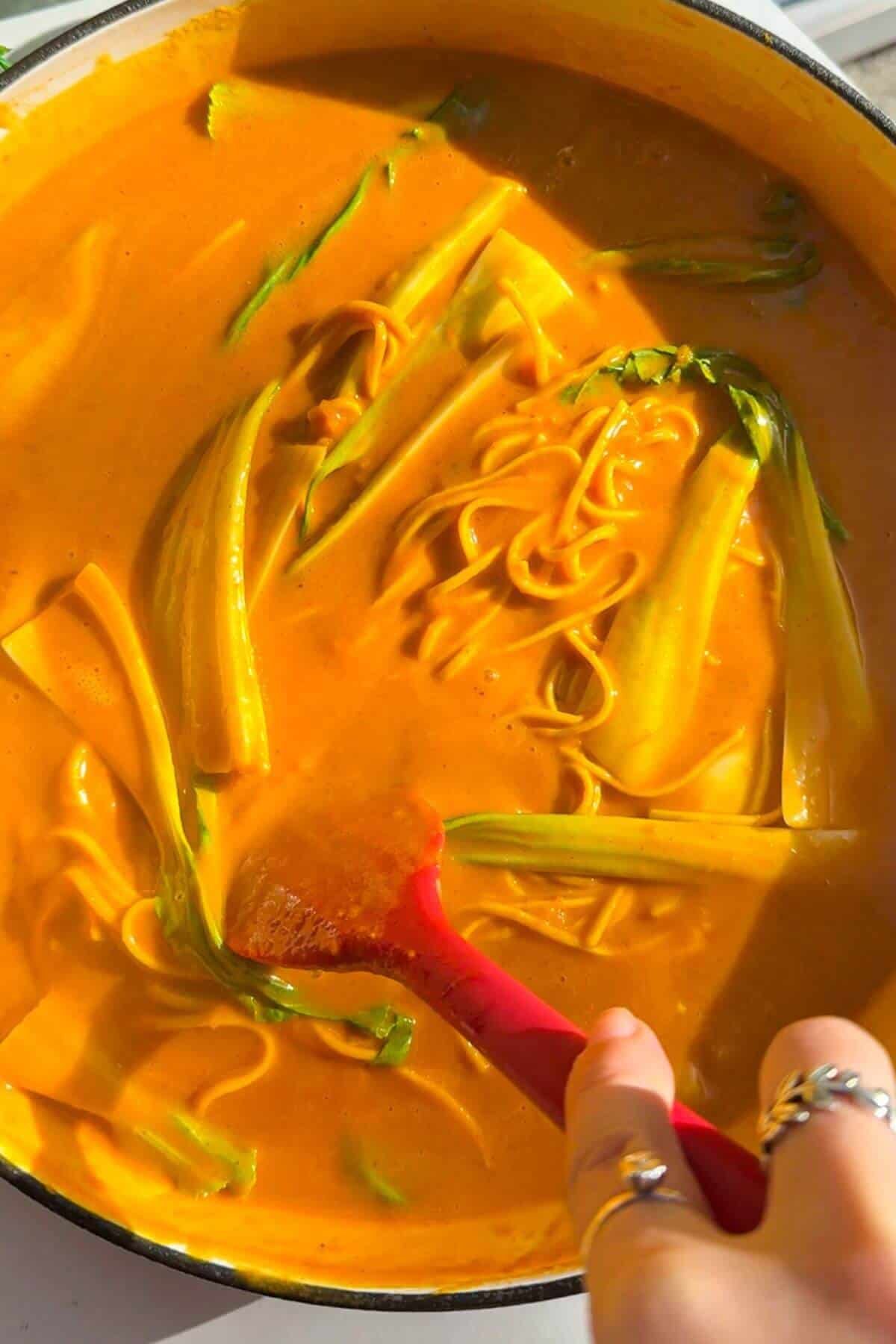
- Add the bok choi and stir through the noodles and broth.

Kate’s Top Ramen Tip
While I prefer cooking the noodles directly in the broth (I love how thick and saucy it becomes), if you’d like it more ‘soupy’, cook the noodles separately, divide between bowls, then pour the broth over them to serve.

- Divide the ramen between bowls, then top with the chorizo, chili crisp, cilantro, and extra scallions.
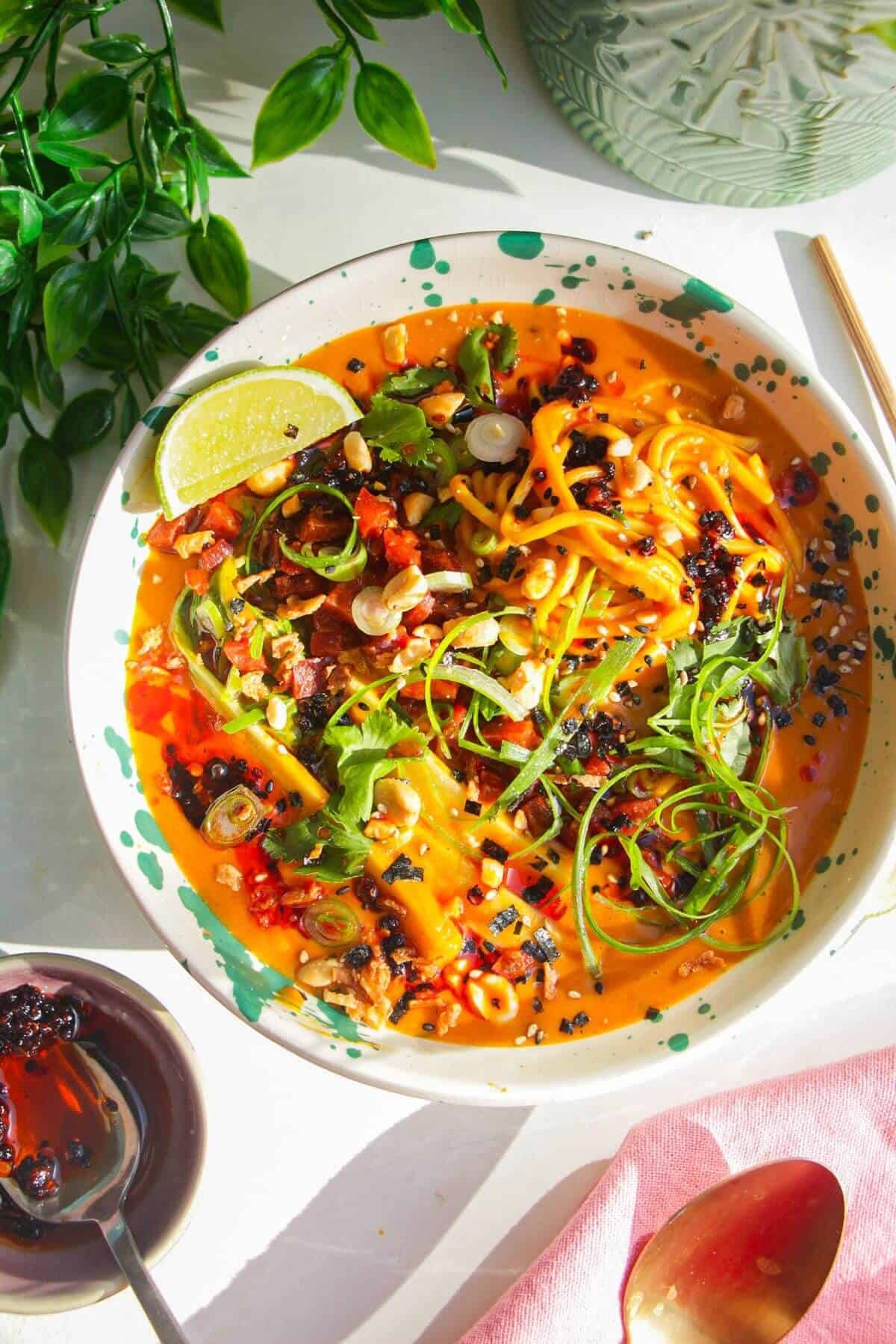
- Serve while hot, saucy, and delicious, with more chili crisp on the side.
Butternut Squash Ramen FAQs
How can I make the ramen broth thicker or thinner?For a thicker, creamier ramen, either reduce the stock slightly or cook the noodles directly in the sauce (as I prefer to do). This thickens the sauce perfectly.
If you’d like the broth thinner, add a little more stock and cook the noodles separately. This keeps the broth more soup-like, rather than a thick sauce.
You can! Just skip the chorizo (or you could use shredded tofu or mushrooms) and use extra light soy sauce instead of fish sauce (or use a vegetarian or vegan fish sauce if you can find it).
What’s the best way to make the ramen in advance?It’s best to roast the squash, then make the ramen broth and store the broth in the fridge for up to three days, until you’re ready to serve.
You can then cook the noodles fresh and combine them with the broth. If you store the noodles in the broth, you’ll find they end up quite soggy and will absorb the sauce.
If you make this recipe, I’d love to hear from you! You can leave a recipe rating and a comment below. And remember to tag @Zageer on Instagram, Facebook and TikTok if you’ve made one of my recipes. Seeing your recreations really makes my day 😊.
This cozy butternut squash ramen is everything I want on a weeknight – creamy, a little spicy, with sweet roasted squash blended straight into the broth. You get this gorgeous Asian-fusion base of gochujang and peanut butter, all swirled into a silky coconut broth that clings perfectly to every noodle. And, it all comes together in one pot for ease. If you don’t want to roast your own squash, use 1 1/2 cups of canned, plain pumpkin puree instead. Prep Time 10 minsCook Time 30 mins
Total Time 40 mins
Servings: 4 servings
Course: Main Course
Cuisine: asian
Ingredients Method Nutrition Notes
Ingredients
For the roasted squash –- 1 medium butternut squash
- 1 tablespoon olive oil
- Pinch of salt
- 2 oz Spanish chorizo, diced (optional), (50g)
- 1 inch piece of ginger, grated
- 3 garlic cloves, crushed
- 2 teaspoons ground turmeric
- 1 can of coconut milk, (13.5oz or 400ml)
- 3 tablespoons gochujang paste
- 2 tablespoons peanut butter, (ideally natural peanut butter, with only peanuts and salt in the ingredients list)
- 2 tablespoons light soy sauce
- 2 teaspoons fish sauce, optional, or use more soy sauce for vegetarian
- 3 cups chicken or vegetable stock
- 2 heads of bok choi, sliced
- Juice of 1/2 lime
- For the noodles –
- 10 oz dried noodles (instant ramen bricks, udon, or egg noodles are best), (300g)
- Chili crisp, (try this 30 minute chili oil)
- Fresh cilantro
- Sliced scallions
- Sesame seeds
- Crispy fried onions
Method
- Roast the butternut squash. Heat your oven to 425°F (220°C fan). Slice the squash in half lengthwise and scoop out the seeds. Drizzle the exposed squash flesh with the olive oil and sprinkle with salt. Roast, cut-side down, on a parchment paper-lined baking sheet for 30 minutes, until soft and tender. You should be able to easily pierce the squash with a knife.
- Cook the chorizo (optional). While the squash roasts, set a large, high-sided skillet or pot over medium heat, then add the diced chorizo. Cook, stirring, for a few minutes, until it releases oil and gets lovely and crispy. Remove the chorizo from the pan and set aside.
- Build the broth. To the same pan, add a little drizzle of oil, then add the ginger, garlic, and ground turmeric. Cook, stirring, for a minute, then add 3 tablespoons of gochujang paste, 2 tablespoons of peanut butter, 2 tablespoons of light soy sauce, and 2 teaspoons of fish sauce. Stir for another few minutes, until it forms a thick paste.
- Add coconut milk and stock. Pour in the coconut milk and 3 cups of chicken stock, then use a whisk to mix the paste into the liquid to form a lovely creamy broth. Stir, reduce the heat, and bring to a simmer.
- Add the roasted squash. Scoop the roasted squash flesh out of its skin and add to the broth. Stir through, breaking the flesh up with your spoon and spatula. Return to a simmer for five minutes.
- Blend the broth. For ease, use an immersion blender directly in the pot to blend the broth into a silky smooth soup. Or, for a slightly more velvety texture, transfer to a stand blender.
- Cook the noodles and bok choi. I like to cook the noodles straight in the broth because I like the ramen more saucy than soupy – but if you prefer a soupier ramen, cook the noodles separately, drain, then divide between serving bowls. Use the packet instructions as your guide here. Halfway through the noodle cooking time, add the bok choi to the broth and stir through to gently cook.
- Finish and serve. Taste, then add the lime juice and any extra seasoning if you think it needs it (I sometimes add a little extra fish sauce). Divide the noodles and broth between bowls, then add your desired toppings. Serve while hot and enjoy.
Nutrition
Serving: 250gCalories: 575kcal
Carbohydrates: 63g
Protein: 18g
Fat: 28g
Saturated Fat: 16g
Polyunsaturated Fat: 11g
Cholesterol: 20mg
Sodium: 1.52mg
Fiber: 7g
Sugar: 10g