Quick Spicy Coconut Noodles
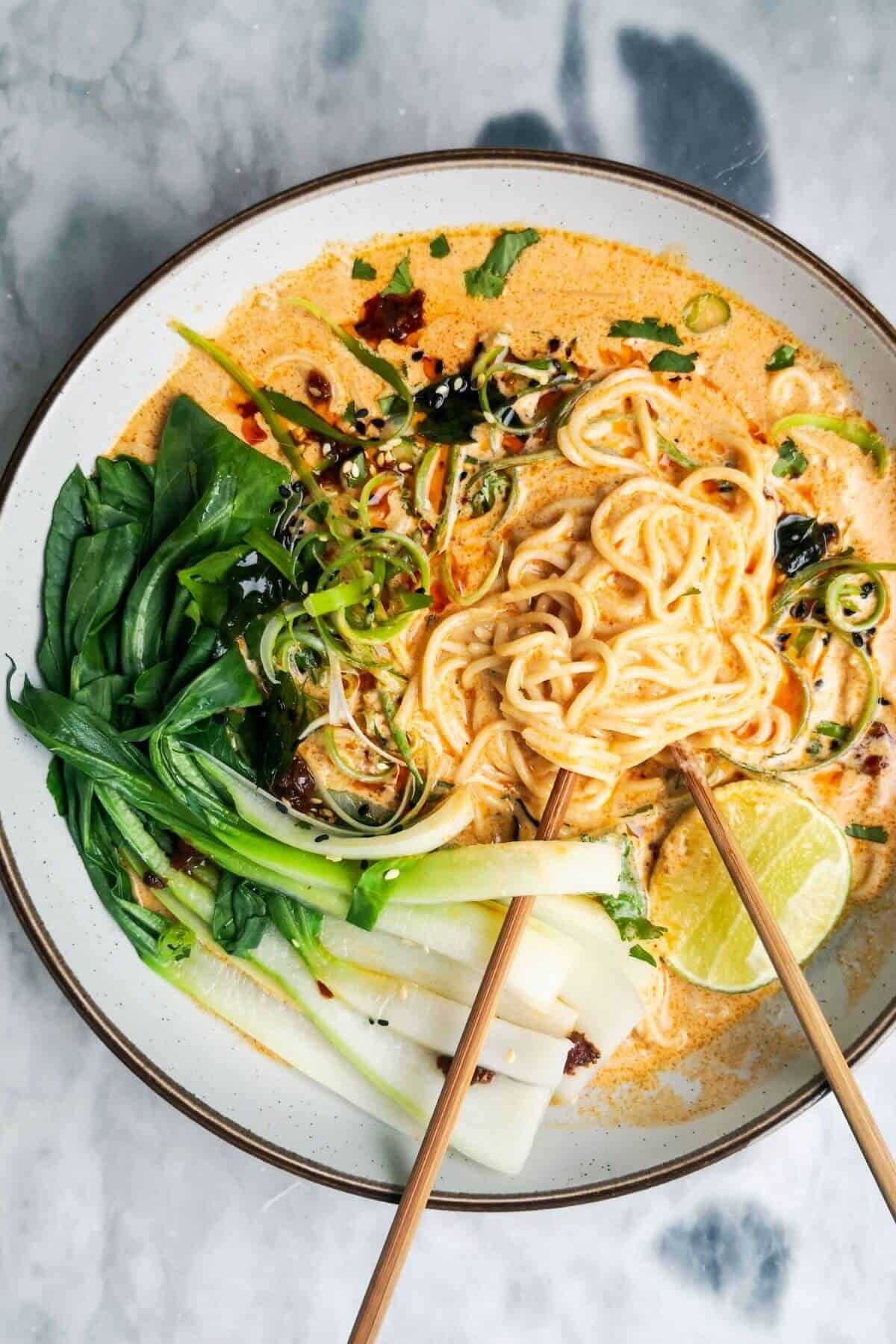
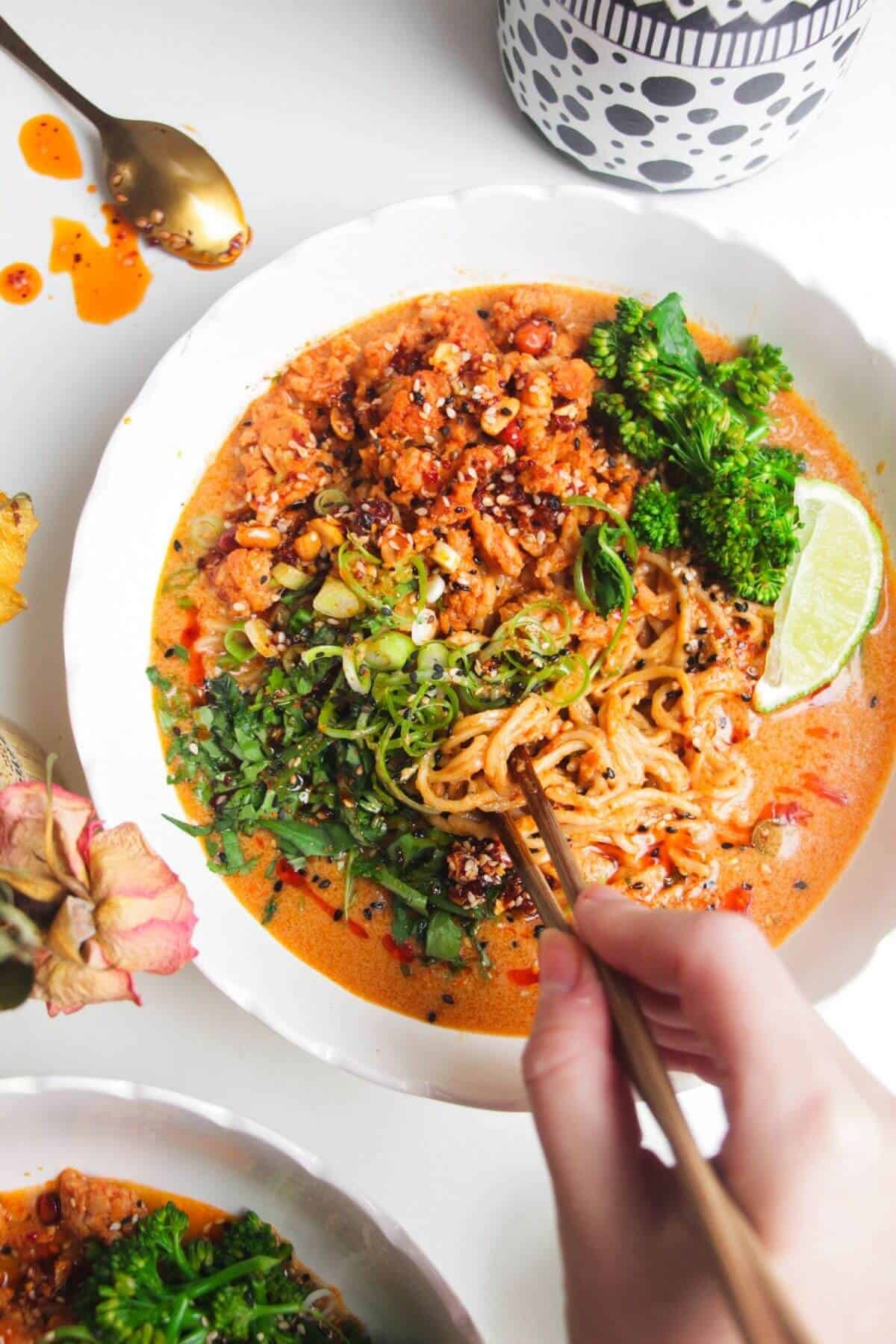
One pot, 20 minutes, and a seriously cozy bowl of spicy coconut noodles. Part ramen, part noodle soup, they’re creamy, easy, PACKED with flavor, and perfect for busy weeknights.
Spicy Coconut Noodles, at a Glance
⏰Time: 20 minutes
🍽️Serves: 4
🛒 Key Ingredients: Noodles, coconut milk, gochujang paste, chili crisp (or chili oil), light soy sauce, vegetable or chicken stock
🧠 Skill Level: Beginner-friendly
👩🍳 Cooking Method: One pot, stovetop
🍜 Why It Works: The noodles cook directly in the spicy coconut broth, absorbing flavor and releasing starch to thicken the sauce quickly
🍳 Make Ahead: Keeps well for up to 5 days
💃 Perfect For: Busy weeknights, low-effort dinners, better-than-takeout nights
My Favorite ‘Can’t Be Bothered Cooking’ Noodles
On days I’m tired, get home late, or just don’t feel like cooking but also don’t want to spend money on takeout, I’m always looking for low-effort recipes that still pack an incredible flavor punch (ideally with a few vegetables thrown in for good measure).
That’s exactly what these lovely spicy coconut noodles are. A shortcut flavor paste made from cupboard staples that does all the heavy lifting flavor-wise, then everything comes together in one pot. It’s as simple as:
- Mixing the flavor paste.
- Adding coconut milk and stock.
- Cooking the noodles and veg directly in the broth.
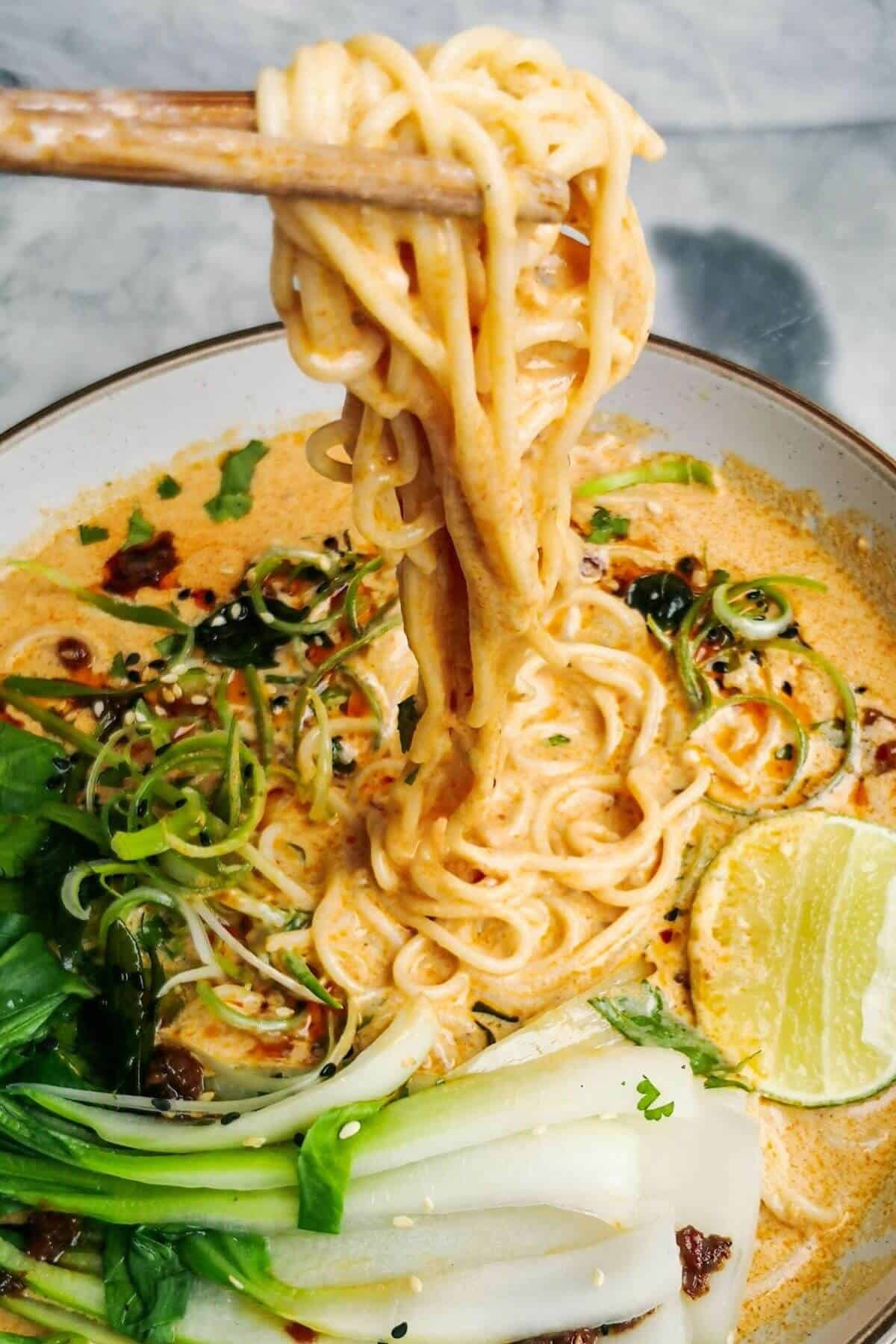
Cooking the noodles in the broth isn’t just a convenient shortcut. They’ll absorb all that lovely flavor, and release starch that helps thicken the broth considerably. A win-win!
The result is part ramen, part noodle soup, and just a very gorgeous bowl of creamy comfort. And if you love cozy noodle bowls like this, you might like to try saucy peanut satay noodles, butternut squash ramen, or baked satay ramen next.
“Best. Ramen. Recipe. Ever. I’m a ramen lover, and have never been able to find a recipe that satisfied like restaurants did until now. AMAZING. Followed recipe exactly. Husband says it’s his new favorite dinner. 6 stars!”
– Kayla
Read More Reviews
Ingredients You’ll Need
- Aromatics.
- Garlic and ginger provide the base flavor, and I love using lemongrass for a citrus element (optional but recommended if you have it). Fresh is best, but pastes work too.
- Veggies.
- Pak choi, scallions, and cilantro are my go-to combo, but almost any green veg works. Try broccoli, green beans, peas, spinach, or edamame beans – fresh or frozen.
- Flavor base.
- Light soy sauce, gochujang paste, fish sauce, and chili crisp create the spicy, savory backbone of the broth. No gochujang? Try sriracha or red curry paste instead.
- Broth.
- Coconut milk and vegetable broth (stock) create the creamy, soupy sauce. Chicken broth (stock) or even water works too.
- Noodles.
- Quick cooking ramen or egg noodles are perfect, but you can use any other egg or wheat based noodles, udon, or even spaghetti.
- Optional protein boost.
- Add shredded chicken, crispy tofu, or frozen shrimp to bulk the noodles out into a heartier meal if you like. Leftover chicken works well here – I often use chicken from my miso grilled chicken, or sticky gochujang chicken.
- Throwingfrozen dumplings into the soup is a fab way to make it feel more luxurious. I love making my own dumplings (using homemade two-ingredient dumpling wrappers), like these chicken and mushroom potstickers, or juicy pork dumplings. But store-bought frozen dumplings are perfect.
How to Make the Coconut Noodles
This is a step-by-step photo overview of how to make the noodles – the full, detailed recipe with ingredient quantities is at the bottom of the page for you.
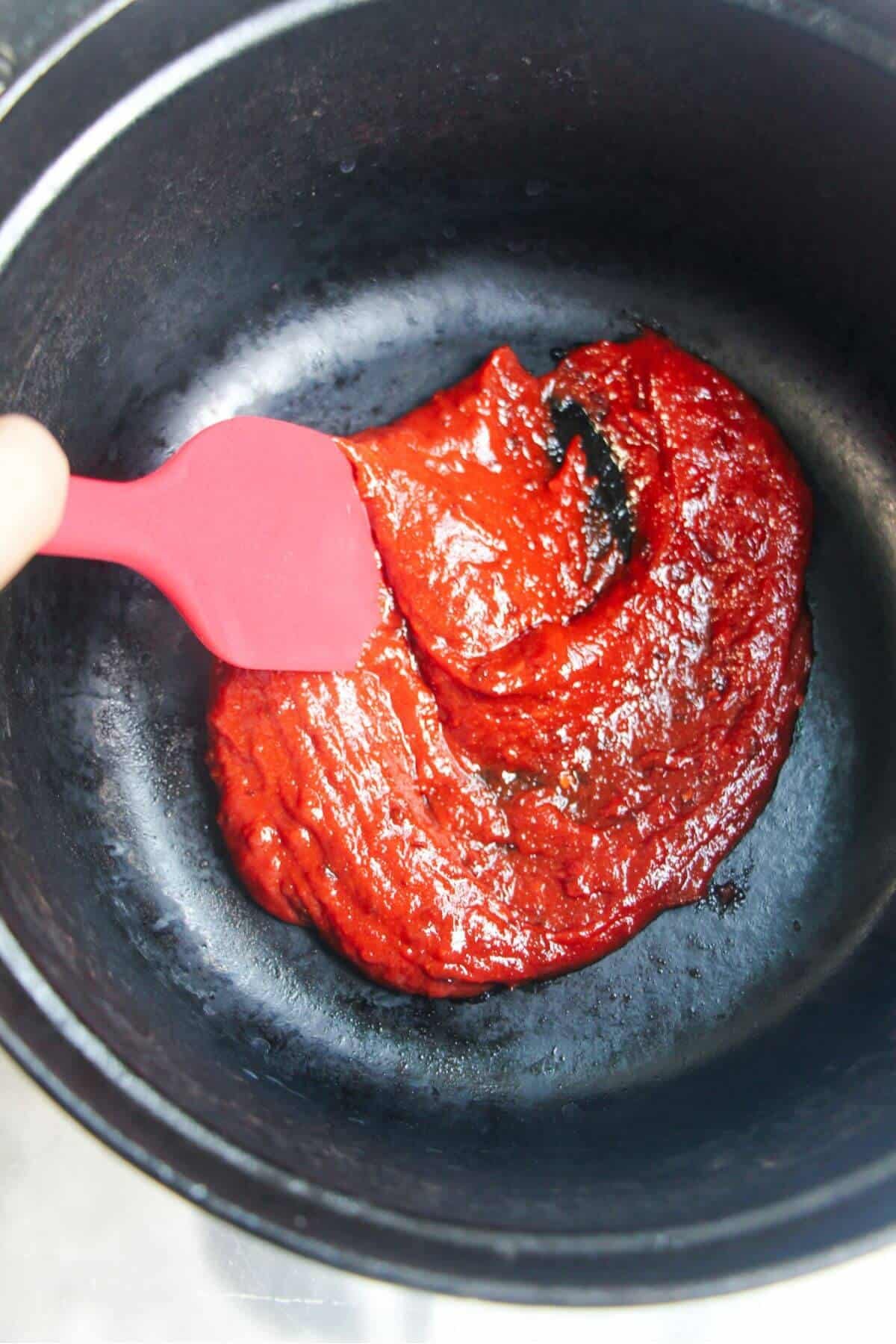
- Add the aromatics to a large pot and cook for a couple of minutes.
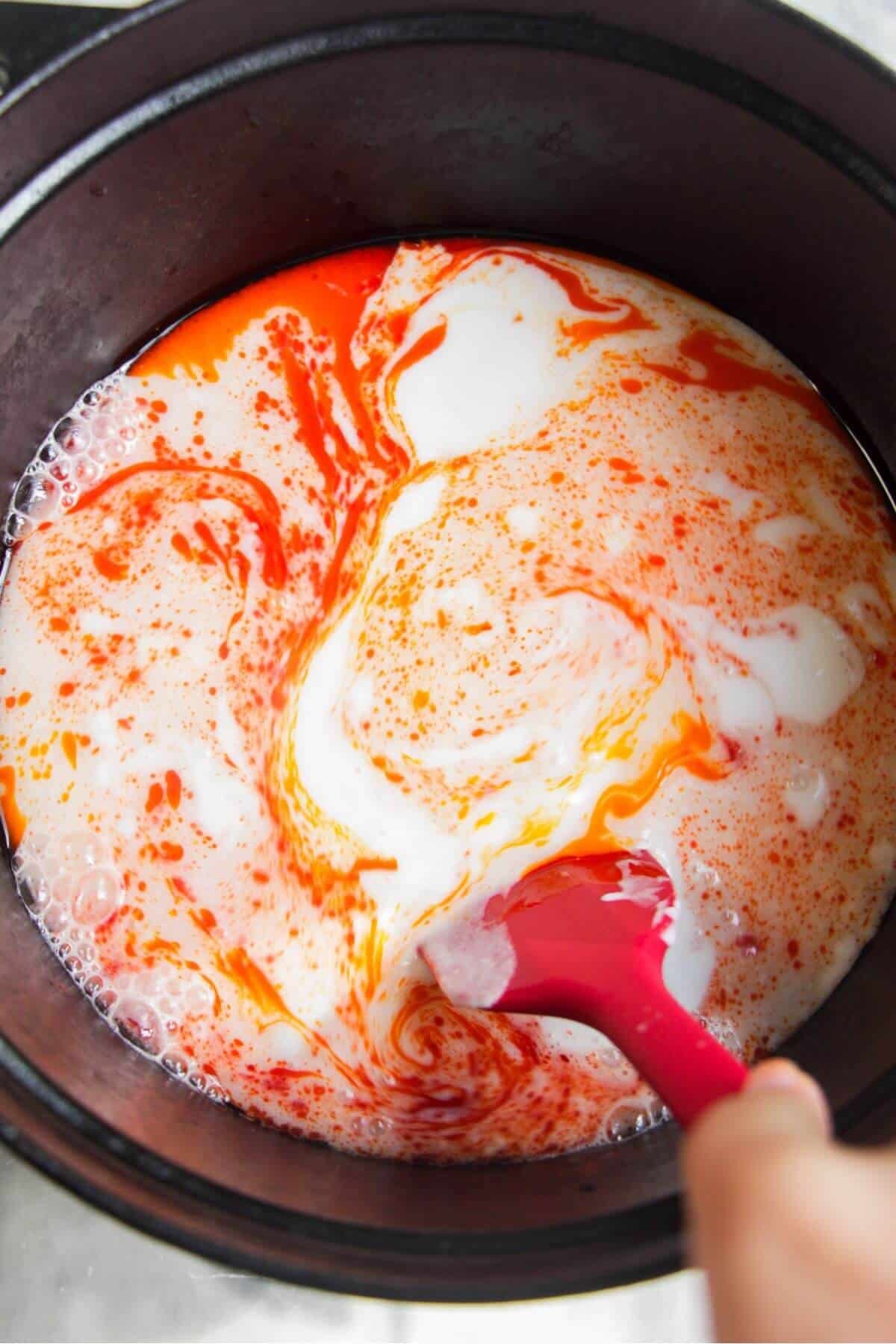
- Pour in the coconut milk and stock (broth), stir to combine, then bring to a simmer.
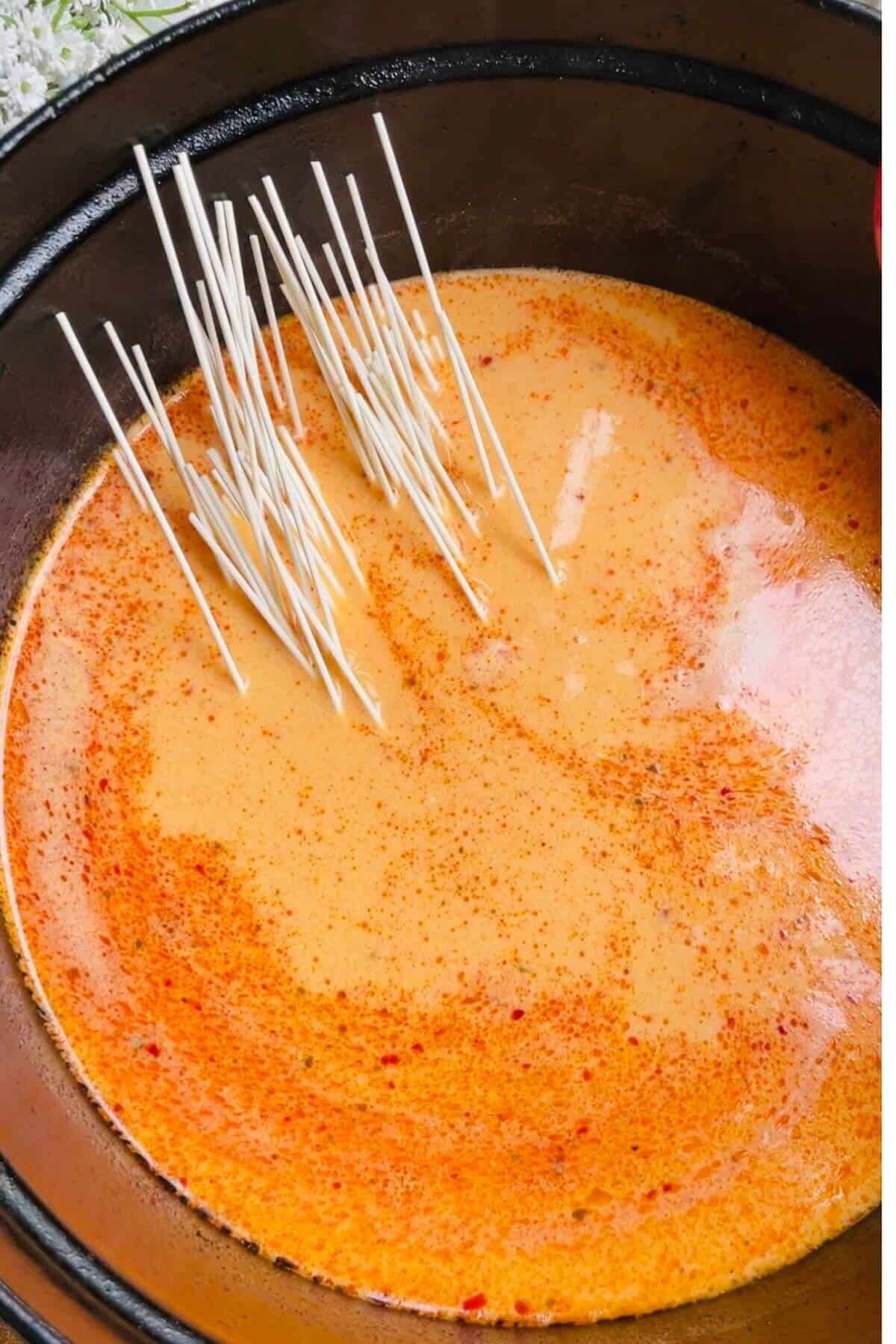
- Add the noodles straight into the broth, stir, and simmer for a few minutes until they’re nearly cooked through.
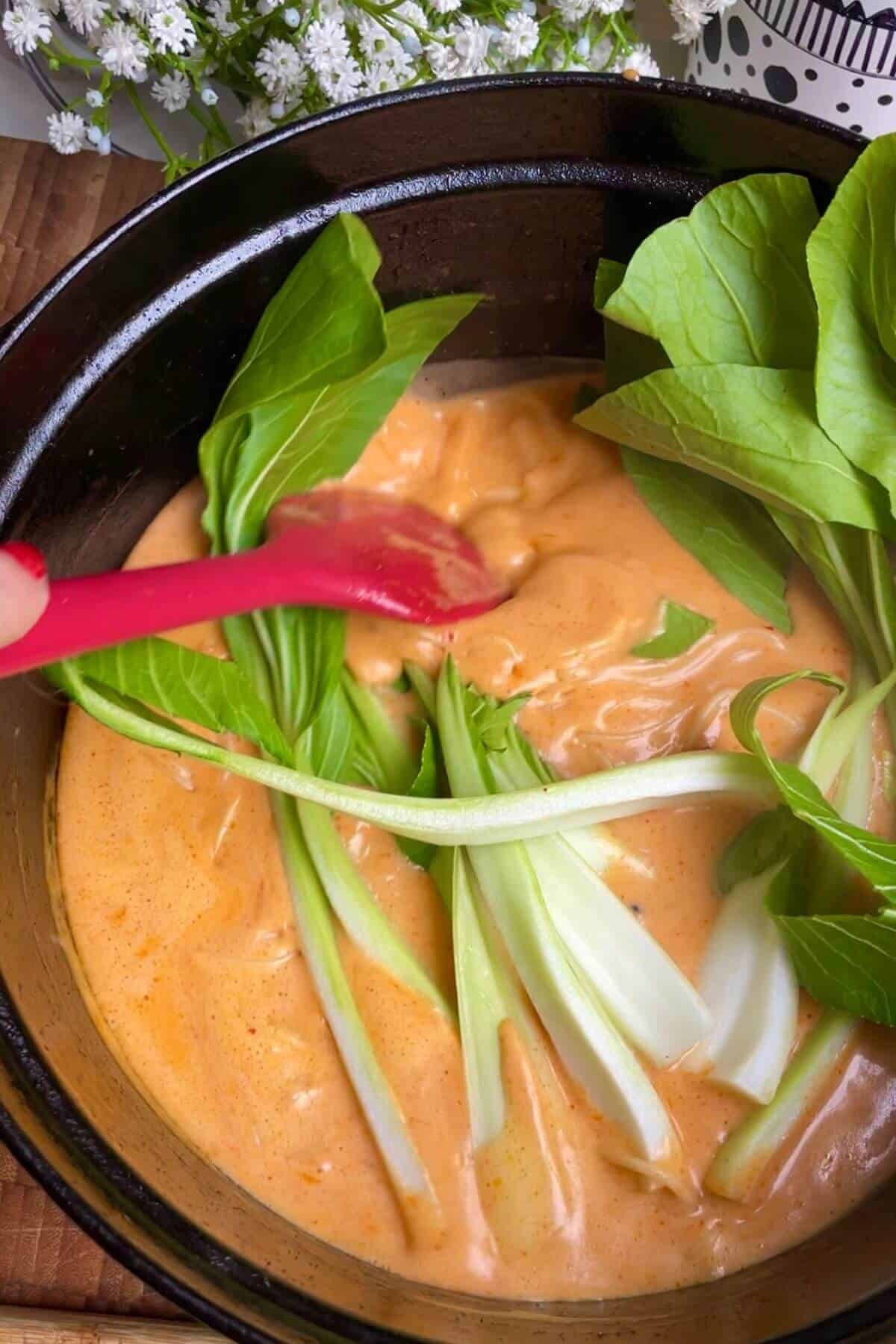
- Add the pak choi, or other green veggies, and stir through the sauce and noodles.
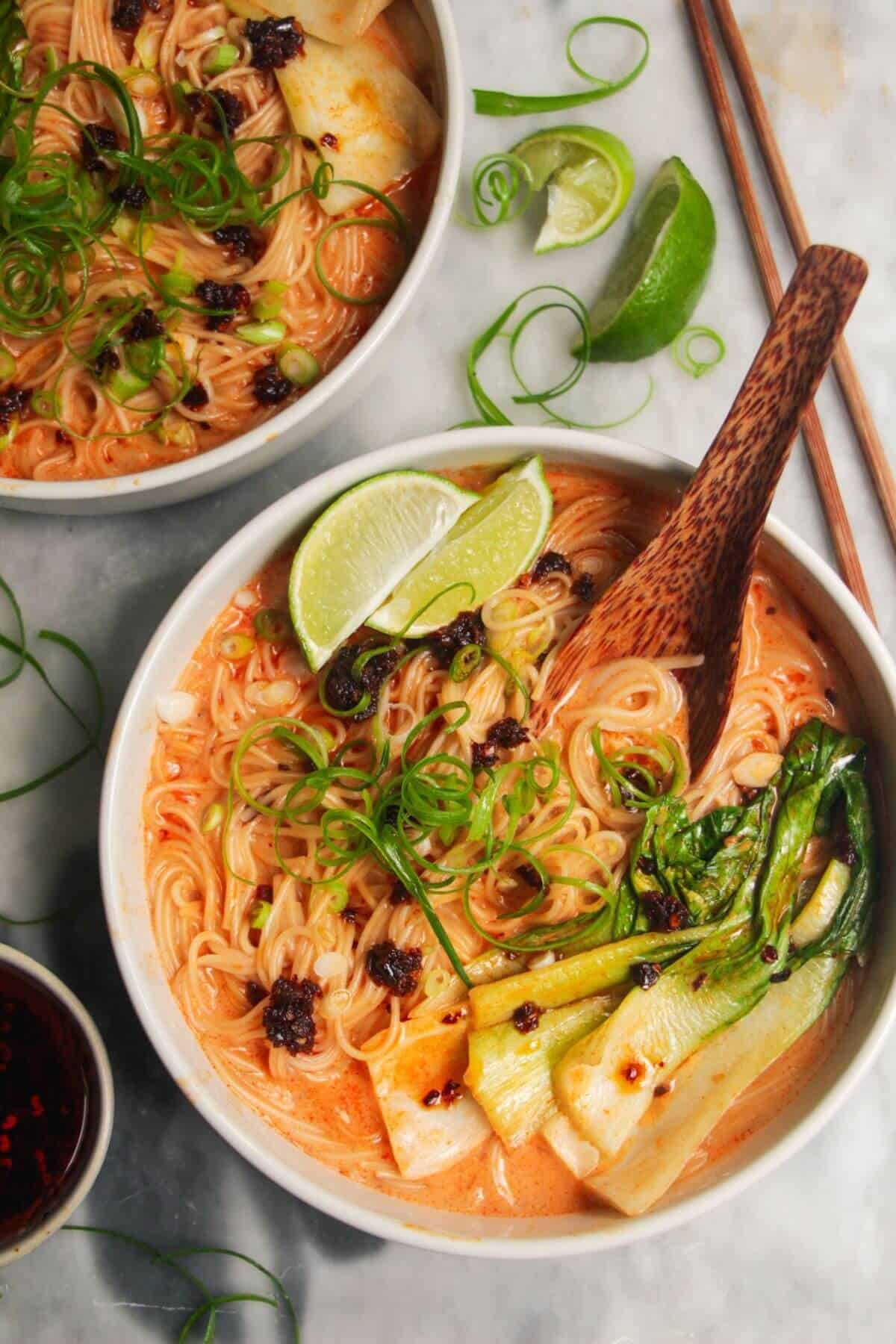
- Divide the noodles and broth between plates. Drizzle with chili crisp, scatter with scallions and cilantro, then finish with a squeeze of lime.

Kate’s Top Recipe Tip
This recipe has been specifically designed for the noodles to cook directly in the spicy coconut broth.
There are two reasons for this: it makes the recipe simpler, and their starch helps to thicken the broth. They’ll also absorb a lot of liquid as they cook (and continue to do so as they sit).
If you choose to cook your noodles separately, I recommend starting with just 1 ½ cups of stock. If you use the full amount as stated in the recipe, you’ll find your sauce much too watery.
Coconut Noodles FAQs
What noodles work best?You can use almost any noodles you have in your kitchen. I’ve found that quick-cooking ramen or regular egg noodles work the best, and they help to thicken the broth nicely. Udon and spaghetti can also work – just make sure you follow the packet instructions for timings.
If you use rice noodles, I’d recommend cooking them separately. In that case, you’ll need to reduce the amount of stock you use to 1 ½ cups.
Yes! You can make the spicy broth itself up to five days in advance, then reheat it on the stovetop, and cook the noodles and pak choi directly in it as directed in the recipe.
I’d recommend storing the noodles and broth separately if you do, or you’ll find the noodles absorb a lot of liquid and can go quite gluggy.
Leftovers will keep for up to three days. If you’d like to loosen the broth, just add a splash of water or stock as you reheat.
You can swap in another chili sauce or curry paste easily. Sriracha or red curry paste are great, as is sambal oelek. The flavor will be a little bit different, but they’ll still work well.
Why does the recipe use a lot of stock?This is because it’s been designed for the noodles to cook directly in the broth. They’ll absorb a lot of liquid – more than you might expect. They also release starch directly into it, which helps to thicken the sauce.
It will look soupy and loose when you add the noodles, and even as you add the pak choi, but it will thicken considerably as you finish the recipe and serve.
If you want to cook your noodles separately, you’ll need to make sure you reduce the quantity of stock to 1 ½ cups or it’ll be too watery.
Watch How to Make the Noodles
If you make this recipe, I’d love to hear from you! You can leave a recipe rating and a comment below. And remember to tag @Zageer on Instagram, Facebook and TikTok if you’ve made one of my recipes. Seeing your recreations really makes my day 😊.
One pot, 20 minutes, and a seriously cozy bowl of spicy coconut noodles. Part ramen, part noodle soup, they’re creamy, easy, PACKED with flavor, and perfect for busy weeknights. They’re exactly the kind of quick, comforting dinner I turn to on days I can’t be bothered cooking. Prep Time 5 minsCook Time 15 mins
Total Time 20 mins
Servings: 4 servings
Course: Main Course
Cuisine: Asian-inspired
Ingredients Method Nutrition Notes
Ingredients
- 2 tablespoons gochujang paste
- 1 tablespoon light soy sauce
- 2 teaspoons fish sauce, or a vegan alternative/more soy sauce
- 2 tablespoons chili crisp or chili oil, plus more to serve
- 2 garlic cloves, crushed
- 1 tablespoon ginger, grated (or use 2 teaspoons of ginger paste)
- 1 lemongrass stalk, crushed and chopped into 3 pieces (or use 1 tablespoon of lemongrass paste), optional
- 14 oz can of coconut milk (look for a coconut extract level above 60%), (400ml)
- 4 cups vegetable or chicken broth, roughly 1 liter
- 7 oz noodles of your choice, like ramen, udon, egg noodles, spaghetti (200g)
- 2 heads of pak choi, sliced
- 4 scallions, spring onions, finely sliced
- Handful of cilantro, coriander leaves
- 1 lime, sliced into wedges
Method
- Cook the aromatic base. Set a large saucepan over medium heat and add 2 tablespoons of gochujang paste, 1 tablespoon light soy sauce, 2 teaspoons fish sauce, and 2 tablespoons of chili oil. Stir for a minute or two, then add the garlic and ginger and cook, stirring, for another minute.
- Make the broth. Pour in the coconut milk, lemongrass pieces (if you're using them), and vegetable broth. Stir to combine, then bring it to a simmer, lower the heat, and leave it for five minutes to slightly thicken.
- Add the noodles.Add your noodles directly into the broth. This is important as they absorb some of the liquid and release starch that helps to thicken the broth. Stir them through the broth, then let them cook for about 4 minutes. Use your packet to guide you on the cooking time here – different noodles have slightly different cooking times. COOKING THE NOODLES SEPARATELY: The recipe – and the amount of stock specified – has been designed for noodles cooked directly in the broth. If you're cooking them separately, reduce the stock to 1½ cups to start with, and add a little more if needed. The noodles won't absorb liquid or release their starch into the broth, so using the full amount will make it too watery.
- Add the pak choi.Once your noodles are almost ready, add the sliced pak choi and stir through the broth and noodles for a minute, until they look bright green. Remove the pot from the heat. Taste, then season with a squeeze of lime.
- Garnish and serve. Divide the saucy noodles and pak choi between bowls, spooning lots of the lovely sauce into each bowl. Top with the scallions and cilantro leaves. Finish with another drizzle of chili oil, then serve with more lime wedges on the side.
Nutrition
Serving: 350gCalories: 395kcal
Carbohydrates: 57g
Protein: 15g
Fat: 14.5g
Saturated Fat: 6.6g
Polyunsaturated Fat: 2.5g
Monounsaturated Fat: 4.5g
Sodium: 1690mg
Potassium: 800mg
Fiber: 5.4g
Sugar: 11g
Vitamin A: 830IU
Vitamin C: 55mg
Calcium: 140mg
Iron: 4.5mg