
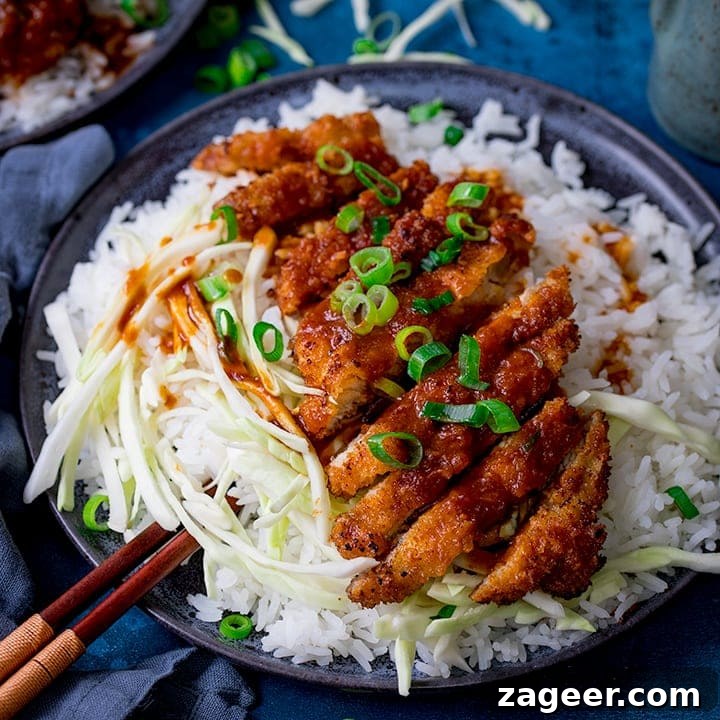
Crispy Japanese Tonkatsu: Your Ultimate Guide to Perfect Pork Cutlets
Welcome to the irresistible world of Tonkatsu! This classic Japanese dish, featuring a succulent pork cutlet coated in gloriously crispy panko breadcrumbs and drizzled with a rich, tangy sauce, is a true culinary delight. My simplified version brings this restaurant-quality meal to your table in under 30 minutes, making it perfect for busy weeknights or a special weekend treat. Get ready for a flavorful journey that’s surprisingly easy to master!
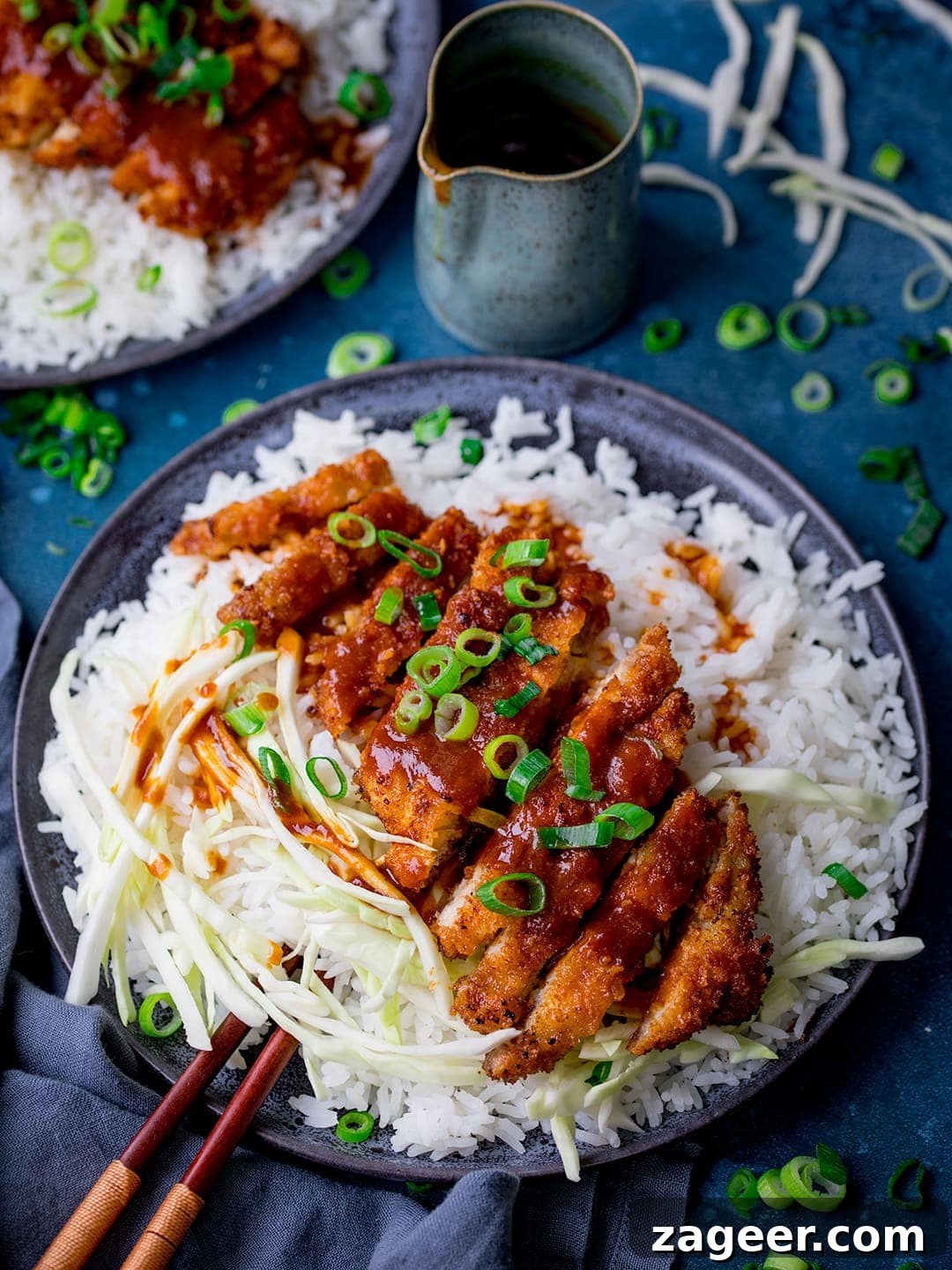
What is Tonkatsu? A Glimpse into Japanese Culinary History
Tonkatsu, a name derived from ‘Ton’ meaning ‘pork’ and ‘Katsu’ being a shortened form of ‘katsuretsu’ (cutlet), boasts a fascinating history. Originating in Japan during the 19th century, it emerged as a popular “yōshoku” — a Western-influenced Japanese dish. While initially prepared with beef, pork quickly became the preferred meat, leading to the beloved dish we know today.
Traditionally, Tonkatsu is deep-fried to achieve its signature crispy crust. It’s often served alongside fluffy steamed rice, a generous mound of finely shredded cabbage, and a distinctive thick, savory-sweet sauce. Beyond the basic cutlet, Tonkatsu has inspired many variations, such as Katsudon (a Tonkatsu rice bowl topped with egg) and Katsu Curry, showcasing its versatility and enduring popularity in Japanese cuisine.
The Secret to Crispy Perfection: Why Panko Matters
The hallmark of an outstanding Tonkatsu is its incredibly light and crispy coating, and the secret lies squarely with panko breadcrumbs. Unlike traditional Western breadcrumbs, panko is made from bread without crusts, resulting in a coarser, flakier texture. These larger crumbs absorb less oil during frying, leading to an exceptionally airy and delicate crunch that is far superior to what regular breadcrumbs can achieve.
The unique structure of panko creates a more substantial and visibly crisp exterior that perfectly encases the tender pork inside. It’s this distinct texture that elevates Tonkatsu from a simple fried cutlet to a culinary experience.
My Signature Shortcut Tonkatsu Sauce: Sweet, Tangy, and Unforgettable
While authentic Tonkatsu sauce can be a complex affair, often involving a blend of vegetables and fruits like tomatoes, prunes, dates, apples, lemon juice, carrots, onions, and celery, along with over ten types of spices, soy sauce, vinegar, and sugar (as eloquently described by Namiko of the fantastic Just One Cookbook), my recipe offers a brilliant shortcut without compromising on flavor.
My version delivers a strong, tangy, and sweet profile that is utterly delicious. Don’t be fooled by its intensity if you taste it straight from the pan – it might pucker your lips a little! However, once generously drizzled over the crispy pork, the flavors harmonize beautifully, creating a symphony of taste. This homemade sauce is a family favorite, always polished off in minutes by everyone, even transforming the humble shredded cabbage into an eagerly consumed accompaniment!
📋 What You’ll Need for Homemade Tonkatsu
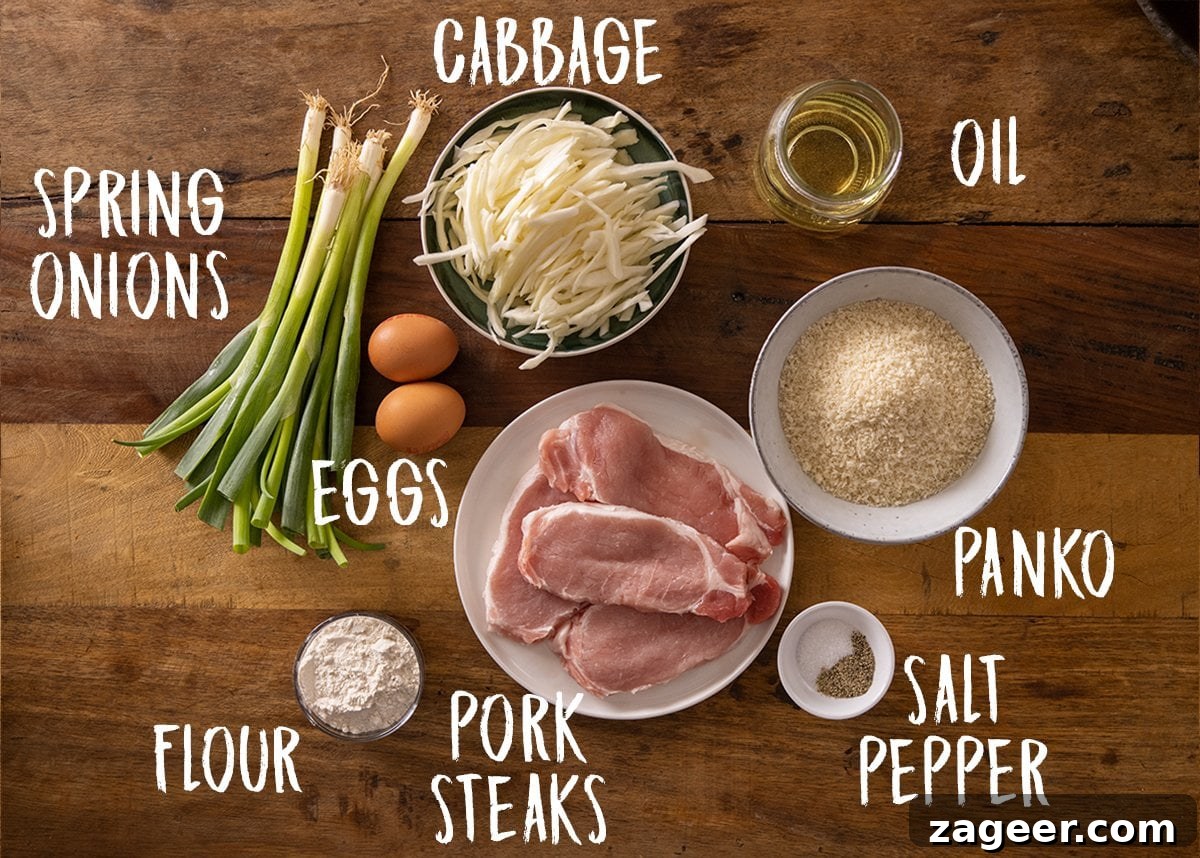
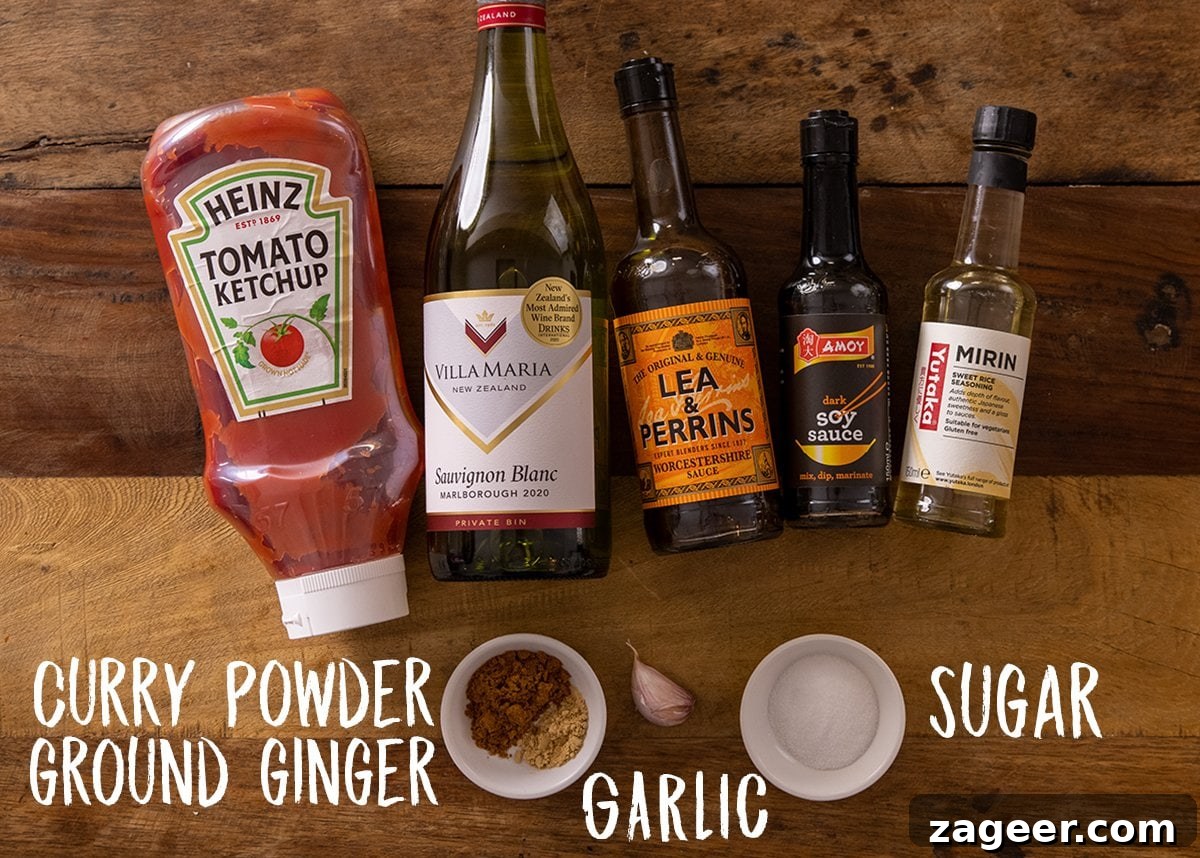
Tonkatsu Sauce Ingredients
🔪 How to Make Perfect Tonkatsu
For the full recipe with detailed steps and precise measurements, please refer to the comprehensive recipe card at the end of this post.
Preparing the Pork Cutlets
- Start by selecting high-quality pork loin steaks. For best results, pound the pork gently to an even thickness. This ensures consistent cooking and helps tenderize the meat. Season both sides lightly with salt and pepper.
- Set up a classic dredging station: one shallow bowl for flour, another for lightly whisked eggs, and a third for the panko breadcrumbs. This systematic approach ensures a perfect coating.
- Carefully dredge each pork loin steak first through the seasoned flour, ensuring it’s fully coated. Then, dip it into the egg wash, allowing any excess to drip off. Finally, press the pork firmly into the panko breadcrumbs, ensuring every inch is thoroughly coated. The firmer you press, the better the panko will adhere, leading to maximum crispiness.
The Perfect Fry & Finish
- Heat a generous amount of vegetable oil in a large frying pan over medium heat. We’re aiming for a shallow fry, which is healthier and less messy than deep-frying while still delivering incredible crispiness.
- Once the oil is hot (a small sprinkle of panko should sizzle immediately), carefully place the coated pork steaks into the pan. Fry for 2-4 minutes on each side until they achieve a beautiful golden-brown and crispy crust.
- After frying, transfer the pork steaks to a baking tray and finish cooking them in a preheated oven (200°C/400°F fan) for an additional 7-10 minutes. This two-step cooking process ensures the pork is thoroughly cooked through to the center without burning the panko crust.
- 👩🍳 **PRO TIP:** To ensure the pork is perfectly done, slice into the thickest part of one steak. It should be piping hot throughout and show no signs of pink in the middle.
Whipping Up the Tangy Tonkatsu Sauce
- While the pork is in the oven, it’s time to prepare the sensational Tonkatsu sauce. Gather your shortcut ingredients: ketchup, white wine, Worcestershire sauce, dark soy sauce, minced garlic, ground ginger, curry powder, mirin, and sugar.
- Combine all these ingredients in a small saucepan. Whisk them together until well blended.
- Bring the mixture to a gentle boil, then reduce the heat and let it simmer for about 5 minutes. This allows the flavors to meld beautifully and the sauce to thicken slightly. Turn off the heat; the sauce is best served warm, not piping hot.
Assembling Your Tonkatsu Feast
- Once the pork steaks are ready, remove them from the oven and allow them to rest for a minute or two. Then, slice them into thick, even strips.
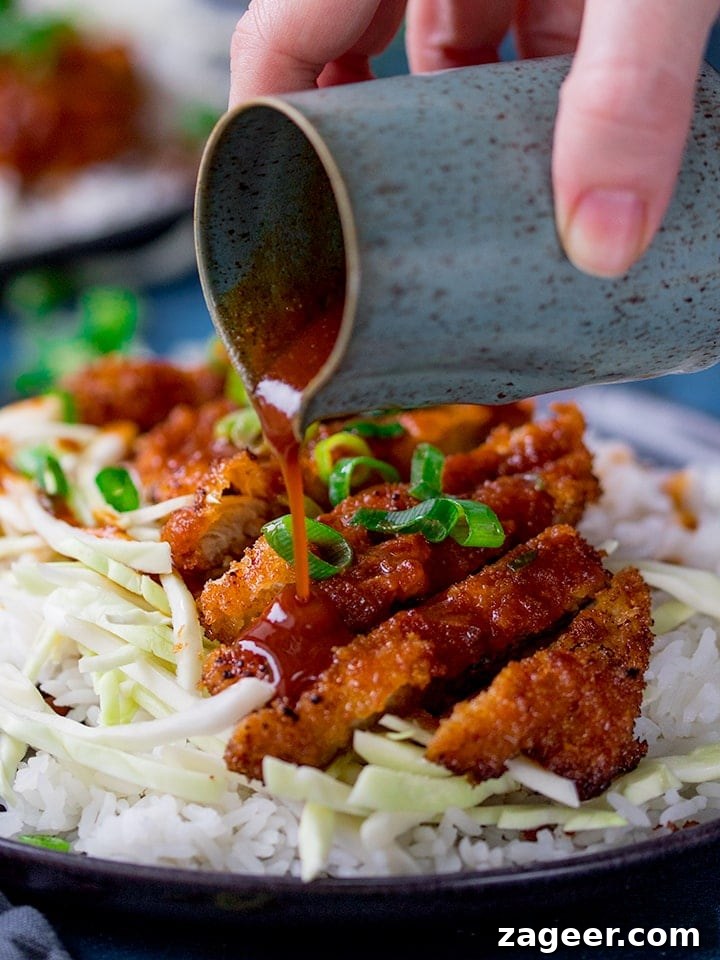
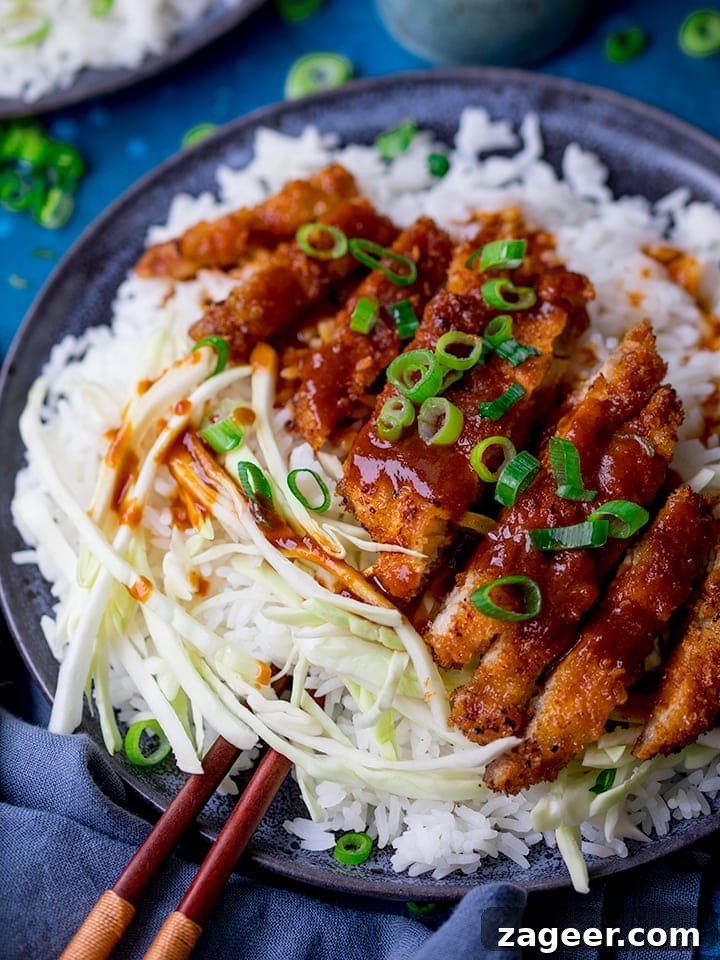
- Arrange the crispy-coated pork strips artfully on top of waiting piles of fluffy boiled rice and finely shredded raw white cabbage.
- Then, pour on that tangy, sweet, and savory Tonkatsu sauce… The combination of crispy pork, soft rice, crunchy cabbage, and bold sauce is truly divine!
🍽️ Essential Accompaniments: What to Serve with Tonkatsu
Tonkatsu is traditionally served with a few key accompaniments that perfectly balance its rich flavors and crispy texture. However, don’t hesitate to get creative with your side dishes!
Traditional Pairings:
- Simple Boiled Rice: Fluffy, steamed short-grain Japanese rice is the perfect canvas for the Tonkatsu, soaking up the delicious sauce. Check out my guide on how to boil rice for perfect results every time.
- Thinly Sliced White Cabbage: Raw, finely shredded cabbage offers a refreshing crunch that cuts beautifully through the richness of the fried pork. It’s an indispensable part of the Tonkatsu experience.
Creative Alternatives & Additions:
If you’re looking to change things up or add more variety to your meal, consider these delicious options:
- Crispy Oven-Baked Fries: A fantastic Western-inspired fusion side that kids and adults will love.
- Egg Fried Rice: Elevate your meal with a flavorful and satisfying fried rice, adding another layer of texture and taste.
- On top of a Noodle Salad: For a lighter, fresher meal, serve your Tonkatsu sliced over a vibrant noodle salad. Skip the mustard dressing in the linked recipe and use the spicy Tonkatsu sauce from this recipe for an incredible flavor boost!
- Miso Soup: A classic Japanese clear broth that provides a comforting, savory start to any meal.
- Pickled Vegetables (Tsukemono): Offer a tangy, crunchy counterpoint to the richness of the Tonkatsu, aiding digestion and cleansing the palate.
A final sprinkle of fresh spring onions adds a pop of color and a mild, oniony freshness, and then your magnificent Tonkatsu feast is ready to be devoured.
📺 Watch How to Make Tonkatsu
🍲 More Delicious Pork Recipes to Explore
Street Food
Gua Bao (Pork Belly Bao Buns)
Asian
Spicy Pork Ramen Noodle Soup
Asian
Sweet and Sour Pork
Street Food
Crispy Pork Gyros
Dinner
Smothered Pork Steak
Asian
Sticky Chinese Pork Belly
Stay Connected for More Culinary Inspiration!
Never miss a new recipe!
Subscribe to our newsletter to get delicious recipes delivered straight to your inbox. You can also find me on YouTube (new videos every week) and Instagram (behind-the-scenes stories & beautiful food photos).

Click the stars to rate or comment
Tonkatsu Pork Recipe
10 mins
18 mins
28 mins
4 people
Dinner
Japanese
Ingredients
Pork:
- 2 eggs, lightly whisked
- 4 tbsp flour
- ¼ tsp salt
- ¼ tsp black pepper
- 75 g (1 ½ cups) panko breadcrumbs
- 4 pork loin steaks, excess fat removed
- Vegetable oil for frying
Tonkatsu Sauce:
- 120 ml (½ cup) tomato ketchup
- 60 ml (¼ cup) white wine
- 2 tbsp Worcestershire sauce
- 2 tbsp dark soy sauce
- 1 garlic clove, peeled and minced
- ¼ tsp ground ginger
- 1 tsp curry powder
- 1 tbsp mirin
- 1 tbsp sugar
To Serve:
- Boiled rice
- ½ white cabbage, finely shredded
- 3 spring onions/scallions, chopped
Instructions
- Preheat the oven to 200°C/400°F (fan).
- Prepare your dredging station: place the eggs in a shallow bowl, mix the flour, salt, and pepper in a second bowl, and put the panko breadcrumbs in a third bowl.
- Coat each pork steak: first in the seasoned flour, then dip in the whisked egg, and finally firmly press into the panko breadcrumbs until fully coated. Place on a plate and repeat for all steaks.
- Heat the vegetable oil in a large frying pan over medium heat. Fry the pork steaks for 2-4 minutes on each side until golden brown and crispy.
- Transfer the fried pork steaks to a baking tray and finish cooking them in the preheated oven for 7-10 minutes, or until the pork is piping hot and no longer pink in the middle.
- While the pork is cooking, combine all Tonkatsu sauce ingredients (ketchup, white wine, Worcestershire sauce, dark soy sauce, garlic, ground ginger, curry powder, mirin, and sugar) in a small saucepan. Mix well and bring to a boil.
- Reduce the heat and simmer the sauce for 5 minutes, then turn off the heat. The sauce is best served warm.
- Once the pork steaks are ready, remove them from the oven and slice them into strips.
- Serve the sliced pork on top of four bowls of rice, accompanied by finely shredded raw cabbage. Drizzle generously with the homemade Tonkatsu sauce. Garnish with chopped spring onions and serve with any remaining sauce on the side.
Notes
Recipe Source: This recipe is a personalized adaptation based on a version from the fantastic Hairy Bikers (love those guys!). I’ve made a few tweaks: using white wine instead of sake, ground ginger instead of fresh, omitting mustard powder, adding a touch of curry powder for depth, and finishing the pork in the oven for convenience and consistent cooking.
What does Tonkatsu sauce taste like? It’s a delightful blend of sweet, tangy, and savory flavors with a subtle hint of spice. This complex profile is specifically designed to cut through the richness of the fried crispy pork, creating a perfect balance on your palate!
Can I make it ahead? While Tonkatsu truly shines when freshly made due to its crispy nature, you can prepare the pork and sauce ahead of time. Fully cook both components, then cool them completely and store separately in airtight containers in the refrigerator for up to one day. To reheat, warm the pork in the oven (uncovered) at 190°C/380°F for 10-15 minutes until piping hot and crispy again. Reheat the sauce gently in a pan until warm.
Can I freeze it? Yes, you can freeze cooked Tonkatsu. After cooking and cooling, cover and freeze the pork and sauce separately. Defrost overnight in the refrigerator. Reheat the pork in the oven (uncovered) at 190°C/380°F for 10-15 minutes until piping hot and re-crisped. Reheat the sauce in a pan until warm.
Can I make it gluten-free? Absolutely! To make this recipe gluten-free, substitute regular flour with a gluten-free plain flour blend and use gluten-free breadcrumbs instead of panko. You’ll also need to replace the dark soy sauce with tamari. Always double-check your tomato ketchup, Worcestershire sauce, and mirin labels to ensure they are certified gluten-free versions.
Do I have to fry it first, or can I just cook it in the oven? Frying the pork first and finishing it in the oven yields the most succulent and crispy results. However, if you prefer an oven-only method, you can achieve a decent crispiness by tossing the panko breadcrumbs with about 2 tablespoons of olive oil until evenly coated before dredging the pork. Bake the panko-crusted pork in the oven for approximately 15 minutes, or until it’s golden brown, piping hot, and no longer pink in the middle.
Can I make it with chicken instead? Yes, Chicken Katsu is a very popular and delicious alternative! Use boneless, skinless chicken breasts, and use a rolling pin or meat tenderizer to flatten them to an even thickness. Then, follow the same breading and cooking method as for the pork. You may need to cook the chicken for a couple of minutes longer in the oven to ensure it is thoroughly cooked through.
Nutritional Information: Please note that the nutritional information provided is calculated per serving and does not include the serving suggestion of boiled rice. It is an approximation and can vary based on specific ingredients and cooking methods.
Nutrition
Carbohydrates: 42g |
Protein: 37g |
Fat: 21g |
Saturated Fat: 13g |
Cholesterol: 164mg |
Sodium: 1288mg |
Fiber: 4g |
Sugar: 16g
Nutrition information is automatically calculated, so should only be used as an approximation.
Like this recipe? Leave a comment below!
This recipe was first published in October 2015. It has been significantly updated in January 2019 and April 2021 with new photos, enhanced step-by-step images, an instructional video, and additional cooking tips for the best homemade Tonkatsu experience.
Some of the links in this post may be affiliate links – which means if you buy the product I get a small commission (at no extra cost to you). If you do buy, then thank you! That’s what helps us to keep Kitchen Sanctuary running. The nutritional information provided is approximate and can vary depending on several factors. For more information please see our Terms & Conditions.