

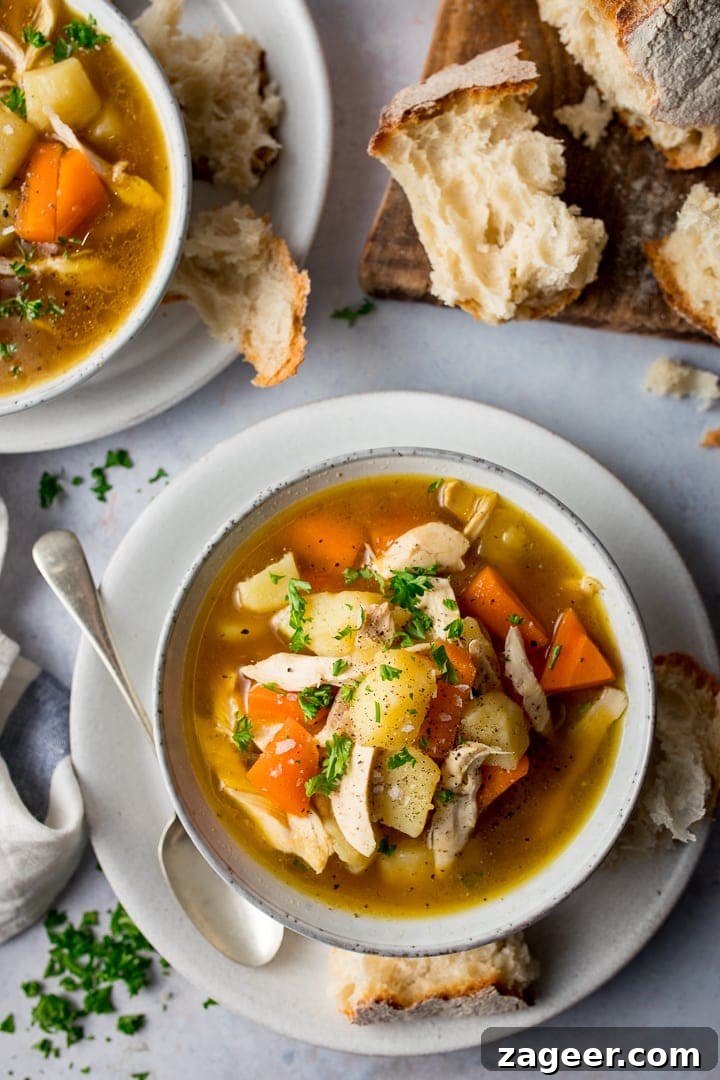
Discover the ultimate comfort food with this incredibly flavorful and hearty Homemade Chicken and Vegetable Soup. Crafted from leftover roast chicken bones, this recipe transforms what might be discarded into a deeply satisfying meal. Perfect for a cozy lunch or a light dinner, it’s a delicious and economical way to utilize every bit of your Sunday roast.
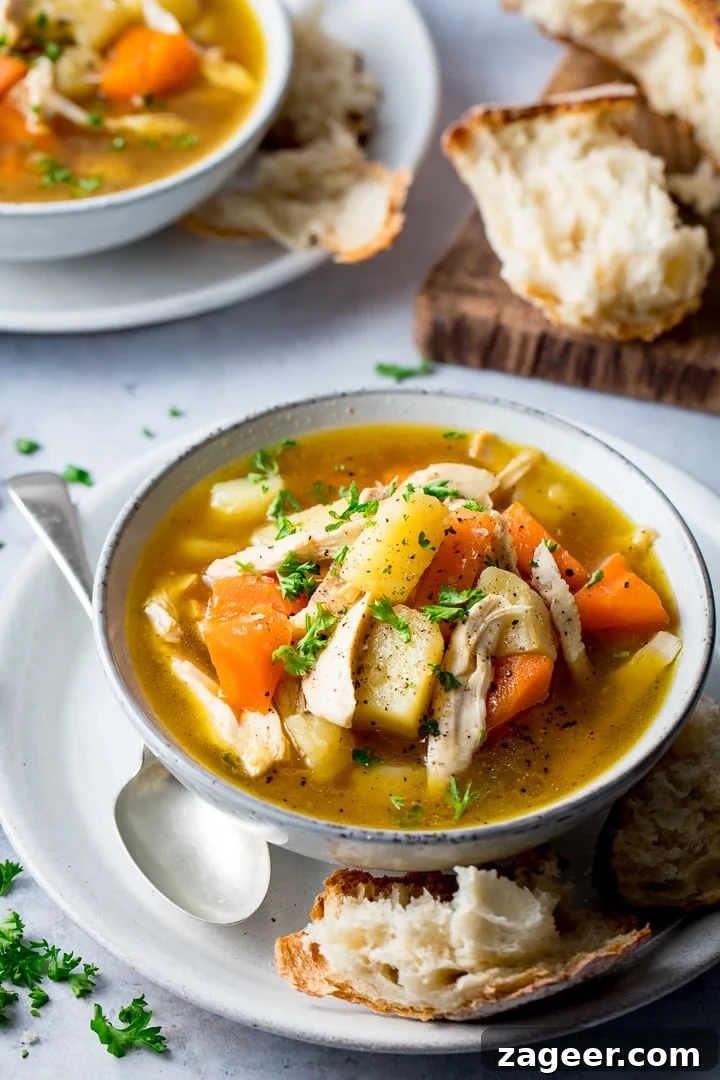
There’s nothing quite like a steaming bowl of homemade chicken soup to warm the soul. While many associate comfort food with rich, creamy dishes or sweet, indulgent treats, this simple yet profoundly satisfying chicken and vegetable soup stands in a league of its own. It’s a nostalgic staple, a culinary embrace that brings a sense of calm and well-being with every spoonful.
This recipe holds a special place in my heart, a tradition passed down through generations. I’ve been enjoying this comforting elixir since childhood. My mum would often make a turkey version after our elaborate Christmas dinners, always in generous batches. I still recall stumbling home in my late teens after a night out, and her having a warm bowl ready, saving me from any potential kitchen mishaps while attempting to heat it myself!
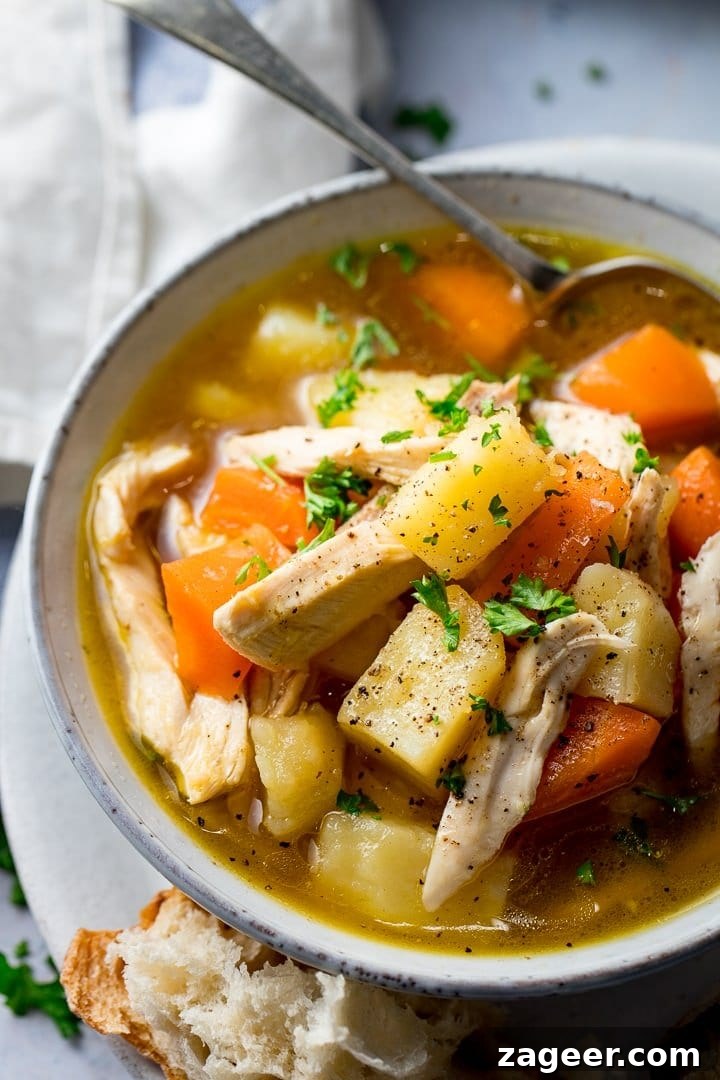
The craving for this soup became particularly intense when I was pregnant with my daughter, Gracey. I found myself roasting chickens late into the night, simply to have the bones available for making this very soup the next day. It truly is a dish that resonates deeply, offering warmth, nourishment, and a taste of home.
Why Homemade Chicken Soup is a Must-Make
Beyond its incredible flavor, homemade chicken and vegetable soup is a champion of practicality and nutrition. It’s the perfect solution for transforming what would otherwise be kitchen waste – your leftover roast chicken carcass – into a nutrient-rich, economical meal. Making your own stock from scratch ensures you control all the ingredients, avoiding artificial flavors and excessive sodium often found in store-bought options. This ‘nose-to-tail’ approach to cooking not only reduces food waste but also extracts maximum flavor and beneficial nutrients from the chicken bones.
The long simmering process draws out collagen, minerals, and amino acids from the bones, creating a gelatinous, body-building broth that is incredibly good for you. This makes the soup not just delicious, but also a powerhouse of goodness, contributing to gut health, joint support, and overall well-being. It’s a meal that truly nourishes from the inside out.
Essential Ingredients for Your Comforting Soup
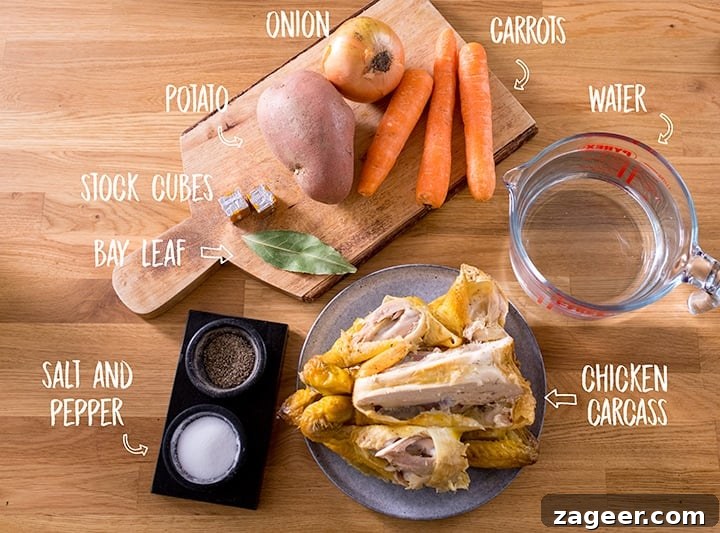
The beauty of this chicken and vegetable soup lies in its flexibility. While a few core ingredients form the foundation, you can easily customize it with your favorite vegetables. My go-to base always includes carrots and potatoes, as they add natural sweetness and heartiness, soaking up all the rich flavors of the broth beautifully. But don’t hesitate to get creative!
- Leftover Cooked Chicken Carcass: The star of the show! Don’t forget any remaining meat attached to the bones.
- Cold Water: Essential for gradually extracting maximum flavor from the bones.
- Onion: Quartered, unpeeled. Its skin adds color and depth to the stock.
- Carrots: Used both in the stock and as a main vegetable in the soup.
- Bay Leaf: A classic aromatic that imparts a subtle, savory note.
- Chicken Stock Cubes: For an extra layer of flavor and seasoning. Ensure they are gluten-free if needed.
- Large Potato: Peeled and chopped into bite-sized pieces for texture and substance.
- Salt and Pepper: To season to taste.
- Fresh Chopped Parsley: For a bright, fresh finish.
Once you have your base of carrots and potatoes, feel free to add other seasonal vegetables. Broccoli florets, peas, chopped cauliflower, kale, or even chunks of butternut squash can all work wonderfully, adding more nutrients and variety to your soup. Just be mindful of cooking times; add softer vegetables later in the process to prevent them from becoming mushy.
Crafting Your Homemade Chicken and Vegetable Soup: A Step-by-Step Guide
Making this soup is a straightforward process, primarily involving simmering and assembly. The key to its exceptional flavor is the rich, homemade chicken stock derived directly from the roast chicken carcass.
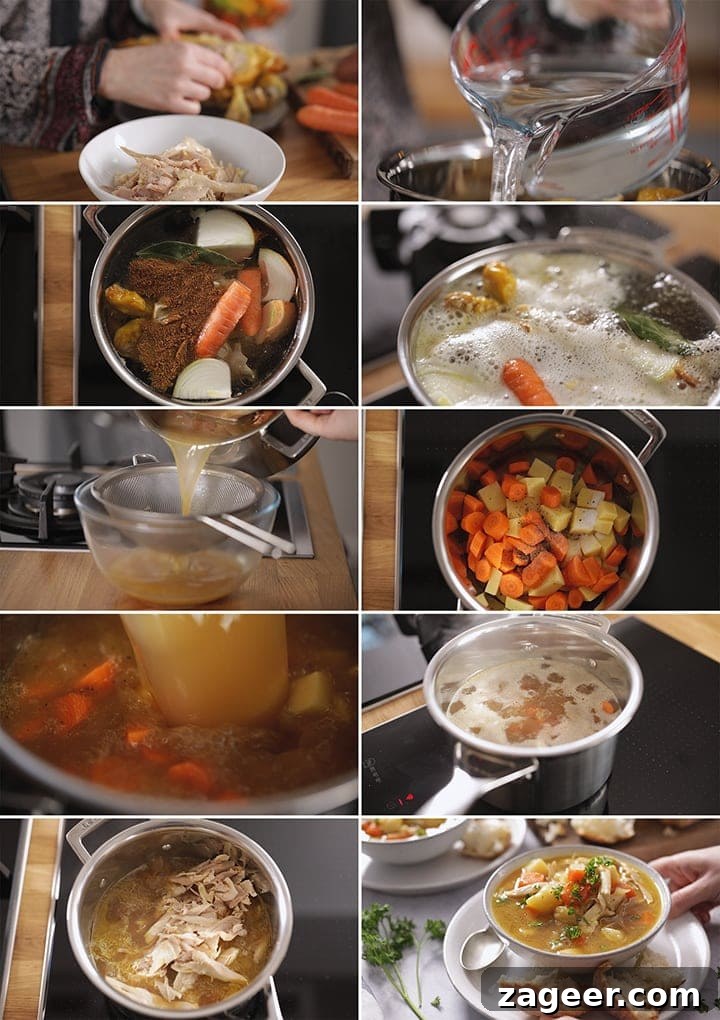
- **Prepare the Carcass:** Carefully remove any remaining shreds of chicken meat from the leftover roast chicken carcass. Set these delicious morsels aside in the refrigerator to add to your finished soup later. The more meat you retrieve, the heartier your soup will be!
- **Simmer for Flavor:** Place the stripped chicken carcass (including any skin or drippings from the roasting pan, if available) into a large, heavy-bottomed pot. Cover the carcass completely with cold water, ensuring the water level is about an inch above the bones.
- **Add Aromatics:** Roughly chop one onion into quarters (no need to peel, as the skin adds color and flavor to the stock) and break one carrot in half. Add these along with a bay leaf and two crumbled chicken stock cubes to the pot. These ingredients will infuse the water with a wonderful aromatic depth.
- **Create the Stock:** Bring the mixture to a rolling boil over high heat, then immediately reduce the heat to a gentle simmer. Allow it to cook undisturbed for 2-3 hours. During this time, the water will reduce significantly, and all the incredible flavors, collagen, and nutrients will be extracted from the bones, forming a rich, golden stock.
- **Strain the Stock:** After simmering, carefully remove the carcass and vegetables from the pot using tongs or a slotted spoon. Place a fine-mesh sieve over a large heatproof bowl and pour the entire contents of the pot through it, separating the liquid gold (your stock) from the solids. Press down on the solids gently to extract every last drop of flavorful liquid. Discard the bones and spent vegetables. Return the strained stock to the clean pot.
- **Cook the Vegetables:** Peel and chop the remaining two carrots and the large potato into bite-sized chunks. Add them to the pot with the strained chicken stock. Season generously with salt and pepper to taste.
- **Final Simmer:** Bring the soup back to a gentle boil, then reduce the heat and simmer for approximately 20 minutes, or until the carrots and potatoes are tender.
- **Combine and Serve:** In the last 5 minutes of cooking, add the reserved shredded chicken meat to the soup, allowing it to heat through thoroughly. Ladle the hot soup into bowls and garnish with a sprinkle of fresh chopped parsley. Serve immediately with your favorite crusty bread.
Smart Tips for Preparing Your Chicken Soup
Too Busy After Roasting? Freeze the Carcass!
I understand that after spending hours on a delicious roast dinner, the last thing you might want to do is immediately start another cooking project. If time is of the essence, simply pull off every last piece of usable meat from the chicken bones (don’t forget to check the underside and wings for hidden gems!). Wrap the shredded meat securely in foil or a small container. Place the bare chicken carcass in a freezer-safe bag with the wrapped meat and freeze it until you have a more convenient moment. There’s no need to defrost the carcass before boiling it up later; simply transfer it from the freezer directly to your stockpot and proceed with the recipe!
Scaling Your Soup: Batch Cooking and Freezing Stock
This recipe is incredibly adaptable. A single small chicken carcass will typically yield enough soup for two generous portions, while a larger chicken can serve 3-4 people. If you wish to stretch it further, you can always add a bit more water and an extra stock cube for flavor. I always keep a few bags of homemade chicken stock or a leftover carcass in my freezer, ready for spontaneous soup cravings.
If you find yourself with more than one roast chicken carcass, don’t let them go to waste! This recipe can easily be doubled, tripled, or even quadrupled while maintaining the same ingredient ratios. If you have a pot large enough, you can boil multiple carcasses at once. This allows you to make a huge batch of soup or, even better, to portion out that glorious homemade stock into freezer-safe containers. Freezing individual portions of stock means you can whip up your chicken and vegetable soup in a fraction of the time whenever the mood strikes!
Frozen stock can be stored for up to a month, while refrigerated stock is best used within 3 days.
Using a Rotisserie Chicken Carcass
Absolutely! A rotisserie chicken carcass works wonderfully for this soup. Just keep in mind that the quality and flavor of your rotisserie chicken will directly impact the taste of your stock and, consequently, your soup. Opt for a high-quality, unseasoned, or lightly seasoned rotisserie chicken if possible. Strongly flavored chickens (like BBQ or lemon-herb varieties) might impart undesirable tastes to your delicate soup broth, so choose wisely!
Make-Ahead and Storage Options
This chicken and vegetable soup is an excellent candidate for meal prep. You have a couple of convenient options:
- **Prepare the Stock Ahead:** You can make the chicken stock (soup base) in advance. Once it’s simmered and strained, allow it to cool completely before refrigerating or freezing. You can add the shredded chicken meat to the stock before storing, or keep it separate. When ready to eat, simply reheat the stock (it can be added to the pan from frozen) over a low heat until fully melted and hot. Then, add your carrots, potatoes, and seasonings, simmering for 20 minutes until the vegetables are tender. If you stored the chicken separately, add it in for the last 5 minutes to heat through.
- **Make the Entire Soup Ahead:** Alternatively, you can prepare the chicken and vegetable soup completely, allow it to cool, then cover and refrigerate or freeze.
- **Refrigerated Soup:** If refrigerated, the soup might develop a jelly-like consistency (more on this below). Simply reheat it in a pan over medium heat until it returns to a liquid state and is piping hot throughout.
- **Frozen Soup:** To reheat from frozen, you can either defrost it in the refrigerator overnight before warming it in a pan, or heat it directly from frozen over a very low heat. Stir frequently to prevent sticking until it’s fully thawed and piping hot throughout.
Why Does My Refrigerated Soup Turn Jelly-Like?
Don’t be alarmed if your homemade chicken soup transforms into a jelly-like texture when refrigerated! This is a natural and desirable phenomenon, indicating a rich, high-quality stock. This texture comes from collagen, which is released from the chicken bones, tendons, and ligaments during the long, slow cooking process. When cooled, this cooked collagen becomes gelatin, giving your soup a wonderful body and mouthfeel. Upon reheating, it will melt back into a liquid form. This gelatin is not only a sign of excellent stock but also contains beneficial amino acids, making your soup even more nutritious alongside all those healthy vegetables.
Gluten-Free Adaptation
Making this soup gluten-free is incredibly easy. The only ingredient that typically contains gluten in a recipe like this is the stock cube. Simply ensure you use a certified gluten-free chicken stock cube, and your delicious, comforting soup will be entirely safe for those with gluten sensitivities.
How to Thicken Your Soup
This classic chicken and vegetable soup is traditionally broth-based, with tender pieces of chicken and vegetables swimming in a flavorful liquid. If you prefer a thicker, more substantial soup, you can easily achieve this right before serving. While the soup is still simmering on the stove, slowly pour in a cornstarch slurry (made by whisking together 2 tablespoons of cornflour, or cornstarch in the US, with 6 tablespoons of cold water) while continuously stirring. Add the slurry gradually, a little at a time, until your soup reaches your desired level of thickness. You may not need the entire slurry, so add cautiously.
Serving Suggestions and Creative Twists
This humble chicken and vegetable soup, while perfect on its own, can be elevated with a few simple additions and serving suggestions. A classic pairing is a slice of warm, crusty bread or a homemade bread roll, perfect for soaking up every last drop of the savory broth. For an extra touch of flavor and texture, consider adding:
- **Croutons:** Store-bought or homemade crispy croutons add a delightful crunch. For a cheesy twist, try Gruyere bacon croutons.
- **Fresh Herbs:** Beyond parsley, a sprinkle of fresh dill, chives, or thyme can brighten the flavor profile.
- **A Swirl of Cream:** For a richer, creamier soup, stir in a tablespoon of heavy cream or a dollop of Greek yogurt just before serving.
- **Noodles or Rice:** To make it even more filling, add cooked egg noodles, small pasta shapes, or a scoop of cooked rice during the last few minutes of heating.
- **Spicy Kick:** A pinch of red pepper flakes or a dash of hot sauce can add a pleasant warmth.
This versatile recipe serves as a fantastic base for experimentation. Don’t hesitate to make it your own!
Explore More Delicious Soup Recipes:
If you’re a true soup enthusiast, you’re in for a treat! Discover our extensive collection of comforting and flavorful soup recipes. Here are just a few hand-picked favorites:
Cream of Broccoli Soup
Tuscan Chicken Soup
Chicken Pot Pie Soup
Hearty Tomato Soup with Savory Croutons
Creamy Chicken and Tortellini Soup
Baked Sweet Potato and Carrot Soup with Cheddar-Potato-Skin Croutons
Luxurious Cauliflower Soup
Watch the Recipe Video:

Heartwarming Homemade Chicken and Vegetable Soup
Use those leftover chicken bones to make the most sumptuous base for this Chicken and Vegetable soup. A delicious and hearty lunch!
By Nicky Corbishley
Ingredients
- 1 leftover cooked chicken carcass (with some meat still on)
- Cold water (to cover)
- 1 onion, chopped into quarters (no need to peel)
- 3 carrots (1 for stock, 2 for soup)
- 1 bay leaf
- 2 chicken stock cubes, crumbled (use gluten-free if needed)
- 1 large potato, peeled and chopped into bite-size chunks
- ¼ tsp each of salt and pepper (or to taste)
- 1 tsp fresh chopped parsley, for garnish
Instructions
- Carefully remove any meat from the leftover chicken carcass. Place the shredded chicken on a plate, cover, and refrigerate for later use.
- Place all the leftover bones and skin from the carcass in a large pot. Cover completely with cold water, ensuring the water level is about 1 inch above the chicken bones.
- Add the quartered onion, one of the carrots (broken in half, no need to peel), the bay leaf, and the crumbled stock cubes to the pot with the chicken bones.
- Bring the mixture to a boil, then reduce the heat to a gentle simmer. Cook for 2-3 hours, or until the liquid has reduced by at least half, creating a rich stock.
- After simmering, place a sieve over a large bowl. Carefully strain the chicken bones and spent vegetables, allowing all the flavorful juices to drip into the bowl. Discard the solids and pour the strained stock back into the clean pot.
- Peel and chop the remaining two carrots and the large potato. Add them to the pot with the stock.
- Season with salt and pepper. Bring the soup back to a boil, then reduce heat and simmer gently for 20 minutes, or until the vegetables are soft and tender. In the last 5 minutes of cooking, add the reserved shredded chicken pieces from the fridge to heat through.
- Ladle the hot soup into bowls and serve immediately, topped with fresh chopped parsley.
Notes
Can I make it ahead?
Yes! You can either make the soup base (stock) ahead: strain, cool, and refrigerate or freeze. Reheat, then add carrots, potatoes, and seasoning, simmering for 20 minutes (add shredded chicken in the last 5 minutes). Alternatively, make the entire soup completely ahead. Cool, cover, and refrigerate or freeze. Reheat from fridge until piping hot; from frozen, defrost overnight or heat on low from frozen until piping hot.
Why does refrigerated soup turn jelly-like?
This is due to collagen released from the bones during slow cooking, which turns into gelatin when cooled. It will liquefy upon reheating and indicates a rich, nutritious stock.
Can I make it gluten-free?
Yes, simply use gluten-free stock cubes.
Nutritional Information is per serving.
Nutrition (Approximate per Serving)
Calories: 242 kcal | Carbohydrates: 28g | Protein: 14g | Fat: 9g | Saturated Fat: 2g | Cholesterol: 39mg | Sodium: 1357mg | Fiber: 6g | Sugar: 7g
Nutrition information is automatically calculated, so should only be used as an approximation and can vary depending on specific ingredients and preparation.
We hope you enjoyed this heartwarming recipe! Please feel free to leave a comment below and share your thoughts or any creative twists you added to your homemade chicken and vegetable soup. Your feedback is always appreciated!
This post was first published in April 2015. Updated in February 2020 with new photos, video, and tips for an even better soup-making experience.
Some of the links in this post may be affiliate links – which means if you buy the product I get a small commission (at no extra cost to you). If you do buy, then thank you! That’s what helps us to keep Kitchen Sanctuary running. The nutritional information provided is approximate and can vary depending on several factors. For more information please see our Terms & Conditions.