
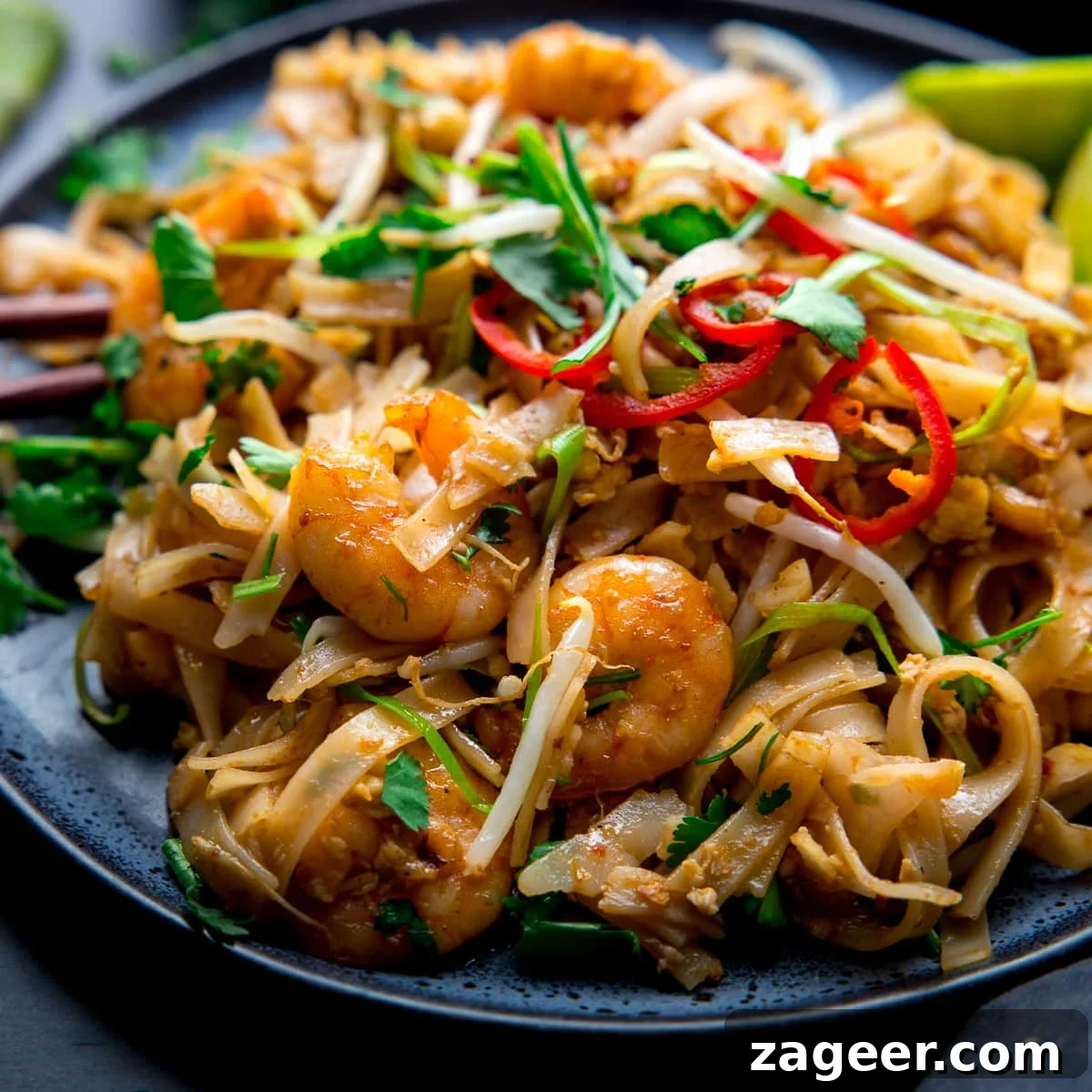
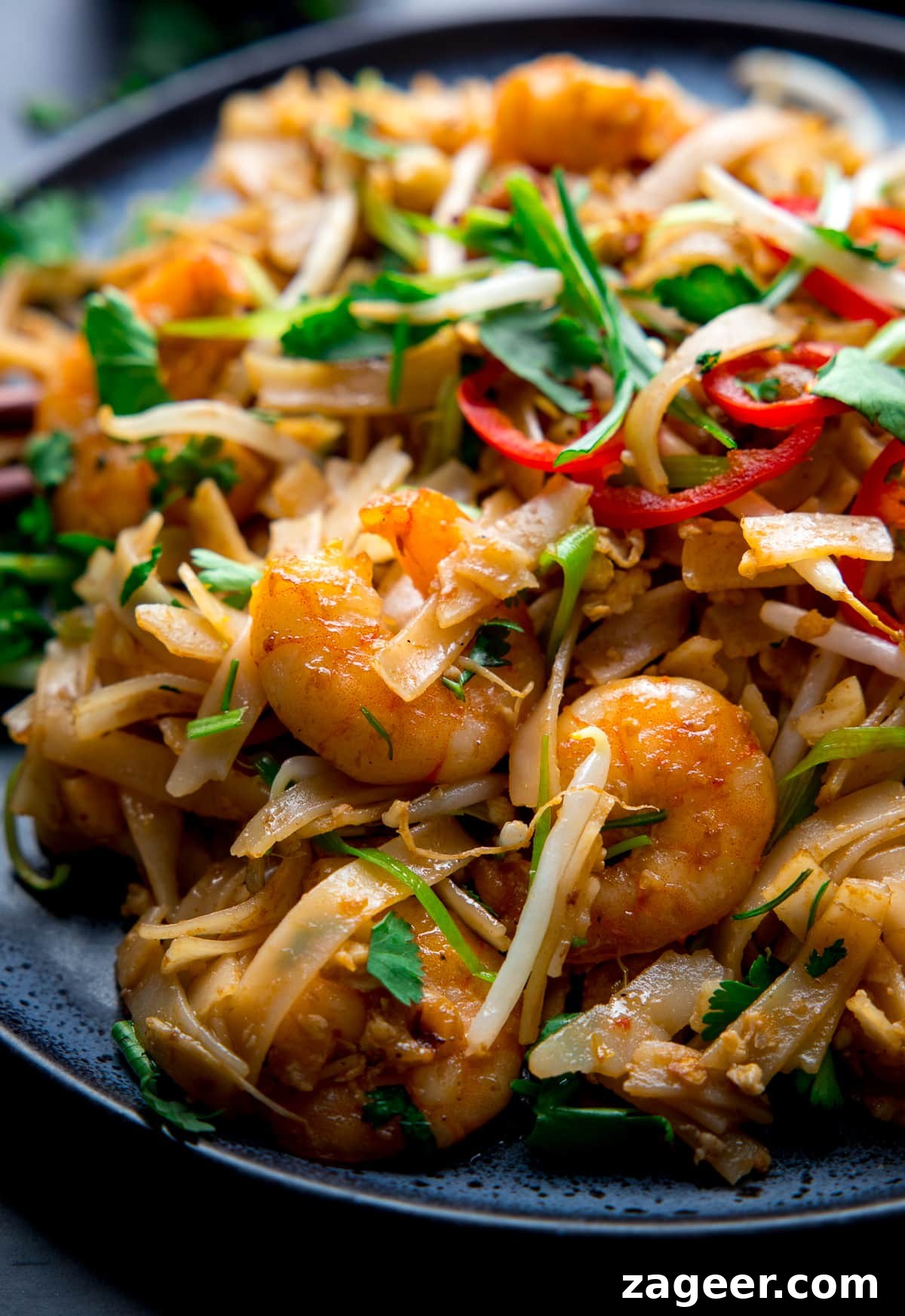
Indulge in the vibrant flavors of Thailand with this incredibly delicious Prawn Pad Thai recipe. Featuring succulent king prawns and tender baby shrimp wok-fried with flat rice noodles in a perfectly balanced **sweet, sour, and spicy sauce**, this dish is a true culinary delight. Garnished with crunchy peanuts, fresh coriander, and a squeeze of tangy lime, it promises a symphony of **BIG flavors** that will transport your taste buds straight to the streets of Bangkok. The best part? You can whip up this lip-smackingly tasty dinner in just **30 minutes**, making it an ideal choice for a quick weeknight meal that rivals your favorite Thai restaurant or bustling food truck.
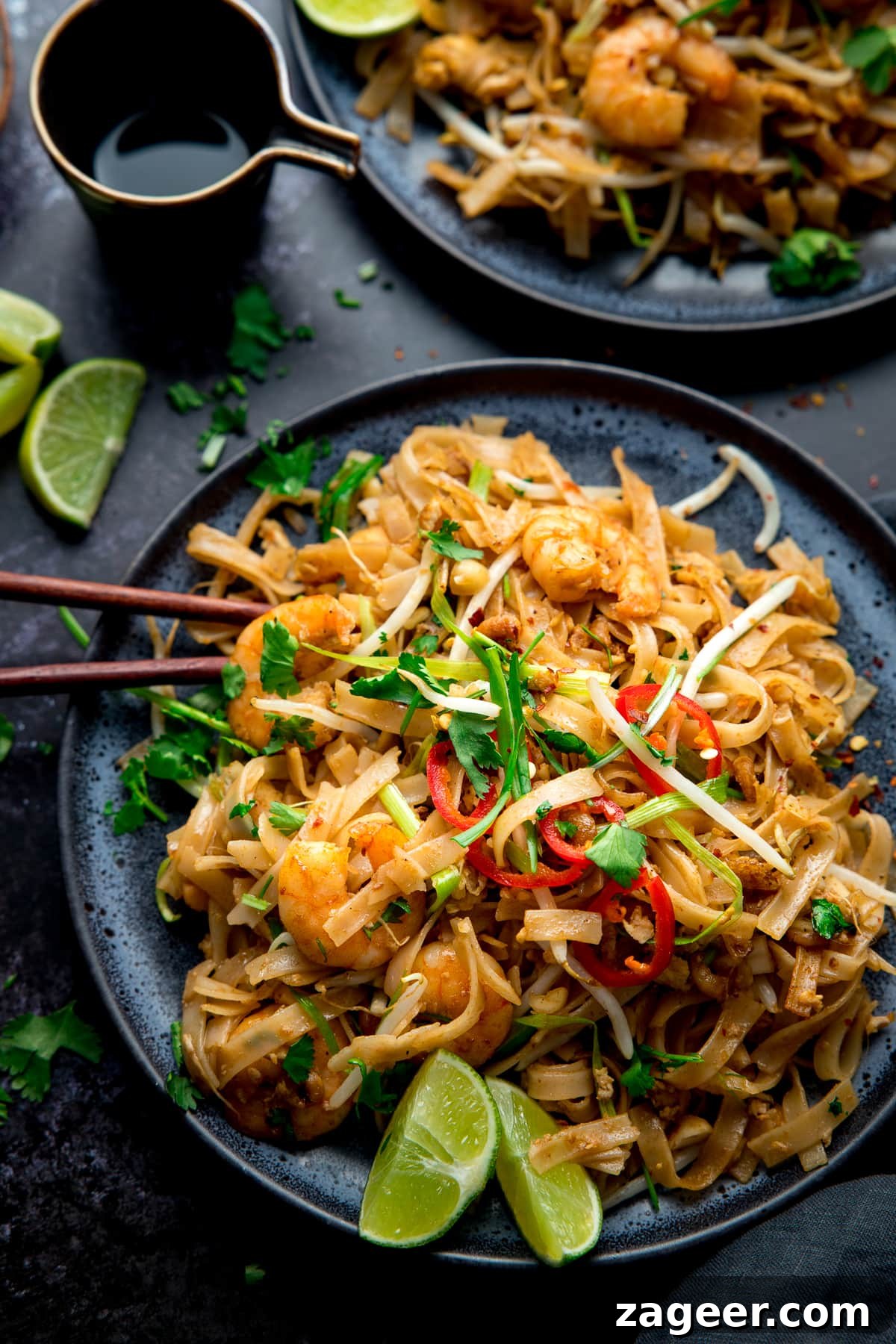
For me, Pad Thai is an absolute staple whenever I visit a Thai restaurant. There’s something irresistibly satisfying about those tangy, chewy noodles, combined with plump, juicy prawns. As a true enthusiast of generous toppings, Pad Thai stands out as arguably the most ‘topping-heavy’ item on any Thai menu. Picture this: a generous scattering of crushed peanuts, vibrant fresh coriander, refreshing lime wedges, thinly sliced fresh chillies, and sometimes even a delicate sprinkle of dried chilli flakes. It’s this delightful array of textures and fresh flavors that truly elevates the dish, making every bite an exciting experience.
What Exactly is Pad Thai?
Pad Thai, also known as Phad Thai, is a cornerstone of Thai cuisine and a quintessential street food dish that has gained global acclaim. Its origins are deeply rooted in Thailand’s history, particularly during the economic nationalism of the 1930s and 40s. The then-prime minister, Plaek Phibunsongkhram, promoted Pad Thai as a national dish to foster a sense of national identity and encourage rice noodle consumption (which was more economical for the country at the time). This stir-fried noodle dish traditionally features flat rice noodles, intricately flavored with a harmonious blend of tamarind paste, pungent shrimp paste, fiery chillies, savory fish sauce, a touch of sugar for sweetness, and a bright squeeze of lime juice.
Beyond its iconic sauce, common additions to Pad Thai include scrambled eggs, firm tofu, succulent prawns or other proteins, crunchy chopped peanuts, crisp bean sprouts, and sometimes pickled radishes, all contributing to its complex flavor profile and delightful textures. The beauty of Pad Thai lies in its layered flavors – a perfect balance of sweet, sour, salty, and spicy, often with a rich umami depth. This intricate combination, coupled with an abundance of fresh garnishes, truly completes the dish, offering a complete sensory experience that keeps you coming back for more.
Why Make Prawn Pad Thai at Home?
While ordering Pad Thai from your favorite takeout spot is always a treat, preparing it at home offers a rewarding experience with several compelling advantages. Firstly, it provides unparalleled freshness; you control the quality and quantity of every ingredient, ensuring a vibrant and wholesome meal. Secondly, it’s incredibly customizable. Want more spice? Add extra chillies. Prefer more vegetables? Load them in! You can tailor the dish precisely to your family’s preferences or dietary needs.
Furthermore, making Pad Thai at home can be surprisingly quick and economical. This particular recipe promises a delicious meal in just 30 minutes, making it faster than waiting for delivery and often more budget-friendly than restaurant portions. It’s a fantastic way to master a classic international dish in your own kitchen, impressing guests and satisfying cravings with an authentic taste that’s often superior to many store-bought alternatives. Plus, the aroma that fills your home during cooking is an experience in itself!
Essential Ingredients for an Authentic Taste
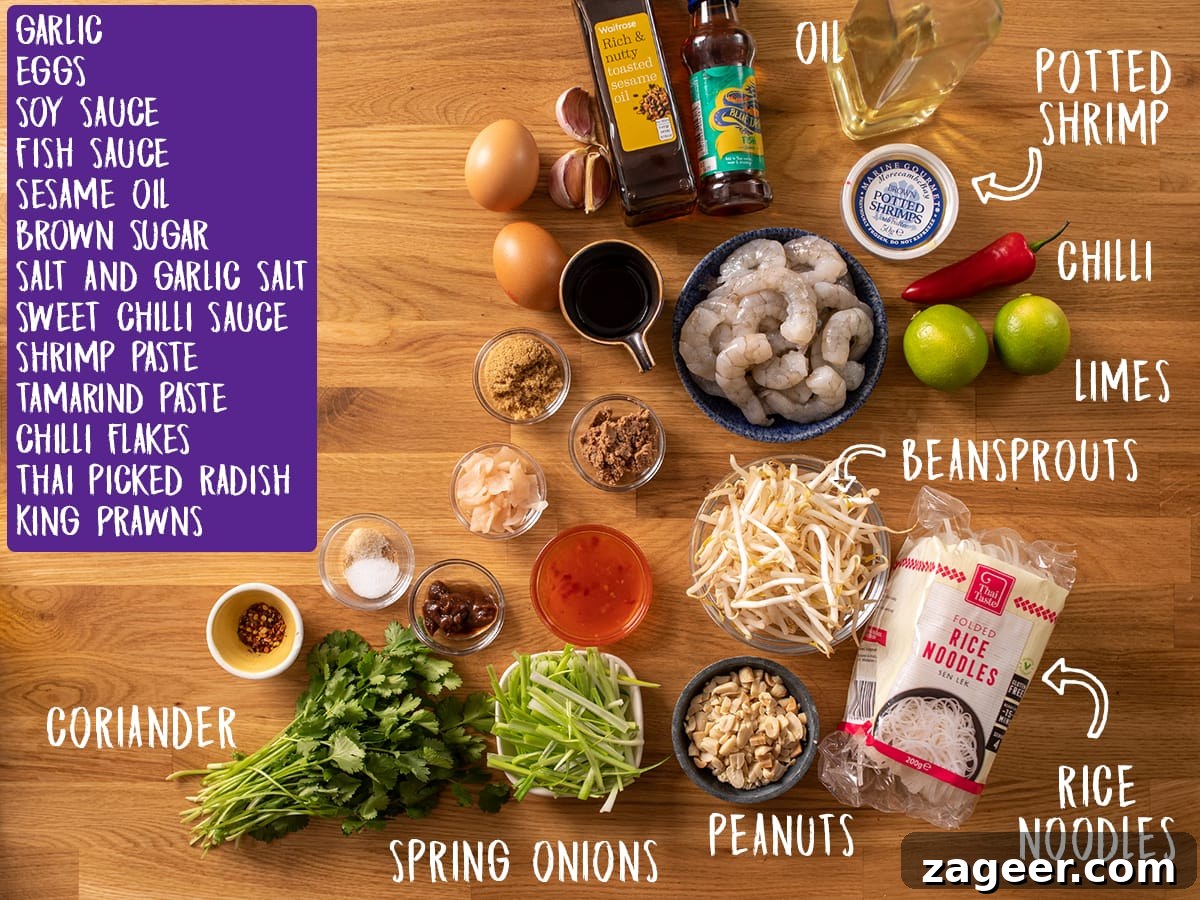
Achieving that unmistakable Pad Thai flavor begins with selecting the right ingredients. Each component plays a vital role in creating the dish’s signature taste and texture profile.
The Perfect Noodles: Flat Rice Sticks
The foundation of any great Pad Thai is undoubtedly the noodles. It’s crucial to use the correct type: flat rice noodles, often referred to as ‘rice sticks,’ typically ranging from 3-5mm in width. Thinner noodles, like vermicelli, or egg noodles, simply won’t achieve the desired texture and absorb the sauce as effectively. Brands such as Thai Taste and Mai Thai often offer excellent quality options that are widely available in Asian supermarkets or international aisles.
Rice noodles, however, have a notorious tendency to stick together, which can be a common challenge for home cooks. To prevent this, I highly recommend a specific preparation method:
- Bring a large pan of water to a boil.
- Add the dried rice noodles, then immediately turn off the heat.
- Let them soak for exactly 3-4 minutes. This brief soak allows them to soften without becoming mushy.
- Drain the noodles thoroughly and rinse them immediately under cold water. This stops the cooking process and removes excess starch, further preventing stickiness.
- Finally, drizzle a teaspoon of sesame oil or any unflavored oil, such as vegetable or rapeseed oil, over the drained noodles and toss gently. This light coating acts as a barrier, ensuring each strand remains separate and perfectly pliable for stir-frying.
These versatile noodles are also fantastic for other Asian dishes, such as my Beef Chow Fun, proving their worth beyond just Pad Thai.
The Double Shrimp Delight: King Prawns and Tiny Brown Shrimp
While many Pad Thai recipes focus solely on large prawns, I find that incorporating both plump **king prawns** and delicate, tiny **brown shrimp** adds a delightful complexity and depth of flavor. The larger prawns provide a satisfying bite, while the smaller shrimp contribute a rich, briny essence that permeates the entire dish.
Traditionally, Pad Thai might use rehydrated dried shrimp, with the frying oil then used to infuse flavor into the dish. However, I often find dried shrimp can be a little *too pungent* and chewy for my palate. As a fantastic and more tender alternative, I opt for small brown shrimp (also known as *Crangon crangon*). These are commonly available in the UK, often sold in small pots preserved in butter, which further enhances their flavor when cooked. This method simplifies preparation without compromising on taste, offering a delightful twist on tradition.
Ingredient Swaps and Flavor Enhancements
Pad Thai is wonderfully adaptable. Don’t hesitate to personalize your dish with these substitutions and additions:
- Add Tofu: Incorporate fried cubes of firm tofu, lightly seasoned with a pinch of salt, for a protein-rich vegetarian option.
- Alternate Proteins: Cooked chicken breast or crab meat can be fantastic substitutes or additions to the prawns.
- Garlic Chives: For a more authentic Thai flavor, swap out regular spring onions for garlic chives. They offer a delicate garlic-onion taste, though they can sometimes be harder to source.
- Dried Shrimp: If you prefer the traditional, more intense flavor, replace the potted brown shrimp with 30g (1 oz or 3 tbsp) of dried shrimp (available at Asian markets). When frying, add an extra tablespoon of vegetable oil to properly render their flavor. Be aware that dried shrimp can be quite chewy and pungent, offering a distinct taste profile some absolutely adore.
- Vegetarian Focus: For a completely vegetarian version, replace all shrimp and prawns with a generous amount of sautéed mushrooms (shiitake or oyster work well) and extra firm tofu. For the sauce, use a vegetarian fish sauce alternative (some Thai brands offer these) or increase the soy sauce/tamari. Miso paste can be a surprisingly good substitute for shrimp paste, providing that crucial umami depth.
- Extra Vegetables: Feel free to add thinly sliced bell peppers, carrots, or snap peas during the stir-frying process for added nutrition and crunch.
Mastering Your Homemade Prawn Pad Thai: Step-by-Step
Creating this iconic dish at home is a straightforward process once you have all your ingredients prepped. Here’s how to bring those incredible flavors to life:
- **Prepare the Noodles:** Begin by properly soaking your flat rice noodles as described above. This ensures they are perfectly tender and don’t stick together during cooking.
- **Flavor the Oil with Tiny Shrimp:** Heat a large wok over high heat. Add the potted brown shrimp (including their butter), along with additional vegetable oil, a pinch of salt, and garlic salt. Fry them for 2-3 minutes until they turn lightly golden and the oil is beautifully infused with their savory flavor. Using a slotted spoon, carefully remove the shrimp and set them aside in a bowl, leaving that rich, flavored oil in the wok. This oil will be the flavor base for the rest of your dish.
- **Cook the King Prawns:** To the shrimp-infused oil, add the large raw king prawns, minced garlic, and dried chilli flakes. Stir-fry for 2-3 minutes, just until the prawns start to turn pink. Be careful not to overcook them; they will continue to cook slightly in subsequent steps.
- **Scramble the Eggs:** Push the prawns and garlic to one side of the wok. Pour in the beaten eggs and scramble them with a spatula until they are just set but still moist. Then, gently mix them with the prawns.
- **Combine with Noodles and Sauce:** Reduce the heat to medium. Add the prepared noodles, the previously fried tiny brown shrimp, and all the essential sauce ingredients: fish sauce, tamarind paste, sweet chilli sauce, soft brown sugar, shrimp paste, and dark soy sauce (or tamari for a gluten-free option).
- **Stir-Fry to Perfection:** Toss everything together vigorously, ensuring the noodles are evenly coated in the rich, sweet, and savory sauce. Heat for about 5 minutes, continuously stirring and tossing to prevent sticking and to break up any pieces of shrimp paste, until the noodles are piping hot and perfectly tender.
- **Add Freshness and Crunch:** Finally, stir in the chopped Thai preserved radish (if using), roasted peanuts, finely sliced spring onions (scallions), fresh bean sprouts, and roughly chopped coriander (cilantro).
- **Final Toss and Serve:** Give it another quick toss for 1-2 minutes, just long enough for the bean sprouts to heat through but still retain their crispness.
- **Garnish Generously:** Serve immediately, topped with fresh lime wedges for squeezing, and additional sliced red chilli for extra heat. For an even more authentic presentation, sprinkle with extra chopped peanuts, fresh coriander, and a few more chilli flakes.
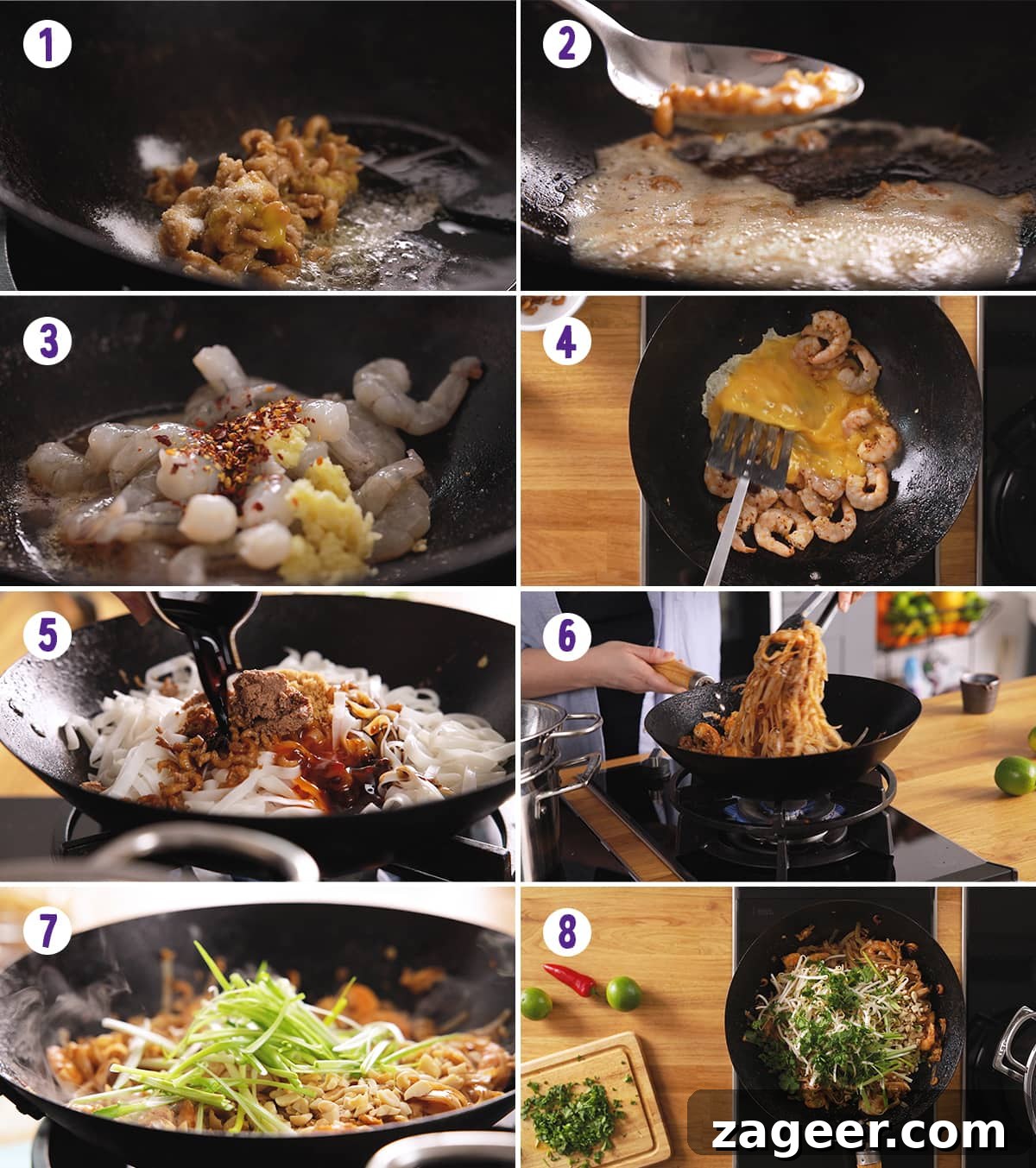
Voila! An easy, flavorful, and remarkably quick homemade Prawn Pad Thai. While it involves a fair few ingredients, the process is straightforward, yielding a dish that’s incredibly delicious and satisfying.
Is Pad Thai Intensely Fishy?
The characteristic flavor profile of authentic Pad Thai often includes a noticeable ‘fishy’ undertone, primarily derived from the use of fish sauce and shrimp paste. These ingredients are fundamental to creating the dish’s signature umami depth and savory complexity. While shrimp paste, in particular, can be quite pungent in its raw form, its intensity mellows considerably during the cooking process, integrating beautifully with the other flavors.
The degree to which a Pad Thai tastes fishy largely depends on the quantities of shrimp paste and fish sauce used. In this recipe, I suggest 2 teaspoons of shrimp paste and 2 tablespoons of fish sauce. This amount is carefully balanced to provide that addictive umami tang and distinctive Pad Thai taste without overwhelming the palate with an overly fishy flavor. It strikes a perfect harmony, allowing all the sweet, sour, and spicy notes to shine through while providing a robust backbone of savory goodness.
Serving Suggestions and What to Pair With
Pad Thai is often considered a complete meal on its own, offering a balanced combination of protein, carbohydrates, and vegetables. However, it pairs wonderfully with a few simple additions to create a more elaborate dining experience.
- Fresh Salad: A simple green salad with a light vinaigrette or a Thai-inspired dressing can offer a refreshing counterpoint to the rich flavors of the Pad Thai.
- Crispy Spring Rolls: For an appetizer, serve homemade or store-bought crispy vegetable spring rolls with a sweet chili dipping sauce.
- Thai Iced Tea or Coffee: These traditional Thai beverages are perfect for cooling down the palate, especially if you’ve added extra spice to your Pad Thai.
- Beer or Wine: A crisp lager or a light, aromatic white wine like Sauvignon Blanc or Riesling can complement the dish beautifully.
- Coconut Water: For a non-alcoholic option, chilled coconut water is both refreshing and authentically Thai.
Storage and Reheating Tips for Leftovers
While Pad Thai is undoubtedly best enjoyed fresh off the wok, leftovers can be a delicious treat for lunch the next day. Here’s how to handle them to maintain the best possible quality:
- Making Ahead: I generally do not recommend making Pad Thai entirely ahead of time. The noodles tend to absorb the sauce and can become a bit sticky and dry, and the prawns lose some of their tenderness upon reheating.
- Storing Leftovers: If you have leftovers, allow them to cool quickly to room temperature. Transfer the Pad Thai to an airtight container and refrigerate promptly. It can be stored safely for up to one day.
- Reheating: The best method for reheating Pad Thai is in the microwave. Sprinkle a couple of tablespoons of water over the noodles before covering the container. Reheat in 30-second bursts on high heat. After each burst, use a fork or chopsticks to gently agitate and loosen the noodles. Continue this process until the Pad Thai is heated through and piping hot, which typically takes 3-5 minutes per portion. This method helps to rehydrate the noodles and prevents them from drying out too much.
- Freezing: While not ideal for optimal texture, you can freeze leftover Pad Thai. Cool it quickly, place it in a freezer-safe airtight container, and freeze for up to 1-2 months. To reheat, defrost it in the refrigerator overnight, then follow the microwave reheating instructions above, adding extra water as needed.
Explore More Thai & Seafood Recipes
If you loved this Prawn Pad Thai, you’ll definitely want to try some of my other popular Thai-inspired dishes:
- Thai Green Chicken Curry – a vibrant and aromatic classic made with homemade curry paste.
- Thai Red Curry – rich and fiery, this homemade version is far superior to store-bought sauces.
- Thai Yellow Curry with Fish – a milder, fragrant curry perfect for showcasing fresh fish.
- Thai Fishcakes with Vegetable Ribbons – delicious and light, perfect as an appetizer or light meal.
- Thai Chicken Salad with Peanut Dressing – a fresh and crunchy salad bursting with Asian flavors.
- Thai Style Peanut Pork and Broccoli – a quick and savory stir-fry.
- Thai Fish Burgers with Sweet Chilli Sauce – a creative and flavorful take on a classic.
More Delicious Prawn Recipes:
- Prawn and Mango noodle Curry Bowl
- Thai Prawns with Cauliflower Rice
- Chicken, Chorizo and Prawn Jambalaya
- Coconut Prawns with Fiery Tomato Dip
- Chris’s AMAZING Prawn Toast Recipe
Watch How to Make It:
Stay updated with new recipes and cooking inspiration!
Subscribe to our newsletter to receive fresh recipes directly in your inbox. You can also find us on YouTube (with new videos every week) and Instagram (for behind-the-scenes stories and beautiful food photos).
Prawn Pad Thai Recipe
Sweet and savory Pad Thai with ALL the toppings is way easier than it looks. A fantastic street food dish you can make at home in 30 minutes.
By: Nicky Corbishley
Prep Time: 10 mins
Cook Time: 20 mins
Total Time: 30 mins
Servings: 4 people
Course: Dinner
Cuisine: Asian, Thai
Ingredients
- 175 g (6 oz) dried 5mm-wide flat rice noodles
- 1 tsp sesame oil
- 50 g (1.75 oz) pot of potted brown shrimp (the tiny shrimp in butter) * (see note 1)
- 1 ½ tbsp vegetable oil
- ¼ tsp salt
- Pinch garlic salt
- 20 large raw king prawns, peeled and de-veined
- 3 cloves garlic, peeled and minced
- ½ tsp dried chilli flakes
- 2 eggs, beaten
- 2 tbsp fish sauce
- 1 tsp tamarind paste
- 2 tbsp sweet chilli sauce
- 1 tbsp soft brown sugar
- 2 tsp shrimp paste
- 2 tbsp dark soy sauce (or tamari for gluten-free)
- 1 tbsp Thai preserved radish, chopped (optional)
- 40 g (1/3 cup) roasted peanuts, coarsely chopped
- 4 spring onions (scallions), halved, then finely sliced lengthways
- 100 g (3.5 oz) fresh bean sprouts (mung bean sprouts)
- 2 tbsp roughly chopped coriander/cilantro
To Serve:
- 2 limes, sliced into wedges
- 1 fresh red chilli, sliced
- Extra chopped coriander/cilantro, spring onions, chopped peanuts and chilli flakes (optional, for garnish)
Instructions
- Boil a large pan of water and add the noodles. Turn off the heat and leave to stand for 3-4 minutes. Drain, then rinse with cold water until cold. Drizzle on the sesame oil and toss together – to prevent the noodles from sticking.
- Heat a large wok over a high heat. Add the potted shrimp in butter, vegetable oil, salt, and garlic salt. Fry for 2-3 minutes until lightly golden.
- Remove the shrimp with a slotted spoon and place in a bowl – leaving the oil in the wok.
- Add the king prawns, garlic, and dried chilli flakes to the oil in the wok. Fry for 2-3 minutes until the king prawns just start to turn pink.
- Whisk the eggs together and add to the prawns. Fry, stirring often with a spatula until the eggs are just scrambled.
- Turn down the heat to medium and add the noodles, the reserved potted shrimp, fish sauce, tamarind paste, sweet chilli sauce, sugar, shrimp paste, and soy sauce/tamari.
- Toss everything together, heating for about 5 minutes, until the noodles are hot. Keep the noodles moving around the wok to stop them sticking, and ensure any pieces of shrimp paste are broken up.
- Add the preserved radish (if using), peanuts, spring onions (scallions), beansprouts, and coriander (cilantro).
- Toss together and cook for a further 1-2 minutes, until the beansprouts are just heated through but still crunchy.
- Serve with lime wedges and top with fresh red chillies. You can also sprinkle on extra coriander/cilantro, spring onions, chopped peanuts, and chilli flakes if you like.
Notes
- *Note 1: Potted shrimp is not a traditional ingredient in Pad Thai. If you prefer, you can replace the potted shrimp with 30g (1 oz/3tbsp) of dried shrimp (available from Asian supermarkets). Add an extra 1 tablespoon of vegetable oil when frying them up. I personally find dried shrimp a little too chewy and pungent; the potted shrimp offer a lovely small and juicy texture.
- Can I make it ahead? This Pad Thai tastes best when made and eaten right away, so I wouldn’t recommend making it ahead for a future meal.
- Leftovers: If you do have leftovers, quickly cool, cover, and refrigerate for up to a day. Reheat covered in the microwave; sprinkle with a couple of tablespoons of water, then reheat in 30-second bursts on the highest heat, agitating the noodles with a fork or chopsticks every 30 seconds until piping hot throughout (3-5 minutes per portion).
- Can I freeze it? While fresh is best, you *can* freeze leftovers. Quickly cool, cover, and freeze. Defrost in the refrigerator overnight and reheat as per the instructions above.
- Pad Thai Sauce: The various liquid ingredients (fish sauce, tamarind paste, sweet chilli sauce, sugar, shrimp paste, soy sauce) can be pre-mixed into a single sauce for convenience, then added to the noodles during cooking.
- Gluten-Free Pad Thai: For a gluten-free version, use tamari instead of regular soy sauce. Always check labels for rice noodles, fish sauce, tamarind paste, chilli sauce, and shrimp paste, as some brands may contain gluten. Most rice noodles are naturally gluten-free.
- Vegetarian Pad Thai: Swap out the shrimp and prawns for sautéed mushrooms and firm tofu. Replace fish sauce with a vegetarian fish sauce (Thai Taste offers one) or extra soy sauce/tamari. For the shrimp paste, miso paste can be a good alternative to achieve a similar umami depth.
- Scaling the Recipe:
- Scaling Down: Halve all ingredients to make a portion for two people, cooking in the same manner.
- Scaling Up: Double all ingredients for up to 8 people. This will require slightly longer cooking times and careful handling of noodles to prevent them from breaking up in the wok due to extended agitation.
- Recipe Inspiration: This recipe is inspired by Rick Stein’s Pad Thai recipe from his book Far Eastern Odyssey.
Nutrition (Approximate, per portion)
Calories: 616 kcal | Carbohydrates: 57g | Protein: 53g | Fat: 20g | Saturated Fat: 8g | Cholesterol: 494mg | Sodium: 3383mg | Fiber: 4g | Sugar: 11g
Nutrition information is automatically calculated, so should only be used as an approximation.
Like this recipe? Leave a comment below!
Your feedback helps us create more delicious recipes for you.
This post was first published in July 2019. Updated in July 2020 with new photos, tips, and video, and extensively rewritten for SEO and clarity in [Current Year].
Some of the links in this post are affiliate links – which means if you buy the product I get a small commission (at no extra cost to you). If you do buy, then thank you! That’s what helps us to keep Kitchen Sanctuary running. The nutritional information provided is approximate and can vary depending on several factors. For more information please see our Terms & Conditions.