
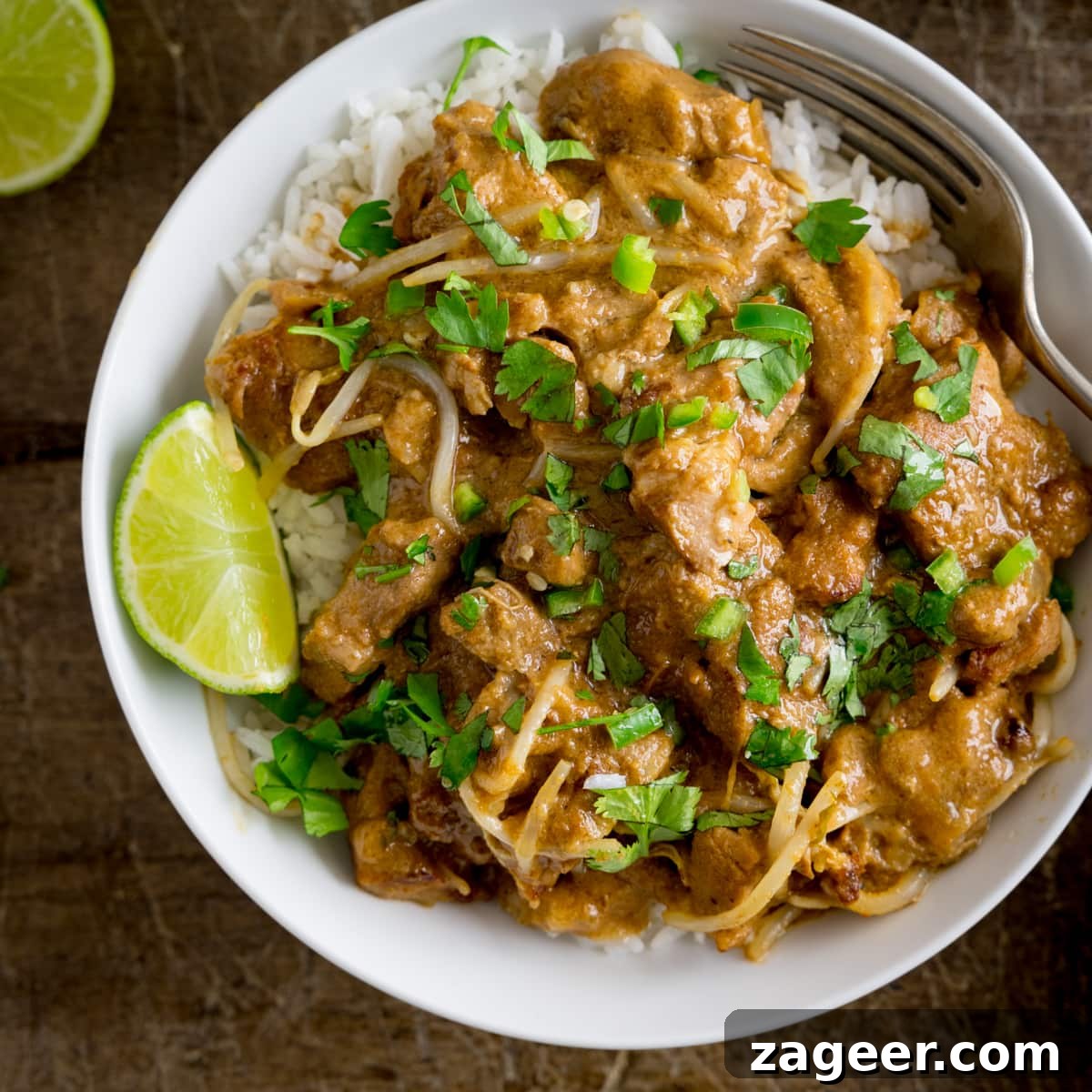
Thai Style Peanut Pork Recipe: Your Ultimate Guide to a Melt-in-Your-Mouth Delight
Indulge in the rich, aromatic flavors of this Thai-inspired Peanut Pork, a dish so tender it literally melts in your mouth. This incredibly satisfying meal is designed for simplicity, cooked entirely in one pan with the oven doing most of the work.
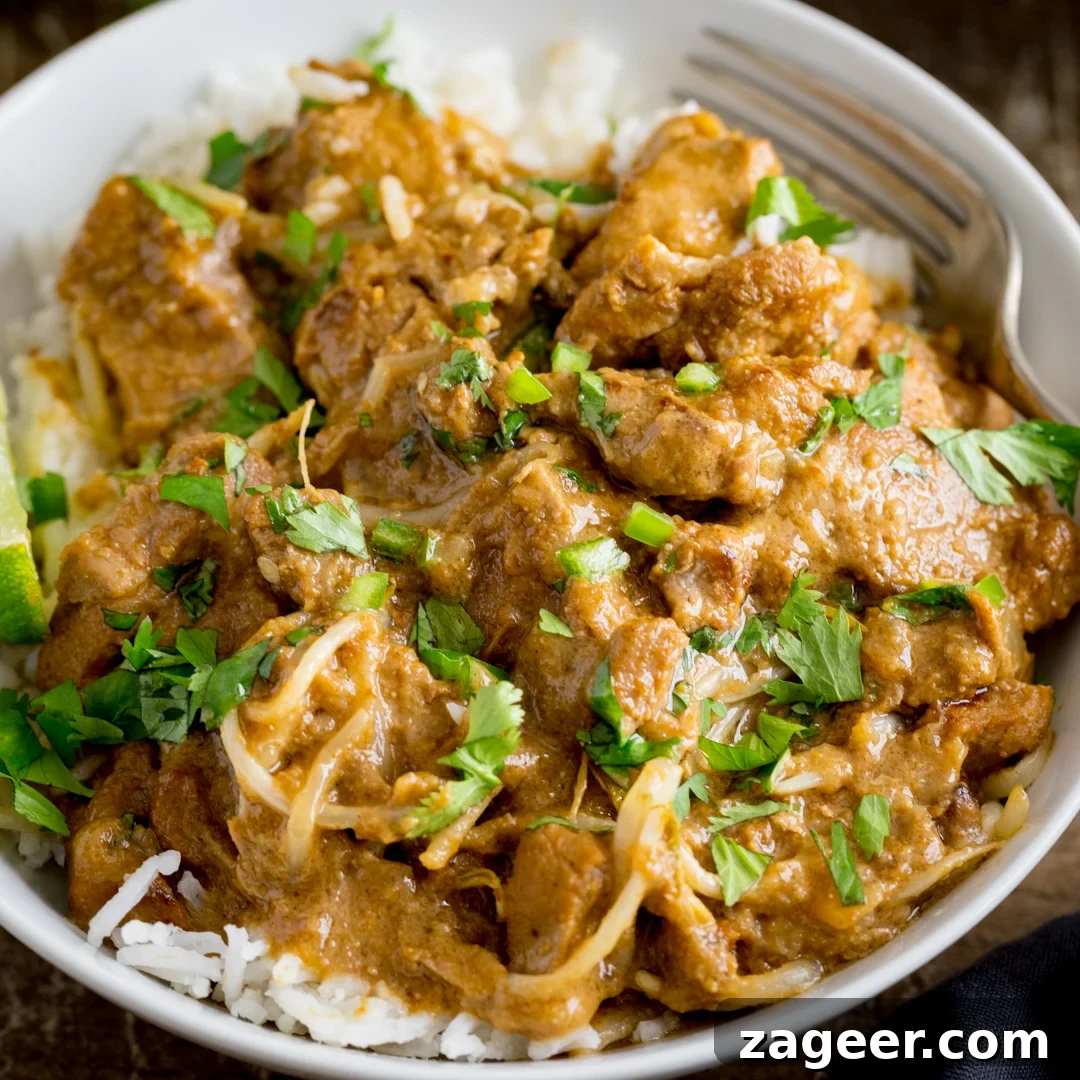
Perfect for those evenings when you crave warmth and flavor, our Thai Style Peanut Pork is slow-cooked to perfection. The succulent pork shoulder simmers in a creamy, savory sauce, bursting with authentic Thai spices, rich peanut butter, and luscious coconut milk. Finished with fresh, crisp beansprouts and vibrant coriander, this recipe offers a delightful blend of textures and tastes. It’s the ultimate comfort food, especially as the weather turns cooler, promising to transport your taste buds straight to Thailand from the comfort of your kitchen.
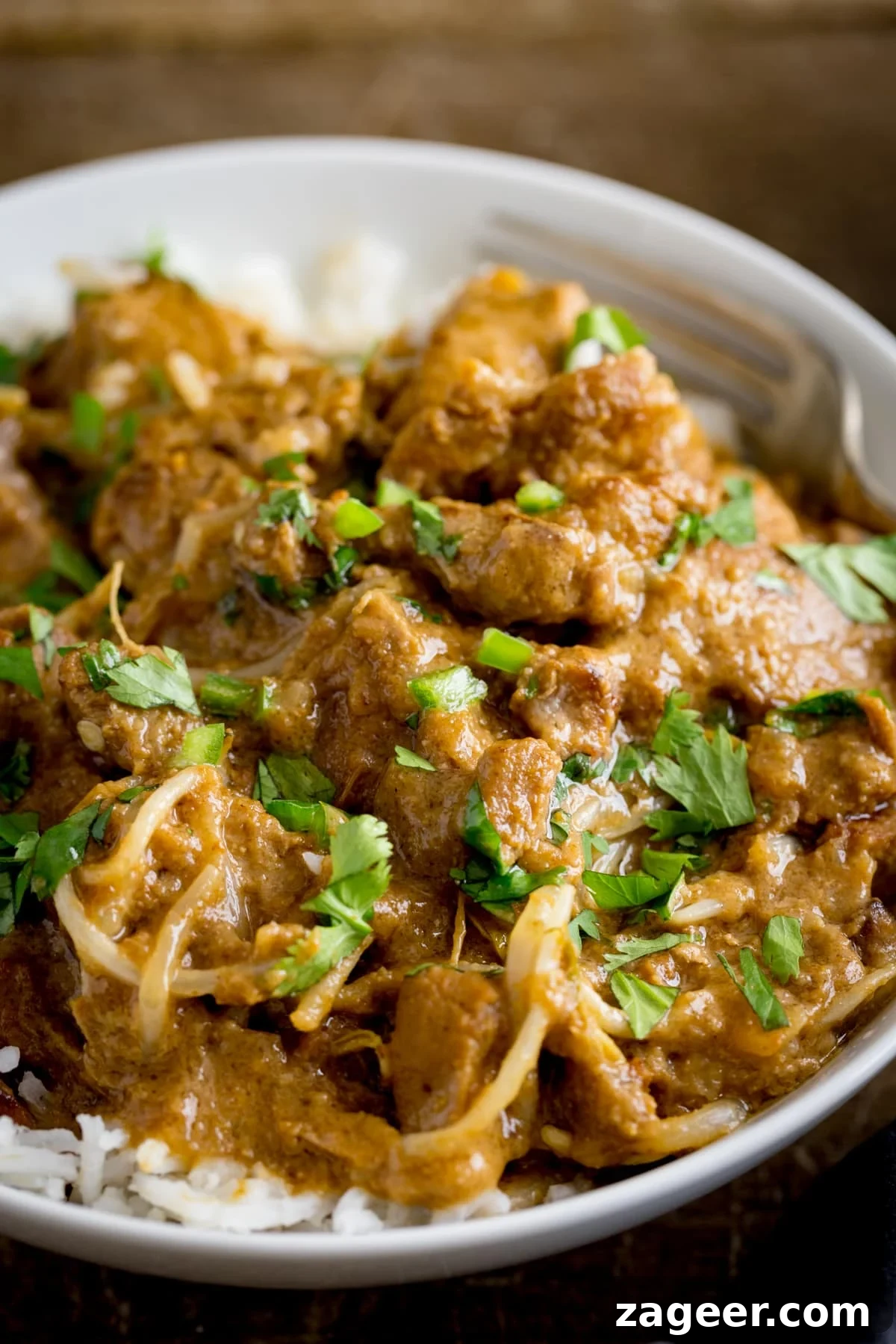
Why You’ll Love This Thai Style Peanut Pork
While some might not categorize it as “diet food,” this homemade Thai Style Peanut Pork is exceptionally tasty and wholesome. The magic lies in the slow cooking process, which transforms humble pork shoulder into unbelievably tender, fall-apart morsels. The sauce, a harmonious blend of sweet, spicy, and savory notes, makes every bite a mouthwatering experience. It’s a fantastic choice for a comforting family dinner, easy enough for a weeknight yet impressive enough for guests.
A Taste of Thailand at Home
Thai cuisine is renowned for its vibrant flavors and aromatic ingredients. This recipe captures the essence of those beloved tastes with minimal effort. The combination of creamy coconut milk, savory fish sauce, tangy lime, and the nutty richness of peanut butter creates a depth of flavor that is both exotic and deeply satisfying. You’ll be amazed at how easily you can recreate these complex flavors in your own kitchen.
The Magic of One-Pan Slow Cooking
One of the greatest advantages of this recipe is its “one-pan” nature. After a quick searing and sauté, everything goes into a single casserole dish and into the oven. This not only minimizes washing up but also allows the flavors to slowly meld and intensify, resulting in a richer, more profound sauce and incredibly tender pork. It’s truly a dish that exemplifies the beauty of low and slow cooking.
📋 Essential Ingredients for Thai Peanut Pork
Crafting this delicious dish requires a selection of fresh and pantry-staple ingredients. Each component plays a vital role in building the layered flavors of this Thai-inspired masterpiece. Let’s explore what you’ll need to gather:
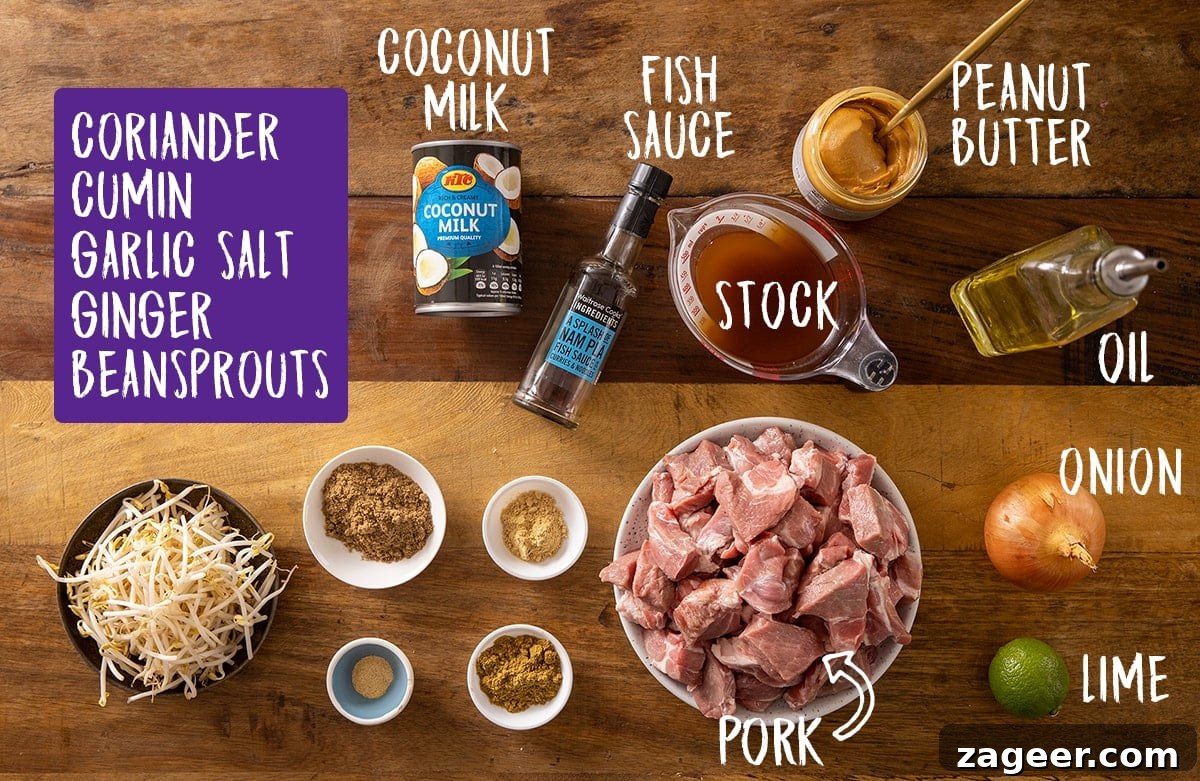
For the star of the show, I highly recommend using **pork shoulder**. Its inherent marbling of fat renders down beautifully during the slow cooking process, ensuring the pork stays incredibly tender, moist, and juicy. While other cuts can work, pork shoulder delivers unparalleled results for this recipe.
Key Components & Substitutions
- Pork Shoulder: As mentioned, this is our top recommendation for its texture and flavor after slow cooking. If you must substitute, boneless pork butt or even pork loin (though it might be less tender) could work. For a non-pork alternative, chicken thighs would also be delicious, but cooking time would need adjustment.
- Coconut Milk: Always opt for full-fat coconut milk for maximum creaminess and richness in the sauce. The light versions won’t give you the same luxurious texture.
- Peanut Butter: Creamy peanut butter is ideal for a smooth sauce. Check labels for gluten-free if required, although most natural peanut butters are. For an extra nutty flavor, you can use a crunchy variety.
- Aromatics: Fresh onion, garlic, and ginger form the foundation of our flavor base. You can use fresh garlic and ginger, but ground versions also work well for convenience.
- Spices: Ground coriander, cumin, and garlic salt create an aromatic and earthy blend that complements the Thai flavors. Feel free to adjust quantities to your preference.
- Liquid Gold: Chicken/Veg Stock: This adds depth to the sauce. Use vegetable bouillon for a gluten-free or vegetarian option.
- Fish Sauce: A cornerstone of Thai cooking, fish sauce adds that essential umami depth. Don’t skip it!
- Lime Juice: Freshly squeezed lime juice brightens the entire dish, cutting through the richness and adding a zesty finish.
- Beansprouts: Added at the end, these provide a delightful crunch and freshness. Use fresh or drained canned beansprouts.
📺 Watch How to Make It
For a visual guide to preparing this mouthwatering Thai Style Peanut Pork, watch our detailed video. It walks you through each step, ensuring you achieve perfect results every time. You can find the full recipe with detailed steps in the recipe card at the end of this post.
How to Make Mouthwatering Thai Style Peanut Pork: Detailed Instructions
Creating this flavorful dish is a straightforward process, broken down into a few simple steps. The beauty of slow cooking is that it does most of the hard work for you, leaving you with tender pork and an incredibly rich sauce.
- Sear the Pork: Begin by searing the diced pork shoulder in a hot pan. This crucial step develops a beautiful crust and locks in moisture, adding significant depth of flavor to the final dish.
- Sauté Aromatics & Spices: Reduce the heat and add chopped onion to soften. Then, stir in the ground coriander, cumin, ginger, and garlic salt, allowing their fragrant aromas to release and infuse the dish.
- Build the Sauce: Pour in the chicken or vegetable stock, followed by the creamy full-fat coconut milk, rich peanut butter, and umami-packed fish sauce. Stir everything together until well combined and bring it to a gentle simmer.
- Slow Cook to Perfection: Cover the pan with a lid and transfer it to a preheated oven. Let the pork slow cook at 170C/325F for 90-120 minutes, or until it’s incredibly tender and easily falls apart. Remember to check occasionally in the last hour and add a splash of water if the sauce appears too dry.
- Add Freshness: Once the pork is perfectly tender, remove the pan from the oven. Stir in the fresh lime juice for a vibrant kick and then add the beansprouts for a pleasant, crisp texture.
- Final Bake & Serve: Return the dish to the oven for another 10 minutes, uncovered, allowing the flavors to meld and the beansprouts to slightly warm. Remove, stir, and serve hot over boiled rice, garnished generously with fresh coriander and a sprinkle of chilies if you like a little heat.
👩🍳PRO TIP: For the best results, I highly recommend using a heavy cast-iron casserole dish with a tight-fitting lid for this recipe. Cast iron provides even heat distribution, which is perfect for slow cooking, ensuring your pork is uniformly tender and the sauce develops its full flavor potential.
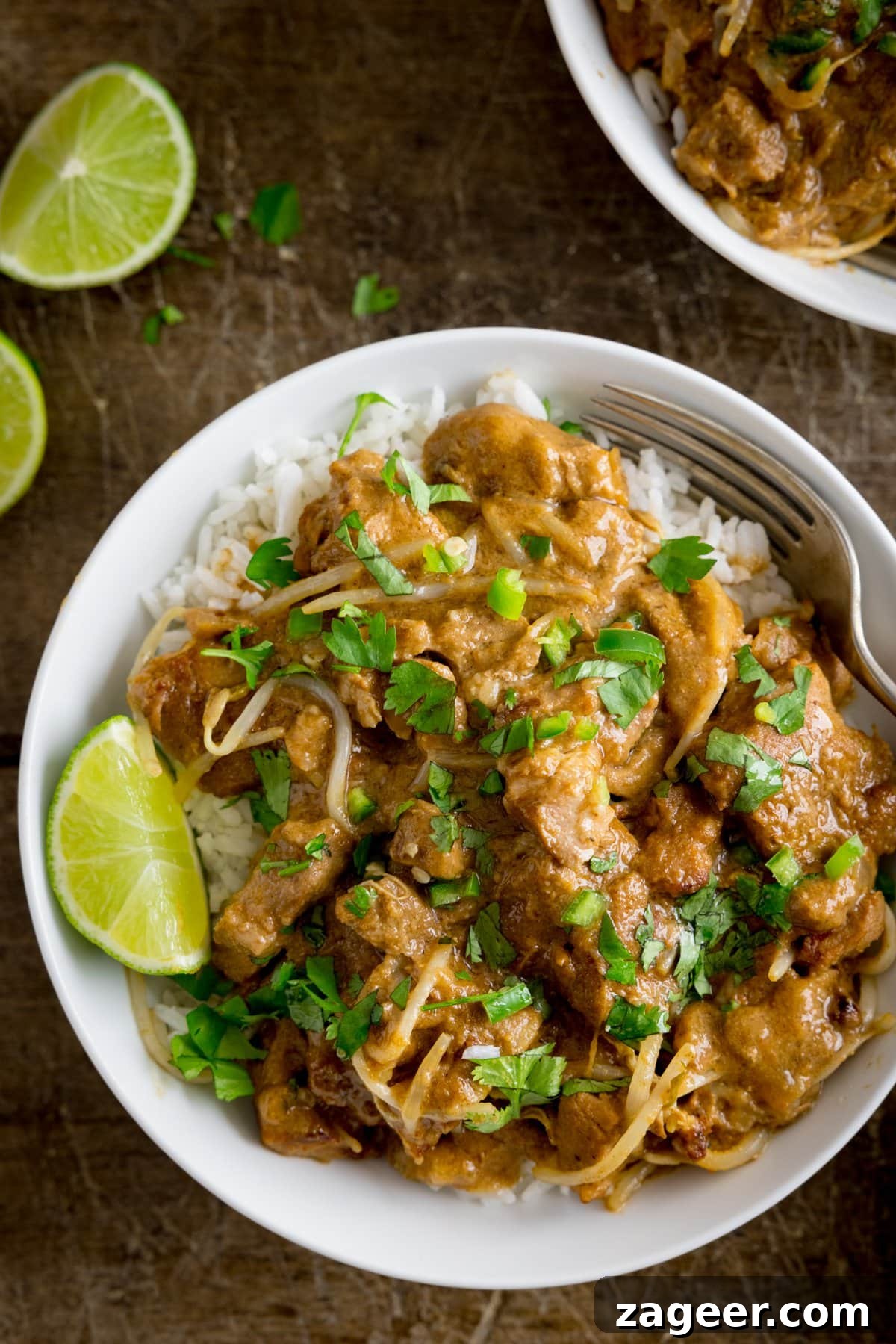
Before serving, a final flourish of fresh chilies (like Fresno chilies) and vibrant coriander not only adds a beautiful pop of color but also elevates the flavor profile. Trust me, with a bowl of this deliciousness, everything truly feels right with the world again.
This dish is an absolute delight to look forward to after a long day. And if you’re lucky enough to have leftovers, they reheat beautifully in the office microwave, making for the best lunch idea ever!
Pro Tips for the Perfect Thai Peanut Pork
Achieving restaurant-quality Thai peanut pork at home is easier than you think with these expert tips:
- Don’t Skip the Sear: Browning the pork before slow cooking isn’t just for looks; it creates a depth of flavor through the Maillard reaction that you simply can’t achieve otherwise. Take your time to get a good crust on all sides.
- Taste and Adjust: The beauty of cooking is customization. Before covering and putting it in the oven, taste your sauce. Need more tang? Add a squeeze of lime. Prefer it sweeter? A touch of brown sugar or honey can balance the flavors. Spicier? A pinch of red pepper flakes will do the trick.
- Consistency is Key: If your sauce is too thick after cooking, thin it with a little more stock or water. If it’s too thin, you can simmer it on the stovetop (after removing the pork) for a few minutes to reduce and thicken, or mix a teaspoon of cornstarch with cold water and stir it in.
- Embrace the Freshness: The fresh beansprouts, lime juice, and coriander added at the end are not just garnishes; they provide crucial contrasting textures and bright, fresh flavors that elevate the entire dish. Don’t add them too early, as they’ll lose their crunch.
- Make Ahead Magic: This recipe is fantastic for meal prep! You can cook the entire dish in advance and simply reheat portions when ready to eat. The flavors often deepen overnight, making it even more delicious the next day.
🍽️ Serving Suggestions: What to Pair with Your Peanut Pork
This delicious Thai peanut pork is wonderfully versatile and pairs well with a variety of sides. I personally love serving it with classic boiled rice, steamed tenderstem broccoli, and a generous dollop of Sweet Chilli Sauce for an extra kick. However, here are some other fantastic ideas:
- For an even richer meal, pair it with some flavorful homemade fried rice.
- Try it with noodles! Rice noodles or egg noodles would soak up the delicious sauce beautifully.
- For a lighter option, serve it alongside a crisp green salad or steamed mixed vegetables.
- Get creative! Believe it or not, the rich sauce can be a unique and flavorful filling for a jacket potato (baked potato) – it might sound a little unconventional, but don’t knock it ’til you try it!
- Garnish with chopped peanuts for extra crunch, sliced red chilies for heat, and extra fresh coriander.
Storing and Reheating Your Delicious Leftovers
This Thai Style Peanut Pork is fantastic as leftovers, often tasting even better the next day as the flavors continue to meld. Here’s how to store and reheat it:
- Storage: Allow the pork to cool completely, then transfer it to an airtight container. It can be stored in the refrigerator for up to 3-4 days.
- Freezing: For longer storage, this dish freezes beautifully. Once cooled, transfer to freezer-safe containers and freeze for up to 3 months. Thaw overnight in the refrigerator before reheating.
- Reheating: Gently reheat on the stovetop over medium-low heat, stirring occasionally, until heated through. You may need to add a splash of water or stock if the sauce has thickened too much. Alternatively, reheat in the microwave in individual portions.
Frequently Asked Questions (FAQ)
Can I use another cut of pork or a different protein?
While pork shoulder is highly recommended for its tenderness when slow-cooked, you can experiment with other cuts like boneless pork butt or even pork loin (though it might be slightly less tender). For a different protein, boneless chicken thighs would be a great substitute. Just adjust the cooking time as chicken cooks faster – approximately 60-90 minutes, or until cooked through and tender.
Is this recipe spicy? How can I adjust the heat?
The base recipe, as written, is mildly spiced and not inherently hot. The “garlic salt” adds flavor, not heat. You can easily adjust the spice level to your preference:
- For more heat: Add a pinch of chili flakes or a finely diced fresh red chili along with the other spices. For a significant kick, stir in some Thai red curry paste (1-2 teaspoons, adjusted to taste) when you add the coconut milk.
- For less heat: Simply omit any optional chili flakes or fresh chilies you might consider adding for garnish.
Can I make this recipe ahead of time or freeze it?
Absolutely! This Thai Style Peanut Pork is an excellent meal prep option. You can prepare the entire dish a day or two in advance and store it in an airtight container in the refrigerator. The flavors often deepen and improve overnight. It also freezes wonderfully for up to 3 months. Just ensure it’s completely cooled before freezing, and thaw thoroughly in the refrigerator before reheating gently on the stovetop or in the microwave.
🍲 More Comfort Food Recipes to Warm Your Soul
It seems that as the evenings draw in, many of us, myself included, are gravitating towards hearty, slow-cooked comfort food dishes. Here on Kitchen Sanctuary, these types of recipes are always incredibly popular, and it’s easy to see why! If you loved this Thai Peanut Pork, you’re sure to enjoy these other cozy meals:
Slow Cooked
Beef Bourguignon
Curries
Lamb Bhuna
Chicken
Chicken Casserole
Slow Cooked
Beef Goulash
Slow Cooked
Slow Cooked Steak Diane Casserole
Dinner
Creamy Pork and Apple Casserole
One Pot
Chilli Con Carne
Dinner
Cottage Pie Recipe
So it seems like you guys are with me on this – it’s definitely time for more slow-cooked comfort food to keep us warm and well-fed!
🍲 Explore More Fantastic Thai Inspired Recipes
We absolutely adore cooking with those iconic Thai flavors – the vibrant herbs, aromatic spices, and creamy coconut milk are simply irresistible. If you’ve fallen in love with the flavors of this Peanut Pork, you’ll definitely want to try some more of our favorite Thai-inspired recipes:
Asian
Pad Thai
Asian
Thai Fish Cakes with Vegetable Ribbons
Asian
Ultimate Beef Massaman Curry Recipe
Curries
Thai Red Chicken Curry
Curries
Thai Green Chicken Curry Recipe
Curries
Easy From Scratch Thai Yellow Curry With Fish

Print Recipe
★★★★★
Click the stars to rate or comment
Thai Style Peanut Pork Recipe
15
2 15
2 30
Ingredients
- 1 tbsp sunflower oil
- 1 kg (2.2 lbs) diced lean pork shoulder
- 1 onion peeled and chopped
- 2 tbsp. ground coriander
- 1 tbsp ground cumin
- 1 tsp ground ginger
- ¼ tsp garlic salt
- 300 ml (1 1/4 cups) chicken/veg stock use vegetable bouillon for gluten-free
- 400 ml (14 oz) can full-fat coconut milk
- 2 heaped tbsp peanut butter check if you need it to be gluten-free, it usually is though
- 2 tbsp fish sauce
- juice of 1 lime
- 100 g (1 cup) beansprouts these can be fresh, or canned beansprouts that have been drained
To Serve:
- boiled rice
- fresh coriander cilantro – roughly torn
- green chillies I use Fresno chillies, chopped
- chili flakes
- steamed tenderstem broccoli (optional)
Instructions
-
Preheat the oven to 170C/325F (fan), then heat the oil in a large casserole pan on a high heat until hot.1 tbsp sunflower oil
-
Add the pork, and brown on all sides – takes about 6-8 minutes. This step is crucial for developing deep flavors.1 kg (2.2 lbs) diced lean pork shoulder
-
Turn down to a medium heat and add the chopped onions. Cook for 5 minutes, stirring regularly, until the onions soften and become translucent.1 onion
-
Add the ground coriander, cumin, ginger, and garlic salt. Stir well to coat the pork and onions, allowing the spices to become fragrant for about 1 minute.2 tbsp. ground coriander, 1 tbsp ground cumin, 1 tsp ground ginger, ¼ tsp garlic salt
-
Pour in the chicken or vegetable stock, full-fat coconut milk, and stir in the peanut butter and fish sauce. Mix thoroughly until the peanut butter is fully incorporated and bring the sauce to a gentle simmer.300 ml (1 1/4 cups) chicken/veg stock, 400 ml (14 oz) can full-fat coconut milk, 2 heaped tbsp peanut butter, 2 tbsp fish sauce
-
Place a lid on the pan and transfer it to the preheated oven. Cook for 90 minutes to 2 hours, or until the pork is incredibly tender and easily falls apart with a fork. NOTE: Check a couple of times in the last hour; if the sauce looks a little dry, stir in a splash of water or extra stock.
-
Once the pork is fall-apart tender, remove the pan from the oven. Stir in the fresh lime juice for a vibrant, zesty finish, then add the beansprouts for a delightful crunch.juice of 1 lime, 100 g (1 cup) beansprouts
-
Stir gently and place the pan back in the oven (without the lid) for an additional 10 minutes. This allows the beansprouts to warm through slightly while retaining their crispness.
-
Remove from the oven, give it a final stir, and serve immediately over freshly boiled rice. Garnish generously with fresh coriander, and add some chopped fresh green chillies and/or dried chilli flakes if you enjoy a touch of heat. Steamed tenderstem broccoli makes a wonderful healthy side (optional).boiled rice, fresh coriander, green chillies, chili flakes, steamed tenderstem broccoli
Video Instructions
Notes
Nutrition
Carbohydrates: 12g |
Protein: 45g |
Fat: 30g |
Saturated Fat: 16g |
Polyunsaturated Fat: 3g |
Monounsaturated Fat: 9g |
Trans Fat: 0.02g |
Cholesterol: 100mg |
Sodium: 828mg |
Fiber: 2g |
Sugar: 4g
Nutrition information is automatically calculated, so should only be used as an approximation.